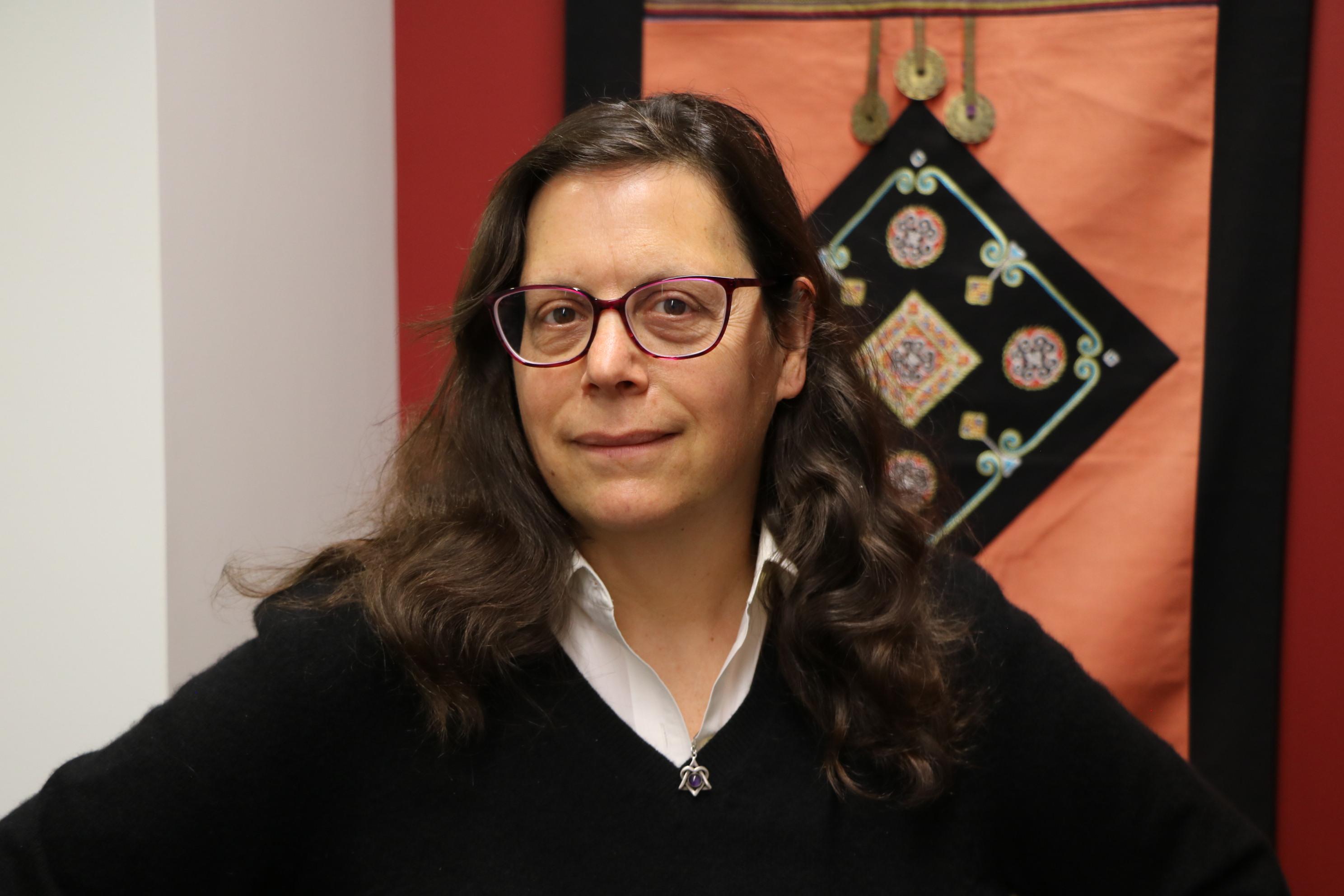
Dina Borzekowski
· Research Professor, Behavioral and Community Health, Director, Global Health InitiativeVerifiedUniversity of Maryland, College Park · Health Policy and Management
Active 1996–2025
About
Dina Borzekowski is a Research Professor in the Department of Behavioral and Community Health at the University of Maryland School of Public Health, where she also serves as the Director of the Global Health Initiative. Her research expertise is in health communication, with a focus on how media and technology influence population health and disease prevention. She has conducted research in around 32 countries, exploring how young people use media and the impact of media on children and adolescents. Dr. Borzekowski coordinates educational, research, and service collaborations for the School of Public Health community through her role as Director of the Global Health Initiative. Her academic background includes a B.S. in Biology from Cornell University, an M.S. in Communications, Computing and Technology in Education from Columbia University, an Ed.M. in Interactive Technology in Education from Harvard University, and an Ed.D. in Human Development and Psychology from Harvard University.
Research topics
- Political Science
- Medicine
- Virology
- Sociology
- Geography
- Psychology
- Media studies
- Pathology
Selected publications
British Journal of Learning Disabilities · 2025-12-17
articleOpen accessSenior authorABSTRACT Background The Chedoke‐McMaster Attitudes Towards Children with Handicaps (CATCH), a 36‐item scale, is widely used to assess children's attitudes toward peers with disabilities. While recognized for its strong validity and reliability, it was developed nearly four decades ago in Canada for children aged 9 to 13 and no longer fully aligns with diverse geographical and cultural contexts today. We examine children's attitudes toward children with disabilities in Kampala, Uganda, using a culturally‐tailored, shorter, and updated version of the CATCH scale. We establish the construct validity of the scale by testing three hypotheses grounded in existing literature. Methods We cross‐sectionally examined the attitudes of 375 children aged 6 to 9 years in Kampala in the Summer of 2024. Findings Through rigorous scale validation steps, we offer a modernized, age‐appropriate, and concise 15‐item adaptation—one of the first in the East African context. The revised scale demonstrated strong construct validity along with good internal consistency. Conclusions Future research should evaluate the scale's psychometric properties across broader age groups, geographical regions, and socioeconomic contexts to enhance its robustness as a modern multi‐dimensional scale for measuring children's attitudes toward peers with disabilities. We introduce the Maryland‐East African Children's Attitudes toward Disabilities (MEACAD) scale.
Physical Activity Among Belizean Older Adults: A National Study
Activities Adaptation & Aging · 2025-06-16
article1st authorCorrespondingInternational Journal of Child Youth and Family Studies · 2024-01-03
articleOpen access1st authorCorrespondingThis study examined whether an educational television show would affect young Haitian children’s gender perceptions. We first collected data on children’s beliefs about male and female characteristics and roles. Among 862 participating 6- and 7-year-olds from urban, peri-urban, and rural settings, we saw gender stereotypical beliefs about activities, traits, and occupations. We conducted a school-based intervention over a 10-week period, in which children were randomly assigned to watch a children’s television program in either of two groups: one that watched Lakou Kajou or one that watched Dora the Explorer. Each group saw 21 episodes of its assigned show, spread over 3 screenings of 7 episodes each. Lakou Kajou is an educational television show created in Haiti that purposely incorporates overt counter-stereotypical gender messaging. Among those children who watched Lakou Kajou and recalled more characters from the show, beliefs around gender became less stereotypical. In countries like Haiti, where pronounced gender disparities and biases exist, it is encouraging to see that a locally produced educational television show can change beliefs.
Journal of Children and Media · 2023-06-19
article1st authorCorrespondingA team of researchers were investigating the impact of a Nigerian adaptation of Akili and Me when the COVID−19 pandemic struck. Schools shut down, interrupting the study’s quasi-experimental intervention design. Post-school reopening, researchers recontacted 363 children (mean age = 5.1, SD = 1.1 years) who had provided data at baseline and had completed the intervention. The analyses revealed that during the shutdown, participating children watched Akili and Me, beyond the exposure experienced through the study intervention. Across viewing groups and including the control group, researchers found the children knew the program’s characters using a program receptivity score. The researchers found no differences associated with study’s initial group assignments. Those children who could name more Akili and Me characters performed significantly better on the outcomes of literacy, numeracy, shape, socio-emotional development, controlling for sex, age, baseline score, and group assignment. This study offers promising evidence that locally-produced educational media interventions can impact early learning skills, especially during a crisis when children rely on educational media for home learning.
International Journal of Early Childhood · 2022-02-26 · 2 citations
article1st authorCorrespondingInternational Journal of Environmental Research and Public Health · 2022-05-12 · 4 citations
articleOpen accessSenior authorCorrespondingAround the world, well-produced television programming can engage vulnerable, hard-to-reach audiences by offering informal education and enrichment. Akili and Me is an animated children’s educational program available in Sub-Saharan Africa that provides age and culturally appropriate lessons. In 2018, the producers created socio-emotional and health content. This study examines the relationship between children’s exposure to the new Akili and Me content and socio-emotional and health outcomes. Participants included low-income school children (mean age 5.32 years, SD = 0.82) from Arusha, Tanzania. Researchers conducted one-on-one baseline and post-intervention surveys with each participant. Over 12 weeks, the children attended afterschool sessions with screenings of Akili and Me, with distinct content screened on different days. The research team recorded children’s attendance and assessed children’s receptivity to the program through character identification. Using MLM regression models with data from 411 participants from 10 public schools, the analyses showed that a greater exposure and receptivity to Akili and Me predicted improved outcomes scores on the socio-emotional and health outcomes, controlling for sex, age, baseline scores, and general media receptivity (non-Akili and Me characters). Contributing to the literature on educational media, this study shows that exposure to an animated program can teach vulnerable preschool children socio-emotional and health content.
Children and Media Worldwide in a Time of a Pandemic
2022 · 9 citations
- Political Science
- Sociology
- Psychology
This edited volume focuses on the lived experiences of children during the first wave of the COVID-19 outbreak in the spring of 2020, their knowledge and emotional reactions, the adjustments they made in their everyday lives, and the strengths and skills they developed in response. A central theme of inquiry is the place media held in all of these aspects: the roles they played for children’s informational, emotional, and social needs, how these have changed under the pandemic circumstances, and the media competencies children developed in utilizing and controlling the media in their lives. The book is based on responses of 4,200 children ages 9-13 to an international survey administered in 42 countries as well as additional complementaries localized studies. Comparative dimensions are central to this unique collection of chapters, along geographical and cultural lines, as well as gender, age, class, health, and refugee status. With 40 authors from around the world, this book highlights the potential of media to assist children and their families in times of crisis as well as their potential drawbacks. Lessons learned for future crises are outlined in the concluding chapter of this book, which will be an asset to scholars of children’s wellbeing as well as professionals of media for children, educators, and parents.
Media Content for and Research on Children in Low- and Middle-Income Countries
2022-04-01 · 1 citations
book-chapter1st authorCorrespondingAvailable content and research on children and media differ strikingly between high-income and low- and middle-income countries (HICs versus LMICs). In just the last decade, the problem of access has changed considerably. Children and adolescents from LMICs receive broadcasts, but more so, frequently use the internet and social media. Available content comes mostly from high-income countries, although in-country production companies and user-generated material are emerging. Other than evaluations of preschool programming, most research on use and effects is superficial. Given that almost 90% of those 14 years and under live in LMICs, it is time to support children's media and research in these parts of the world.
The relation between knowledge and concern: A global study of children and COVID-19
Health psychology research · 2021-06-11 · 2 citations
articleOpen access1st authorCorrespondingCOVID-19 messages vary around the world, and populations receive these messages in different ways. Children are a vulnerable audience, especially in terms of risk communication. As messages are being developed, communicated, and disseminated about this pandemic, it is important to know the relation between COVID-19 knowledge and concern among preadolescents. In Spring 2020, children (N= 4,249) from 8 global regions completed an online survey (Mage= 11.0, 54% female, 46% male). We assessed children’s COVID-19 knowledge by asking about prevention and symptoms, as well as myths about the virus. We also assessed children’s concerns by asking about worries about self and others getting sick, missing school, and interruption of activities. Our analyses revealed different relations between knowledge and concern by region. Among children from Sub-Saharan Africa, the Arabian region, Asia, and North America, there was a positive relation between knowledge and concern. For those from Latin America, Oceania, Europe, and Southeast Asia, the relation was flat or negative. When producing messages for children during a public health crisis, health communicators must know that more knowledge is not always associated with less concern.
The Impact of Natural Viewership of Galli Galli Sim Sim on Indian Children: A Longitudinal Study
RIDIE datasets · 2021-07-15
dataset1st authorCorrespondingThe Registry for International Development Impact Evaluations (RIDIE), is a project of the International Initiative for Impact Evaluation (3ie). RIDIE is a registry of impact evaluations related to development in low and middle income countries. The purpose of the registry is to enhance the transparency and quality of evaluation research as well as to provide a repository of impact evaluation studies for researchers, funders, and others.
Recent grants
NIH · $1.0M · 2012
Frequent coauthors
- 17 shared
Thomas N. Robinson
University of Colorado Anschutz Medical Campus
- 14 shared
Alvin F. Poussaint
University of Colorado Colorado Springs
- 9 shared
Donna Matheson
Stanford University
- 9 shared
Helena C. Kraemer
Stanford University
- 6 shared
Rebecka Peebles
University of Pennsylvania
- 6 shared
Vaughn I. Rickert
MSD (Austria)
- 6 shared
Julia Chen‐Sankey
Rutgers, The State University of New Jersey
- 6 shared
Jenny L. Wilson
Labs
Global Health InitiativePI
Education
- 1994
EdD, Human Development and Psychology
Harvard Graduate School of Education
Awards & honors
- Gloria S. Friedgen School Spirit Award, May 2024
- American Public Health Association short film award, 2020
- Delta Omega, Honorary Society in Public Health, Gamma Zeta C…
- Mentor of 2023-2024 Philip Merrill Presidential Scholar awar…
- Mentor of 2018-2019 Philip Merrill Presidential Scholar awar…
- Resume-aware match score
- Save to shortlist
- AI-drafted outreach
See your match with Dina Borzekowski
PhdFit ranks faculty by your research interests, methods, and publications — grounded in their actual work, not templates.
- Free to start
- No credit card
- 30-second signup