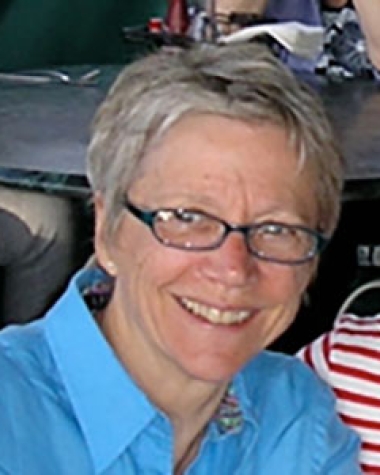
Douglas Antczak
· Dorothy Havemeyer McConville Professor of Equine Medicine, ProfessorVerifiedCornell University · Microbiology and Molecular Genetics
Active 1973–2026
About
Douglas Antczak is a professor emeritus of Microbiology and Immunology at Cornell University College of Veterinary Medicine. He received his Doctor of Veterinary Medicine (DVM) degree from the University of Montreal in Canada and was awarded a Ph.D. in Veterinary Microbiology from Texas A&M University for his studies on the outer membrane proteins of Brucella spp. His research interests include the pathogenesis of bacterial diseases affecting mammalian and aquatic animals. He has a background working as a postdoctoral fellow in the laboratory of Dr. Daniel Portnoy at the University of Pennsylvania, focusing on the pathogenesis of Listeria monocytogenes. His professional career includes an assistant professorship at the University of Colorado School of Medicine before moving to Cornell University in July 2001. Throughout his career, he has contributed to the understanding of bacterial disease mechanisms and has been involved in microbiology and immunology research.
Research topics
- Biology
- Genetics
- Medicine
- Pathology
- Geography
- Immunology
- Evolutionary biology
- Cell biology
- Cancer research
- Computational biology
- Zoology
Selected publications
bioRxiv (Cold Spring Harbor Laboratory) · 2026-02-27
articleOpen accessWe present telomere-to-telomere genome assemblies of a Thoroughbred horse and a donkey derived from their mule offspring. Now adopted and annotated by NCBI as reference genomes, these assemblies resolve previously inaccessible regions, including satellite arrays, duplications, and telomeres. Equids are known to exhibit an uncoupling between satellite DNA and centromeric function. The completeness of these assemblies enabled annotation of both satellite-based and satellite-free centromeres, as well as non-centromeric satellite loci, revealing notable centromeric plasticity. They also allowed detailed characterization of the variable binding domains of CENP-A-the epigenetic determinant of centromere identity-and CENP-B, whose association with CENP-A, previously considered typical based on a few model organisms, is absent in equids. Comparative analyses of satellite repeats and centromere positions provide new insights into the accelerated karyotypic reshuffling in equid evolution. These assemblies represent foundational resources for equid genomics and support ongoing initiatives such as the Equine Pangenome Project.
The Equine Major Histocompatibility Complex
2025-12-23
book-chapterAlmost 20 years ago several investigators independently began studying equine leukocyte antigen polymorphisms using sera from primi- and multiparous mares or alloantisera developed for classical blood group typing. At that time the role of the major histocompatibility complex (Mhc) in transplantation biology was evident from studies in other species; the high degree of polymorphism and the complexity of the Mhc molecules and genes were just beginning to be uncovered. The first disease associations such as that of HLA-B27 with ankylosing spondylitis in humans 1 or B haplotypes with susceptibility/resistance to Marek’s disease in chickens 2 were also reported. Motivation for research on the equine Mhc was manifold: the use of the high polymorphism for parentage testing or for population studies, the possible physiological or pathological influence of the Mhc, and the role of the Mhc in fertility.
Animal Genetics · 2024-03-21
articleOpen access1st authorDomenico (Meco) Bernoco (April 6, 1935 – October 27, 2023) Domenico (Meco) Bernoco, professor emeritus at the University of California-Davis, passed away at home in Davis, California on 27 October 2023. He was 88 years old. During his long scientific career, Meco made major contributions in the field of immunogenetics through his work on the major histocompatibility complex (MHC) of humans and domestic animals. Meco was born on 6 April 1935, as the youngest of one sister and two brothers in Cherasco, a small town in the Piedmont area of Italy with fewer than 10 000 inhabitants. Piedmont is known for gastronomy and fine wines, including the famous Barolo made from the Nebbiolo grape. Cherasco is situated about 50 km south of the city of Torino (Turin), and within a short distance of the Italian Alps to the west. Meco was a true son of the region, enjoying the preparation, eating, and sharing of good food. Meco also enjoyed all kinds of sports, in particular soccer. During his first time in Davis in 1967, he organized an unofficial soccer team of mostly Australian and South American students at UC Davis, and he made sure they would win most of their games. In 1959 Meco was awarded his Doctor of Veterinary Medicine degree (summa cum laude). After substituting for a friend in a private veterinary practice for 2 or 3 weeks, Meco decided that full time practice was not for him: “I was sick and tired holding hands with old women who fed their dogs chocolate!” Instead, Meco privately treated the dogs of neighbors and friends in return for a hare or pheasant hunted in the upper dry part of the hills (where they taste better). In the early 1960s, Meco and his friend Giuseppe Sartore joined the Osservatorio di Genetica Animale under Professor Pietro Dassat. After several years of teaching and conducting research on livestock genetics at the University of Torino, in 1971 Meco was awarded the Libera Docenza qualification from the University. From 1967 to 1969, Meco visited Professor Clyde Stormont at UC Davis while on a NATO fellowship. Back in Torino, Meco had the great good fortune to become associated with Ruggero Ceppellini, one of the most accomplished and brilliant immunogeneticists of the 1960s and 1970s. Meco was recruited by Ceppellini to lead a research program on Human Lymphocyte Antigens and transplantation biology in Torino. Prior to starting work on this program, Meco was tasked with visiting UCLA for 2 months in 1969 to learn the new lymphocyte typing techniques developed in the laboratory of Paul Terasaki. Meco became expert in the new technology, but more importantly, he met his future wife, Marietta von Diepow, who was working with Terasaki. In another stroke of good luck, in 1971 Meco moved to the Basel Institute for Immunology in Switzerland with Ceppellini, and there his research flourished. At that time the Basel Institute was a mecca for fundamental immunology research. One could not have asked for a more favorable environment in which to work as a young scientist. In Basel, Meco developed the technique of lysostripping, which uses antibodies to remove molecules from the surface of living cells through aggregation (capping) and subsequent endocytosis (Bernoco et al., 1972). Taking advantage of highly specific antisera developed in early human leukocyte antigen (HLA) workshops, and the availability of lymphocytes from individuals homozygous for the MHC, Meco was able to identify new HLA loci, an important advance in the field of human histocompatibility genetics. After several successful years in Switzerland, in 1977 Meco was able to return to California to become part of Dr. Paul Terasaki's team at University of California, Los Angeles. At UCLA, Meco was an Associate Research Immunologist at the Tissue Typing Laboratory in the Surgery Department. He played an important role in the development of the lymphocyte microcytotoxicity assay that became the standard test for matching donors and recipients in human tissue and organ transplantation (Terasaki et al., 1978). The assay was also widely used for genotyping large human populations in MHC-disease association studies. Meco was also a key participant in the human HLA Workshop series, where his ability to analyze large and complex datasets of HLA serology was fundamental to the success of those meetings. Fortunately, Meco always retained his ties to the veterinary profession, and in 1981 he was recruited to join the laboratory of Dr. Clyde Stormont, University of California Davis here. By that time, research on HLA attracted interest of livestock geneticists because of many discoveries during the previous decade showed associations of HLA antigens with a wide variety of diseases. Therefore, as a veterinarian and a leader in HLA research, Meco was recruited by Professor Clyde Stormont and Professor Bennie Osburn to initiate a program to identify and use this genetic system at UC Davis in the Department currently known as Population Health and Reproduction. Meco was an early leader in MHC research and typing in animals and led research on cattle and horses in that field before he retired as Professor Emeritus from the University in 1993. He continued as co-owner of the private Stormont Laboratories in Woodland, California, typing blood groups in cattle and horses for breeding purposes until 2006, when the laboratory closed. Meco also became an active participant in the horse genome workshop at its outset in 1995 until his full retirement in 2006. At Davis, Meco became involved in many genetic projects, but his greatest contributions were in the early international workshops to define the equine MHC haplotypes of the equine leukocyte antigen region (Bailey et al., 1984), bovine MHC class I antigens (Davies et al., 1994), and then later as part of the Horse Genome Workshop (Penedo et al., 2005). Meco made other contributions while at Davis, including population studies of the mutation causing severe combined immunodeficiency disease of Arabian horses (Bernoco & Bailey, 1998), characterizing the gene that causes hyperkalemic periodic paralysis in Quarter horses (Rudolph et al., 1992), and defining genetic aspects of bovine leukemia virus infections (Bernoco & Lewin, 1989). Meco did not mentor many students at Davis, but quality is more important than quantity. Two of Meco's former trainees went on to outstanding independent careers. Dr. Ernie Bailey became a professor at the Gluck Equine Research Center at the University of Kentucky, and the leader of the Horse Genome Project. Dr. Harris Lewin became an expert in bovine immunogenetics, and then a leader in bovine and comparative genomics, and was elected to the National Academy of Sciences. Meco's career occurred during a revolution in genetics, beginning with the challenges of identifying variation or individual genes and extending to the challenge of simultaneously evaluating thousands of DNA variants for construction of gene maps. Meco had an intuitive and brilliant grasp of the principles of genetics, immunology, cell biology, and statistical analyses. He made key contributions to medical genetics involving characterization of the complexity of the HLA system and variation in HLA expression. Later he led workshops designed to understand the MHC of cattle and horses, and then, even later, to create and use a gene map for the horse. Meco was a proponent of scientific workshops, specifically, the collaboration by groups of scientists on projects larger than could be accomplished in any one laboratory. Ernie Bailey participated in many of the workshops and reported, “At the end of a workshop, participants would typically spend an hour discussing what might be the next logical step. And, after the hour, we might have a rough idea of the challenges ahead. Then, Meco would concisely propose the structure we would adopt for the next workshop activity.” Meco found discovery easy and delighted in guiding younger scientist in their own paths of discovery, using the tools from the workshops. In this fashion, Meco facilitated the discovery of Mendelian genes for many disease and coat color traits. Doug Antczak, another member of equine MHC and Horse Genome communities, fondly recalled the verbal jousting in which he and Meco engaged over the years in spirited workshop discussions. “It was a badge of honor for me that Meco kept my photo on his bulletin board with the caption: Enemy Number One!” Meco had several pat phrases for his students. “Show me the data!” was an invitation for consultation. “Garbage in garbage out!” was the demand to see the controls for any set of data. “You are not a complete idiot!”, was recognition of success. All the while, he cared deeply for the people he met and lives he touched. His care was often shown in teasing words that made everyone laugh. Besides Meco's love for science and his wife, he enjoyed his garden and the harvest of pomegranates, figs, and lemons. With the latter he made “Meco cello”, his own type of limoncello, that his guests always appreciated. He also liked traveling. When conferences were organized in interesting parts of the world such as the Kruger Park in South Africa, Perth and Brisbane in Australia, Rio de Janeiro and Porto Seguro in Brazil, and places in Europe he took advantage and added some vacation weeks for himself and his wife, Marietta. All those who knew or worked with Meco were enriched by those associations. He was a true friend, and he made our lives better. All authors shared equally in drafting, writing, reviewing and editing.
The global spread of Oriental Horses in the past 1,500 years through the lens of the Y chromosome
Proceedings of the National Academy of Sciences · 2024-11-18 · 3 citations
articleOpen accessSince their domestication, horses have accompanied mankind, and humans have constantly shaped horses according to their needs through stallion-centered breeding. Consequently, the male-specific portion of the Y chromosome (MSY) is extremely uniform in modern horse breeds. The majority of stallions worldwide carry MSY haplotypes (HT) attributed to an only ~1,500-y-old, so-called, "Crown" haplogroup. The predominance of the Crown in modern horse breeds is thought to represent a footprint of the vast impact of stallions of "Oriental origin" in the past millennium. Here, we report the results of a fine-scaled MSY haplotyping of large datasets of patrilines comprising 1,517 males of 189 modern horse breeds, covering a broad phenotypic and geographic spectrum. We can disentangle the multilayered influence of Oriental stallions over the last few hundred years, exposing the intense linebreeding and the wide-ranging impact of Arabian, English Thoroughbred, and Coldblood sires. Iberian and New World horse breeds contain a wide range of diversified Crown lineages. Their broad HT spectrum illustrates the spread of horses of Oriental origin via the Iberian Peninsula after the Middle Ages, which is commonly referred to as the "Spanish influence." Our survey also revealed a second major historical dissemination of horses from Western Asia, attributed to the expansion of the Ottoman Empire. Our analysis shows that MSY analysis can uncover the complex history of horse breeds and can be used to establish the paternal ancestry of modern horse breeds.
Production of Mare Chorionic Girdle Organoids That Secrete Equine Chorionic Gonadotropin
International Journal of Molecular Sciences · 2023-05-31 · 8 citations
articleOpen accessThe equine chorionic girdle is comprised of specialized invasive trophoblast cells that begin formation approximately 25 days after ovulation (day 0) and invade the endometrium to become endometrial cups. These specialized trophoblast cells transition from uninucleate to differentiated binucleate trophoblast cells that secrete the glycoprotein hormone equine chorionic gonadotropin (eCG; formerly known as pregnant mare serum gonadotropin or PMSG). This eCG has LH-like activity in the horse but variable LH- and FSH-like activity in other species and has been utilized for these properties both in vivo and in vitro. To produce eCG commercially, large volumes of whole blood must be collected from pregnant mares, which negatively impacts equine welfare due to repeated blood collections and the birth of an unwanted foal. Attempts to produce eCG in vitro using long-term culture of chorionic girdle explants have not been successful beyond 180 days, with peak eCG production at 30 days of culture. Organoids are three-dimensional cell clusters that self-organize and can remain genetically and phenotypically stable throughout long-term culture (i.e., months). Human trophoblast organoids have been reported to successfully produce human chorionic gonadotropin (hCG) and proliferate long-term (>1 year). The objective of this study was to evaluate whether organoids derived from equine chorionic girdle maintain physiological functionality. Here we show generation of chorionic girdle organoids for the first time and demonstrate in vitro production of eCG for up to 6 weeks in culture. Therefore, equine chorionic girdle organoids provide a physiologically representative 3D in vitro model for chorionic girdle development of early equine pregnancy.
Refining the evolutionary tree of the horse Y chromosome
Scientific Reports · 2023-06-02 · 39 citations
articleOpen accessThe Y chromosome carries information about the demography of paternal lineages, and thus, can prove invaluable for retracing both the evolutionary trajectory of wild animals and the breeding history of domesticates. In horses, the Y chromosome shows a limited, but highly informative, sequence diversity, supporting the increasing breeding influence of Oriental lineages during the last 1500 years. Here, we augment the primary horse Y-phylogeny, which is currently mainly based on modern horse breeds of economic interest, with haplotypes (HT) segregating in remote horse populations around the world. We analyze target enriched sequencing data of 5 Mb of the Y chromosome from 76 domestic males, together with 89 whole genome sequenced domestic males and five Przewalski's horses from previous studies. The resulting phylogeny comprises 153 HTs defined by 2966 variants and offers unprecedented resolution into the history of horse paternal lineages. It reveals the presence of a remarkable number of previously unknown haplogroups in Mongolian horses and insular populations. Phylogenetic placement of HTs retrieved from 163 archaeological specimens further indicates that most of the present-day Y-chromosomal variation evolved after the domestication process that started around 4200 years ago in the Western Eurasian steppes. Our comprehensive phylogeny significantly reduces ascertainment bias and constitutes a robust evolutionary framework for analyzing horse population dynamics and diversity.
Juvenile idiopathic epilepsy in Arabian horses is not a single-gene disorder
Journal of Heredity · 2023-05-05 · 3 citations
articleValued for their temperament, beauty, athletic ability, and exhibition in the show ring, Arabian horses are an important component of the horse industry. Juvenile idiopathic epilepsy (JIE), a seizure disorder, is most often reported in Arabian foals from birth to 6 months of age. Affected foals exhibit tonic-clonic seizures lasting as long as 5 min and risking secondary complications like temporary blindness and disorientation. Some foals outgrow this condition, while others die or suffer lifelong complications if not treated. Previous work suggested a strong genetic component to JIE and proposed JIE to be a single-gene trait. In this work, we conducted a genome wide association study (GWAS) in 60 cases of JIE and 120 genetically matched controls, identifying loci suggesting JIE is not caused by a single locus. Coat color (chestnut, gray) phenotypes were used as positive control traits to assess the efficacy of GWAS in this population. Future work will attempt to future define candidate regions and explore a polygenic mode of inheritance.
Scientific Reports · 2023-11-17 · 7 citations
articleOpen accessAbstract We generated single haplotype assemblies from a hinny hybrid which significantly improved the gapless contiguity for horse and donkey autosomal genomes and the X chromosomes. We added over 15 Mb of missing sequence to both X chromosomes, 60 Mb to donkey autosomes and corrected numerous errors in donkey and some in horse reference genomes. We resolved functionally important X-linked repeats: the DXZ4 macrosatellite and ampliconic Equine Testis Specific Transcript Y7 ( ETSTY7 ). We pinpointed the location of the pseudoautosomal boundaries (PAB) and determined the size of the horse (1.8 Mb) and donkey (1.88 Mb) pseudoautosomal regions (PARs). We discovered distinct differences in horse and donkey PABs: a testis-expressed gene, XKR3Y , spans horse PAB with exons1–2 located in Y and exon3 in the X–Y PAR, whereas the donkey XKR3Y is Y-specific. DXZ4 had a similar ~ 8 kb monomer in both species with 10 copies in horse and 20 in donkey. We assigned hundreds of copies of ETSTY7 , a sequence horizontally transferred from Parascaris and massively amplified in equids, to horse and donkey X chromosomes and three autosomes. The findings and products contribute to molecular studies of equid biology and advance research on X-linked conditions, sex chromosome regulation and evolution in equids.
Evaluation of Fecal Egg Count Tests for Effective Control of Equine Intestinal Strongyles
Pathogens · 2023-10-26 · 9 citations
articleOpen accessThe American Association of Equine Practitioners strongly advocates evidence-based intestinal strongyle control in horses. It recommends targeted treatment of all heavy egg shedders (>500 eggs per gram (EPG) of feces), while the low shedders (0–200 EPG) are left untreated. As 50–75% of adult horses in a herd are low shedders, preventing them from unnecessary anthelmintic exposure is critical for tackling resistance. There are various fecal egg count (FEC) techniques with many modifications and variations in use, but none is identified as a gold standard. The hypothesis of the study was that the diagnostic performance of 12 commonly used quantitation methodologies (three techniques with four variants) differs. In this regard, method comparison studies were performed using polystyrene beads as proxy for intestinal strongyle eggs. Mini-FLOTAC-based variants had the lowest coefficient of variation (CV%) in bead recovery, whereas McMaster variants had the highest. All four variants of Mini-FLOTAC and the NaNO3 1.33 specific gravity variant of modified Wisconsin followed a linear fit with R2 > 0.95. In contrast, the bead standard replicates for modified McMaster variants dispersed from the regression curve, causing a lower R2. The Mini-FLOTAC method seems less influenced by the choice of floatation solution and has better repeatability parameters and linearity for bead standard recovery. For FEC tests with high R2 (>0.95) but that underestimated the true bead count, a correction factor (CF) was determined to estimate the true count. Finally, the validity of CF was analyzed for 5 tests with R2 > 0.95 to accurately quantify intestinal strongyle eggs from 40 different horses. Overall, this study identified FEC methodologies with the highest diagnostic performance. The limitations in standardizing routine FEC tests are highlighted, and the importance of equalization of FEC results is emphasized for promoting uniformity in the implementation of parasite control guidelines.
Journal of Equine Veterinary Science · 2023-06-01
article
Recent grants
NIH · $660k · 2001
NIH · $2.1M · 2002
NIH · $1.3M · 2012
Frequent coauthors
- 56 shared
Donald C. Miller
Cornell University
- 56 shared
T.L. Lear
University of Kentucky
- 55 shared
Terje Raudsepp
Texas A&M University
- 53 shared
M. M. Binns
- 53 shared
Loren C. Skow
Texas A&M University
- 52 shared
June Swinburne
- 52 shared
Gérard Guérin
- 52 shared
L. V. Millon
University of California, Davis
Labs
Hélène Marquis LabPI
- Resume-aware match score
- Save to shortlist
- AI-drafted outreach
See your match with Douglas Antczak
PhdFit ranks faculty by your research interests, methods, and publications — grounded in their actual work, not templates.
- Free to start
- No credit card
- 30-second signup