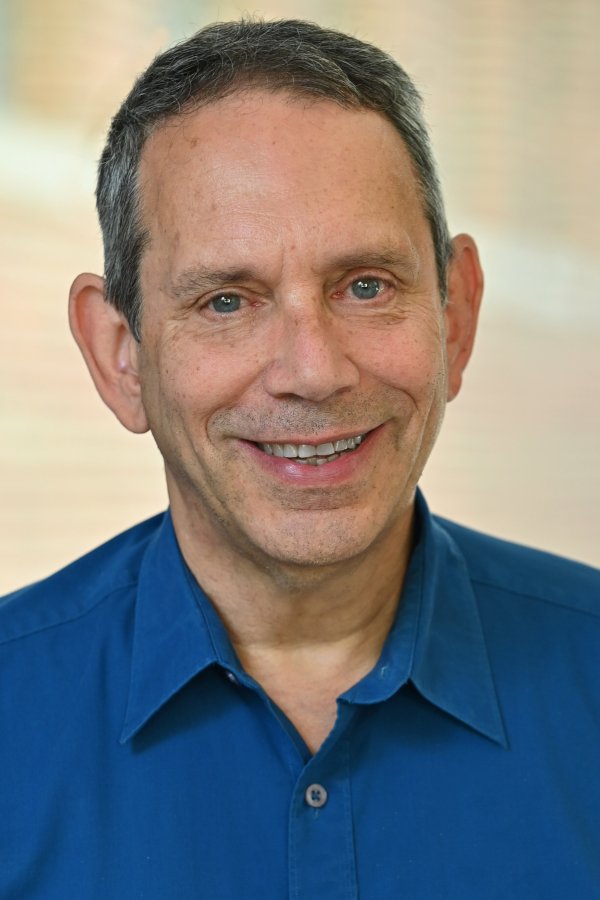
Douglas Arnold
· McKnight Presidential Professor, School of MathematicsVerifiedUniversity of Minnesota · Mathematics
Active 1979–2026
About
Douglas Arnold is the McKnight Presidential Professor at the School of Mathematics at the University of Minnesota. His research interests include numerical analysis, partial differential equations, classical and quantum mechanics, and mathematical physics, with a particular focus on the interplay between these fields. Much of his work concerns the computer solution of partial differential equations, emphasizing the development and understanding of methods for simulating physical phenomena such as the deformation of elastic plates and shells, and the collision of black holes. Around 2002, Arnold initiated the finite element exterior calculus, a new approach to the stability of finite element methods based on the geometric and topological structure underlying the relevant partial differential equations. This development, along with the applications of the finite element exterior calculus, constitutes one of the two major directions of his current research. The other is the study of wave localization in disordered media, which has important applications including the design of more efficient and sustainable LED lighting. He holds a PhD in Mathematics from the University of Chicago, earned in 1979, and has received numerous honors and awards, including the 2023 Peter Henrici prize. Arnold has served as editor-in-chief of Acta Numerica and has been involved with several editorial boards. He has also been president of the Society for Industrial and Applied Mathematics (SIAM) and is a fellow of SIAM, AMS, and AAAS. His contributions to the field have been recognized through various awards and memberships, including being a foreign member of the Norwegian Academy of Science and Letters.
Research topics
- Computer Science
- Artificial Intelligence
- Mathematical physics
- Mathematics
- Chemistry
- Pure mathematics
- Physics
- Quantum mechanics
Selected publications
NeuroImage Clinical · 2026-01-01 · 1 citations
articleOpen access• Subcortical inflammation in MS patients was linked to subpial demyelination. • Cortical demyelination was measured with 7 Tesla Magnetization Transfer Saturation. • Subcortical microglial activation was measured with [11C]PBR28 TSPO PET imaging. • Patients were classified by Principal Component Analysis of subcortical TSPO PET. • Patients with subcortical inflammation had increased disability and cortical atrophy. In multiple sclerosis (MS), pathology of both the subpial cortex and subependymal parenchyma has been strongly linked to compartmentalized meningeal inflammation. The topographical distribution of subpial demyelination can be appraised in vivo using surface-based mapping of magnetization transfer saturation (MTsat) in the cortex with 7T MRI. We combined 7T cortical MTsat mapping with [ 11 C]PBR28 PET molecular imaging of microglia to study the potential influence of subcortical microglial inflammation on cortical pathology. Thirty-eight MS patients (median EDSS: 4.0) and 21 healthy controls (HCs) underwent high resolution 7T MRI and [ 11 C]PBR28 PET. Principal component analysis of [ 11 C]PBR28 PET data was used to phenotype patients as having high (MSHigh) or low (MSLow) subcortical inflammation. Quantitative, surface-based measures of cortical myelin were obtained by sampling MTsat maps at 25%-50%-75% depths from the pia. MSHigh patients presented substantially greater, diffuse reductions in MTsat at all three cortical depths relative to HCs ( P < 0.05). Areas of significantly reduced MTsat were greatest at 25% depth in the frontal, parietal and cingulate cortices, occupying nearly 70% of total cortical area and providing evidence of extensive subpial demyelination. Importantly, MSHigh patients presented increased microstructural abnormalities in subcortical regions ( P < 0.05), alongside higher Expanded Disability Status Score (EDSS) ( P = 0.02), increased odds of progressive MS (odds ratio = 4.85:1 [1.20, 23.26], P = 0.03) and significant cortical atrophy ( P = 0.009). We provide in vivo evidence of a relationship between subcortical microglial inflammation and subpial demyelination in MS that is associated with increased clinical disability.
Efficacy of Ublituximab in People with Highly Active Relapsing Multiple Sclerosis
Neurology and Therapy · 2026-03-06
articleOpen accessINTRODUCTION: People with highly active multiple sclerosis benefit from early treatment with highly efficacious disease-modifying therapies. Here we present data on the efficacy of ublituximab versus teriflunomide in a subgroup of participants with highly active disease at baseline. METHODS: Pooled post hoc analyses of the phase 3 ULTIMATE I (N = 549) and II (N = 545) studies evaluated efficacy measures at weeks 12 and 96 in participants with highly active disease, defined as ≥ 2 relapses in the year prior and ≥ 1 gadolinium-enhancing (Gd+) T1 lesion at baseline. RESULTS: In the highly active disease population, the unadjusted annualized relapse rates (ARR) at week 96 were 0.145 and 0.496 for the ublituximab (n = 88) and teriflunomide (n = 80) groups, respectively (70.8% relative reduction, P < 0.001). The number (least squares means) of gadolinium-enhancing T1 lesions per scan for ublituximab versus teriflunomide was 0.114 versus 0.683 at week 12 (83.3% relative reduction) and 0.038 versus 0.875 at week 96 (95.6% relative reduction; both P < 0.001). Corresponding values for new/enlarging T2 lesions (ublituximab versus teriflunomide) were 1.754 versus 4.127 at week 12 (57.5% relative reduction) and 0.568 versus 6.367 at week 96 (91.1% relative reduction, both P < 0.001). No evidence of disease activity-3 (NEDA-3) rates with ublituximab versus teriflunomide were 29.5% versus 10.1% (P = 0.001) at week 12 and 77.9% versus 16.4% (P < 0.001) at week 96 (weeks 24-96, re-baselined). CONCLUSION: Ublituximab was associated with significant treatment benefits across multiple efficacy measures versus teriflunomide in participants with highly active disease at baseline. TRIAL REGISTRATION: Clinical trial registry: ULTIMATE I and II ClinicalTrials.gov numbers, NCT03277261 (registration date September 7, 2017) and NCT03277248 (registration date September 7, 2017).
Topology-aware DDPM inpainting of evolving MS lesions in paired brain MRI
2026-02-15
articleSenior authorProceedings of the Satellite Division's International Technical Meeting (Online)/Proceedings of the Satellite Division's International Technical Meeting (CD-ROM) · 2024-10-09
articlePositioning, navigation, and timing (PNT) technologies are integral to numerous applications, including critical infrastructure. Notably, GPS (Global Positioning System) and other satellite-based navigation systems (satnav) offer globally accessible, low-cost, precise PNT services with such high reliability that their utility is often taken for granted. However, these systems are susceptible to various adversities, both accidental and intentional, such as interference, spoofing, and cyber-attacks. In response to growing concerns regarding the security of PNT technologies, the IEEE (Institute of Electrical and Electronics Engineers) Standards Association established the P1952 working group to develop standards for resilient PNT user equipment. The P1952 standard aims to classify the resilience of PNT user equipment by defining discrete levels of increasing resilience. This standard emphasizes the input and output interfaces of PNT user equipment, stipulating requirements for the equipment's ability to adapt its output behavior in response to adversities encountered at its input interfaces. To facilitate efficient testing for compliance, P1952 has categorized these adversities. The working group has initiated collaboration with the IEEE Conformity Assessment Program (ICAP) to promote the development of testing protocols. Additionally, P1952 has been rigorously examining representative use cases from various industries, including critical infrastructure. The officers of the P1952 working group will present the current status of the standard, the development process, and an overview of the final stages of their work.
Hilbert Complexes: Analysis, Applications, and Discretizations
Oberwolfach Reports · 2023-04-13 · 2 citations
articleIn this workshop 70 (43 at MFO, 27 online) leading mathematicians from Europe, United States, China, and Australia met at the MFO to discuss and present new developments in the mathematical and numerical analysis including discretizations of Hilbert complexes related to systems of partial differential equations, in particular the well known de Rham complex and the complexes of elasticity and the biharmonic equations. The report at hand offers the extended abstracts of their talks.
Spectral functions and localization-landscape theory in speckle potentials
Physical review. A/Physical review, A · 2022-02-14 · 5 citations
articleOpen accessSpectral function is a key tool for understanding the behavior of Bose-Einstein condensates of cold atoms in random potentials generated by a laser speckle. In this paper we introduce a method for computing the spectral functions in disordered potentials. Using a combination of the Wigner-Weyl approach with the localization-landscape theory, we build an approximation for the Wigner distributions of the eigenstates in the phase space and show its accuracy in all regimes, from the deep quantum regime to the intermediate and semiclassical. Based on this approximation, we devise a method to compute the spectral functions using only the landscape-based effective potential. The paper demonstrates the efficiency of the proposed approach for disordered potentials with various statistical properties without requiring any adjustable parameters.
The Landscape Law for Tight Binding Hamiltonians
Communications in Mathematical Physics · 2022 · 10 citations
1st authorCorresponding- Computer Science
- Artificial Intelligence
- Mathematics
Local $L^2$-bounded commuting projections in FEEC
arXiv (Cornell University) · 2021-04-01
preprintOpen access1st authorCorrespondingWe construct local projections into canonical finite element spaces that appear in the finite element exterior calculus. These projections are bounded in $L^2$ and commute with the exterior derivative.
The landscape law for tight binding Hamiltonians
arXiv (Cornell University) · 2021-01-09 · 1 citations
preprintOpen access1st authorCorrespondingThe present paper extends the landscape theory pioneered in [FM, ADFJM2, DFM] to the tight-binding Schrödinger operator on $\Z^d$. In particular, we establish upper and lower bounds for the integrated density of states in terms of the counting function based upon the localization landscape.
Sharp estimates for the integrated density of states in Anderson tight-binding models
Physical review. A/Physical review, A · 2021-07-12 · 6 citations
articleOpen accessRecent work [G. David, M. Filoche, and S. Mayboroda, arXiv:1909.10558 [Adv. Math. (to be published)]] has proved the existence of bounds from above and below for the integrated density of states (IDOS) of the Schr\"odinger operator throughout the spectrum, called the landscape law. These bounds involve dimensional constants whose optimal values are yet to be determined. Here, we investigate the accuracy of the landscape law in 1D and 2D tight-binding Anderson models, with binary or uniform random distributions. We show, in particular, that in 1D, the IDOS can be approximated with high accuracy through a single formula involving a remarkably simple multiplicative energy shift. In 2D, the same idea applies but the prefactor has to be changed between the bottom and top parts of the spectrum.
Recent grants
Applications and development of finite element exterior calculus
NSF · $387k · 2014–2017
Finite element exterior calculus and applications
NSF · $299k · 2007–2011
Development and applications of the finite element exterior calculus
NSF · $453k · 2011–2015
Numerical Solution of Partial Differential Equations and Applications
NSF · $124k · 2004–2007
Numerical Solution of Partial Differential Equations: Algorithms, Analysis, and Applications
NSF · $300k · 2017–2020
Frequent coauthors
- 32 shared
Richard S. Falk
- 20 shared
Ragnar Winther
University of Oslo
- 15 shared
Marcel Filoche
Université Paris Sciences et Lettres
- 13 shared
Jim Douglas
- 12 shared
Franco Brezzi
Istituto di Matematica Applicata e Tecnologie Informatiche
- 12 shared
Wolfgang L. Wendland
University of Stuttgart
- 11 shared
Guy David
- 10 shared
Svitlana Mayboroda
University of Minnesota
Education
- 1979
M.S., Ph.D., Department of Mathematics
University of Chicago
- 1975
B.A., Department of Mathematics
Brown University
Awards & honors
- 2023 Peter Henrici Prize
- Resume-aware match score
- Save to shortlist
- AI-drafted outreach
See your match with Douglas Arnold
PhdFit ranks faculty by your research interests, methods, and publications — grounded in their actual work, not templates.
- Free to start
- No credit card
- 30-second signup