Resume-aware faculty matching

Find professors who actually fit you

Upload your resume. Four AI agents analyze your background, rank the faculty who fit, inspect their recent research, and help you draft outreach — grounded in their actual work, not templates.

Free to startNo credit cardCancel anytime
Top matches Balanced preset
Dr. Sarah Chen
Stanford · Interpretability · NLP
91
Dr. Marcus Holloway
MIT · Robotics · RL
84
Dr. Aisha Okonkwo
CMU · Fairness · HCI
82
Nova · Professor Researcher · re-ranking top 20…
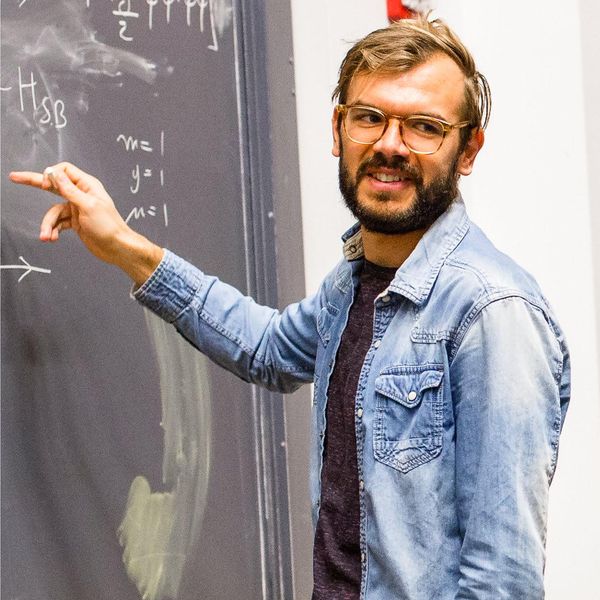
Dries Sels

Dries Sels

· Associate ProfessorVerified

Boston University · Physics

Active 2010–2026

h-index39
Citations5.2k
Papers209132 last 5y
Funding
See your match with Dries Sels — sign in to PhdFit.Sign in

About

Dries Sels is an Associate Professor in the Department of Physics at Boston University. His research focuses on developing new numerical methods for simulating many-body quantum systems, exploring quantum optimal control theory and counter-diabatic driving, and investigating dynamical phenomena in complex quantum systems. He is also involved in developing quantum algorithms. Dr. Sels has received fellowships including the Sloan Research Fellowship and FWO Senior and Junior postdoctoral fellowships. His work contributes to advancing understanding and simulation of quantum phenomena, with a particular emphasis on tensor network simulation, quantum chaos, and quantum control.

Research topics

  • Quantum mechanics
  • Mathematics
  • Physics
  • Statistical physics
  • Condensed matter physics
  • Classical mechanics
  • Mathematical physics
  • Mathematical analysis

Selected publications

  • Counterdiabatic Hamiltonian Monte Carlo

    Open MIND · 2026-02-24

    preprintSenior author

    Hamiltonian Monte Carlo (HMC) is a state of the art method for sampling from distributions with differentiable densities, but can converge slowly when applied to challenging multimodal problems. Running HMC with a time varying Hamiltonian, in order to interpolate from an initial tractable distribution to the target of interest, can address this problem. In conjunction with a weighting scheme to eliminate bias, this can be viewed as a special case of Sequential Monte Carlo (SMC) sampling \cite{doucet2001introduction}. However, this approach can be inefficient, since it requires slow change between the initial and final distribution. Inspired by \cite{sels2017minimizing}, where a learned \emph{counterdiabatic} term added to the Hamiltonian allows for efficient quantum state preparation, we propose \emph{Counterdiabatic Hamiltonian Monte Carlo} (CHMC), which can be viewed as an SMC sampler with a more efficient kernel. We establish its relationship to recent proposals for accelerating gradient-based sampling with learned drift terms, and demonstrate on simple benchmark problems.

  • Reinforcement learning for path integrals in quantum statistical physics

    ArXiv.org · 2026-02-18

    articleOpen accessSenior author

    Machine learning is rapidly finding its way into the field of computational quantum physics. One of the most popular and widely studied approaches in this direction is to use neural networks to model quantum states (NQS) in the Hamiltonian formulation of quantum mechanics. However, an alternative angle of attack to leverage machine learning in physics is through the path integral formulation, which has so far received far more limited attention. In this paper, we explore how reinforcement learning can be used to compute a class of Euclidean path integrals that yield the thermal density matrix of a quantum system, thereby enabling the computation of the free energy or other thermal expectation values. In particular, we propose a two-step approach with the unique feature that after a variational approximation for a quantity is obtained in a first step, it can then be used to efficiently compute the exact result in a second step. We benchmark this method on several simple systems and then apply it to the quantum rotor chain.

  • Anderson localization: A view from Krylov space

    Physical review. B./Physical review. B · 2026-02-09

    articleOpen accessSenior author

    The Krylov subspace expansion is a workhorse method for sparse numerics that has been increasingly explored as source of physical insight into many-body dynamics in recent years. In this work we revisit the venerable Anderson model of localization in dimensions $d=1, 2, 3, 4$ to construct local integrals of motion (LIOM) in Krylov space. These appear as zero eigenvalue edge states of an effective hopping problem in the Krylov superoperator subspace and can be analytically constructed given the Lanczos coefficients. We exploit this idea, focusing on $d=3$, to study the manifestation of the disorder driven Anderson transition in the anatomy of LIOMs. We find that the increasing complexity of the Krylov operators results in a suppression of the fluctuations of the Lanczos coefficients. As such, one can study the phenomenology of the integrals of motion in the disorder averaged Krylov chain. We find edge states localized on vanishing fraction of Krylov space (of dimension $D_K=V^2$ for cubes of volume $V$), both in localized and extended phases. Importantly, in the localized phase, disorder induces powerlaw decaying dimerization in the (Krylov) hopping problem, producing stretched exponential decay of the LIOMs in Krylov space with a stretching exponent $1/2d$. Metallic LIOMs are completely delocalized albeit across only $\propto \sqrt{D_K}$ states. Critical LIOMs exhibit powerlaw decay with an exponent matching the expected value of $0.29$.

  • Dynamics of disordered quantum systems with two- and three-dimensional tensor networks

    Science · 2026-05-21

    articleSenior authorCorresponding

    Large-scale quantum annealing dynamics of Ising spin glasses were recently implemented on D-Wave's Advantage2 system on a range of lattices. After extensive comparison with existing numerical methods, these experiments were claimed to be beyond the reach of classical computation. Here, we simulated these spin-glass models with lattice-specific tensor networks, using belief propagation (BP) to keep up with the entanglement generated during the time evolution and then extracting expectation values with more sophisticated variants of BP. We found that state-of-the-art accuracies could be achieved with modest computational resources. Moreover, our results are scalable in both two and three dimensions, which we leveraged to verify universal Kibble-Zurek physics on systems involving hundreds of qubits.

  • Tensor network surrogate models for variational quantum computation

    arXiv (Cornell University) · 2026-04-22

    preprintOpen access

    We adopt a two-dimensional tensor-network (TN) ansatz to simulate variational quantum algorithms on two-dimensional qubit architectures, demonstrating its capability to accurately simulate deep circuits through the Quantum Approximate Optimization Algorithm (QAOA) applied to Ising spin-glass problems on heavy-hexagonal and square lattices. For heavy-hexagonal problems with up to three-body interactions, parameters trained on small instances and transferred to systems an order of magnitude larger improve the sampled energy distribution only up to intermediate depths, indicating a fundamental limit of parameter concentration as a transfer strategy. By extending the training itself with TN simulations on larger system sizes, we avoid local minima and obtain lower-energy samples. Analyses of entanglement growth and importance sampling show that the simulation remains classically feasible with moderate bond dimension. We find that parameter concentration also persists on square lattices, albeit at substantially higher computational cost to perform reliable sampling. Overall, our TN framework not only provides an efficient and controlled framework for benchmarking variational quantum algorithms on two-dimensional lattices, but also serves as an effective surrogate model for training variational algorithms.

  • Data from: Dynamics of disordered quantum systems with two- and three-dimensional tensor networks

    DRYAD · 2026-03-13

    datasetOpen accessSenior author

    Large-scale quantum annealing dynamics of Ising spin glasses were recently implemented on D-Wave’s Advantage2 system on a range of lattices. Following extensive comparison to existing numerical methods, these experiments were claimed to be beyond the reach of classical computation. Here, we simulate these spin glass models with lattice-specific tensor networks, using belief propagation (BP) to keep up with the entanglement generated during the time evolution and then extracting expectation values with more sophisticated variants of BP. We find that state-of-the-art accuracies can be achieved with modest computational resources. Moreover, our results are scalable in both two and three dimensions, which we leverage to verify universal Kibble-Zurek physics on systems involving hundreds of qubits.

  • Reinforcement learning for path integrals in quantum statistical physics

    Open MIND · 2026-02-18

    preprintSenior author

    Machine learning is rapidly finding its way into the field of computational quantum physics. One of the most popular and widely studied approaches in this direction is to use neural networks to model quantum states (NQS) in the Hamiltonian formulation of quantum mechanics. However, an alternative angle of attack to leverage machine learning in physics is through the path integral formulation, which has so far received far more limited attention. In this paper, we explore how reinforcement learning can be used to compute a class of Euclidean path integrals that yield the thermal density matrix of a quantum system, thereby enabling the computation of the free energy or other thermal expectation values. In particular, we propose a two-step approach with the unique feature that after a variational approximation for a quantity is obtained in a first step, it can then be used to efficiently compute the exact result in a second step. We benchmark this method on several simple systems and then apply it to the quantum rotor chain.

  • Adiabatic dressing of quantum enhanced Markov chains

    arXiv (Cornell University) · 2026-03-30

    preprintOpen accessSenior author

    Quantum-enhanced Markov chain Monte Carlo, a hybrid quantum-classical algorithm in which configurations are proposed by a quantum proposer and accepted or rejected by a classical algorithm, has been introduced as a possible method for robust quantum speedup. Previous work has identified competing factors that limit the algorithm's performance: the quantum dynamics should delocalize the system across a range of classical states to propose configurations beyond the reach of simple classical updates, whereas excessive delocalization produces configurations unlikely to be accepted, slowing the chain's convergence. Here, we show that controlling the degree of delocalization by adiabatically dressing the quench protocol can significantly enhance the Markov gap in paradigmatic spin-glass models.

  • Double descent: When do neural quantum states generalize?

    Physical review. E · 2026-03-13

    articleOpen access

    Neural quantum states (NQS) provide flexible and compact wave-function parametrizations for numerical studies of quantum many-body physics. In particular, NQS aim to circumvent the exponential scaling of the Hilbert space by compressing quantum many-body wave functions with a tractable amount of parameters. While inspired by deep learning, it remains unclear to what extent NQS share characteristics with neural networks used for standard machine learning tasks. We demonstrate that, in a simplified supervised setting, NQS exhibit the double descent phenomenon, a key feature of modern deep learning, where generalization worsens as network size increases before improving again in an overparameterized regime. Notably, we find the second descent to occur only for network sizes much larger than the Hilbert space dimension, i.e., network sizes that are out of reach for problems of practical interest. Within our setting, this observation places typical NQS in the underparameterized regime. We also observe that the optimal network size in the underparameterized regime depends on the number of unique training samples. While the double descent phenomenon does indeed translate to the NQS setting, potential practical consequences of our findings point more toward the need for symmetry-aware, physics-informed architecture design, rather than directly adopting machine learning heuristics.

  • Tensor network surrogate models for variational quantum computation

    ArXiv.org · 2026-04-22

    articleOpen access

    We adopt a two-dimensional tensor-network (TN) ansatz to simulate variational quantum algorithms on two-dimensional qubit architectures, demonstrating its capability to accurately simulate deep circuits through the Quantum Approximate Optimization Algorithm (QAOA) applied to Ising spin-glass problems on heavy-hexagonal and square lattices. For heavy-hexagonal problems with up to three-body interactions, parameters trained on small instances and transferred to systems an order of magnitude larger improve the sampled energy distribution only up to intermediate depths, indicating a fundamental limit of parameter concentration as a transfer strategy. By extending the training itself with TN simulations on larger system sizes, we avoid local minima and obtain lower-energy samples. Analyses of entanglement growth and importance sampling show that the simulation remains classically feasible with moderate bond dimension. We find that parameter concentration also persists on square lattices, albeit at substantially higher computational cost to perform reliable sampling. Overall, our TN framework not only provides an efficient and controlled framework for benchmarking variational quantum algorithms on two-dimensional lattices, but also serves as an effective surrogate model for training variational algorithms.

Frequent coauthors

Awards & honors

  • Sloan Research fellow (NYU)
  • FWO Senior postdoctoral fellow (Harvard)
  • FWO Junior postdoctoral fellow (BU)
  • Resume-aware match score
  • Save to shortlist
  • AI-drafted outreach

See your match with Dries Sels

PhdFit ranks faculty by your research interests, methods, and publications — grounded in their actual work, not templates.

  • Free to start
  • No credit card
  • 30-second signup