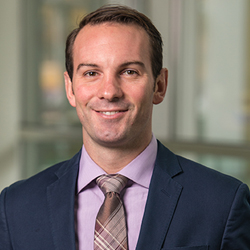
Dylan Roden
· Associate ProfessorVerifiedRutgers University · Otolaryngology - Head and Neck Surgery
Active 1952–2026
About
Dylan Roden, MD, is an Associate Professor in the Department of Otolaryngology at Rutgers New Jersey Medical School. He was raised in Bellport, NY, and graduated as Valedictorian from Bellport High School. He earned his Bachelor of Science degree in Biological Engineering from the Massachusetts Institute of Technology (MIT), where he also played Division III soccer and lacrosse. He completed his medical training at the Icahn School of Medicine at Mount Sinai in Manhattan, earning both MD and MPH degrees. Dr. Roden completed his surgical residency in Otolaryngology - Head & Neck Surgery at New York University (NYU), where he received multiple research awards. He further specialized with a fellowship in advanced Head & Neck surgical oncology and microvascular reconstruction at Thomas Jefferson University in Philadelphia. His clinical expertise includes advanced head and neck surgical oncology, transoral robotic surgery, microvascular reconstructive surgery, and management of voice and swallowing disorders. He has a particular interest in the care of head and neck cancer patients and has expressed a passion for international surgical education and care, having volunteered to provide free surgery in five different countries. Dr. Roden is a member of the American Head & Neck Society Global Outreach Service and continues to pursue efforts in international surgical outreach.
Research topics
- Surgery
- Medicine
- Internal medicine
- Endocrinology
Selected publications
Genetic Landscape of Oral Cavity Squamous Cell Carcinoma
OTO Open · 2026-01-01
articleOpen accessSenior authorCorrespondingAbstract Objective The association, if any, between gene mutations, pathologic features of squamous cell carcinoma of the head and neck, and patient prognosis is unknown. This study investigates the association between common gene mutations in oral cavity squamous cell carcinoma, pathologic features of malignancy, and patient survival. Study Design Retrospective database review. Setting US hospitals. Methods The cBioPortal for Cancer Genomics database was queried for oral cavity squamous cell carcinoma patient data. Statistical analyses were conducted using IBM SPSS v29. Results Of the 423 patients included, the majority were male (66.6%), white (89.3%), and current/former smokers (74.1%). Tumor protein p53 (TP53), titin (TTN), and FAT atypical cadherin 1 (FAT1) mutations were present in 72.3%, 31.2%, and 22.0% of patients, respectively. Mutant TP53 was associated with positive extranodal extension compared to wild‐type (WT) TP53 (31.0% vs 18.8%) ( P = .038) and perineural invasion (59.4% vs 44.3%, P = .021). High tumor mutational burden was present in 5.4% of cases. Gene mutations were not associated with differences in median overall survival or disease‐free survival. Multivariable analysis revealed an association between mutant TP53 and the presence of extranodal extension (odds ratio [OR] 2.61, 95% CI 1.05‐6.52, P = .039) and perineural invasion (OR 2.14, 95% CI 1.04‐4.42, P = .039). Conclusion Mutant TP53 was associated with high‐risk pathologic features, including extranodal extension and perineural invasion, but not with inferior survival. A high tumor mutational burden (>10) is rare in oral cavity squamous cell carcinoma. Further research into the interplay between genetic mutations and patient outcomes is needed.
Cancer Research · 2026-04-17
articleAbstract Oral cancer kills over 180 thousand peoplearound the world each year, and can cause permanent sequelae in survivors. Over90 percent of oral cancers are oral squamous cell carcinomas (OSCC). Thepodoplanin (PDPN) receptor has emerged as a functionally relevant biomarker andchemotherapeutic target expressed by OSCC cells. PDPN signaling can directlyincrease tumor cell invasion and metastasis, and inhibit host lymphocyteactivation and immune response. Antibodies and Maackia amurensis seedlectin (MASL) can target PDPN to inhibit OSCC cell migration and viability. Weconducted a Phase 1 human clinical trial to examine the effects of MASL on OSCCcell morphology, PDPN expression, and immune cell infiltration in oral cancerpatient lesions. We also examined the effects of MASL on motility, viability,and PDPN expression in cells cultured from these patient lesions. Oral MASLadministration was found to be safe and did not produce any adverse effects inany patients in this study. MASL did not affect OSCC cell morphology in lesionsin situ, but appeared to increase lymphocyte infiltration into tumor fields inone out of three patients examined within 24 hours after dosing (p<0.01).MASL also inhibited the growth and motility of all OSCC cells cultured fromthese patient lesions in a dose dependent manner in vitro (p<0.05 in allcases). We also examined the ability of antibodies to target PDPN and kill OSCCcells by near-infrared photoimmunotherapy (NIR-PIT). We found that antibodiescan target PDPN on OSCC cells from patients to destroy them by NIR-PIT. Theseresults suggest that protocols using MASL and photoimmunotherapy targeting PDPNcan be developed to effectively treat OSCC lesions in oral cancer patients. Inparticular, these data support the overall approach of using antibodies thatrecognize human PDPN to target and kill human OSCC cells by NIR-PIT. Thesenovel results support a general and powerful approach to use NIR-PIT to treatoral cancer patients and, by deduction, patients with other cancers thatexpress the PDPN receptor. Citation Format: Ariel C. Yin, Cayla J. Holdcraft, Tyler J. Hellmig, Eamonn J. Brace, David I. Suster, Alan J. Shienbaum, Dylan Roden, Evelyne Kalyousef, Ghayoour Mir, Eugenio Capitle, Soly Baredes, Rabie Shanti, Mika K. Kaneko, Yukinari Kato, Hisataka Kobayashi, Aki Furusawa, Mahnaz Fatahzadeh, Gary S. Goldberg. Effects of Maackia amurensis seed lectin (MASL) on OSCC cell morphology, PDPN expression, viability, and motility in a phase 1 clinical trial [abstract]. In: Proceedings of the American Association for Cancer Research Annual Meeting 2026; Part 2 (Late-Breaking, Clinical Trial, and Invited Abstracts); 2026 Apr 17-22; San Diego, CA. Philadelphia (PA): AACR; Cancer Res 2026;86(8_Suppl):Abstract nr CT047.
Journal of Cancer Research and Clinical Oncology · 2025-07-19
articleOpen accessBACKGROUND: Podoplanin (PDPN) has emerged as a functionally relevant biomarker and chemotherapeutic target expressed by OSCC cells. PDPN signaling can directly increase tumor cell invasion and metastasis, and also inhibit host lymphocyte activation and immune response. Accordingly, antibodies and Maackia amurensis seed lectin (MASL) can target the PDPN receptor to inhibit OSCC cell migration and viability. However, the effects of MASL on OSCC cells in oral cancer patients has not yet been reported. METHODS: We conducted a Phase 1 human clinical trial to examine the effects of a single 100 mg oral dose of MASL on OSCC cell morphology, PDPN expression, and immune cell infiltration in lesions in oral cancer patients. We also examined the effects of MASL on the PDPN expression, motility, and viability of cells cultured from these patient lesions. In addition, we examined the ability of antibodies to target PDPN and kill OSCC cells by near-infrared photoimmunotherapy. RESULTS: MASL administration was found to be safe and did not produce any adverse effects in any patients. While this single dose did not affect OSCC cell morphology in lesions in situ, it did appear to increase lymphocyte infiltration into tumor fields in one patient by over 5 fold (p < 0.01). In addition, MASL inhibited the growth and motility of all OSCC cells cultured from these patient lesions in a dose responsive manner in vitro (p < 0.05 in all cases) We also report that antibodies can target PDPN on OSCC cells obtained from these patients to destroy them by near-infrared photoimmunotherapy (NIR-PIT). CONCLUSION: These results suggest that protocols using MASL and photoimmunotherapies that target PDPN can be developed to effectively treat OSCC lesions in oral cancer patients.
Neck Dissection and Survival Among Head and Neck Cancer Patients Undergoing Adjuvant Immunotherapy
Laryngoscope Investigative Otolaryngology · 2025-03-18 · 1 citations
articleOpen accessSenior authorABSTRACT Background Some studies suggest that neck dissection (ND) should be avoided in candidates for immunotherapy because lymph nodes are primary sites for immunotherapy activation. Our study investigates ND utilization and associated differences in overall survival (OS) among patients with head and neck cancer (HNC) undergoing adjuvant immunotherapy. Methods The 2013–2018 National Cancer Database was retrospectively reviewed for patients with HNC undergoing surgery with curative intent, and adjuvant immunotherapy. Multivariable binary logistic and Cox regression models adjusted for patient demographics, clinicopathologic features, and treatment. Results Of 1335 patients satisfying inclusion criteria, 679 (50.9%) patients underwent ND: 94 (13.8%) had pN0, 109 (16.1%) had pN1, 411 (60.5%) had pN2, 60 (8.8%) had pN3, and 5 (0.7%) had pNx classification. On multivariable binary logistic regression, academic treatment facility, cT4, and cN1–3 classification were associated with higher odds of undergoing ND ( p < 0.05); salivary, sinonasal, oropharyngeal, hypopharyngeal, and laryngeal primary sites were associated with decreased odds ( p < 0.05). Compared with those undergoing neck observation, patients undergoing ND had worse OS (49.4% vs. 61.5%, p < 0.001) on Kaplan–Meier but not multivariable Cox (adjusted hazard ratio [aHR] 1.00, 95% confidence interval [CI] 0.82–1.24, p = 0.968) regression. Compared with adjuvant immunotherapy alone, the addition of radiotherapy (aHR 0.64, 95% CI 0.44–0.93) and chemoradiotherapy (aHR 0.56, 95% CI 0.37–0.86) were associated with higher OS ( p < 0.025). Conclusion ND was utilized in approximately 51% of patients with HNC undergoing adjuvant immunotherapy. ND was not associated with worse OS, possibly related to the high rate of pN1–3 classification. Level of Evidence 4
Patterns and Trends in Adjuvant Therapy for Major Salivary Gland Cancer
Otolaryngology · 2024-03-14 · 20 citations
articleOpen accessSenior authorOBJECTIVE: To investigate adjuvant therapy indications, utilization, and associated survival disparities in major salivary gland cancer (MSGC). STUDY DESIGN: Retrospective cohort study. SETTING: The 2006 to 2017 National Cancer Database. METHODS: Patients with surgically resected MSGC were included (N = 11,398). pT3-4 classification, pN2-3 classification, lymphovascular invasion, pathologic extranodal extension (pENE), and positive surgical margin (PSM) were considered indications for adjuvant radiotherapy (aRT). pENE and PSM were considered possible indications for adjuvant chemotherapy. Multivariable logistic and Cox regression models were implemented. RESULTS: 1 indication for aRT, 1906 (28.5%) received no further treatment and missed aRT. Age, race, comorbidity status, facility type, and distance to reporting facility were associated with missed aRT (P < .025). Among 4003 patients with ≥1 possible indication for adjuvant chemoradiotherapy (aCRT), 914 (22.8%) received aCRT. Patients with pENE only (38.5%) and both pENE and PSM (44.0%) received aCRT more frequently than those with PSM only (17.0%) (P < .001). Academic facility was associated with aCRT utilization (P < .05). aCRT utilization increased between 2006 and 2017 in both academic (14.8% vs 23.9%) and nonacademic (8.8% vs 13.5%) facilities (P < .05). Among 2691 patients with ≥1 indication for aRT alone, missed aRT portended poorer OS (hazard ratio [HR]: 1.61, 95% confidence interval [CI]: 1.28-2.03, P < .001). Among 4003 patients with ≥1 possible indication for aCRT, aRT alone (HR: 1.02, 95% CI: 0.89-1.18, P = .780) and aCRT were associated with similar OS. CONCLUSION: Missed aRT in MSGC occurs frequently and portends poorer OS. Further studies clarifying indications for aCRT are required.
Biochemical and Biophysical Research Communications · 2024-04-03 · 2 citations
articleOpen accessMaackia amurensis lectins serve as research and botanical agents that bind to sialic residues on proteins. For example, M. amurensis seed lectin (MASL) targets the sialic acid modified podoplanin (PDPN) receptor to suppress arthritic chondrocyte inflammation, and inhibit tumor cell growth and motility. However, M. amurensis lectin nomenclature and composition are not clearly defined. Here, we sought to definitively characterize MASL and its effects on tumor cell behavior. We utilized SDS-PAGE and LC-MS/MS to find that M. amurensis lectins can be divided into two groups. MASL is a member of one group which is composed of subunits that form dimers, evidently mediated by a cysteine residue in the carboxy region of the protein. In contrast to MASL, members of the other group do not dimerize under nonreducing conditions. These data also indicate that MASL is composed of 4 isoforms with an identical amino acid sequence, but unique glycosylation sites. We also produced a novel recombinant soluble human PDPN receptor (shPDPN) with 17 threonine residues glycosylated with sialic acid moieties with potential to act as a ligand trap that inhibits OSCC cell growth and motility. In addition, we report here that MASL targets PDPN with very strong binding kinetics in the nanomolar range. Moreover, we confirm that MASL can inhibit the growth and motility of human oral squamous cell carcinoma (OSCC) cells that express the PDPN receptor. Taken together, these data characterize M. amurensis lectins into two major groups based on their intrinsic properties, clarify the composition of MASL and its subunit isoform sequence and glycosylation sites, define sialic acid modifications on the PDPN receptor and its ability to act as a ligand trap, quantitate MASL binding to PDPN with KD in the nanomolar range, and verify the ability of MASL to serve as a potential anticancer agent.
Head and Neck Pathology · 2024-08-21 · 1 citations
reviewOpen accessnpj Precision Oncology · 2024-06-08 · 12 citations
articleOpen accessOral squamous cell carcinoma (OSCC) biomarker studies rarely employ multi-omic biomarker strategies and pertinent clinicopathologic characteristics to predict mortality. In this study we determine for the first time a combined epigenetic, gene expression, and histology signature that differentiates between patients with different tobacco use history (heavy tobacco use with ≥10 pack years vs. no tobacco use). Using The Cancer Genome Atlas (TCGA) cohort (n = 257) and an internal cohort (n = 40), we identify 3 epigenetic markers (GPR15, GNG12, GDNF) and 13 expression markers (IGHA2, SCG5, RPL3L, NTRK1, CD96, BMP6, TFPI2, EFEMP2, RYR3, DMTN, GPD2, BAALC, and FMO3), which are dysregulated in OSCC patients who were never smokers vs. those who have a ≥ 10 pack year history. While mortality risk prediction based on smoking status and clinicopathologic covariates alone is inaccurate (c-statistic = 0.57), the combined epigenetic/expression and histologic signature has a c-statistic = 0.9409 in predicting 5-year mortality in OSCC patients.
Adjuvant Radiation and Survival Following Surgical Resection of Sinonasal Adenocarcinoma
The Laryngoscope · 2023-02-06 · 3 citations
articleOpen accessOBJECTIVES: This study aims to investigate the utility of adjuvant radiation in patients who undergo surgical resection for the management of node-negative sinonasal adenocarcinoma (SNAC). STUDY DESIGN: Retrospective database review. METHODS: The 2004-2016 National Cancer Data Base (NCDB) was used to extract patients with surgically resected node-negative SNAC. Kaplan-Meier survival analysis and Cox-Proportional Hazards Modelling were used to analyze the impact of adjuvant radiation on overall survival (OS) following surgery. RESULTS: 349 patients with SNAC underwent surgical resection. Of these patients, 154 (44.1%) received adjuvant radiotherapy (RT). Although there was no significant difference in race, age, or sex of those receiving RT, those receiving RT have more advanced diseases and are more likely to have positive margins. Kaplan Meier analysis showed no significant difference in 5-year OS in patient who received adjuvant RT in comparison to those who underwent surgical resection alone (65.7% vs. 72.6%, respectively; p = 0.378). In addition, when looking at only patients with positive margins, 5-year OS still did not have a significant difference (73.8% vs. 61.6%, respectively; p = 0.101). Only patients with clinical AJCC T4 showed a statistically significant survival benefit with adjuvant RT (56.9% vs. 29.9%, respectively; p = 0.009). CONCLUSIONS: Adjuvant RT does not appear to provide a significant survival benefit in patients with resected SNAC, with the exception of those with clinically AJCC T4 disease. LEVEL OF EVIDENCE: 4 Laryngoscope, 133:2603-2612, 2023.
Prognostic significance of head and neck spindle cell carcinoma
Head & Neck · 2022-12-30 · 18 citations
articleBACKGROUND: Our study investigates the prognostic significance of spindle cell histology on overall survival (OS) of conventional head and neck squamous cell carcinoma (HNSCC). METHODS: The 2004 to 2017 National Cancer Database was queried for patients with head and neck spindle cell carcinoma (HNSpCC) (n = 1572) or HNSCC (n = 242 697) of the oral cavity, major salivary glands, sinonasal tract, oropharynx, hypopharynx, and larynx treated with curative intent. RESULTS: Patients with HNSpCC presented more frequently with higher-grade tumors and cN0 disease than those with HNSCC (p < 0.001). In the oral cavity, the HR for death for SpCC compared with SCC was 1.33 (p < 0.001). In the oropharynx, the HR for death for SpCC compared with SCC was 1.47 (p = 0.028). CONCLUSIONS: After adjusting for patient, tumor, and treatment characteristics, SpCC histology had an independent adverse prognostic effect on OS in the oral cavity and oropharynx. SpCC histology does not necessarily portend poorer survival in all HNSCC.
Frequent coauthors
- 29 shared
Babak Givi
Memorial Sloan Kettering Cancer Center
- 20 shared
David Schreiber
Institute of Contemporary Psychoanalysis
- 17 shared
Ghayoour S. Mir
Johnson University
- 14 shared
David Schreiber
- 14 shared
David A. Schwartz
- 14 shared
Niki Sheth
- 13 shared
Samer T. Elsamna
University of South Florida
- 13 shared
Virginia Osborn
Education
- 2009
B.S.
Massachusetts Institute of Technology
- 2013
M.D.
Icahn School of Medicine at Mount Sinai
Awards & honors
- Recognition with multiple research awards at NYU
- Resume-aware match score
- Save to shortlist
- AI-drafted outreach
See your match with Dylan Roden
PhdFit ranks faculty by your research interests, methods, and publications — grounded in their actual work, not templates.
- Free to start
- No credit card
- 30-second signup