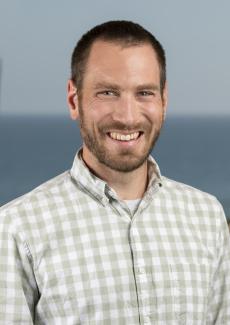
Christopher Free
VerifiedUniversity of California, Santa Barbara · Environmental Science and Management
Active 2013–2024
Research topics
- Fishery
- Biology
- Economics
- Ecology
- Business
- Agricultural economics
- Environmental science
- Natural resource economics
- Environmental health
- Biotechnology
- Medicine
- Environmental resource management
- Geography
- Economic growth
- Food science
Selected publications
Fish and Fisheries · 2022 · 35 citations
1st authorCorresponding- Fishery
- Environmental resource management
- Business
Abstract Climate change is altering the productivity of marine fisheries and challenging the effectiveness of historical fisheries management. Harvest control rules, which describe the process for determining catch limits in fisheries, represent one pathway for promoting climate resilience. In the USA, flexibility in how regional management councils specify harvest control rules has spawned diverse approaches for reducing catch limits to precautionarily buffer against scientific and management uncertainty, some of which may be more or less resilient to climate change. Here, we synthesize the control rules used to manage all 507 US federally managed fish stocks and stock complexes. We classified these rules into seven typologies: (1) catch‐based; (2) constant catch; (3) constant escapement; (4) constant F; (5) stepped F; (6) ramped F and (7) both stepped and ramped F. We also recorded whether the control rules included a biomass limit (‘cut‐off’) value or were environmentally linked as well as the type and size of the buffers used to protect against scientific and/or management uncertainty. Finally, we review the advantages and disadvantages of each typology for managing fisheries under climate change and provide seven recommendations for updating harvest control rules to improve the resilience of US federally managed fisheries to climate change.
Aquatic foods to nourish nations
Nature · 2021 · 594 citations
- Business
- Natural resource economics
- Environmental health
The future of food from the sea
Nature · 2020 · 841 citations
- Natural resource economics
- Business
- Fishery
. As food from the sea represents only 17% of the current production of edible meat, we ask how much food we can expect the ocean to sustainably produce by 2050. Here we examine the main food-producing sectors in the ocean-wild fisheries, finfish mariculture and bivalve mariculture-to estimate 'sustainable supply curves' that account for ecological, economic, regulatory and technological constraints. We overlay these supply curves with demand scenarios to estimate future seafood production. We find that under our estimated demand shifts and supply scenarios (which account for policy reform and technology improvements), edible food from the sea could increase by 21-44 million tonnes by 2050, a 36-74% increase compared to current yields. This represents 12-25% of the estimated increase in all meat needed to feed 9.8 billion people by 2050. Increases in all three sectors are likely, but are most pronounced for mariculture. Whether these production potentials are realized sustainably will depend on factors such as policy reforms, technological innovation and the extent of future shifts in demand.
Frequent coauthors
- 19 shared
Olaf P. Jensen
University of Wisconsin–Madison
- 12 shared
Christopher D. Golden
Harvard University
- 12 shared
David Mouillot
Marine Biodiversity Exploitation and Conservation
- 11 shared
Jacob G. Eurich
University of California, Santa Barbara
- 8 shared
Lyall Bellquist
Scripps Institution of Oceanography
- 8 shared
Steven D. Gaines
University of California, Santa Barbara
- 7 shared
James Grogan
Smith College
- 7 shared
Alon Shepon
Tel Aviv University
Education
- 2018
PhD, Department of Marine & Coastal Sciences
Rutgers University New Brunswick
- 2010
BA, Biology Department
Middlebury College
- Resume-aware match score
- Save to shortlist
- AI-drafted outreach
See your match with Christopher Free
PhdFit ranks faculty by your research interests, methods, and publications — grounded in their actual work, not templates.
- Free to start
- No credit card
- 30-second signup