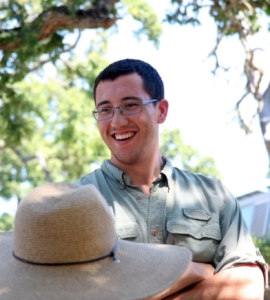
Koji Lau Ozawa
University of California, Los Angeles · Anatomy and Cell Biology
Active 1960–2015
About
Koji Lau-Ozawa is an archaeologist and anthropologist whose work and life are documented through a newsletter on Substack titled 'Koji Digs Archaeology.' The newsletter provides insights into his professional activities, research focus, and personal experiences related to archaeology and anthropology. The page indicates his engagement with these fields but does not provide detailed information about his specific research interests, background, or key contributions.
Research topics
- Medicine
- Internal medicine
- Endocrinology
- Chemistry
- Surgery
Selected publications
Clinical & Experimental Immunology · 2015-01-20 · 1 citations
articleOpen accessCorrespondingSummary This study aimed to investigate the role of initial priming of interleukin (IL)-12 receptor beta-1 in CD8+central memory T cells (initial IL-12RTCM priming) and CCR7-negative subsets (CNS) in effector cell expansion and clinical outcome after living donor liver transplantation (LDLT). One hundred and six patients who underwent LDLT were classified into the following three groups according to hierarchical clustering of CD8+CD45 isoforms before LDLT: I, naive-dominant; II, effector memory-dominant; and III, effector-dominant. The pre-existing CD8+effector cells (TE) and activated immune status increased progressively from group I to group II to group III. Groups I, II and III received tacrolimus (Tac)/glucocorticoid (GC) regimens. Eighteen group III recipients received Tac/mycophenolate mofetil (MMF) and were defined as group IV. Initial IL-12RTCM priming was slightly, moderately and markedly decreased in droups I, II, and III, respectively. Initial priming of IL-12Rβ1 in CNS was decreased markedly in the three groups with marked decreases of TE, perforin and interferon (IFN)-γ; all parameters were restored by up-regulation of IL-12Rβ1+TCM through the self-renewal of TCM. The lag time required until coupled up-regulation of IL-12Rβ1 of TCM and CNS to above baseline was 12, 20 and 32 days in groups I, II and III, respectively. Inferior clinical outcomes were associated with increasing lag time. In contrast, the initial priming of IL-12Rβ1 in TCM and CNS remained above baseline in group IV due to MMF-mediated increase of IL-12Rβ1. Early coupled up-regulation of TCM and CNS leads to efficient TE differentiation and optimal clinical outcomes.
Title Page / Contents / Acknowledgments / Foreword / Preface / Prologue
2015-04-16
paratext1st authorCorrespondingTitle Page / Contents / Acknowledgments / Preface
2015-04-16
paratext1st authorCorrespondingClinical & Experimental Immunology · 2015-11-11 · 2 citations
articleOpen accessCorrespondingOur previous work revealed that the recipients with the highest pre-existing numbers of CD8(+) effector T cells (TE ) [hyperparathyroidism (HPT)E recipients] occupied approximately 30% of adult transplant recipients performed in our hospital. HPTE recipients demonstrated very poor clinical outcome compared with the remaining 70% of recipients with the lowest pre-existing TE (LPTE recipient). This study aimed to clarify the best combined immunosuppressive regimen related to function of cytotoxic T lymphocytes (CTLs) for HPTE recipients. Eighty-one HPTE recipients were classified into three types, according to the immunosuppressive regimens: type 1, tacrolimus (Tac)/glucocorticoid (GC); type 2, Tac/mycophenolate mofetil (MMF)/GC; and type 3, Tac/MMF. Frequencies of severe infection, rejection and hospital death were the highest in types 1 and 2, whereas the lowest occurred in type 3. The survival rate in type 3 was the highest (100%) during follow-up until post-operative day 2000. Regarding the immunological mechanism, in type 1 TE perforin and interferon (IFN)-γ were generated through the self-renewal of CD8(+) central memory T cells (TCM ), but decreased in the early post-transplant period due to marked down-regulation of interleukin (IL)-12 receptor beta-1 of TCM. In type 2, the self-renewal TCM did not develop, and the effector function could not be increased. In type 3, in contrast, the effectors and cytotoxicity were correlated inversely with IL-12Rβ1(+) TCM levels, and increased at the highest level around the pre-transplant levels of IL-12Rβ1(+) TCM . However, the immunological advantage of Tac/MMF therapy was inhibited strongly by additive steroid administration.
Search for the advancement of the International Journal of Clinical Oncology (IJCO)
International Journal of Clinical Oncology · 2014-12-02
editorialOpen access1st authorCorrespondingTranslational research · 2010-07-12
paratextOpen accessClinical & Experimental Immunology · 2010-03-16 · 4 citations
articleOpen accessCorrespondingThis study investigated how CD8(+) T cell subsets respond to allo- and infectious immunity after living donor liver transplantation (LDLT). Early alloimmunity: 56 recipients were classified into three types according to the post-transplant course; type I demonstrated uneventful post-transplant course, type II developed severe sepsis leading to multiple organ dysfunction syndrome or retransplantation and type III with acute rejection. In 23 type I recipients, the interleukin (IL)-12 receptor beta-1 (R beta 1)(+) cells of central memory T cells (Il-12R beta 1(+) T(CM)) were increased above the pretransplant level. In 16 type II recipients, IL-12R beta 1(+) T(CM) was decreased markedly below the pretransplant level on postoperative day (POD) 5. In 17 type III recipients, IL-12R beta 1(+) T(CM) was decreased for a more prolonged period until POD 10. Along with down-regulation of IL-12R beta 1(+) T(CM), the IL-12R beta 1(+) cells of CCR7-negative subsets (CNS) as well as perforin, interferon (IFN)-gamma and tumour necrosis factor (TNF)-alpha decreased gradually, resulting in the down-regulation of effectors and cytotoxicity. The down-regulation of IL-12R beta 1(+) T(CM) was suggested to be due to the recruitment of alloantigen-primed T cells into the graft, and then their entry into the secondary lymphoid organ, resulting in graft destruction. Infectious immunity: immunocompetent memory T cells with the capacity to enhance effectors and cytotoxicity were generated in response to post-transplant infection along with both up-regulation of the IL-12R beta 1(+) T(CM) and an increase in the CNS showing the highest level of IL-12R beta 1(+) cells. In conclusion, this work demonstrated that the IL-12R beta 1(+) cells of T(CM) and CNS are regulated in a tightly coupled manner and that expression levels of IL-12R beta 1(+) T(CM) play a crucial role in controlling allo- and infectious immunity.
Translational research · 2010-06-23 · 4 citations
articleCorrespondingAcknowledgement to the Reviewers
Digestive Surgery · 2008-11-05
articleOpen accessInfluence of Hemodilution on Hepatic Energy Metabolism in Rat
European Surgical Research · 2008-04-22 · 12 citations
articleSenior authorThe effects and safety limits of acute hemodilution on hepatic energy status were investigated in relation to arterial blood ketone body ratio and hepatic energy charge in a hemodilution rat model. As long as the hematocrit value was maintained above 20%, ketone body ratio and energy charge level at 6 h after hemodilution remained at the same levels as those of the sham-diluted groups. However, when hematocrit value was less than 15%, the ketone body ratio markedly decreased from the control value of 0.686 +/- 0.044 to 0.278 +/- 0.048 (p less than 0.001), and energy charge decreased from the control value of 0.856 +/- 0.012 to 0.0806 +/- 0.011 (p less than 0.01). From these results, it was suggested that hemodilution exerts no influence on the energy status of the liver as long as hematocrit is maintained above 20%.
Frequent coauthors
- 137 shared
Yoshio Yamaoka
Oita University
- 74 shared
Yasuyuki Shimahara
National Institute of Technology, Nara College
- 57 shared
Kōichi Tanaka
Ehime Prefectural Central Hospital
- 54 shared
Takayoshi Tobe
Tohoku University
- 50 shared
Abraham Shaked
University of Pennsylvania
- 49 shared
M. Sandler
University of London
- 49 shared
Model Murray
University of California, Los Angeles
- 49 shared
Barry R. Cofer
Children's Hospital of San Antonio
- Resume-aware match score
- Save to shortlist
- AI-drafted outreach
See your match with Koji Lau Ozawa
PhdFit ranks faculty by your research interests, methods, and publications — grounded in their actual work, not templates.
- Free to start
- No credit card
- 30-second signup