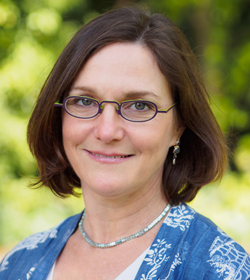
Abby Dernburg
· Howard Hughes Medical Institute Investigator, Professor of Cell Biology, Development and PhysiologyVerifiedUniversity of California, Berkeley · Biological Sciences
Active 1988–2026
About
Abby Dernburg, PhD, is the Principal Investigator of the Dernburg Lab at the University of California, Berkeley. She holds a PhD from the University of California, San Francisco, and a B.A. in Biochemistry from the University of California, Berkeley. The lab's webpage lists her as the lead faculty member, indicating her role in directing research and mentoring a diverse team including postdoctoral scholars, graduate students, and interns. Contact information is provided as afdernburg(at)berkeley.edu. The page primarily serves as a team directory and does not provide detailed descriptions of her specific research focus or key scientific contributions.
Research signals
Five dimensions sourced from public faculty / publication signals. Sign in to compare against your own profile and see your match score.
Research topics
- Evolutionary biology
- Computational biology
- Genetics
- Biology
Selected publications
NPP-21/TPR is required for developmental control of spindle checkpoint strength in <i>C. elegans</i>
bioRxiv (Cold Spring Harbor Laboratory) · 2026-04-15
articleOpen accessAbstract The spindle checkpoint ensures accurate chromosome segregation by monitoring whether chromosomes, via kinetochores, are properly attached to the spindle. If chromosomes fail to establish bipolar attachment, the checkpoint delays the cell cycle to enable error correction. In C. elegans early embryos, activation of the spindle checkpoint produces a longer mitotic delay in primordial germ cells than somatic cells. We show that the conserved nucleoporin and spindle matrix component, NPP-21/TPR, is required for the stronger spindle checkpoint in germline cells. A checkpoint-proficient NPP-21::GFP transgene localizes to a spindle-like structure during mitosis and is enriched in germline cells, consistent with a cell-fate specific function for this protein. Finally, NPP-21 controls spindle checkpoint strength in germline cells via two, potentially linked, mechanisms: concentrating PCH-2 around mitotic chromosomes and promoting the localization of the checkpoint effector, Mad2, to unattached kinetochores. These experiments demonstrate a developmental role for NPP-21, and the spindle matrix, in controlling spindle checkpoint strength in immortal germline cells in C. elegans .
Dynamic molecular architecture of the synaptonemal complex
Science Advances · 2025-01-22 · 15 citations
articleOpen accessSenior authorCorrespondingDuring meiosis, pairing between homologous chromosomes is stabilized by the assembly of the synaptonemal complex (SC). The SC ensures the formation of crossovers between homologous chromosomes and regulates their distribution. However, how the SC regulates crossover formation remains elusive. We isolated an unusual mutation in Caenorhabditis elegans that disrupts crossover interference but not SC assembly. This mutation alters the unique C terminal domain of an essential SC protein, SYP-4, a likely ortholog of the vertebrate SC protein SIX6OS1. We use three-dimensional stochastic optical reconstruction microscopy (3D-STORM) to interrogate the molecular architecture of the SC from wild-type and mutant C. elegans animals. Using a probabilistic mapping approach to analyze super-resolution image data, we detect changes in the organization of the synaptonemal complex in wild-type animals that coincide with crossover designation. We also found that our syp-4 mutant perturbs SC architecture. Our findings add to growing evidence that the SC is an active material whose molecular organization contributes to chromosome-wide crossover regulation.
Crossover patterning through condensation and coarsening of pro-crossover factors
Nature Cell Biology · 2025-06-19 · 14 citations
articleOpen accessSenior authorScience · 2024-11-21 · 15 citations
articleSenior authorCorrespondingSexual reproduction relies on robust quality control during meiosis. Assembly of the synaptonemal complex between homologous chromosomes (synapsis) regulates meiotic recombination and is crucial for accurate chromosome segregation in most eukaryotes. Synapsis defects can trigger cell cycle delays and, in some cases, apoptosis. We developed and deployed a chemically induced proximity system to identify key elements of this quality control pathway in Caenorhabditis elegans . Persistence of the polo-like kinase PLK-2 at pairing centers—specialized chromosome regions that interact with the nuclear envelope—induced apoptosis of oocytes in response to phosphorylation and destabilization of the nuclear lamina. Unexpectedly, the Piezo1/PEZO-1 channel localized to the nuclear envelope and was required to transduce this signal to promote apoptosis in maturing oocytes.
How to build the virtual cell with artificial intelligence: Priorities and opportunities
Cell · 2024-12-01 · 258 citations
articleOpen accessCells are essential to understanding health and disease, yet traditional models fall short of modeling and simulating their function and behavior. Advances in AI and omics offer groundbreaking opportunities to create an AI virtual cell (AIVC), a multi-scale, multi-modal large-neural-network-based model that can represent and simulate the behavior of molecules, cells, and tissues across diverse states. This Perspective provides a vision on their design and how collaborative efforts to build AIVCs will transform biological research by allowing high-fidelity simulations, accelerating discoveries, and guiding experimental studies, offering new opportunities for understanding cellular functions and fostering interdisciplinary collaborations in open science.
ATM signaling modulates cohesin behavior in meiotic prophase and proliferating cells
Nature Structural & Molecular Biology · 2023-03-06 · 20 citations
articleOpen accessSenior authorCohesins are ancient and ubiquitous regulators of chromosome architecture and function, but their diverse roles and regulation remain poorly understood. During meiosis, chromosomes are reorganized as linear arrays of chromatin loops around a cohesin axis. This unique organization underlies homolog pairing, synapsis, double-stranded break induction, and recombination. We report that axis assembly in Caenorhabditis elegans is promoted by DNA-damage response (DDR) kinases that are activated at meiotic entry, even in the absence of DNA breaks. Downregulation of the cohesin-destabilizing factor WAPL-1 by ATM-1 promotes axis association of cohesins containing the meiotic kleisins COH-3 and COH-4. ECO-1 and PDS-5 also contribute to stabilizing axis-associated meiotic cohesins. Further, our data suggest that cohesin-enriched domains that promote DNA repair in mammalian cells also depend on WAPL inhibition by ATM. Thus, DDR and Wapl seem to play conserved roles in cohesin regulation in meiotic prophase and proliferating cells.
Science Advances · 2023-02-08 · 10 citations
articleOpen accessSenior authorCorrespondingInteractions between chromosomes and LINC (linker of nucleoskeleton and cytoskeleton) complexes in the nuclear envelope (NE) promote homolog pairing and synapsis during meiosis. By tethering chromosomes to cytoskeletal motors, these connections lead to processive chromosome movements along the NE. This activity is usually mediated by telomeres, but in the nematode Caenorhabditis elegans , special chromosome regions called “pairing centers” (PCs) have acquired this meiotic function. Here, we identify a previously uncharacterized meiosis-specific NE protein, MJL-1 (MAJIN-Like-1), that is essential for interactions between PCs and LINC complexes in C. elegans . Mutations in MJL-1 eliminate active chromosome movements during meiosis, resulting in nonhomologous synapsis and impaired homolog pairing. Fission yeast and mice also require NE proteins to connect chromosomes to LINC complexes. Extensive similarities in the molecular architecture of meiotic chromosome-NE attachments across eukaryotes suggest a common origin and/or functions of this architecture during meiosis.
Science Advances · 2023-07-12 · 7 citations
articleOpen accessSenior authorCorresponding, oocyte nuclei lacking the single lamin protein LMN-1 are vulnerable to collapse under forces mediated through LINC (linker of nucleoskeleton and cytoskeleton) complexes. Here, we use cytological analysis and in vivo imaging to investigate the balance of forces that drive this collapse and protect oocyte nuclei. We also use a mechano-node-pore sensing device to directly measure the effect of genetic mutations on oocyte nuclear stiffness. We find that nuclear collapse is not a consequence of apoptosis. It is promoted by dynein, which induces polarization of a LINC complex composed of Sad1 and UNC-84 homology 1 (SUN-1) and ZYGote defective 12 (ZYG-12). Lamins contribute to oocyte nuclear stiffness and cooperate with other inner nuclear membrane proteins to distribute LINC complexes and protect nuclei from collapse. We speculate that a similar network may protect oocyte integrity during extended oocyte arrest in mammals.
2023-01-17
peer-reviewOpen accessSenior authorMost animals, plants, and fungi reproduce sexually, meaning that the genetic information from two parents combines during fertilization to produce offspring. This parental genetic information is carried within the reproductive cells in the form of chromosomes. Reproductive cells in the ovaries or testes first multiply through normal cell division, but then go through a unique type of cell division called meiosis. During meiosis, pairs of chromosomes – the two copies inherited from each parent – must find each other and physically line up from one end to the other. As they align side-by-side with their partners, chromosomes also go through a mixing process called recombination, during which regions of one chromosome cross over to the paired chromosome to exchange information. Scientists are still working to understand how this process of chromosome alignment and crossing-over is controlled. If chromosomes fail to line up or cross over during meiosis, eggs or sperm can end up with too many or too few chromosomes. If these faulty reproductive cells combine during fertilization this can lead to birth defects and developmental problems. To minimize this problem, reproductive cells have a quality control mechanism during meiosis called “crossover assurance”, which limits how often mistakes occur. Zhang et al. have investigated how cells can tell if their chromosomes have accomplished this as they undergo meiosis. They looked at egg cells of the roundworm C. elegans, whose meiotic processes are similar to those in humans. In C. elegans, a protein called CHK-2 regulates many of the early events during meiosis. During successful meiosis, CHK-2 is active for only a short amount of time. But if there are problems during recombination, CHK-2 stays active for longer and prevents the cell division from proceeding. Zhang et al. uncovered another protein that affects for how long CHK-2 stays switched on. When chromosomes align with their partners, a protein called PLK-2 sticks to other proteins at the interface between the aligned chromosomes. A combination of microscopy and test tube experiments showed that when PLK-2 is bound to this specific location, it can turn off CHK-2. However, if the chromosome alignment fails, PLK-2 is not activated to switch off CHK-2. Therefore, CHK-2 is only switched off when the chromosomes are properly aligned and move on to the next step in crossing-over, which then allows meiosis to proceed. Thus, PLK-2 and CHK-2 work together to detect errors and to slow down meiosis if necessary. Further experiments in mammalian reproductive cells will reveal how similar the crossover assurance mechanism is in different organisms. In the future, improved understanding of quality control during meiosis may eventually lead to improvements in assisted reproduction.
bioRxiv (Cold Spring Harbor Laboratory) · 2023-10-28 · 2 citations
preprintOpen accessSenior authorCorrespondingAbstract Successful sexual reproduction relies on robust quality control during meiosis. Assembly of the synaptonemal complex between homologous chromosomes (synapsis) regulates meiotic recombination and is crucial for accurate chromosome segregation in most eukaryotes. Synapsis defects can trigger cell cycle delays and, in some cases, apoptosis. Here, by developing and deploying a new chemically induced proximity system, we iden-tify key players in this quality control pathway in Caenorhabditis elegans . We find that persistence of the Polo-like kinase PLK-2 at pairing centers, specialized chromosome regions that interact with the nuclear envelope to promote homolog pairing and synapsis, induces apoptosis of oocytes by phosphorylating and destabilizing the nuclear lamina. Unexpectedly, we find that a mechanosensitive Piezo1/PEZO-1 channel localizes to the nuclear envelope and is required to transduce this signal to promote apoptosis. Thus, mechanosensitive ion channels play essential roles in detecting nuclear events and triggering apoptosis during gamete production. One-sentence summary Destabilization of the nuclear lamina triggers Piezo-dependent germline apoptosis.
Recent grants
Crossover control during meiosis
NIH · $4.5M · 2002–2021
Frequent coauthors
- 169 shared
Liangyu Zhang
Fujian Medical University
- 93 shared
Simone Köhler
European Molecular Biology Laboratory
- 76 shared
Zhouliang Yu
Yunnan University
- 71 shared
Chenshu Liu
University of California, Los Angeles
- 66 shared
Julie Ahringer
University of Cambridge
- 58 shared
Ofer Rog
University of Utah
- 56 shared
Ericca Stamper
- 48 shared
Regina Rillo-Bohn
Howard Hughes Medical Institute
Labs
The Dernburg Lab studies the mechanisms of cell division and the role of the cytoskeleton in cell shape and movement.
Education
- 2000
Postdoctoral , Developmental Biology
Stanford University School of Medicine
- 1996
Ph.D., Biochemistry and Biophysics
University of California, San Francisco
- 1987
B.A., Biochemistry
University of California, Berkeley
- Resume-aware match score
- Save to shortlist
- AI-drafted outreach
See your match with Abby Dernburg
PhdFit ranks faculty by your research interests, methods, and publications — grounded in their actual work, not templates.
- Free to start
- No credit card
- 30-second signup