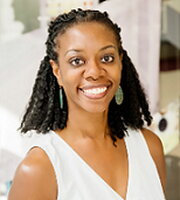
Ruby Mendenhall
· Kathryn Lee Baynes Dallenbach Professorship in Liberal Arts and SciencesVerifiedUniversity of Illinois Urbana-Champaign · African American Studies
Active 2003–2025
About
Ruby Mendenhall is an Associate Professor in Sociology, African American Studies, Urban and Regional Planning, and Social Work at the University of Illinois at Urbana-Champaign. She is also an affiliate of the Institute for Genomic Biology and the Institute for Computing in Humanities, Arts and Social Sciences. She received her Ph.D. in Human Development and Social Policy from Northwestern University in 2004. Her dissertation focused on Black Women in Gautreaux’s Housing Desegregation Program, examining the long-run effects of neighborhood conditions and networks on economic independence using administrative welfare and employment data, census information, and in-depth interviews. Her research concentrates on issues of social inequality over the life course and the role of public policy and individual agency in facilitating social and economic mobility. She employs both quantitative and qualitative methods, analyzing administrative welfare and employment data, census data, in-depth interviews, and focus group data. Mendenhall leads a multi-site research study on how low- to moderate-income families utilize the Earned Income Tax Credit for social and economic mobility, with projects in Champaign and Boston. She also conducts research on the Gautreaux Assisted Housing Program in Chicago, one of the largest desegregation programs in the nation.
Research topics
- Sociology
- Political Science
- Computer Science
- Gender studies
- Social psychology
- Psychology
- Law
- Psychotherapist
- Mathematics
- History
- Mathematics education
- Medicine
- Medical education
- Aesthetics
- Criminology
Selected publications
2025-05-15
peer-review1st authorCorrespondingRecreating the circle: A collective vision for radical African healing in community.
American Psychologist · 2025-05-01 · 5 citations
articleAs attacks on Black people have become more visible, key Black organizations have been building a grassroots movement of culturally grounded healing circles. African-centered healing circles address historical and contemporary racial stress experienced by Black people. They privilege culture and function as community-driven medicine, promoting collective healing and protecting against the effects of ongoing racism. The growth of these circles signals a shift away from Western methods of healing and toward indigenous practices. This article describes their growth, underlying theories, common elements, and evidence, and sketches a vision for national and international expansion. (PsycInfo Database Record (c) 2025 APA, all rights reserved).
Studies in Clinical Social Work Transforming Practice Education and Research · 2025-01-05
articleJOURNAL OF MENTAL HEALTH AND CLINICAL PSYCHOLOGY · 2024-01-04
articleOpen accessBlack Americans continue to experience higher rates of poverty, hyper-residential segregation, and exposure to neighborhood violence compared to their white counterparts1,2. Among Black women, 25% live in poverty.
131 Pulmonary Embolism Severity Index vs Point-of-Care Ultrasound in Predicting Adverse Outcomes
Annals of Emergency Medicine · 2024-09-25
articleSenior authorEthnic and Racial Studies · 2024-10-11
articleJournal of Community Medicine and Health Solutions · 2024-04-23
articleOpen access1st authorCorrespondingThe genesis of the youth Community Health Worker (CHW) and Citizen/Community Science (CS) training is rooted in interdisciplinary research and the lived experiences of families in Chicago and Urbana-Champaign. Dr. Mendenhall and colleagues’ (Drs. Robinson, Roberts and Rodriquez-Zas) South Chicago’s Black Mothers’ Resiliency Project provide dinsights into Black women’s experiences with genomics, trauma, and community science. Black women’s testimonies highlighted the health impacts of living in neighborhoods with high levels of gun violence and the resilience strategies they employ. This led to the development of a youth-centered CHW and CS training program, aimed at addressing health disparities. The program trained high school students and young adults (up to age 24) as CHWs and CSs, focusing on the objectives of (1) embedding culturally competent health workers in marginalized communities; (2) amplifying community voices; (3) collecting, analyzing, and quantifying observational data to inform policy decision-making; (4) amplifying community voices in healthcare discussions and (5) creating community health care worker training certification for youth. Over three years, the program trained over 50 participants, incorporating elements of wellness, art, and entrepreneurship.Based on ethnographic notes participants reported increases in wellness such as reduced anxiety and increased empowerment. The program’s long-term goals include creating employment opportunities for graduates and contributing to improved community health outcomes. This initiative represents a step towards addressing racial trauma and promoting community healing through youth-led innovation and empowerment.
Family Medicine and Primary Care Open Access · 2024-02-02 · 2 citations
articleOpen access1st authorCorrespondingAbstract Background: Structural racism negatively affects the lives of Black women living in hyper segregated neighborhoods on the South Side of Chicago. As a part of emerging research about social exposome's effect on health, this project seeks to understand how the neighborhood context shapes social exposures that often contribute to mental and physical health disparities for Black women. Social exposome is how social experiences can manifest in the body. Materials and Methods: This is a mixed methods study that combines geographic data with interviews from Black 92 mothers to understand their social exposures in their neighborhoods, with particular attention to health domains. The Chicago Health Atlas, a public health dataset created by the City of Chicago, is used to contextualize the women's stories about their lived experiences on the Southside of Chicago. The mothers'one-hour interviews are part of a larger study, "The South Chicago Black Mothers' Resiliency Project," which examined how one's health is affected by neighborhood conditions. The original study results showed that neighborhood conditions significantly affected Black mothers' health outcomes. Results: Multilevel thematic analysis of the in-depth interviews and descriptive analysis of a public health dataset elucidate that racially hypersegregated neighborhoods serve as enclaves of racialized health disparities. As such, Black women are left feeling trapped where they live, due to high levels of community violence exposure, vacant housing, and other forms of structural violence that are associated with diseases and early deaths among Black women. Conclusion: This study turns an intersectional lens on the concept of the social exposome to understand Black women's narratives of the chronic stress resulting from living in racially hypersegregated neighborhoods with high levels of gun violence. These neighborhoods are culturally rich and vibrant. Unfortunately, the health data shows that systemic racism often cuts down the life and potential of so many of the mothers and their family members. As a society, it is critical to identify and eliminate threats to well-being in the exposome. This is especially true of physicians and other healthcare providers. We argue that all healthcare training institutions must train future practitioners to holistically understand the social contexts of their patients' lives, highlighting the need to advance equity as prevention and the holistic healing of individuals.
Artificial Intelligence, Social Responsibility, and the Roles of the University
Communications of the ACM · 2024-08-01 · 3 citations
articleOpen accessHow universities can influence socially responsible AI technology development and use.
Journal of Racial and Ethnic Health Disparities · 2023-01-30 · 10 citations
articleOpen access1st authorCorresponding
Recent grants
Frequent coauthors
- 22 shared
Margaret Browne Huntt
University of Illinois Urbana-Champaign
- 21 shared
Stacy Anne Harwood
- 14 shared
Meggan J. Lee
Illinois College
- 12 shared
Andrew J. Greenlee
- 12 shared
Rita M. Ryan
Rainbow Babies & Children's Hospital
- 11 shared
Rubén G. Rumbaut
- 10 shared
Wendy Anne Smith
Sydney Local Health District
- 10 shared
Edward L. Deci
University of Rochester
Education
- 2004
Ph.D., Human Development and Social Policy
Northwestern University
- Resume-aware match score
- Save to shortlist
- AI-drafted outreach
See your match with Ruby Mendenhall
PhdFit ranks faculty by your research interests, methods, and publications — grounded in their actual work, not templates.
- Free to start
- No credit card
- 30-second signup