Resume-aware faculty matching

Find professors who actually fit you

Upload your resume. Four AI agents analyze your background, rank the faculty who fit, inspect their recent research, and help you draft outreach — grounded in their actual work, not templates.

Free to startNo credit cardCancel anytime
Top matches Balanced preset
Dr. Sarah Chen
Stanford · Interpretability · NLP
91
Dr. Marcus Holloway
MIT · Robotics · RL
84
Dr. Aisha Okonkwo
CMU · Fairness · HCI
82
Nova · Professor Researcher · re-ranking top 20…
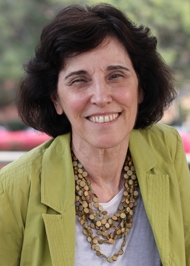
Elinor Ochs

Elinor Ochs

University of California, Los Angeles · Anatomy and Cell Biology

Active 1979–2025

h-index63
Citations23.3k
Papers1494 last 5y
Funding
See your match with Elinor Ochs — sign in to PhdFit.Sign in

About

Elinor Ochs is a Distinguished Research Professor in the UCLA Department of Anthropology. Her primary research interests include the role of language and culture in lifespan human development and learning across social groups. Her work with children and their caregivers in Samoa, along with collaborative efforts with anthropologist B. Schieffelin, helped to develop the field of language socialization, which examines how sociocultural knowledge and cognitive skills are transmitted through language and social interactions. Currently, Professor Ochs directs the UCLA Center on Everyday Lives of Families, a Sloan Center on Working Families. This center conducts ethnographic research on how middle-class working families create home life through culturally and situationally organized social interactions, develops digital archives of family activities, and fosters scholarly apprenticeship and public dialogue on family and community relationships. Her ethnographic projects also include the Ethnography of Autism, which provides detailed accounts of the everyday lives of high-functioning children with autistic spectrum disorders, focusing on social interactions, inclusion, and social rule socialization. Her extensive publication record encompasses books, journal articles, and edited volumes on discourse structures, language acquisition, socialization, and autism, contributing significantly to the fields of linguistic anthropology and sociocultural studies.

Research topics

  • Sociology
  • Political Science
  • Social Science
  • Anthropology
  • Humanities
  • Art
  • Political economy
  • Psychology
  • Ethnology
  • Law
  • Epistemology
  • Aesthetics
  • Economics
  • Linguistics
  • Philosophy
  • Pedagogy
  • Cognitive psychology
  • Gender studies

Selected publications

  • Jeu et développement du langage chez l’enfant à travers le cheminement scientifique d’Elinor Ochs

    Cahiers de littérature orale · 2025-01-01

    articleOpen access1st authorCorresponding

    Résumé : C’est à l’occasion d’une rencontre en marge d’un colloque à Canberra, en Australie, qu’Aliyah Morgenstern a pu s’entretenir avec Elinor Ochs, anthropologue américaine dont les travaux sur la socialisation langagière à Samoa ont été à l’origine du développement, à partir des années 1980, de nombreuses recherches sur les rapports des enfants au langage. Elinor Ochs relate comment ses premières recherches à Madagascar l’ont sensibilisée aux jeux de langage, puis comment l’observation de ses propres enfants l’a conduite à s’intéresser à la socialisation. Au fil du récit, c’est son cheminement intellectuel qui est retracé à partir du questionnement sur la relation ludique que peuvent avoir les enfants, et les adultes, avec le langage.

  • Entanglements of Language and Experience in Everyday Life

    2023-03-21 · 3 citations

    other1st authorCorresponding
  • Thinking in Between Disciplines

    Annual Review of Anthropology · 2022 · 17 citations

    1st authorCorresponding
    • Sociology
    • Social Science
    • Sociology

    Academic disciplines are shape-shifting zones of inquiry yet notably bounded by regimes of training, truth, genre, and aesthetics. This article journeys into liminal zones in between disciplines as an existential space to ponder matters that beg for release from disciplinary syllabi. Can one thrive or even survive in the academy while dwelling in intervals between scholarly footprints? I lay bare a life of thinking in between anthropology, linguistics, and psychology for the reader to pursue and complicate this question. Try as I might to steer clear of folly, I have thrown caution to the winds to suggest affordances that nourish transgressive thinking in ways that expand and reassemble thinkable objects of inquiry.

  • Talk labour and doing ‘being neoliberal mother’

    Gender and Language · 2021 · 7 citations

    1st authorCorresponding
    • Sociology
    • Sociology
    • Gender studies

    This essay considers the gendered work of childrearing through Harvey Sacks’ (1992) concept of doing ‘being ordinary’. While doing ‘being ordinary’ under-girds social order, what constitutes ‘ordinary’ changes over time. Neoliberalism ushered in middle-class childrearing ideologies that encourage parents to share ever more intensive responsibilities; yet, mothers ordinarily continue to assume the lion’s portion. Central to the intensive parenting practices primarily carried out by mothers is what we call ‘talk labour’, wherein dialoguing with children as conversational partners, beginning in infancy, is constant. The ubiquity of talk makes ordinary for young children a communicative style of heightened reflexivity about their own and others’ actions, ideas and sentiments – skills conducive to becoming a successful actor in the knowledge economy. This essay ties intensification of child-directed talk, critical to ‘doing being neoliberal mother’, to social transformations in family life rooted in modernity and the Industrial Revolution.

  • Ethical Blind Spots in Ethnographic and Developmental Approaches to the Language Gap Debate

    Langage et société · 2020 · 19 citations

    1st authorCorresponding
    • Humanities
    • Political Science
    • Humanities

    L’article soutient que le débat sur le fossé linguistique s’enlise dans les zones d’ombre que présentent les approches ethnographiques et développementales. Les impasses disciplinaires générées par ces zones d’ombre interdisent tout dialogue productif sur les économies morales de la parole et du savoir qui imprègnent la vie des enfants. Tous les protagonistes de ce débat s’engagent avec ferveur pour la réduction des inégalités économiques. Ces chercheurs s’opposent cependant sur le sujet des investissements éthiques pour les droits humains et culturels et sur la confiance dans le fait que l’individu parvienne à la parité économique. Ces lignes de fracture les empêchent de voir combien ils ont besoin de l’inestimable expertise les uns des autres. À la lumière du postcolonialisme, des soulèvements populaires qui se produisent à l’échelle mondiale et des sciences sociales critiques, les chercheurs qui ont pris position pour ou contre les interventions en matière de fossé linguistique ont perdu de vue les problèmes éthiques causés par leur positionnalité privilégiée quand il s’agit d’exprimer ce qui convient pour les autres.

  • Puntos ciegos éticos de los enfoques etnográficos y de desarrollo en la controversia sobre la Brecha Lingüística

    Langage et societe · 2020-01-01

    article1st authorCorresponding

    Este articulo argumenta que el debate sobre la brecha linguistica esta intricado por puntos ciegos eticos en todos los enfoques etnograficos y de desarrollo. Estos puntos ciegos nutren las dificultades disciplinarias para el dialogo productivo concerniente a la economia moral del habla y el conocimiento que infunde la vida de los ninos. Todos los especialistas implicados en este debate se comprometen fervientemente a reducir la desigualdad economica. Sin embargo, se muestran divididos entre hacer inversiones eticas en derechos humanos y culturales y confiar en el individuo para lograr la igualdad economica. Estas desavenencias impiden que los especialistas se den cuenta de lo mucho que necesitan la valiosisima experiencia de los demas. A la luz del poscolonialismo, las revueltas globales y de la ciencia critica social, los especialistas a favor y en contra de las intervenciones de Brecha Linguistica han perdido de vista las problematicas eticas de su posicion privilegiada al representar que es lo mejor para los demas.

  • Introduction

    2019-12-31

    book-chapter1st authorCorresponding
  • 12. The Good Enough Family

    2019-12-31 · 1 citations

    book-chapter1st authorCorresponding
  • 3. Dinner

    2019-12-31 · 2 citations

    book-chapter1st authorCorresponding
  • 1. Coming Home

    2019-12-31

    book-chapter1st authorCorresponding

Frequent coauthors

Awards & honors

  • UCLA Center on Everyday Lives of Families support from Sloan…
  • UCLA Ethnography of Autism Project supported by the Spencer…
  • Resume-aware match score
  • Save to shortlist
  • AI-drafted outreach

See your match with Elinor Ochs

PhdFit ranks faculty by your research interests, methods, and publications — grounded in their actual work, not templates.

  • Free to start
  • No credit card
  • 30-second signup