Resume-aware faculty matching

Find professors who actually fit you

Upload your resume. Four AI agents analyze your background, rank the faculty who fit, inspect their recent research, and help you draft outreach — grounded in their actual work, not templates.

Free to startNo credit cardCancel anytime
Top matches Balanced preset
Dr. Sarah Chen
Stanford · Interpretability · NLP
91
Dr. Marcus Holloway
MIT · Robotics · RL
84
Dr. Aisha Okonkwo
CMU · Fairness · HCI
82
Nova · Professor Researcher · re-ranking top 20…
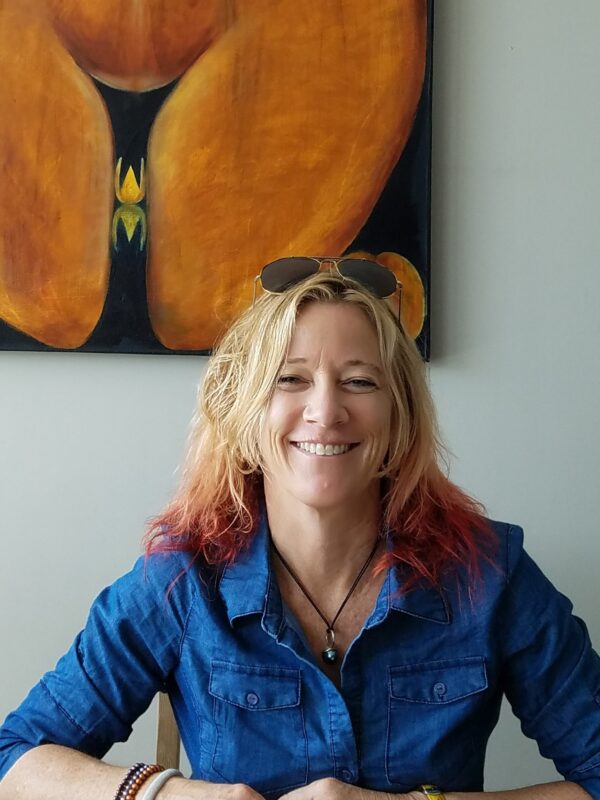
Elizabeth DeLoughrey

Elizabeth DeLoughrey

· Professor

University of California, Los Angeles · Environmental Science and Policy

Active 1998–2024

h-index25
Citations3.0k
Papers5512 last 5y
Funding
See your match with Elizabeth DeLoughrey — sign in to PhdFit.Sign in

About

Professor Elizabeth DeLoughrey is a faculty member in the Department of English and the Institute for the Environment and Sustainability at UCLA. Her scholarship focuses on postcolonial and Indigenous approaches to the Environmental Humanities, with particular interests in Island Studies, the Anthropocene and Climate Change, Militarization and Nuclearization, Critical Ocean Studies, Feminist and Critical Theory, as well as Caribbean and Pacific Island Literatures and Art. She is the founder and coordinator of the UCLA Postcolonial Literature and Theory Colloquium and served as co-editor for the interdisciplinary, transnational open access journal Environmental Humanities from 2015 to 2020. Her academic work explores the intersections of climate change, empire, and cultural expression through literary and visual arts. She has authored and edited several books, including 'Routes and Roots: Navigating Caribbean and Pacific Literatures,' 'Caribbean Literature and the Environment: Between Nature and Culture,' 'Postcolonial Ecologies: Literatures of the Environment,' and 'Global Ecologies and the Environmental Humanities: Postcolonial Approaches.' Her most recent publication, 'Allegories of the Anthropocene,' examines climate change and empire within the context of literary and visual arts, published by Duke University Press in 2019. Her research has been supported by numerous prestigious institutions, including the American Council for Learned Societies, the National Endowment for the Humanities, the Rockefeller Foundation, and others.

Research topics

  • Sociology
  • Political Science
  • Art
  • History
  • Literature
  • Social Science
  • Visual arts
  • Communication
  • Genealogy
  • Gender studies
  • Ecology
  • Aesthetics
  • Anthropology

Selected publications

  • Kinship in the abyss: submerging with The Deep

    2024-12-04 · 1 citations

    book-chapter1st authorCorresponding

    While a body of earlier work on the Black Atlantic generally imagined the ocean as a backdrop for primarily heteronormative, masculine human agents to move from one continent to another, this westward telos has been complicated by a deeper engagement with Black queer intimacies and non-human kinship relations in the depths of the ocean. A recent novella written by Rivers Solomon with their collaborative interlocuters from the band “clipping.” – Daveed Diggs, William Hutson, and Jonathan Snipes – portrays the fluidity of an aqueous merfolk named the wajinru who are born of the dead and nursed and nourished as kin by non-human figures of what Edouard Glissant terms the “womb abyss.” Here I explore The Deep as speculative fiction that speaks directly to questions of oceanic origins and ontologies, transforming the necropolitics of transatlantic slave trading into the possibilities of the “womb abyss” for the lives of its “aquatically mutated,” non-binary descendants.

  • Inner Spaces

    2023-10-05 · 1 citations

    book-chapter1st authorCorresponding

    Cold War legacies have long rendered the planetary ocean as an inner space counter to an extraterritorial outer space. Telescoping between the scales of climate change and weather, and between outer and inner space, the chapter explores the ways in which two Caribbean-born women artists render allegories of the Anthropocene in the wake of Black Atlantic crossings. I bring together the work of María Magdalena Campos-Pons and Deborah Jack in relation to their differing visual allegories of oceanic embodiment. Focusing on their representations of embodied fluidity and flow, I connect these themes to the recent materialist turn to wet matter at a critical moment of sea-level rise.

  • Kinship in the abyss: submerging with<i>The Deep</i>

    Atlantic Studies · 2022 · 9 citations

    1st authorCorresponding
    • Sociology
    • History
    • Literature

    While a body of earlier work on the Black Atlantic generally imagined the ocean as a backdrop for primarily heteronormative, masculine human agents to move from one continent to another, this westward telos has been complicated by a deeper engagement with Black queer intimacies and non-human kinship relations in the depths of the ocean. A recent novella written by Rivers Solomon with their collaborative interlocuters from the band “clipping.” – Daveed Diggs, William Hutson, and Jonathan Snipes – portrays the fluidity of an aqueous merfolk named the wajinru who are born of the dead and nursed and nourished as kin by non-human figures of what Edouard Glissant terms the “womb abyss.” Here I explore The Deep as speculative fiction that speaks directly to questions of oceanic origins and ontologies, transforming the necropolitics of transatlantic slave trading into the possibilities of the “womb abyss” for the lives of its “aquatically mutated,” non-binary descendants.

  • Mining the Seas

    2022-06-13 · 5 citations

    book-chapterOpen access1st authorCorresponding

    This chapter makes two provocative claims: first, that the turn to what is being called the “blue humanities,” while certainly is driven by our environmental crisis and the ecological turn in scholarship, is also the product of the neoliberalization of academia. Second, that while there is certainly a contemporary scramble for mineral rights and access to the seabed by transnational mining conglomerates, the oceanic turn in capitalism and scholarship seems to be an answer to the need for an intellectual and material “spatial fix.” The chapter places these claims in relationship to a critical genealogy of the oceanic humanities and to current discourses around the “blue economy” that demonstrate the circulatory nature of the intellectual currency and fluidity of ideas and extractive capitalism. This is demonstrated in a reading of the XPRIZE science-fiction contest, an attempt by extractive industries like Shell Oil to develop an extractive imaginary for the future of deep-sea mining.

  • Genealogizing Pō

    Ethnic studies review · 2021-01-01 · 1 citations

    article

    The first half of this article draws from the keynote lecture delivered by Joyce Pualani Warren in which she theorizes an Indigenous Pacific conception of origins that encompasses notions of Blackness and kinship. Warren argues that using knowledge of Pō can offer a model of kinship and enhanced support for Indigeneity and Indigenous futures. The second half of this article features Warren’s response to questions and prompts posed by Keith L. Camacho, Elizabeth DeLoughrey, and Evyn Lê Espiritu Gandhi.

  • Care

    Women s Studies · 2021-11-17

    article1st authorCorresponding
  • Submerged Bodies

    2020-06-30 · 1 citations

    book-chapter1st authorCorresponding

    Recent scholarship in the blue humanities, or critical ocean studies, has turned to the mutable relationship between human bodies and the ocean, shifting from depictions of a seascape across which human bodies attain agency to considering the experience and representability of sea ontologies, wet matter, and transcorporeal engagements with the more-than-human world. This work generally focuses on a universalized ocean (as nonhuman nature) rather than a geographically and culturally specific place (as history). The authors’ work turns the visual focus from the surface to the depths, engaging with the Caribbean Sea and contemporary artists who depict a gendered oceanic intimacy and aesthetics of diffraction and submergence. Building upon the 2017 exhibition Relational Undercurrents: Contemporary Art of the Caribbean Archipelago, curated by Tatiana Flores, this article expands the conversation from the archipelagic to the submarine, engaging tidalectic representations of underwater bodies through ontologies and aesthetics of diffraction. The authors consider the work of artists Tony Capellán, Jean-Ulrick Désert, María Magdalena Campos-Pons, Nadia Huggins, and David Gumbs.

  • Island Studies and the US Militarism of the Pacific

    2020-01-01 · 6 citations

    book-chapter1st authorCorresponding
  • Prospects for Critical Island Studies

    2020-01-01 · 1 citations

    book-chapter
  • Submerged Bodies

    Environmental Humanities · 2020 · 41 citations

    1st authorCorresponding
    • Sociology
    • Social Science
    • Political Science

    Abstract Recent scholarship in the blue humanities, or critical ocean studies, has turned to the mutable relationship between human bodies and the ocean, shifting from depictions of a seascape across which human bodies attain agency to considering the experience and representability of sea ontologies, wet matter, and transcorporeal engagements with the more-than-human world. This work generally focuses on a universalized ocean (as nonhuman nature) rather than a geographically and culturally specific place (as history). The authors’ work turns the visual focus from the surface to the depths, engaging with the Caribbean Sea and contemporary artists who depict a gendered oceanic intimacy and aesthetics of diffraction and submergence. Building upon the 2017 exhibition Relational Undercurrents: Contemporary Art of the Caribbean Archipelago, curated by Tatiana Flores, this article expands the conversation from the archipelagic to the submarine, engaging “tidalectic” representations of underwater bodies through ontologies and aesthetics of diffraction. The authors consider the work of artists Tony Capellán, Jean-Ulrick Désert, María Magdalena Campos-Pons, Nadia Huggins, and David Gumbs.

Frequent coauthors

Awards & honors

  • American Council for Learned Societies
  • National Endowment for the Humanities
  • Rockefeller Foundation
  • Mellon Foundation
  • UCLA Global Studies Program
  • Resume-aware match score
  • Save to shortlist
  • AI-drafted outreach

See your match with Elizabeth DeLoughrey

PhdFit ranks faculty by your research interests, methods, and publications — grounded in their actual work, not templates.

  • Free to start
  • No credit card
  • 30-second signup