Upload your resume. PhdFit's six research agents compare your background with faculty profiles, recent publications, lab focus, and outreach opportunities, then rank professors with evidence you can review.
Ask how her lab is extending interpretability methods into fairness audits for real-world AI systems.
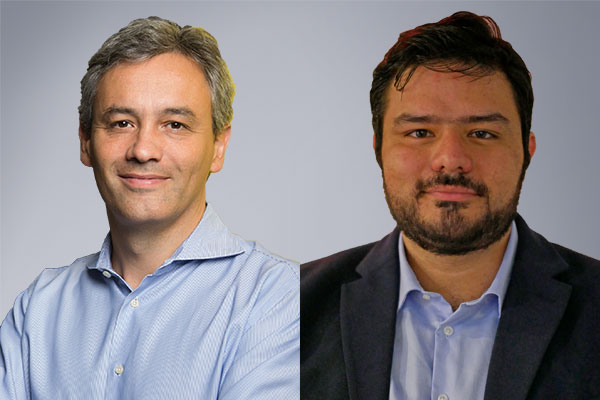
Northeastern University · Electrical and Energy Engineering
Active 2011–2026
Emrecan Demirors is a Research Assistant Professor in the Department of Electrical and Computer Engineering at Northeastern University College of Engineering. His research focuses on wireless communication systems, including underwater ultrasonic communication, underwater-to-aerial communication, and acoustic wireless communication. He has been awarded multiple patents for innovations in visible-light software-defined modems, underwater acoustic networking, and wireless communication methods. Demirors has contributed to advancements in underwater ultrasonic signals transmission and reception, and his work has been recognized through patents and awards, including a patent for a visible-light communication system and improvements in acoustic wireless communication. His research is part of the Institute for the Wireless Internet of Things, and he collaborates with faculty on projects related to wireless communication technologies.
ITU Journal on Future and Evolving Technologies · 2026-03-27
Underwater acoustic networks enable critical applications including environmental monitoring, offshore infrastructure inspection, maritime security, and Autonomous Underwater Vehicle (AUV) operations. Their design, however, is fundamentally constrained by the acoustic propagation environment, characterized by severe bandwidth limitations, long and variable delays, strong Doppler effects, complex multipath, non-Gaussian noise, and the absence of widely accepted statistical channel models. These challenges significantly limit the effectiveness of traditional model-driven approaches. In terrestrial Radio Frequency (RF) systems, Artificial Intelligence (AI) has successfully enabled data-driven inference and control across the protocol stack. Motivated by these advances, recent work has begun exploring AI-driven underwater acoustic communications, yet adoption remains limited due to strong non-stationarity and environmental dependence. Using motivating examples based on real underwater data, we show that learned models exhibit limited generalization across environments. This paper presents a research roadmap toward AI-enabled autonomous underwater acoustic networks and sensing applications, identifying key challenges and outlining directions for robust, adaptive inference and control under stringent energy, computational, and environmental constraints.
Tommaso Melodia
Raffaele Guida
Deniz Unal
Lorenzo Bertizzolo
Sanofi (France)
Kerem Enhoş
Northeastern University
Ph.D., Electrical Engineering and Computer Science
Massachusetts Institute of Technology (MIT)
M.S., Electrical Engineering and Computer Science
Massachusetts Institute of Technology (MIT)
B.S., Electrical Engineering and Computer Science
University of California, Berkeley
PhdFit ranks faculty by your research interests, methods, and publications — grounded in their actual work, not templates.
Real-Time Modulation Classification in Underwater Acoustic Channels Using Deep Learning
2025-09-29
Automatic Modulation Classification (AMC) plays a critical role in both civilian and military communication systems, enabling efficient identification and demodulation of signals. It enables the recognition of different modulation types in transmitted signals, which supports efficient bandwidth usage, reduced protocol overhead, and adaptive signal processing for optimal performance. In recent years, deep learning has changed the field of AMC by providing more effective solutions to these problems. Deep learning models like Convolutional Neural Networks (CNNs) and recurrent neural networks (RNNs), among others, can automatically learn the important features from raw data, making modulation classification more accurate and efficient. These models are instrumental in complex environments where traditional methods struggle with noise, distortion, and other issues. However, underwater acoustic (UWA) communication presents unique challenges for AMC due to the unpredictable underwater environment. Factors like multipath interference, Doppler shifts, and platform motion can distort signals, making classification more difficult. To overcome these challenges, recent research has focused on creating deep learning models specifically designed for the underwater environment. These deep neural network algorithms have shown promising results in improving AMC performance, making modulation classification more accurate in these complex conditions [1], [2]. In this work, we propose a novel deep learning-based approach to develop an adaptive receiver capable of autonomously reconfiguring itself in real-time based on the properties of the incoming signal. The receiver accurately predicts key waveform parameters, including modulation type, BW, and FFT size, using only a small portion of the received payload. The system is optimized for low-overhead, real-time signal classification and has been extensively evaluated in underwater communication scenarios using the Hydronet Software-Defined Modem and Edge Platform (SDM-EP) [3]. Our experimental results demonstrate the robustness and effectiveness of the proposed method under practical operating conditions, confirming its suitability for deployment in dynamic and resource-constrained environments.
Demo: Multi-Modal Seizure Prediction System
arXiv (Cornell University) · 2024-11-01
This demo presents SeizNet, an innovative system for predicting epileptic seizures benefiting from a multi-modal sensor network and utilizing Deep Learning (DL) techniques. Epilepsy affects approximately 65 million people worldwide, many of whom experience drug-resistant seizures. SeizNet aims at providing highly accurate alerts, allowing individuals to take preventive measures without being disturbed by false alarms. SeizNet uses a combination of data collected through either invasive (intracranial electroencephalogram (iEEG)) or non-invasive (electroencephalogram (EEG) and electrocardiogram (ECG)) sensors, and processed by advanced DL algorithms that are optimized for real-time inference at the edge, ensuring privacy and minimizing data transmission. SeizNet achieves > 97% accuracy in seizure prediction while keeping the size and energy restrictions of an implantable device.
SeizNet: An AI-Enabled Implantable Sensor Network System for Seizure Prediction
2024-01-29 · 6 citations
In this paper, we introduce SeizNet, a closed-loop system for predicting epileptic seizures through the use of Deep Learning (DL) method and implantable sensor networks. While pharmacological treatment is effective for some epilepsy patients (with ~65M people affected worldwide), one out of three suffer from drug-resistant epilepsy. To alleviate the impact of seizure, predictive systems have been developed that can notify such patients of an impending seizure, allowing them to take precautionary measures. SeizNet leverages DL techniques and combines data from multiple recordings, specifically intracranial electroencephalogram (iEEG) and electrocardiogram (ECG) sensors, that can significantly improve the specificity of seizure prediction while preserving very high levels of sensitivity. SeizNet DL algorithms are designed for efficient real-time execution at the edge, minimizing data privacy concerns, data transmission overhead, and power inefficiencies associated with cloud-based solutions. Our results indicate that SeizNet outperforms traditional single-modality and non-personalized prediction systems in all metrics, achieving up to 99% accuracy in predicting seizure, offering a promising new avenue in refractory epilepsy treatment.
Neuromodulation Technology at the Neural Interface · 2024-05-31 · 3 citations
Computer Networks · 2024-06-12 · 6 citations
Cardiovascular Engineering and Technology · 2024-09-04 · 4 citations
SeizNet: An AI-enabled Implantable Sensor Network System for Seizure Prediction
arXiv (Cornell University) · 2024-01-12 · 2 citations
In this paper, we introduce SeizNet, a closed-loop system for predicting epileptic seizures through the use of Deep Learning (DL) method and implantable sensor networks. While pharmacological treatment is effective for some epilepsy patients (with ~65M people affected worldwide), one out of three suffer from drug-resistant epilepsy. To alleviate the impact of seizure, predictive systems have been developed that can notify such patients of an impending seizure, allowing them to take precautionary measures. SeizNet leverages DL techniques and combines data from multiple recordings, specifically intracranial electroencephalogram (iEEG) and electrocardiogram (ECG) sensors, that can significantly improve the specificity of seizure prediction while preserving very high levels of sensitivity. SeizNet DL algorithms are designed for efficient real-time execution at the edge, minimizing data privacy concerns, data transmission overhead, and power inefficiencies associated with cloud-based solutions. Our results indicate that SeizNet outperforms traditional single-modality and non-personalized prediction systems in all metrics, achieving up to 99% accuracy in predicting seizure, offering a promising new avenue in refractory epilepsy treatment.
2024-09-03 · 1 citations
Underwater acoustic (UWA) communication and networking is vital for various maritime applications, such as smart environmental monitoring, subsea infrastructure monitoring, and autonomous underwater vehicle operations. However, UWA systems face significant challenges due to the spatial and temporal variability of UWA channels, characterized by severe multipath propagation and the Doppler effect. Existing efforts to mitigate Doppler-induced distortions often increase redundancy or computational load. This paper addresses these challenges by designing, implementing, and evaluating an orthogonal time frequency space (OTFS) modulation scheme on software-defined acoustic modems. Utilizing delay-Doppler domain symbol mapping, OTFS demonstrates greater resilience to inter-symbol interference (ISI) in high-Doppler environments. We describe the OTFS system model, propose an algorithm for parameter selection, and present experimental results on Hydronet wideband modular software-defined modems, showcasing its potential for UWA communication systems.
Comparison of Doppler Estimation Methods in Mobile Underwater Acoustic Communication
2024-09-23
Underwater acoustic (UWA) communication and networking have been of great interest in recent years and find utility in various commercial and military applications, including underwater surveillance, environmental monitoring, data-driven intelligent aquaculture, and unmanned underwater vehicles. However, due to the relatively low propagation ve-locity of sound through water, even modest velocities between transmitter and receiver translate into extreme Doppler shifts, marring transmission quality. The Doppler effect is amplified for high-frequency transmission, further complicating Doppler estimation and compensation. In this paper, we present three distinct Doppler estimation techniques based on linear frequency-modulated signals: displacement estimation, using preamble and postamble correlation; slope estimation, using the Fractional Fourier Transform (FrFT); and dilation estimation, using a novel matched filtering technique. We compare the efficacy of these three methods across three different scenarios: first, in simulation using a simplified channel model, and then in real-world UWA channels, employing both stationary and mobile node setups with software-defined Hydronet Modems.
Zhangyu Guan
University at Buffalo, State University of New York
George Sklivanitis
Florida Atlantic University
Stella N. Batalama
Florida Atlantic University