Resume-aware faculty matching

Find professors who actually fit you

Upload your resume. Four AI agents analyze your background, rank the faculty who fit, inspect their recent research, and help you draft outreach — grounded in their actual work, not templates.

Free to startNo credit cardCancel anytime
Top matches Balanced preset
Dr. Sarah Chen
Stanford · Interpretability · NLP
91
Dr. Marcus Holloway
MIT · Robotics · RL
84
Dr. Aisha Okonkwo
CMU · Fairness · HCI
82
Nova · Professor Researcher · re-ranking top 20…
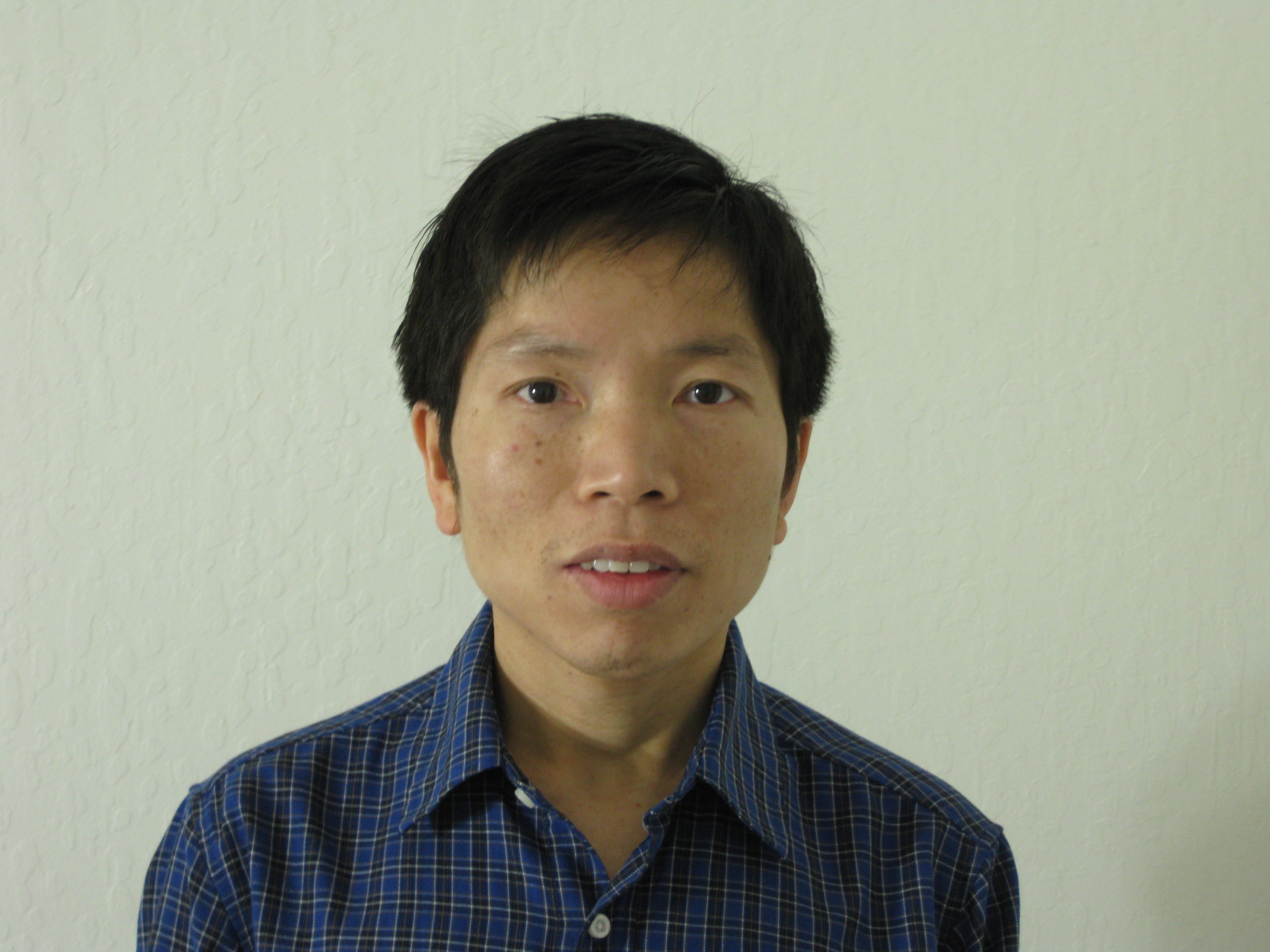
Erhu Cao

Erhu Cao

· Assistant ProfessorVerified

University of Utah · Biology

Active 1985–2026

h-index19
Citations5.5k
Papers3213 last 5y
Funding$1.8M
See your match with Erhu Cao — sign in to PhdFit.Sign in

About

Erhu Cao, Ph.D., is an Associate Professor at the University of Utah in the Department of Biochemistry. His research focuses on biochemistry, and he is actively involved in leading the Cao Lab, which is dedicated to exploring various aspects of biochemical science. As a faculty member, he contributes to advancing scientific understanding through his research and mentorship of graduate students and postdoctoral fellows. His lab is part of the university's efforts to push the boundaries of precision measurement science and technology, as evidenced by the lab's association with the Innovation Academy of Precision Measurement Science and Technology.

Research topics

  • Biology
  • Biochemistry
  • Chemistry
  • Biophysics
  • Computer Science
  • Nanotechnology
  • Materials science
  • Optics
  • Cell biology
  • Genetics
  • Crystallography
  • Physics

Selected publications

  • Structural mechanism for noncanonical GPCR signaling in the Hedgehog pathway

    Nature Structural & Molecular Biology · 2026-04-30

    articleOpen access

    The Hedgehog (Hh) pathway is fundamental to embryogenesis, tissue homeostasis and cancer. Hh signals are transduced through an unusual mechanism; upon agonist-induced phosphorylation, the noncanonical G-protein-coupled receptor (GPCR) Smoothened (SMO) binds the protein kinase A (PKA) catalytic subunit (PKA-C) and physically blocks its enzymatic activity. Here, by combining computational structural approaches with biochemical and functional studies, we show that SMO mimics strategies prevalent in canonical GPCR and PKA signaling complexes, despite little sequence or secondary-structure homology. The intrinsically disordered SMO cytoplasmic domain binds the PKA-C active site, resembling the regulatory subunit within PKA holoenzymes, while the SMO transmembrane domain binds a conserved PKA-C interaction hub. Unlike prevailing GPCR signal transduction models, phosphorylation of SMO promotes intramolecular electrostatic interactions that stabilize structural elements within its cytoplasmic domain, thereby remodeling it into a PKA-inhibiting conformation. Our work provides a structural mechanism for a central step in Hh signaling and defines a principle for disordered GPCR domains to transmit signals intracellularly.

  • Structural basis for human NKCC1 inhibition by loop diuretic drugs

    The EMBO Journal · 2025-01-28 · 7 citations

    articleOpen accessSenior author

    Abstract Na + –K + –Cl − cotransporters functions as an anion importers, regulating trans-epithelial chloride secretion, cell volume, and renal salt reabsorption. Loop diuretics, including furosemide, bumetanide, and torsemide, antagonize both NKCC1 and NKCC2, and are first-line medicines for the treatment of edema and hypertension. NKCC1 activation by the molecular crowding sensing WNK kinases is critical if cells are to combat shrinkage during hypertonic stress; however, how phosphorylation accelerates NKCC1 ion transport remains unclear. Here, we present co-structures of phospho-activated NKCC1 bound with furosemide, bumetanide, or torsemide showing that furosemide and bumetanide utilize a carboxyl group to coordinate and co-occlude a K + , whereas torsemide encroaches and expels the K + from the site. We also found that an amino-terminal segment of NKCC1, once phosphorylated, interacts with the carboxyl-terminal domain, and together, they engage with intracellular ion exit and appear to be poised to facilitate rapid ion translocation. Together, these findings enhance our understanding of NKCC-mediated epithelial ion transport and the molecular mechanisms of its inhibition by loop diuretics.

  • Epithelial sodium channels assemble in an orderly manner: Biology does not play dice

    Structure · 2025-02-01

    letterOpen accessSenior author
  • Structural bases for Na+-Cl− cotransporter inhibition by thiazide diuretic drugs and activation by kinases

    Nature Communications · 2024-08-14 · 12 citations

    articleOpen accessSenior author

    The Na+-Cl− cotransporter (NCC) drives salt reabsorption in the kidney and plays a decisive role in balancing electrolytes and blood pressure. Thiazide and thiazide-like diuretics inhibit NCC-mediated renal salt retention and have been cornerstones for treating hypertension and edema since the 1950s. Here we determine NCC co-structures individually complexed with the thiazide drug hydrochlorothiazide, and two thiazide-like drugs chlorthalidone and indapamide, revealing that they fit into an orthosteric site and occlude the NCC ion translocation pathway. Aberrant NCC activation by the WNKs-SPAK kinase cascade underlies Familial Hyperkalemic Hypertension, but it remains unknown whether/how phosphorylation transforms the NCC structure to accelerate ion translocation. We show that an intracellular amino-terminal motif of NCC, once phosphorylated, associates with the carboxyl-terminal domain, and together, they interact with the transmembrane domain. These interactions suggest a phosphorylation-dependent allosteric network that directly influences NCC ion translocation. The Na+-Cl− cotransporter (NCC) drives salt reabsorption in the kidney. Here the authors determine NCC co-structures individually complexed with the thiazide drug hydrochlorothiazide, and two thiazide-like drugs chlorthalidone and indapamide, revealing that they occlude the NCC ion translocation pathway.

  • Cilia-enriched oxysterol 7β,27-DHC is required for polycystin ion channel activation

    Nature Communications · 2024-07-31 · 14 citations

    articleOpen access

    Polycystin-1 (PC-1) and PC-2 form a heteromeric ion channel complex that is abundantly expressed in primary cilia of renal epithelial cells. This complex functions as a non-selective cation channel, and mutations within the polycystin complex cause autosomal dominant polycystic kidney disease (ADPKD). The spatial and temporal regulation of the polycystin complex within the ciliary membrane remains poorly understood. Using both whole-cell and ciliary patch-clamp recordings, we identify a cilia-enriched oxysterol, 7β,27-dihydroxycholesterol (DHC), that serves as a necessary activator of the polycystin complex. We further identify an oxysterol-binding pocket within PC-2 and showed that mutations within this binding pocket disrupt 7β,27-DHC-dependent polycystin activation. Pharmacologic and genetic inhibition of oxysterol synthesis reduces channel activity in primary cilia. In summary, our findings reveal a regulator of the polycystin complex. This oxysterol-binding pocket in PC-2 may provide a specific target for potential ADPKD therapeutics.

  • Cation Chloride Cotransporter NKCC1 Operates through a Rocking-Bundle Mechanism

    Journal of the American Chemical Society · 2023-12-26 · 11 citations

    articleOpen access

    The sodium, potassium, and chloride cotransporter 1 (NKCC1) plays a key role in tightly regulating ion shuttling across cell membranes. Lately, its aberrant expression and function have been linked to numerous neurological disorders and cancers, making it a novel and highly promising pharmacological target for therapeutic interventions. A better understanding of how NKCC1 dynamically operates would therefore have broad implications for ongoing efforts toward its exploitation as a therapeutic target through its modulation. Based on recent structural data on NKCC1, we reveal conformational motions that are key to its function. Using extensive deep-learning-guided atomistic simulations of NKCC1 models embedded into the membrane, we captured complex dynamical transitions between alternate open conformations of the inner and outer vestibules of the cotransporter and demonstrated that NKCC1 has water-permeable states. We found that these previously undefined conformational transitions occur via a rocking-bundle mechanism characterized by the cooperative angular motion of transmembrane helices (TM) 4 and 9, with the contribution of the extracellular tip of TM 10. We found these motions to be critical in modulating ion transportation and in regulating NKCC1’s water transporting capabilities. Specifically, we identified interhelical dynamical contacts between TM 10 and TM 6, which we functionally validated through mutagenesis experiments of 4 new targeted NKCC1 mutants. We conclude showing that those 4 residues are highly conserved in most Na+-dependent cation chloride cotransporters (CCCs), which highlights their critical mechanistic implications, opening the way to new strategies for NKCC1’s function modulation and thus to potential drug action on selected CCCs.

  • The cilia enriched oxysterol 7β,27-DHC is required for polycystin activation

    bioRxiv (Cold Spring Harbor Laboratory) · 2022-04-14 · 1 citations

    preprintOpen access

    PC-1 and PC-2 form a heteromeric ion channel complex (hereafter called the Polycystin complex) that is abundantly expressed on primary cilia of renal epithelial cells. Mutations within the polycystin complex cause Autosomal Dominant Polycystic Kidney Disease (ADPKD). The Polycystin complex forms a non-selective cation channel, yet the spatial and temporal regulation of the polycystin complex within the ciliary membrane remains poorly understood, partially due to technical limitations posed by the tiny ciliary compartment. Here, we employ our novel assays to functionally reconstitute the polycystin complex in the plasma membrane. Using whole-cell and ciliary patch-clamp recordings we identified a ciliary enriched oxysterol, 7β,27-DHC, as a critical component required for activation of the polycystin complex. We identified a novel oxysterol binding pocket in PC-2 using molecular docking simulation. We also identified two amino acids within the PC-2 oxysterol binding pocket, E208 and R581, to be critical for 7β,27-DHC dependent polycystin activation in both the plasma membrane and ciliary compartment. Further, we can show that the pharmacological and genetic inhibition of oxysterol synthesis by carbenoxolone (CNX) reduces channel activity in primary cilia. Our findings identified a unique second messenger that regulates the polycystin complex. We hypothesize that cilia-enriched lipids license the polycystin complex to be functional only in the ciliary organelle, thus providing novel insights into the spatial regulation of the polycystin complex. Our results also establish a framework to target the same allosteric regulatory site in the polycystin complex to identify activators of the polycystin channels as novel therapeutic strategies for ADPKD.

  • Structure of the human cation–chloride cotransport KCC1 in an outward-open state

    Proceedings of the National Academy of Sciences · 2022-06-27 · 26 citations

    articleOpen accessSenior author

    Cation–chloride cotransporters (CCCs) catalyze electroneutral symport of Cl − with Na + and/or K + across membranes. CCCs are fundamental in cell volume homeostasis, transepithelia ion movement, maintenance of intracellular Cl − concentration, and neuronal excitability. Here, we present a cryoelectron microscopy structure of human K + –Cl − cotransporter (KCC)1 bound with the VU0463271 inhibitor in an outward-open state. In contrast to many other amino acid–polyamine–organocation transporter cousins, our first outward-open CCC structure reveals that opening the KCC1 extracellular ion permeation path does not involve hinge-bending motions of the transmembrane (TM) 1 and TM6 half-helices. Instead, rocking of TM3 and TM8, together with displacements of TM4, TM9, and a conserved intracellular loop 1 helix, underlie alternate opening and closing of extracellular and cytoplasmic vestibules. We show that KCC1 intriguingly exists in one of two distinct dimeric states via different intersubunit interfaces. Our studies provide a blueprint for understanding the mechanisms of CCCs and their inhibition by small molecule compounds.

  • Structural basis for inhibition of the Cation-chloride cotransporter NKCC1 by the diuretic drug bumetanide

    Nature Communications · 2022-05-18 · 50 citations

    articleOpen accessSenior author

    secretion and regulates excitability of some neurons and NKCC2 is critical to renal salt reabsorption. Both transporters are inhibited by the so-called loop diuretics including bumetanide, and these drugs are a mainstay for treating edema and hypertension. Here, our single-particle electron cryo-microscopy structures supported by functional studies reveal an outward-facing conformation of NKCC1, showing bumetanide wedged into a pocket in the extracellular ion translocation pathway. Based on these and the previously published inward-facing structures, we define the translocation pathway and the conformational changes necessary for ion translocation. We also identify an NKCC1 dimer with separated transmembrane domains and extensive transmembrane and C-terminal domain interactions. We further define an N-terminal phosphoregulatory domain that interacts with the C-terminal domain, suggesting a mechanism whereby (de)phosphorylation regulates NKCC1 by tuning the strength of this domain association.

  • Structural Pharmacology of Cation-Chloride Cotransporters

    Membranes · 2022-11-29 · 14 citations

    reviewOpen accessSenior authorCorresponding

    Loop and thiazide diuretics have been cornerstones of clinical management of hypertension and fluid overload conditions for more than five decades. The hunt for their molecular targets led to the discovery of cation-chloride cotransporters (CCCs) that catalyze electroneutral movement of Cl− together with Na+ and/or K+. CCCs consist of two 1 Na+-1 K+-2 Cl− (NKCC1-2), one 1 Na+-1 Cl− (NCC), and four 1 K+-1 Cl− (KCC1-4) transporters in human. CCCs are fundamental in trans-epithelia ion secretion and absorption, homeostasis of intracellular Cl− concentration and cell volume, and regulation of neuronal excitability. Malfunction of NKCC2 and NCC leads to abnormal salt and water retention in the kidney and, consequently, imbalance in electrolytes and blood pressure. Mutations in KCC2 and KCC3 are associated with brain disorders due to impairments in regulation of excitability and possibly cell volume of neurons. A recent surge of structures of CCCs have defined their dimeric architecture, their ion binding sites, their conformational changes associated with ion translocation, and the mechanisms of action of loop diuretics and small molecule inhibitors. These breakthroughs now set the stage to expand CCC pharmacology beyond loop and thiazide diuretics, developing the next generation of diuretics with improved potency and specificity. Beyond drugging renal-specific CCCs, brain-penetrable therapeutics are sorely needed to target CCCs in the nervous system for the treatment of neurological disorders and psychiatric conditions.

Recent grants

Frequent coauthors

  • Qinzhe Wang

    University of Utah

    101 shared
  • Xiaoyong Yang

    University of Science and Technology of China

    99 shared
  • Janette Myers

    Oregon Health & Science University

    96 shared
  • Irina Novikova

    Pacific Northwest National Laboratory

    96 shared
  • David Julius

    7 shared
  • Stanley G. Nathenson

    7 shared
  • Steven C. Almo

    Albert Einstein College of Medicine

    7 shared
  • Paul G. DeCaen

    Northwestern University

    6 shared

Labs

Education

  • B.S.

    Huazhong Agricultural University

  • Ph.D.

    Albert Einstein College of Medicine

  • Resume-aware match score
  • Save to shortlist
  • AI-drafted outreach

See your match with Erhu Cao

PhdFit ranks faculty by your research interests, methods, and publications — grounded in their actual work, not templates.

  • Free to start
  • No credit card
  • 30-second signup