Resume-aware faculty matching

Find professors who actually fit you

Upload your resume. Four AI agents analyze your background, rank the faculty who fit, inspect their recent research, and help you draft outreach — grounded in their actual work, not templates.

Free to startNo credit cardCancel anytime
Top matches Balanced preset
Dr. Sarah Chen
Stanford · Interpretability · NLP
91
Dr. Marcus Holloway
MIT · Robotics · RL
84
Dr. Aisha Okonkwo
CMU · Fairness · HCI
82
Nova · Professor Researcher · re-ranking top 20…
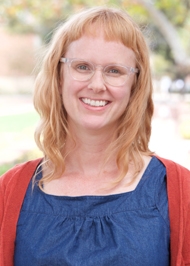
Erin Debenport

Erin Debenport

· Associate ProfessorVerified

University of California, Los Angeles · American Indian Studies

Active 2010–2025

h-index6
Citations193
Papers184 last 5y
Funding
See your match with Erin Debenport — sign in to PhdFit.Sign in

About

Erin Debenport is a linguistic and sociocultural anthropologist and an Associate Professor of Anthropology at UCLA. Her research focuses on technologies of language circulation, secrecy and (in)visibility, indigeneity and sovereignty, and critical language documentation. She concentrates her work in the Pueblo Southwest and the Mexico-Texas-New Mexico border region. Debenport authored the book 'Fixing the Books: Secrecy, Literacy, and Perfectibility in Indigenous New Mexico,' which ethnographically explores the creation and control of written texts in a Pueblo community. Her current project, based in an indigenous community in El Paso, Texas, examines how language is used to render political groups visible and viable. Since 2003, she has contributed to language documentation and revitalization programs in Kiowa-Tanoan speaking communities, collaborating with community members on creating archives and pedagogical materials.

Research topics

  • Sociology
  • Political Science
  • Computer Science
  • Law
  • Linguistics
  • History
  • Criminology
  • Library science
  • Philosophy
  • Psychology
  • Social psychology
  • Media studies

Selected publications

  • Business as Usual? Crises and the Futures for Indigenous Language Work in the Age of COVID

    American Indian Culture and Research Journal · 2025-03-03

    articleOpen access1st authorCorresponding

    Working across multiple ethnographic contexts, this paper surveys the use of digital technologies in language reclamation projects, considering what these mean for anthropologists, archivists, and community members as well as accompanying visions of crisis and futurity. Drawing on experiences working as part of Pueblo language reclamation projects, I consider the ways that tribal members have utilized new practices with digital technologies since the onset of the pandemic. The second part of the paper explores how digital tools can be used to store, analyze, and grant access to Indigenous languages by comparing the approaches to digital language archiving used by the website Ethnologue and by users of the Mukurtu content management system. I conclude with a discussion of what these new media practices tell us about differing visions of crisis and the imagined futures for both community members and academics.

  • Introduction: Language Lives in Unexpected Places

    American Indian Culture and Research Journal · 2025-03-03

    articleOpen accessSenior author

    This guest editors' introduction to the journal issue "Language Lives in Unexpected Places" contextualizes this special issue of American Indian Culture and Research Journal, an attempt to oppose ideas of disappearance through the continued reclamation of Indigenous languages. We connect this collection of papers with the publication of the special issue “American Indian Languages in Unexpected Places,” published previousely in this journal. The guest editors of that issue, Anthony Webster and Leighton Peterson, focused on the work of historian Philip Deloria, which highlights the ways perceptions of the “expected” and the “unexpected” of American Indians as well as linguistic anthropology’s attention to language inequalities and differing linguistic ideologies. Like Webster and Peterson’s earlier intervention, we seek “to place linguistic anthropology into meaningful dialogue with contemporary indigenous studies” (Webster and Peterson 2011). In this essay, we highlight some of the more recent themes and resonances between the disciplines and how the perspectives of linguistic anthropology can help us to theorize contemporary processes of settler colonialism, racism, and decolonization—both within and outside of academia.

  • Secrecy

    2023-03-21 · 1 citations

    other1st authorCorresponding
  • How a Dictionary Became an Archive: Community Language Reclamation Using the Mukurtu Content Management System

    Dictionaries · 2023-01-01

    articleOpen access1st authorCorresponding

    ABSTRACT: Mukurtu is a "free, mobile, and open-source platform built with Indigenous communities to manage and share digital cultural heritage" developed by Waramungu people in Central Australia and Kimberly Christen, a scholar who conducted long-term fieldwork in this Aboriginal community (Mukurtu 2023). Users can archive images, videos, and texts, and most importantly, the platform requires community consultation and collaboration. Mukurtu responds to requests for tools to use in language revitalization projects that were not designed by and for linguists. The platform has fields for words, example sentences, parts of speech, and other typical lexicographic categories, but also the ability to link, relate, and establish relationships to non-linguistic materials, collectively called Dictionary . From the beginning, the Dictionary's capacities have exceeded the scope of the genre as it is usually depicted: a neutral, reference work designed to convey referential regularities within or across languages. In this paper, we explore how Indigenous communities are putting the Mukurtu Dictionary tools to use and how this points to local epistemologies as well as language ideologies concerning what dictionaries are and do. Using ethnographic and media examples taken from our experiences working with Indigenous community members, four themes offer insights into how the platform diverges from traditional dictionaries: 1) access, stewardship, and expertise; 2) relationality; 3) multimodality, multiplicity, and flexibility; and 4) pedagogy and publics. We conclude with shared challenges in using the Dictionary, and a discussion of what the analysis brings to understandings of Indigenous knowledge production, stewardship, and transmission, as well as the sociopolitical possibilities of community-controlled dictionary projects.

  • Graphic Politics in Eastern India: Script and the Quest for Autonomy. NishaantChoksi. New York: Bloomsbury Academic, 2022. Pp. xvi + 208.

    Journal of Linguistic Anthropology · 2022

    1st authorCorresponding
    • Sociology
    • Political Science
    • Library science
  • Sexual Harassment, Speech Acts, and Public Secrets in U.S. Higher Education

    Oxford University Press eBooks · 2020 · 1 citations

    1st authorCorresponding
    • Sociology
    • Political Science
    • Psychology

    Abstract This chapter draws on data from U.S. higher education to analyze the ways that the language used to describe sexual harassment secures its continued power. Focusing on two features viewed as definitional to sexual harassment, frequency and severity, the discussion analyzes three sets of online conversations about the disclosure of abuse in academia (a series of tweets, survey responses, and posts on a philosophy blog) from grammatical, pragmatic, and semiotic perspectives. Unlike most prior research, this chapter focuses on the language of victims rather than the intentions of harassers. The results suggest that speech act theory is unable to account fully for sexual harassment without accepting the relevance of perlocutionary effects. Using Gal and Irvine’s (2019) model of axes of differentiation, the chapter demonstrates how opposing discursive representations (of professors, sexual harassers, victims, and accusers) create a discursive space in which it becomes difficult for victims to report their harassers.

  • From Literacy/Literacies to Graphic Pluralism and Inscriptive Practices

    Annual Review of Anthropology · 2019-08-06 · 12 citations

    article1st authorCorresponding

    This article considers the ongoing importance of studying writing practices within and beyond anthropology. The works included here concentrate on scholarship that has appeared since the productive yet divisive debates that established literacy as a plural phenomenon that is best studied ethnographically. It focuses on research that surveys the multiplicity of graphic forms, the changing notions of literacies, and the ways that literacy is implicated in and constitutive of sites of power. In addition, the cited works engage with the linguistic and semiotic ideologies that inform such literacy practices, the various aesthetic sensibilities that shape writing, and the physicality/materiality of inscriptive practices. Considering the effects of previously theorizing writing as a single, uniform phenomenon and the shift to research that characterizes inscriptive practices as multiple makes possible an argument for moving beyond multiplicity to question what writing is and can be, looking to works on “inscriptive practices” and “graphic pluralism.”

  • What Is Secrecy and How Can We Understand Its Relation to Social Facts?

    American Anthropologist · 2019-02-18 · 6 citations

    article1st authorCorresponding
  • Wilce, James M.: Culture and Communication. An Introduction. Cambridge: Cambridge University Press, 2017. 359 pp. ISBN 978-1-107-62881-6. Price: £ 27.99

    Anthropos · 2019-01-01

    article1st authorCorresponding

    Anthropos , Seite 300 - 301

  • Spatiotemporal, Geographic, and Linguistic Fixity: (Counter)hegemonies in the Pueblo Borderlands

    Association of Mexican American Educators Journal · 2018-08-17

    articleOpen access1st authorCorresponding

    Discussions about migration, geography, and Indigenous language use are key ways that community members perform, negotiate, and contest identities and politics in multilingual Ysleta del Sur Pueblo, a federally-recognized Native nation located within the city of El Paso, Texas. This linguistic anthropological piece illustrates how tribal members creatively use local ways of speaking and the indexing of language ideologies to critique hegemonic discourses that constrain tribal members’ Native identities and call into question the tribe’s status as an Indigenous community. Through “indexing”—or pointing to—dominant and emergent narratives about place and language, Ysletans are able to enhance their visibility as a nation and their political and social influence in the region and beyond. Speech genres focusing on the 17th century Pueblo revolt, the seizure of lands near the U.S.-Mexico border, and the loss of the tribe’s Indigenous language allow community members to assert sovereignty, belonging, and indigeneity in the face of these criticisms by Indian and non-Indian audiences.

Frequent coauthors

Labs

  • UCLA American Indian StudiesPI

Education

  • Ph.D., Linguistic and Sociocultural Anthropology

    University of California, Los Angeles

    2010
  • M.A., Linguistic and Sociocultural Anthropology

    University of California, Los Angeles

    2005
  • B.A., Linguistic and Sociocultural Anthropology

    University of California, Los Angeles

    2003
  • Resume-aware match score
  • Save to shortlist
  • AI-drafted outreach

See your match with Erin Debenport

PhdFit ranks faculty by your research interests, methods, and publications — grounded in their actual work, not templates.

  • Free to start
  • No credit card
  • 30-second signup