Resume-aware faculty matching

Find professors who actually fit you

Upload your resume. Four AI agents analyze your background, rank the faculty who fit, inspect their recent research, and help you draft outreach — grounded in their actual work, not templates.

Free to startNo credit cardCancel anytime
Top matches Balanced preset
Dr. Sarah Chen
Stanford · Interpretability · NLP
91
Dr. Marcus Holloway
MIT · Robotics · RL
84
Dr. Aisha Okonkwo
CMU · Fairness · HCI
82
Nova · Professor Researcher · re-ranking top 20…
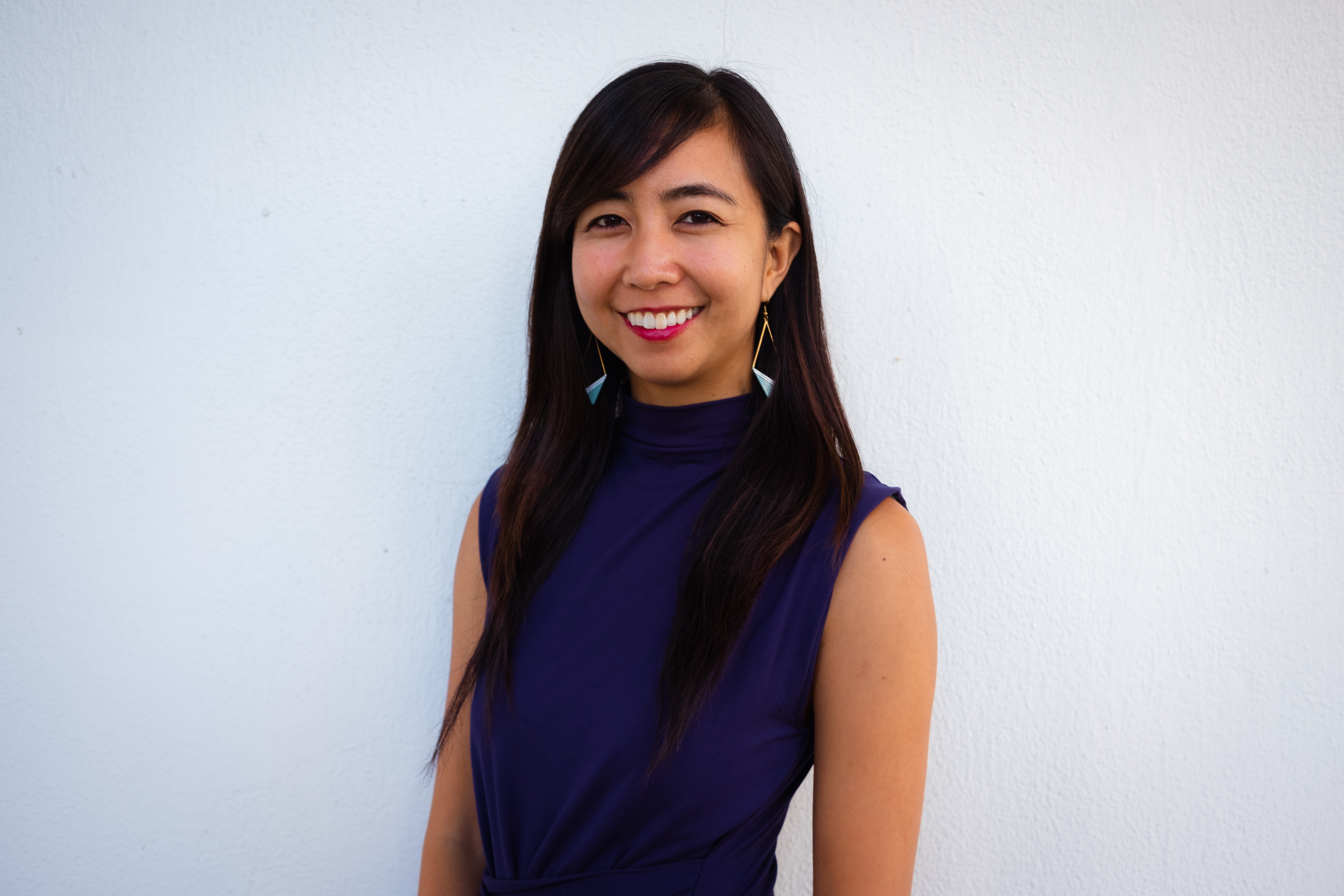
Evyn Lê Espiritu Gandhi

Evyn Lê Espiritu Gandhi

· Associate Professor

University of California, Los Angeles · Asian American Studies

Active 2020–2025

h-index4
Citations78
Papers3030 last 5y
Funding
See your match with Evyn Lê Espiritu Gandhi — sign in to PhdFit.Sign in

Research topics

  • Sociology
  • Political Science
  • Law
  • Gender studies
  • History
  • Archaeology
  • Ethnology
  • Geography
  • Demography
  • Ancient history
  • Philosophy

Selected publications

  • Archipelagos of Transit

    University of Hawaii Press eBooks · 2025-01-03

    book-chapter1st authorCorresponding
  • 5. Transpacific Archipelagic Poetics: Connecting Antibase Activism in Okinawa with Military Buildup Protests in Guåhan

    University of Washington Press eBooks · 2024-12-19

    book-chapter1st authorCorresponding
  • 2 Icon of Solidarity: The Revolutionary Vietnamese Woman in Vietnam, Palestine, and Iran

    2023-01-20

    book-chapter
  • The Routledge Handbook of Refugee Narratives

    2023-02-06 · 11 citations

    bookOpen access1st authorCorresponding

    <P>This <EM>Handbook</EM> presents a transnational and interdisciplinary study of refugee narratives, broadly defined. Interrogating who can be considered a refugee and what constitutes a narrative, the thirty-eight chapters included in this collection encompass a range of forcibly displaced subjects, a mix of geographical and historical contexts, and a variety of storytelling modalities. Analyzing novels, poetry, memoirs, comics, films, photography, music, social media, data, graffiti, letters, reports, eco-design, video games, archival remnants, and ethnography, the individual chapters counter dominant representations of refugees as voiceless victims. Addressing key characteristics and thematics of refugee narratives, this <I>Handbook </I>examines how refugee cultural productions are shaped by and in turn shape socio-political landscapes. It will be of interest to researchers, teachers, students, and practitioners committed to engaging refugee narratives in the contemporary moment.</P> <P>The Open Access version of this book, available at http://www.taylorfrancis.com, has been made available under a Creative Commons [Attribution-Non Commercial-No Derivatives (CC-BY-NC-ND)] 4.0 license.</P>

  • Introduction

    2023-02-06 · 2 citations

    book-chapterOpen access1st authorCorresponding

    An opened suitcase holds the miniature model of a crumbling room. The room's remaining walls are cracked and pocked-marked, evoking violence, abandonment, and decay. A bag or baggage might thus be a fitting carrier for refugee narratives, as stories of and formed in displaced movement, that cross borders and bring material and immaterial things around the world and back. In examining and expanding “refugee” and “narrative,” we point to the historical and contemporary richness of refugee cultural productions that range in content, tone, form, and modality. The 1951 Convention and 1967 Protocol's narrow recognition of what constitutes a “well-founded fear of persecution,” moreover, does not account for the many causes that force people to flee their homelands, which include not only war and ethnic conflict but also ongoing legacies of colonial dispossession, Western intervention, economic underdevelopment, global capitalism, labor exploitation, and climate change.

  • Afro-Asian Intimacies Across Southern Cartographies: Race, Sex, and Gender in Toni Morrison's Home and Yusef Komunyakaa's Dien Cai Dao

    American studies · 2023-01-01

    article1st authorCorresponding

    Afro-Asian Intimacies Across Southern Cartographies:Race, Sex, and Gender in Toni Morrison's Home and Yusef Komunyakaa's Dien Cai Dao Evyn Lê Espiritu Gandhi (bio) In 1953, following the Korean Armistice Agreement that ostensibly ended direct U.S. intervention in Korea (but, in reality, merely led to a recalibration of the unending Korean War), African American soldier Clarence Adams was one of twenty-one prisoners of war who refused repatriation back to the United States and instead migrated to the People's Republic of China. His decision was influenced by the antiblackness that structured the segregated U.S. South, curtailing his chances of upward mobility, as well as his compassion for the Korean civilians devastated by U.S. military intervention, prompting recognition of the shared oppression of Third World peoples.1 Twelve years later, during the Vietnam War, he broadcast a message to Black soldiers via Radio Hanoi, urging them to return to the United States: "You are fighting the wrong war. Brothers, go home. The Negro people need you back there."2 According to Daniel Y. Kim, "Adams mobilize[d] a historiography of a race war to cast both the Korean and Vietnam Wars as ones waged by a white empire against a colored population," exemplifying what Bill Mullens terms "Afro-Orientalism": a phenomenon in which Black activists turned to idealized Asian subjects for anti-imperialist and antiracist inspiration.3 I begin with Adams' story for three reasons. First, it highlights continuities between Black narratives of the Korean and Vietnam Wars. Whereas historians have elucidated the experiences of Black soldiers during the Korean and Vietnam Wars, respectively, few studies have grappled with these two Cold War fronts in relation, noting patterns and [End Page 97] particularities in Black subject formation across the two U.S. imperial conflicts.4 With the signing of Executive Order 9981 in July 1948, President Harry S. Truman desegregated the U.S. military, exemplifying the United States' project of racial liberalism and bolstering the expansion of the liberal empire, vis-à-vis the Soviet Union, even as Jim Crow laws continued to delimit the mobility of African Americans on the home front. Whereas the Korean War was the first U.S. experiment in militarized integration, it wasn't until the Vietnam War that the question of Black–white tensions in the military, transposed from the continental United States to the battlefront in Asia, gained widespread visibility. As Martin Luther King, Jr., famously observed in his "Beyond Vietnam" speech of April 1967: "[We watch] Negro and white boys on TV screens as they kill and die together for a nation that has been unable to seat them together in the same schools. So we watch them in brutal solidarity burning the huts of a poor village, but we realize that they would hardly live on the same block in Chicago."5 Segregation at home was only interrupted by "brutal solidarity" abroad: the uniting of Black and white soldiers in a common project of racialized wartime destruction.6 But continuities between the Korean and Vietnam Wars also led to political mobilization: many civil rights and Black Power leaders active during the Vietnam War era, such as Bobby Seale, James Forman, Ivory Perry, and Robert F. Williams, were radicalized during their experiences as Black soldiers in Cold War Korea.7 Second, Adams' story stitches together three southern spaces that are rarely discussed in relation: the U.S. South, South Korea, and South Vietnam. To focus on the southern-ness of these three sites is to trace the convergence of white supremacy, antiblackness, imperialism, and anticommunism that cohere at the intersection of the U.S. Civil War and Cold War politics.8 Raised in Memphis, Tennessee, amid the structural antiblackness of the segregated U.S. South, Adams joined the U.S. Army to escape incarceration at the hands of white policemen. This military service brought him to South Korea: a decolonizing nation that the United States had taken upon itself to protect in the Cold War struggle against North Korea, Communist China, and the Soviet Union. These south-south relationalities—the transposition of a Black subject of the U.S. South to the southern warfront of a new...

  • Madame Bình and Madame Nhu:

    Pluto Press eBooks · 2023-09-16

    book-chapter
  • Refugee Lifeworlds: The Afterlife of the Cold War in Cambodia by Y-Dang Troeung

    Journal of Asian American Studies · 2023-03-01

    article1st authorCorresponding

    Reviewed by: Refugee Lifeworlds: The Afterlife of the Cold War in Cambodia by Y-Dang Troeung Evyn Lê Espiritu Gandhi (bio) Refugee Lifeworlds: The Afterlife of the Cold War in Cambodia, by Y-Dang Troeung. Philadelphia: Temple University Press, 2022. Xxvii + 223 pp. $29.95 paperback. ISBN 978-1439921760. Chapter 1 of Refugee Lifeworlds: The Afterlife of the Cold War in Cambodia opens with a photograph that Y-Dang Troeung encountered in the archive: an image of a smiling Cambodian refugee mother and her young daughter, the latter identified as the "last" refugee of the Canadian government's Special Indochinese Refugee Program, displayed on the front page of the December 4, 1980 issue of the Montreal Gazette. Troeung writes that this is "an account of goodness–of good refugees entering the good refuge" (48). Yet the child in the photograph is not a silenced subject, a blank page upon which the Global North state can write its humanitarian narrative, erasing centuries of Indigenous genocide and racializing logics. For the child, it is revealed, is Troeung, who stubbornly writes back, revealing a much longer genealogy of the Cold War in Cambodia that preceded her family's entry into Canada. "Knit[ting] together" autotheory and literary analysis, Refugee Lifeworlds creates a "complex fabric" that reveals the "texture and temporalities of refugee life as embodied and inherited experience" (5). Because it opens chapter 1, this anecdote of archival encounter ostensibly presents a beginning of sorts. But it is a beginning that is delayed, put on hold, coming after a twenty-page preface that outlines the long durée of US intervention in Cambodia and a forty-five-page introduction that outlines the key terms and interventions of the book. In this way, Refugee Lifeworlds presents a formal alternative to "scholarly approaches that often treat the refugee as a figure who comes into being only through arrival in the asylum state," when "whiteness enters the frame as an adjudicator of the refugee's humanity" (ix). Moreover, this vignette does not follow the expected script of the liberal subject's self-possessing arrival to speech. Instead, Troeung reveals moments of stumbling and reversal, of difficulty and denial. As explained in the Introduction, when Troeung wrote to the Canadian Broadcasting Corporation (CBC) in 2021 [End Page 103] "asking them to take down" photos like these of herself and her family, explaining that she had given them "in a state of mental distress, and that the final article replicated a colonial practice of putting refugee images and information on public display in an exploitative way," the CBC denied the request, citing lack of evidence of a "mental health crisis at the time of the interview" (7–8). This autotheory example–one of many interwoven throughout the text–incisively illustrates the importance of putting critical refugee studies in conversation with critical disability studies: the book's main intervention. Refugee Lifeworlds takes the fact that "a quarter of Cambodia's population died during the genocide, and the remaining three-quarters of the population were physically and mentally debilitated" as a point of departure (12). Engaging critical refugee studies scholars such as Yến Lê Espiritu and Khatharya Um alongside critical disability scholars such as Jasbir Puar and Liat Ben-Moshe, Troeung argues for a shift from "the language of trauma as an individual, knowable impairment to that of disability, understood as both a lived embodiment and system of differential impairment of racialized and gendered bodies" (13). The book curates a "crip Cambodian refugee archive" that enacts a "politics of refusal . . . of imperial, carceral, and white supremacist state violence" (23–24). "Refugee lifeworlds," as an analytic, acknowledges the necropolitical logics of death and destruction that have structured Cambodian subjectivity, even as it asks us to consider what new epistemologies are possible in the wake of genocide. Ultimately, the book underscores the importance of an abolitionist project of "refugee and disability justice for all" (15). Refugee Lifeworlds consists of four body chapters followed by a short autotheory coda. Chapter 1 unpacks "Cambodia's Cold War episteme" which has rendered Cambodia a "minor anecdote" in the colonial imagination, setting up the importance of centering Cambodian narratives (50). The remaining chapters take up...

  • Archipelago of Resettlement

    University of California Press eBooks · 2022 · 70 citations

    1st authorCorresponding
    • Political Science
    • Sociology
    • Gender studies

    A free open access ebook is available upon publication. Learn more at www.luminosoa.org . What happens when refugees encounter Indigenous sovereignty struggles in the countries of their resettlement? From April to November 1975, the US military processed over 112,000 Vietnamese refugees on the unincorporated territory of Guam; from 1977 to 1979, the State of Israel granted asylum and citizenship to 366 non-Jewish Vietnamese refugees. Evyn Lê Espiritu Gandhi analyzes these two cases to theorize what she calls the refugee settler condition: the fraught positionality of refugee subjects whose resettlement in a settler colonial state is predicated on the unjust dispossession of an Indigenous population. This groundbreaking book explores two forms of critical geography: first, archipelagos of empire, examining how the Vietnam War is linked to the US military buildup in Guam and unwavering support of Israel, and second, corresponding archipelagos of trans-Indigenous resistance, tracing how Chamorro decolonization efforts and Palestinian liberation struggles are connected through the Vietnamese refugee figure. Considering distinct yet overlapping modalities of refugee and Indigenous displacement, Gandhi offers tools for imagining emergent forms of decolonial solidarity between refugee settlers and Indigenous peoples.

  • 1. Archipelagic History

    2022-04-26

    book-chapterOpen access1st authorCorresponding

    On 2 September 1975, Vietnam, Palestine, and Guam were juxtaposed on the front page of Guam's newspaper, the Pacific Daily News (PDN).The top half of the page featured two articles: one discussing the impending Interim Peace Agreement, brokered by US secretary of state Henry A. Kissinger, which would strengthen diplomatic relations between Israel, Egypt, and the United States; and the other reporting the Palestine Liberation Organization (PLO) leader Yasser Arafat's response "in the name of Palestine that the American solution cannot and will not succeed.We will liberate Palestine with our bodies, blood and soul." 1 The bottom half of PDN's front page, meanwhile, described unruly protests at one of Guam's Operation New Life camps. 2 A group of Vietnamese refugees on Asan Beach demanded that the US government allow them to repatriate to Vietnam, challenging the US military's narrative of humanitarian rescue and unidirectional migration to the West. 3 This front page of the PDN invites an archival reading practice that I call archipelagic history: one that traces different forms of US military empire across oceans and continents in order to chart how Vietnam, Palestine, and Guam became entangled in the US imperial imagination between 1967 and 1975.Unlike other models of writing history across multiple locales, such as world history, global history, transnational history, or diasporic history, archipelagic history is not organized around a particular empire, superpower, nation-state, or ethnic diaspora. 4 Rather, it traces connections between spaces on the seeming margins of grand historical narratives in order to draw attention to South-South relations: the exchange of political knowledge, military strategy, solidarity rhetoric, and intimate relations between subjects of the global South who resist aggression from the global North.Archipelagic history upends linear notions of causal temporality

Frequent coauthors

Awards & honors

  • ACLS Open Access Book Prize in History (2025)
  • Stanford Humanities Center External Faculty Fellowship (2024…
  • American Studies Association (ASA) Critical Ethnic Studies P…
  • Ford Foundation Predoctoral Fellowship (2016-18)
  • Association for Asian American Studies (AAAS) Best Graduate…
  • Resume-aware match score
  • Save to shortlist
  • AI-drafted outreach

See your match with Evyn Lê Espiritu Gandhi

PhdFit ranks faculty by your research interests, methods, and publications — grounded in their actual work, not templates.

  • Free to start
  • No credit card
  • 30-second signup