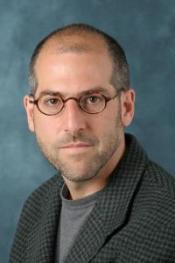
Simon A. Cole
· Professor of Criminology, Law & SocietyVerifiedUniversity of California, Irvine · Criminology, Law and Society
Active 1973–2026
About
Simon A. Cole is a Professor of Criminology, Law and Society at the UCI School of Social Ecology. He holds a Ph.D. from Cornell University and specializes in the historical and sociological study of the interaction between science, technology, law, and criminal justice. His work explores the development and implications of forensic science, including fingerprinting, DNA fingerprinting, and biometric technologies. Cole is the author of 'Suspect Identities: A History of Fingerprinting and Criminal Identification,' which received the 2003 Rachel Carson Prize, and co-author of 'Truth Machine: The Contentious History of DNA Fingerprinting.' He has spoken widely on fingerprinting, scientific evidence, and the intersection of science and law, and has served as an expert witness on fingerprint evidence. Currently, his research interests include the sociology of forensic science and the development of criminal identification databases and biometric technologies. Cole teaches courses on Forensic Science and Society, Miscarriages of Justice, and The Death Penalty. He is also the Director and Associate Editor of The National Registry of Exonerations and is affiliated with the Department of History.
Research topics
- Artificial Intelligence
- Psychology
- Machine Learning
- Computer Science
- Marketing
- Cognitive psychology
- Medicine
- Archaeology
- Surgery
- Business
- Operations management
- Nursing
- History
- Biology
Selected publications
Fingerprint evidence in exoneration cases
CrimRxiv · 2026-04-14
articleOpen access1st authorCorrespondingIn recent years, there have been a number of studies of the role of forensic evidence in wrongful convictions for a review. Many of these studies use data from exonerations, cases in which a conviction was overturned because of new evidence of innocence. Such studies use exoneration data or some other source of cases to generate a data set of cases in which a forensic discipline falsely incriminated the defendant. We have used this approach ourselves in a study of cases in which fingerprint errors contributed to wrongful convictions that later resulted in exoneration . Such studies exclude cases in which the forensic evidence was either: (1) not necessarily false; and/or (2) exculpated, rather than incriminated, innocent defendants. The approach of this study differs from all previous studies that use exoneration data to study forensic error, using fingerprint evidence as a convenient discipline on which to apply a broader approach.1 <https://www.sciencedirect.com/science/article/pii/S2589871X26000185#fn1> In this study, we examine all United States exoneration cases in which there was meaningful fingerprint evidence, regardless of whether it was erroneous and regardless of whether it incriminated the exoneree. This provides a broader look at the role of one forensic discipline in exoneration cases. Rather than asking how fingerprint error contributed to wrongful convictions, this study asks more broadly what role fingerprint evidence played in known exonerations. The answer is that it played a wide variety of roles, and in what follows, we try to make sense of them. (Excerpted from the Introduction.)
Fingerprint evidence in exoneration cases
Forensic Science International Synergy · 2026-04-04
articleOpen access1st authorCorrespondingForensic Science International Synergy · 2026-05-09
articleOpen access1st authorCorresponding[This corrects the article DOI: 10.1016/j.fsisyn.2026.100675.].
CrimRxiv · 2025-05-29
preprintOpen access1st authorCorrespondingThis article investigates why statistical reasoning has had little impact on the practice of friction ridge (or ‘fingerprint’) examination, despite both interest and some modest scientific progress toward this goal. Previous research has attributed this lack of results to practitioner resistance and legal apathy. This article seeks to complement those explanations through interviews with experts with a variety of perspectives on contemporary fingerprint practice about practical and mundane obstacles to the belated statistical revolution in fingerprinting. Based on these interviews, we argue that a ‘forensic device’ is required to incorporate statistical reasoning into fingerprint practice. This device would consist of a robust statistical model fronted by accessible, usable software. These components, in turn, require other components, such as large research data sets, markets, early adopters, government clients, education, and training. We conclude that the statistical revolution has been delayed not just by grand debates over the probabilistic nature of fingerprint evidence, but also by the seemingly mundane problems posed by developing and maintaining the kind of forensic device that would make such a revolution possible and practical.
Forensic Science International · 2025-08-01 · 1 citations
letterSocial Studies of Science · 2025-05-07
articleOpen access1st authorCorrespondingThis article investigates why statistical reasoning has had little impact on the practice of friction ridge (or 'fingerprint') examination, despite both interest and some modest scientific progress toward this goal. Previous research has attributed this lack of results to practitioner resistance and legal apathy. This article seeks to complement those explanations through interviews with experts with a variety of perspectives on contemporary fingerprint practice about practical and mundane obstacles to the belated statistical revolution in fingerprinting. Based on these interviews, we argue that a 'forensic device' is required to incorporate statistical reasoning into fingerprint practice. This device would consist of a robust statistical model fronted by accessible, usable software. These components, in turn, require other components, such as large research data sets, markets, early adopters, government clients, education, and training. We conclude that the statistical revolution has been delayed not just by grand debates over the probabilistic nature of fingerprint evidence, but also by the seemingly mundane problems posed by developing and maintaining the kind of forensic device that would make such a revolution possible and practical.
bioRxiv (Cold Spring Harbor Laboratory) · 2024-11-26
preprintOpen access1st authorCorrespondingMotivation: Chromatin conformation capture experiments (CCC), such as Hi-C and Capture Hi-C (CHiC) work to elucidate the three-dimensional organization of the genome and the underlying epigenetic regulatory structures within. CCC experiments produce large amounts of FASTQ sequencing data with a substantial amount of technical noise and require sophisticated computational pipelines in order to extract meaningful results. Large-scale CCC data repositories like 4D Nucleome and ENCODE mostly provide raw contact information but lack annotated, statistically significant interaction data suitable for downstream genetic and genomic analyses. Results: Here, we present CHARMER, an end-to-end pipeline integrated across multiple CCC assay types (HiC, CHiC) which generates statistically significant, harmonized, queryable, chromatin interactions in a consistent BED-like format across cell/tissue types and CCC assays. Availability: CHARMER is freely available at https://bitbucket.org/wanglab-upenn/CHARMER and harmonized chromatin interaction data will be available in the upcoming version of the FILER database (https://lisanwanglab.org/FILER).
It’s not racist, it’s just fact
Metascience · 2024-12-20
article1st authorCorrespondingLaw Probability and Risk · 2024-01-01
article1st authorCorrespondingAnalysis of Fingerprint Reports in Wrongful Convictions
Iowa State University Digital Repository (Iowa State University) · 2024-06-02
other1st authorCorrespondingThe following poster was presented at the CSAFE All Hands Meeting 2024 on June 2, 2024.
Recent grants
CAREER: Towards a Systems Analysis of the Utilization of Scientific Evidence in the Criminal Law
NSF · $403k · 2004–2012
NIH · $147k · 2010
Frequent coauthors
- 32 shared
William Thompson
Johns Hopkins University
- 17 shared
Henry N. Pontell
- 16 shared
Julia Hume
University of Adelaide
- 16 shared
Maurice Punch
University of Adelaide
- 16 shared
J. Wright Amos
University of Southern California
- 16 shared
Joel Joffe
University of Southern California
- 16 shared
Gasper Patrico
Texas Christian University
- 16 shared
Matt Alecock
University of Adelaide
Education
Ph.D.
Cornell University
Awards & honors
- 2003 Rachel Carson Prize by the Society for Social Studies o…
- Resume-aware match score
- Save to shortlist
- AI-drafted outreach
See your match with Simon A. Cole
PhdFit ranks faculty by your research interests, methods, and publications — grounded in their actual work, not templates.
- Free to start
- No credit card
- 30-second signup