Resume-aware faculty matching

Find professors who actually fit you

Upload your resume. Four AI agents analyze your background, rank the faculty who fit, inspect their recent research, and help you draft outreach — grounded in their actual work, not templates.

Free to startNo credit cardCancel anytime
Top matches Balanced preset
Dr. Sarah Chen
Stanford · Interpretability · NLP
91
Dr. Marcus Holloway
MIT · Robotics · RL
84
Dr. Aisha Okonkwo
CMU · Fairness · HCI
82
Nova · Professor Researcher · re-ranking top 20…
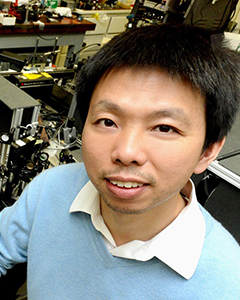
Feng Wang

Feng Wang

· ProfessorVerified

University of California, Berkeley · Engineering Science program

Active 1900–2026

h-index110
Citations41.8k
Papers2.3k431 last 5y
Funding
See your match with Feng Wang — sign in to PhdFit.Sign in

About

Feng Wang received a B.A. from Fudan University, Shanghai, in 1999 and a Ph.D. from Columbia University in 2004. He joined the physics faculty at the University of California, Berkeley, in fall 2007, after serving as a Miller Fellow with the Miller Institute for Basic Science at Berkeley from 2005 to 2007. His research interests focus on light-matter interaction in condensed matter physics, with an emphasis on novel physical phenomena emerging in nanoscale structures and at surfaces and interfaces. He investigates the unique nature and dynamics of excited states in nanostructures using advanced laser spectroscopy techniques, which have sensitivity down to individual nanostructures and offer femtosecond time resolution across a broad spectral range from far-infrared to UV. His work includes developing infrared spectroscopy for graphene, optical spectroscopy of individual nanotubes, plasmonics in metal nanostructures, and spectroscopy of oxide surfaces and interfaces, contributing to the understanding of physical phenomena at the nanoscale and at material interfaces.

Research topics

  • Engineering
  • Computer Science
  • Computer hardware
  • Biochemical engineering
  • Organic chemistry
  • Operating system
  • Nanotechnology
  • Embedded system
  • Process engineering
  • Materials science
  • Pulp and paper industry
  • Business
  • Chemistry
  • Mathematics
  • Biomedical engineering

Selected publications

  • Data set for Photocatalytic methanol dehydrogenation promoted synergistically by atomically dispersed Pd and clustered Pd

    Zenodo (CERN European Organization for Nuclear Research) · 2026-02-19

    articleOpen accessSenior author

    Original data for J. Am. Chem. Soc. 2024, 146, 35, 24440–24449

  • Data set for Photocatalytic methanol dehydrogenation promoted synergistically by atomically dispersed Pd and clustered Pd

    Zenodo (CERN European Organization for Nuclear Research) · 2026-02-19

    articleOpen accessSenior author

    Original data for J. Am. Chem. Soc. 2024, 146, 35, 24440–24449

  • Self‐Assembly Pathways of Carbazole‐derived Macrocycles Into Nanotubular Architectures

    Aggregate · 2025-12-01

    articleOpen accessCorresponding

    ABSTRACT Cooperative self‐assembly based on multiple non‐covalent interactions is ubiquitous in nature, yet the rational design of artificial cooperative systems remains challenging. Here we synthesize two carbazole derivatives, CbzE (with an ester group) and CbzA (with amide groups), to investigate how hydrogen bonding (HB) and halogen bonding (XB) jointly guide self‐assembly into nanotubular supramolecular polymers. Using 1,4‐diiodotetrafluorobenzene (DITFB) as XB donor or diplatinum(II) as linker, two types of [4 + 4] macrocycles are constructed and characterized by high‐resolution mass spectrometry, ultraviolet‐visible, infrared, and atomic force microscopy. CbzA , benefiting from strong HB, cooperatively assembles with DITFB into nanofibers and nanotubes, whereas CbzE , lacking amide groups, forms only disordered aggregates. Pt(II) coordination disrupts HB networks and redirects CbzA toward lateral aggregation, underscoring the sensitivity of assembly pathways to the balance of interactions. Remarkably, nanotubular CbzA + DITFB structures disassemble rapidly under trifluoroacetic acid vapor but are restored by triethylamine, demonstrating a reversible gel–sol–gel transition. This orthogonal acid/base responsiveness highlights the tunable and dynamic features of cooperative HB/XB systems. Overall, these results reveal the critical role of HB and XB cooperativity in directing ordered architectures and provide new design principles for intelligent supramolecular polymers with stimuli‐responsive functions.

  • Microenvironmental Regulation of Fe─N <sub>4</sub> Catalytic Sites for Oxygen Reduction Reaction in Electrochemical Devices

    Angewandte Chemie International Edition · 2025-10-29 · 4 citations

    articleSenior authorCorresponding

    Abstract The non‐metallic‐Pt materials with high activities for oxygen reduction reaction (ORR) have attracted considerable attentions, but still face challenges related to the mismatched performance in device applications, especially for the atomic site catalysts. In this work, we propose a microenvironment‐regulation strategy on introducing amino‐fluorinated cyclotriphosphazene as grafting agents to address the critical issue on the mass‐transfer limitations for the highly active and well‐defined Fe─N 4 sites in phthalocyanine macrocycles. When this functional cyclotriphosphazene was grafted to polyphthalocyanines by the amidate linkage, the large steric hindrance of cyclotriphosphazene and the low surface energy of C─F bonding in fluorinate groups provide the enriched channels with low hygroscopicity, which guarantees the oxygen supply to Fe─N 4 sites and the hydroxyl leave from catalyst molecules. This microenvironment regulation improves the activities of catalyst molecules in electrochemical testing, and an amplified effect are also shown in the corresponding electrode assemblies. As results, the superior peak power densities of 178 mW cm −2 in aqueous Zn‐air batteries (1.4‐fold enhancements) and 616 mW cm −2 in alkaline membrane fuel cells (2.5‐fold enhancements) are obtained. These findings offer a deeper understanding of non‐Pt catalysts and provide a promising approach to their applications in advanced electrochemical devices.

  • Synthesis and Characterization of α-End Functionalized 3,4-Polyisoprene Using Fe(acac)3/IITP/AliBu3 Catalyst

    Chinese Journal of Polymer Science · 2025-06-20 · 1 citations

    article
  • Nitrate synthesis from charged water microdroplets and dinitrogen

    Journal of Energy Chemistry · 2025-05-16 · 7 citations

    articleSenior authorCorresponding
  • Standardization transformation of C-lignin to catechol and propylene

    Nature Communications · 2025-07-07 · 14 citations

    articleOpen accessSenior author

    Abstract Standardization transformation of lignin to high-value-added chemicals requires precise control of the reaction process based on the elaborate catalytic strategy design and lignin structure optimization. Here we report the selective and efficient preparation of bio-catechol and bio-propylene from the ideal C-lignin via a one-pot hydrogenolysis-dealkylation cascade catalysis. The optimized catalyst Ni/HY 30 could orderly cleave the corresponding C α/β –OAr bonds and C aryl –C alkyl bonds in the uniform benzodioxane units of C-lignin, which could directionally and selectively provide a 49 mol% yield of catechol and a 45 mol% yield of propylene from C-lignin under 200°C. Further techno-economic analysis and the life-cycle assessment confirmed the potential of this strategy in the CO 2 -neutral preparation of catechol and propylene. In addition, the control experiments, catalyst characterizations, spectra identification, and DFT calculations indicated that the 4-propenylcatechol primarily generated from the selective hydrogenolysis of C-lignin was the critical intermediate for the following dealkylation, and the side chain was delicately deconstructed via the Brönsted acid-mediated protonation, γ-methyl migration and C aryl –C alkyl scission pathway. Finally, the corresponding strategy design based on the concept of standardization transformation and mechanism revelation focusing on the cleavage of critical linkage bonds could provide guidance for further lignin depolymerization utilization.

  • Predicting Remaining Useful Life of Rotating Machinery via Data-Driven Models

    2025-08-08

    articleSenior author

    Remaining useful life (RUL) prediction of rotating machinery is critical for ensuring operational reliability and reducing maintenance costs. This paper presents a data-driven framework for RUL prediction, integrating advanced machine learning techniques and experimental validation. The proposed method leverages vibration and sensor data from rotating machinery, combined with deep learning models such as LSTM and Transformer, to capture complex degradation patterns. The NASA C-MAPSS dataset is used to validate the approach, demonstrating significant improvements in prediction accuracy compared to traditional methods. The study includes detailed mathematical derivations of model architectures, experimental data analysis, and performance evaluation using metrics like RMSE and MAE.

  • Microenvironmental Regulation of Fe─N <sub>4</sub> Catalytic Sites for Oxygen Reduction Reaction in Electrochemical Devices

    Angewandte Chemie · 2025-10-29

    articleSenior authorCorresponding

    Abstract The non‐metallic‐Pt materials with high activities for oxygen reduction reaction (ORR) have attracted considerable attentions, but still face challenges related to the mismatched performance in device applications, especially for the atomic site catalysts. In this work, we propose a microenvironment‐regulation strategy on introducing amino‐fluorinated cyclotriphosphazene as grafting agents to address the critical issue on the mass‐transfer limitations for the highly active and well‐defined Fe─N 4 sites in phthalocyanine macrocycles. When this functional cyclotriphosphazene was grafted to polyphthalocyanines by the amidate linkage, the large steric hindrance of cyclotriphosphazene and the low surface energy of C─F bonding in fluorinate groups provide the enriched channels with low hygroscopicity, which guarantees the oxygen supply to Fe─N 4 sites and the hydroxyl leave from catalyst molecules. This microenvironment regulation improves the activities of catalyst molecules in electrochemical testing, and an amplified effect are also shown in the corresponding electrode assemblies. As results, the superior peak power densities of 178 mW cm −2 in aqueous Zn‐air batteries (1.4‐fold enhancements) and 616 mW cm −2 in alkaline membrane fuel cells (2.5‐fold enhancements) are obtained. These findings offer a deeper understanding of non‐Pt catalysts and provide a promising approach to their applications in advanced electrochemical devices.

  • Interactions of Aqueous Microdroplets and Mineral Particles Drive Fluorine-First Perfluoroalkyl Mineralization

    Journal of the American Chemical Society · 2025-08-26 · 3 citations

    articleSenior authorCorresponding

    Anthropogenic perfluoroalkyl and polyfluoroalkyl substances (PFAS) are pervasive contaminants subject to increasingly stringent regulatory thresholds in water resources. Current nonthermal defluorination strategies face critical limitations, including incomplete mineralization, yielding persistent short-chain PFAS byproducts, and residual fluoride ions, thereby hindering compliance with water quality standards. Herein, we demonstrate that wollastonite-bearing microdroplets prioritize defluorination over C–C scission in perfluoroalkyl chains through liquid–solid–gas triple-phase contact electrification. This process results in complete perfluorooctanoic acid mineralization with hardly detectable shorter-chain anionic PFAS byproducts, as confirmed by Fourier transform ion cyclotron resonance mass spectrometry. Microdroplet-mediated weathering of wollastonite triggers the formation of CaF2–SiO2 interfacial structures through Si–F–Ca bonding interactions, thereby enabling fluoride immobilization with negligible leaching. This work reveals that atmospheric clouds containing mineral particles intrinsically exhibit a self-cleansing capacity toward PFAS contaminants, advancing cloud-inspired interfacial engineering for next-generation water purification systems.

Frequent coauthors

  • Yehong Wang

    Dalian Institute of Chemical Physics

    456 shared
  • Nengchao Luo

    Chinese Academy of Sciences

    405 shared
  • Chaofeng Zhang

    Nanjing Forestry University

    387 shared
  • Min Wang

    North China Electric Power University

    368 shared
  • Jianmin Lü

    Xidian University

    337 shared
  • Huifang Liu

    Tsinghua University

    279 shared
  • Jian Zhang

    Dalian National Laboratory for Clean Energy

    275 shared
  • Zhixin Zhang

    269 shared

Labs

Education

  • PhD, Laboratory of Fine Chemicals

    Dalian Institute of Chemical Physics

    2005
  • B.S., School of Chemistry and Molecular Engineering

    Zhengzhou University

    1999
  • Resume-aware match score
  • Save to shortlist
  • AI-drafted outreach

See your match with Feng Wang

PhdFit ranks faculty by your research interests, methods, and publications — grounded in their actual work, not templates.

  • Free to start
  • No credit card
  • 30-second signup