About
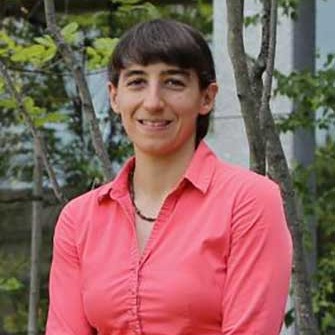
Brenda M. Rubenstein is the Vernon K. Krieble Professor of Chemistry, Professor of Physics, and Director of Data Science at Brown University. Her research interests encompass theoretical quantum chemistry and physics, stochastic methods for electronic structure theory, strongly correlated and relativistic materials, and alternative computing including quantum, molecular, neuromorphic, and biological computing. She is focused on developing electronic structure methods that are both highly accurate and scalable to enable theory-driven materials design, addressing the fundamental compromise in quantum chemistry between accuracy and computational speed. Rubenstein's group actively conducts research in molecular and quantum computing as well as computational biophysics. She earned her Ph.D. from Columbia University in 2013, her M.Phil. from the University of Cambridge in 2008, and her Sc.B. from Brown University in 2007. Her work aims to bridge the gap between modern experimental chemistry and quantum chemistry techniques, facilitating the analysis of complex molecules and materials at scales relevant to experimental questions. Rubenstein has contributed to advancing electronic structure methods and exploring innovative computational approaches, including the application of stochastic and alternative computing paradigms.
Research topics
- Computer Science
- Chemistry
- Materials science
- Condensed matter physics
- Database
- Computational biology
- Combinatorial chemistry
- Biochemistry
- Biology
- Nuclear magnetic resonance
- Genetics
- Physics
Selected publications
Continuously tunable dipolar exciton geometry for controlling bosonic quantum phase transitions
Open MIND · 2026-01-31
preprintThe geometry and binding energy of excitons, set by electron-hole wavefunction distributions, are fundamental factors that underpin their many-body interactions and determine optoelectronic properties of semiconductors. However, in typical solid-state systems, these quantities are fixed by material composition and structure. Here we introduce a polarizable interlayer exciton hosted in a two-dimensional tetralayer heterostructure whose dipole length, in-plane radius, and binding energy can be continuously programmed in situ over a wide range, enabling direct control over the nature of excitonic many-body phase transitions. An out-of-plane electric field redistributes layer-hybridized electron-hole wavefunctions, realizing in situ control of exciton geometry through a strong quadratic Stark response. This tunability further regulates the nature of interaction-driven Mott transition, transforming it from gradual to abrupt. Our results establish exciton geometry as a continuously tunable materials parameter, opening routes to exciton-based quantum phase-transition simulators and guiding the design of emergent optoelectronic functionalities from programmable excitonic materials.
bioRxiv (Cold Spring Harbor Laboratory) · 2026-01-21
articleOpen accessGranulocyte macrophage-colony stimulating factor (GM-CSF) is a cytokine that plays a role in immune modulation. Its expression is associated with a multitude of different effects ranging from harmful, as in diseases such as rheumatoid arthritis and multiple sclerosis, to beneficial, as in the case of mitigation of diabetes type I and neutropenia. However, there is a large gap in knowledge explaining how GM-CSF toggles its structure for such physiological and pathological interactions. Our work describes an ongoing attempt to address this gap by focusing on a clustered histidine triad within alpha-helices near the N-terminus, which prior studies have suggested play a role in binding ligands at an acidic pH. While GM-CSF is known to be highly flexible at a more acidic pH, several properties of its histidine triad remain unclear at the physiological pH at which GM-CSF would encounter its binding partners. We describe an effort to characterize the role of the GM-CSF histidines under physiological pH, specifically to determine if these histidines are key to GM-CSF structural integrity, and whether individual histidine residues modulate binding as they do at a lower pH. Our findings reveal that, while the histidine residues have an impact on GM-CSF structure, flexibility, and stability, they alone do not modulate the affinity for ligands at neutral pH. These data provide an initial explanation for the pleiotropic functions and interactions of GM-CSF within a biophysical context.
Continuously tunable dipolar exciton geometry for controlling bosonic quantum phase transitions
ArXiv.org · 2026-01-31
articleOpen accessThe geometry and binding energy of excitons, set by electron-hole wavefunction distributions, are fundamental factors that underpin their many-body interactions and determine optoelectronic properties of semiconductors. However, in typical solid-state systems, these quantities are fixed by material composition and structure. Here we introduce a polarizable interlayer exciton hosted in a two-dimensional tetralayer heterostructure whose dipole length, in-plane radius, and binding energy can be continuously programmed in situ over a wide range, enabling direct control over the nature of excitonic many-body phase transitions. An out-of-plane electric field redistributes layer-hybridized electron-hole wavefunctions, realizing in situ control of exciton geometry through a strong quadratic Stark response. This tunability further regulates the nature of interaction-driven Mott transition, transforming it from gradual to abrupt. Our results establish exciton geometry as a continuously tunable materials parameter, opening routes to exciton-based quantum phase-transition simulators and guiding the design of emergent optoelectronic functionalities from programmable excitonic materials.
Reducing the Cost of Unitary Coupled Cluster via Active Space Partitioning
Open MIND · 2026-02-04
preprintSenior authorUnitary Coupled Cluster (UCC) theory is a promising variational method for electronic structure calculations, especially for strongly correlated systems and quantum computers. However, its practical application is limited by the steep scaling of its non-terminating Baker-Campbell-Hausdorff expansion. We introduce an active space UCCSD(4)/MP2 approach that leverages a fourth-order many-body perturbation theory truncation of UCCSD within a selected active space, while treating external excitations at the MP2 level. We explore two variants: a composite method that sums separate internal and external contributions and an interacting method that couples the amplitudes for greater accuracy. We test our approach on the GW100 dataset, a metaphosphate hydrolysis reaction, and the strongly correlated torsion of ethylene. Our results suggest that the interacting method with canonical orbitals is robust for weakly and moderately correlated systems and accurately reproduces the full UCCSD(4) potential energy curves using only 15-25% of the virtual orbitals in its active space. In comparison, the composite formulation exhibits greater sensitivity to the orbital basis and active space size, leading to less systematic behavior across the benchmark set. For ethylene torsion, a system dominated by strong static correlation, both composite and interacting formulations employing canonical orbitals closely track the full UCCSD(4) reference but do not alleviate the unphysical features inherited from the underlying single-reference UCCSD(4) description. This active space framework offers a tractable approach for modeling correlated molecules and reactions on classical computers and provides a viable path for scaling UCC calculations for resource-constrained quantum hardware.
EES batteries. · 2026-01-01
articleOpen accessIncorporating the electric double layer structures into SEI formation via a DFT–MD–ML workflow.
Zenodo (CERN European Organization for Nuclear Research) · 2026-03-16
datasetOpen accessSupporting data and figures for the manuscript: Revealing EDL-Driven Reduction Mechanisms in Binary, Ternary, and Quaternary Fluorinated Electrolytes via an Integrated MD–DFT–ML Framework.
A many-body characterization of the fundamental gap in monolayer CrI3
npj 2D Materials and Applications · 2026-01-16
articleOpen accessSenior authorCorrespondingAbstract Many-body fermionic Diffusion Monte Carlo (DMC) methods are applied to accurately predict the fundamental gap of the monolayer ferromagnet CrI 3 . The fundamental gap obtained, Δ f = 2.9(1) eV, agrees well with the highest peak in optical spectroscopy measurements and a previous G W result. We numerically show that the same value of Δ f is obtained in the thermodynamic limit using both neutral promotions and the standard definition of Δ f based on the ionization potential and electron affinity. Analysis of the differences between density matrices of natural orbitals obtained from configuration interaction calculations explains why a single-reference trial wave function can produce an accurate excitation. We find that accounting for electron correlation is more crucial than accounting for spin-orbit effects in determining Δ f . These results highlight the power of DMC for benchmarking 2D material physics and emphasize the importance of using beyond-DFT methods for studying 2D materials.
Advanced Functional Materials · 2026-01-24
articleABSTRACT Developing efficient and sustainable photocatalysts for CO 2 reduction remains a significant challenge, particularly with environmentally benign materials. Here, we report the first one‐step synthesis of metal–lead‐free perovskite heterostructural nanocrystals by decorating Cs 3 Sb 2 Cl 9 perovskite nanorods with size‐controlled Pd nanoclusters via a one‐step hot‐injection method. The resulting Pd‐Cs 3 Sb 2 Cl 9 heteronanorods (HNRs) exhibit strong interfacial electronic coupling, enhanced charge separation, and excellent colloidal stability. Transient absorption spectroscopy and DFT calculations reveal a built‐in electric field that drives directional electron transfer from the perovskite host to the Pd domains. Under UV irradiation, the Pd‐Cs 3 Sb 2 Cl 9 HNRs demonstrate excellent CO 2 photoreduction activity with high CH 4 selectivity, achieving a record apparent quantum yield (AQY) of 2.62% among halide perovskite nanocrystal‐based systems with a large electronic yield of 689.3 ± 12.2 µmol·g cat −1 . In situ spectroscopic monitoring and Gibbs free energy analysis further unveil a Pd‐facilitated reaction pathway involving stabilization of key intermediates. This work introduces a new class of lead‐free perovskite‐based heterostructures through a facile one‐step synthesis strategy and offers a new design principle for next‐generation photocatalysts for solar fuel production.
Annual Review of Physical Chemistry · 2026-02-27 · 1 citations
articleOpen accessSenior authorQuantum computing offers the promise of revolutionizing quantum chemistry by enabling the solution of chemical problems for substantially less computational cost. While most demonstrations of quantum computation to date have focused on resolving the energies of the electronic ground states of small molecules, the field of quantum chemistry is far broader than ground-state chemistry; equally important to practicing chemists are chemical reaction dynamics and reaction mechanism prediction. Here, we review progress toward and the potential of quantum computation for understanding quantum chemistry beyond the ground state, including for reaction mechanisms, reaction dynamics, and finite-temperature quantum chemistry. We discuss algorithmic and other considerations these applications share, as well as differences that make them unique. We also highlight the potential speedups these applications may realize and challenges they may face. We hope that this discussion stimulates further research into how quantum computation may better inform experimental chemistry in the future.
Zenodo (CERN European Organization for Nuclear Research) · 2026-03-16
datasetOpen accessSupporting data and figures for the manuscript: Revealing EDL-Driven Reduction Mechanisms in Binary, Ternary, and Quaternary Fluorinated Electrolytes via an Integrated MD–DFT–ML Framework.
Recent grants
Frequent coauthors
- 60 shared
Jacob K. Rosenstein
Providence College
- 44 shared
Christopher Rose
- 40 shared
Christopher E. Arcadia
Brown University
- 37 shared
Gabriel Monteiro da Silva
- 37 shared
Yuan Liu
- 36 shared
Sherief Reda
- 36 shared
Jordan Yang
Brown University
- 34 shared
Eunsuk Kim
Brown University
Labs
Computational Chemistry at Brown University. We specialize in Quantum Chemistry, Biophysics, and Alternative Computing
- Resume-aware match score
- Save to shortlist
- AI-drafted outreach
See your match with Brenda M. Rubenstein
PhdFit ranks faculty by your research interests, methods, and publications — grounded in their actual work, not templates.
- Free to start
- No credit card
- 30-second signup