Resume-aware faculty matching

Find professors who actually fit you

Upload your resume. Four AI agents analyze your background, rank the faculty who fit, inspect their recent research, and help you draft outreach — grounded in their actual work, not templates.

Free to startNo credit cardCancel anytime
Top matches Balanced preset
Dr. Sarah Chen
Stanford · Interpretability · NLP
91
Dr. Marcus Holloway
MIT · Robotics · RL
84
Dr. Aisha Okonkwo
CMU · Fairness · HCI
82
Nova · Professor Researcher · re-ranking top 20…
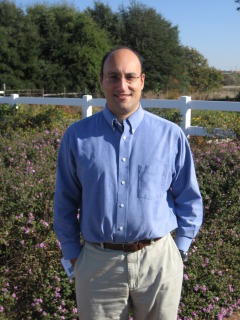
Fouad Jaber

Fouad Jaber

· Professor and Extension SpecialistVerified

Texas A&M University · Biological & Agriculture Engineering

Active 2000–2026

h-index17
Citations990
Papers9318 last 5y
Funding
See your match with Fouad Jaber — sign in to PhdFit.Sign in

About

Fouad Jaber is a Professor and Extension Specialist in the Department of Biological and Agricultural Engineering at Texas A&M University. He holds a B.S. in Agriculture and an M.S. in Irrigation from the American University of Beirut, and a Ph.D. in Agricultural and Biological Engineering from Purdue University. His areas of expertise include integrated water resources management with a specific concentration on watershed management programs, as well as the evaluation of stream processes and hydraulics to support stream restoration programming. Dr. Jaber has contributed to the field through research and extension activities, focusing on sustainable water management practices and stream restoration efforts.

Research topics

  • Environmental science
  • Ecology
  • Computer Security
  • Computer Science
  • Political Science
  • Geography
  • Geology
  • Biology
  • Environmental planning
  • Business
  • Fishery
  • Environmental engineering
  • Meteorology
  • Economics
  • Environmental resource management

Selected publications

  • A framework for simulating structural sediment perimeter barriers using VFSMOD

    Journal of Soils and Sediments · 2026-03-23

    articleOpen accessSenior author

    There are limited tools, particularly process-based models, to simulate the performance of a structural sediment perimeter barrier (SPB) to prevent sediment and particle-bound pollutant transport from construction sites. In this study, we developed a framework to simulate the process of water movement and sedimentation in fiber rolls, a type of structural SPB, using the Vegetative Filter Strip Modeling System (VFSMOD). Fiber rolls constructed from two materials, excelsior wood fiber logs and coconut coir logs, were evaluated under controlled sheet flow conditions. VFSMOD was parameterized to represent shallow overland flow, infiltration, and sediment transport through the fiber rolls, especially with the estimation of equivalent buffer length and Manning’s roughness. Model performance was assessed by comparing simulated and observed water and sediment balance, outflow hydrographs, and spatial sediment deposition patterns (sediment wedges). Statistical performance was evaluated using Nash–Sutcliffe efficiency (NSE), Kling–Gupta efficiency (KGE), and root mean square error (RMSE). The Manning’s roughness coefficients of excelsior wood fiber logs and coconut coir logs were estimated as 0.5 and 0.4, respectively. The comparison of the simulated and observed outflow results indicated that there was a good agreement (NSE: 0.845/0.508, KGE: 0.762/0.726, and RMSE: 50/93 cm3 s− 1) for both fiber rolls, and the model reasonably reproduced observed sediment deposition trends. The results demonstrate the potential for extending VFSMOD beyond vegetative filter strips to represent flow and sediment transport processes through fiber roll–based SPBs, providing a process-based modeling approach for evaluating sediment control practices at construction sites.

  • Improvement of simulating rain gardens to advance sustainable stormwater management

    Journal of Environmental Management · 2026-02-05

    articleSenior author
  • Flood susceptibility comparison between DFW and Texas Hill Country with a spatial difference investigation along Upper Guadalupe River

    2026-01-12

    articleOpen accessSenior author
  • Stability and accuracy of the finite element solution to the kinematic wave overland flow

    2026-02-11

    book-chapter1st authorCorresponding

    The numerical solution of the kinematic wave equations for overland flow is known for its numerical oscillations. The conventional Galerkin finite element consistent formulation results in violation of physical reality and numerical oscillations. Another cause of oscillations is the first derivative terms in the kinematic wave equations that result in non-symmetric operators that are very oscillatory in nature. The lumped formulation is tested in this paper as an alternative to the consistent formulation. It was found that the lumped formulation significantly improves stability of the solution with no reduction in accuracy. The upwind finite element method is also tested to remedy the oscillations caused by the first derivative. The latter scheme is applied to both, lumped and consistent formulations, using upwind factors of 0.1 and 1.0 and is evaluated in terms of stability and accuracy of the solution. The upwind method did not provide any improvement to the stability of both the lumped and the consistent formulation. It required smaller or equal time steps compared to a non-upwinded formulation for the same level of accuracy. The lumped formulation is recommended to solve overland flow problems as it was found to be the most efficient formulation to solve the 1-D kinematic wave equation for overland flow. The dynamic time step for the lumped formulation developed in this study can be easily integrated in overland flow routing models to guide the choice of the optimal time step with minimum user input.

  • Su2055: TIRZEPATIDE SHOWS LOWER RISK OF GASTROINTESTINAL SIDE EFFECTS COMPARED TO OTHER GLUCAGON-LIKE PEPTIDE-1 (GLP-1) RECEPTOR AGONISTS: A REAL-WORLD ANALYSIS OF OVER 1 MILLION PATIENTS

    Gastroenterology · 2025-05-01

    article1st authorCorresponding
  • Tail-Aware Forecasting of Precipitation Extremes Using STL-GEV and LSTM Neural Networks

    Hydrology · 2025-10-30 · 2 citations

    articleOpen access

    Accurate prediction of extreme precipitation events remains a critical challenge in hydrological forecasting due to their rare occurrence and complex statistical behavior. These extreme events are becoming more frequent and intense under the influence of climate change. Their unpredictability not only hampers water resource management and disaster preparedness but also leads to disproportionate impacts on vulnerable communities and critical infrastructure. Therefore, in this article, we introduce a hybrid modeling framework that combines Generalized Extreme Value (GEV) distribution fitting with deep learning models to forecast monthly maximum precipitation extremes. Long Short-term Memory models (LSTMs) are proposed to predict the cumulative distribution (CDF) values of the GEV-fitted remainder series. This approach transforms the forecasting problem into a bounded probabilistic learning task, improving model stability and interpretability. Crucially, a tail-weighted loss function is designed to emphasize rare but high-impact events in the training process, addressing the inherent class imbalance in extreme precipitation predictions. Results demonstrate strong predictive performance in both the CDF and residual domains, with the proposed model accurately identifying anomalously high precipitation months. This hybrid GEV–deep learning approach offers a promising solution for early warning systems and long-term climate resilience planning in hydrologically sensitive regions.

  • Mo2067: GLUCAGON-LIKE PEPTIDE-1 (GLP-1) RECEPTOR AGONISTS ARE ASSOCIATED WITH REDUCED RISK OF GASTROINTESTINAL CANCERS: INSIGHTS FROM A NATIONWIDE REAL-WORLD ANALYSIS

    Gastroenterology · 2025-05-01

    article1st authorCorresponding
  • Optimization of parameters for the HEC-HMS model based on real-time flow monitoring data: a case study of Hyderabad metropolitan area, India

    Modeling Earth Systems and Environment · 2025-07-19 · 2 citations

    article
  • An Upgraded GIS-based Multi-criteria Decision-making Approach for Flood Control Prioritization Mapping: Case Study of West Dallas-Fort Worth Metroplex

    SSRN Electronic Journal · 2025-01-01

    preprintOpen accessSenior author
  • S924 Esophageal Myotomy Is Associated With Reduced Esophageal Cancer and Mortality in Achalasia: A Real-World Cohort Study

    The American Journal of Gastroenterology · 2025-10-01

    article1st authorCorresponding

    Introduction: Patients with achalasia have an increased risk of esophageal cancers, such as squamous cell carcinoma. Although peroral endoscopic myotomy (POEM) or Heller’s myotomy can reduce dysphagia symptoms, less is known about their impact on esophageal cancer. Methods: This retrospective cohort study used the TriNetX database to identify adults (≥18 years) with achalasia. Patients were grouped into those who underwent myotomy (POEM or Heller) and those who did not. Individuals with prior Barrett’s esophagus, esophagectomy, or esophageal cancer were excluded. The primary outcome was incident esophageal cancer, with subgroup analysis by histologic subtype. Secondary outcome was all-cause mortality. Propensity score matching balanced baseline characteristics. Cox proportional hazards modeling and adjusted odds ratios (aORs) assessed associations, adjusting for demographics, comorbidities, and medication exposures. Results: A total of 8,106 patients underwent myotomy and 53,874 did not. Median follow-up was 609 days (interquartile range (IQR): 1,746) for the myotomy group and 896 days (IQR: 1,961) for the non-myotomy group. After matching, baseline characteristics were balanced. Myotomy was associated with a significantly lower risk of esophageal cancer (before matching: 6 vs 202; aOR: 0.323; 95% confidence interval [CI] 0.171-0.610, after: 6 vs 24; aOR: 0.417; 95% CI 0.199-0.871). Subgroup analysis showed no significant differences in squamous cell carcinoma (before: 4 vs 37; aOR: 1.769; 95% CI 0.879-3.559, after: 4 vs 6; aOR: 1.00; 95% CI 0.416-2.404) or adenocarcinoma (before: 4 vs 82; aOR: 0.797; 95% CI 0.413-1.538, after: 4 vs 11; aOR: 0.909; 95% CI 0.386-2.142). Myotomy was also linked to reduced all-cause mortality before (330 vs 6,496, adjusted hazard ratio [aHR]: 0.235; 95% CI 0.196-0.281) and after matching (330 vs 705; aHR: 0.445; 95% CI 0.389-0.509). Cox regression identified male sex (aHR: 2.64; 95% CI 1.97-3.53), older age (aHR per year: 1.03; 95% CI 1.02-1.04), and alcohol use (aHR: 3.10; 95% CI 1.39-6.90) as independent predictors of esophageal cancer. Gastroesophageal reflux disease, tobacco, obesity, and proton pump inhibitor use were not significant. Conclusion: In short-term follow-up, myotomy in achalasia was associated with lower risks of esophageal cancer and mortality compared to non-myotomy care. Subgroup analysis by histology showed no significant difference, likely due to low event rates. Prospective studies with longer follow-up are needed to confirm these findings and clarify the oncologic impact of achalasia treatment.

Frequent coauthors

  • Sanjay Kumar Shukla

    Edith Cowan University

    21 shared
  • Sanjay Shukla

    Southwest Florida Research

    21 shared
  • Edward A. Hanlon

    Naval Hospital Bremerton

    12 shared
  • Peter J. Stoffella

    University of Florida

    12 shared
  • Saurabh Srivastava

    Amrita Vishwa Vidyapeetham

    10 shared
  • Thomas A. Obreza

    University of Florida

    9 shared
  • Rabi H. Mohtar

    Texas A&M University

    7 shared
  • Yazan Abboud

    Rutgers, The State University of New Jersey

    6 shared

Education

  • B.S., Agriculture

    American University of Beirut

    1992
  • M.S., Irrigation

    American University of Beirut

    1995
  • Ph.D., Agricultural and Biological Engineering

    Purdue University

    2001
  • Resume-aware match score
  • Save to shortlist
  • AI-drafted outreach

See your match with Fouad Jaber

PhdFit ranks faculty by your research interests, methods, and publications — grounded in their actual work, not templates.

  • Free to start
  • No credit card
  • 30-second signup