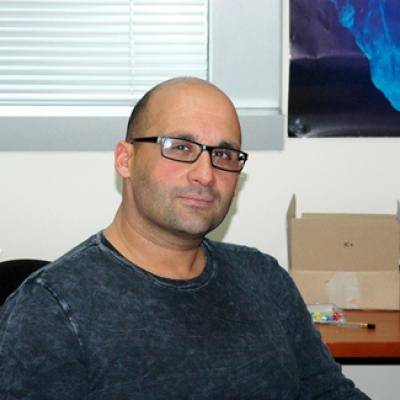
Francesco Fedele
· Associate ProfessorVerifiedGeorgia Institute of Technology · Civil and Environmental Engineering
Active 1981–2026
About
Dr. Francesco Fedele is an Associate Professor in the School of Civil and Environmental Engineering at the Georgia Institute of Technology. He received a Laurea in Civil Engineering from the Università Mediterranea in Italy in 1998 and a Ph.D. in Civil Engineering from the University of Vermont in 2004. He joined Georgia Tech in 2007 after completing a postdoctoral research appointment at NASA Goddard Space Flight Center. His research program focuses on fundamental and applied problems in nonlinear wave phenomena, fluid and wave mechanics, with a particular emphasis on oceanic rogue waves. His work encompasses theoretical, numerical, and experimental studies aimed at understanding and predicting rogue wave behavior in ocean environments. Dr. Fedele has developed innovative teaching methods that integrate arts into the engineering curriculum, creating courses such as Art and Geometry and Art and Generative AI to broaden students' perspectives on science and engineering holistically. He has received numerous awards for his contributions to teaching and research, including the CEE Education Innovation Award, the CEE Senior Faculty Teaching Award, and the OMAE 2011 SSR Best Paper Award. His publications include significant contributions to the understanding of rogue waves, wave dispersion, and nonlinear wave dynamics.
Research topics
- Computer Science
- Quantum mechanics
- Physics
- Mathematics
- Materials science
- Composite material
- Statistical physics
- Mechanics
- Classical mechanics
- Optoelectronics
- Mathematical analysis
- Condensed matter physics
Selected publications
Fold catastrophe in breaking waves
Communications in Nonlinear Science and Numerical Simulation · 2026-04-13
articleOpen access1st authorCorrespondingEffects of bound-wave asymmetry on North Sea rogue waves
Scientific Reports · 2025-07-01 · 5 citations
articleOpen accessSenior authorSince the 1990s, modulational instability has been proposed as an alternative to the constructive interference of waves to explain the occurrence of rogue waves in the open ocean. This study questions the relevance of this instability for real rogue waves by analyzing a novel dataset of high-frequency laser altimeter wave measurements collected over an 18-year period ([Formula: see text]) at the offshore Ekofisk platform in the central North Sea. A composite statistics of the ensemble of 27505 half-hourly sea states, accounting for data heterogeneity, show that third-order modulational instabilities do not significantly impact large waves; instead, second-order bound nonlinearities, shaping waves with asymmetric sharper crests and shallower troughs, are the primary factor that enhances the linear dispersive focusing, or constructive interference, of extreme waves.
Journal of Cardiovascular Development and Disease · 2025-06-05 · 14 citations
reviewOpen accessHeart failure with preserved ejection fraction (HFpEF) accounts for approximately 50% of heart failure cases and is primarily characterized by impaired diastolic function, leading to increased ventricular filling pressures and symptoms like dyspnea and reduced exercise tolerance. Significant gender-specific differences are observed, with women, particularly post-menopausal, experiencing higher prevalence and distinct clinical profiles compared to men. Diastolic dysfunction in HFpEF involves altered cellular mechanisms such as reduced SERCA2a expression, impacting calcium handling and myocardial relaxation. Diagnostic strategies mainly employ echocardiography, including Doppler imaging, tissue Doppler imaging, and strain imaging, to assess ventricular relaxation and stiffness. However, early identification remains challenging, necessitating advanced tools like cardiac magnetic resonance and exercise stress testing for accurate diagnosis, especially in women who often present with subtle symptoms. Treatment options for HFpEF have traditionally been limited, but recent trials, notably EMPEROR-PRESERVED and DELIVER, demonstrated significant cardiovascular benefits using sodium-glucose cotransporter-2 (SGLT2) inhibitors. Additionally, glucagon-like peptide-1 receptor agonists (GLP-1 RAs) have shown promising results, particularly in obese patients. Despite these advances, gender differences in therapeutic response necessitate further research for personalized management strategies. Understanding sex-specific pathophysiological mechanisms and optimizing diagnostic criteria remain essential to improving prognosis and quality of life in HFpEF patients.
International Journal of Cardiology Cardiovascular Risk and Prevention · 2025-08-26 · 8 citations
articleOpen accessBackground: Vitamin D plays several roles beyond bone metabolism, potentially protecting the cardiovascular system. Systemic sclerosis (SSc) is an autoimmune disease characterized by fibrosis and vascular dysfunction, carrying a high cardiovascular risk. However, the relationship between vitamin D insufficiency and cardiovascular involvement in SSc patients remains unclear. This study aims to assess the association between low vitamin D levels, echocardiographic parameters indicative of ventricular dysfunction, and cardiovascular risk factors in SSc patients. Methods: A retrospective observational study involved 160 SSc patients undergoing echocardiography and serum 25-hydroxyvitamin D measurement. Patients were categorized into two groups: vitamin D insufficiency (<30 ng/mL) and normal levels (≥30 ng/mL). Echocardiographic parameters and cardiovascular risk factors were evaluated. Results: Vitamin D insufficiency was detected in 68.9 % of patients. Patients with insufficient vitamin D had higher systolic pulmonary arterial pressure (PAPs; 37.68 ± 7.56 mmHg vs. 33.12 ± 6.17 mmHg; p = 0.004), reduced TAPSE/PAPs ratio (0.65 ± 0.13 vs. 0.72 ± 0.14; p = 0.021), increased interventricular septal thickness (8.17 ± 1.28 mm vs. 7.69 ± 1.18 mm; p = 0.028), and greater left ventricular end-diastolic diameter (44.06 ± 4.28 mm vs. 42.67 ± 3.44 mm; p = 0.037), indicating ventricular dysfunction. Vitamin D insufficiency significantly correlated with hypertension (OR = 2.31; p = 0.032), dyslipidemia (OR = 2.45; p = 0.015), and overweight/obesity (OR = 4.73; p = 0.002), but not with diabetes or smoking. Conclusions: Vitamin D insufficiency may contribute to cardiovascular dysfunction in SSc patients. Monitoring vitamin D levels might improve cardiovascular risk stratification. Further studies are necessary to determine if supplementation could enhance cardiac outcomes.
Finite Element Analysis of 2D Linear Elasticity Problems Under Interval Uncertainty
SSRN Electronic Journal · 2025-01-01
preprintOpen access2025-08-12
articleOpen access1st authorCorrespondingAI and art collide in this engineering course that puts human creativity first
2025-07-09
preprint1st authorCorrespondingCross-architecture tuning of silicon and SiGe-based quantum devices using machine learning
Scientific Reports · 2024 · 10 citations
- Computer Science
- Optoelectronics
- Computer Science
The potential of Si and SiGe-based devices for the scaling of quantum circuits is tainted by device variability. Each device needs to be tuned to operation conditions and each device realisation requires a different tuning protocol. We demonstrate that it is possible to automate the tuning of a 4-gate Si FinFET, a 5-gate GeSi nanowire and a 7-gate Ge/SiGe heterostructure double quantum dot device from scratch with the same algorithm. We achieve tuning times of 30, 10, and 92 min, respectively. The algorithm also provides insight into the parameter space landscape for each of these devices, allowing for the characterization of the regions where double quantum dot regimes are found. These results show that overarching solutions for the tuning of quantum devices are enabled by machine learning.
Hamiltonian Lorenz-like models
Physica D Nonlinear Phenomena · 2024-12-14
articleOpen access1st authorCorrespondingEncyclopedia of earth sciences series/Encyclopedia of earth sciences · 2023-01-01
book-chapter1st authorCorresponding
Frequent coauthors
- 64 shared
Denys Dutykh
Khalifa University of Science and Technology
- 27 shared
Alvise Benetazzo
Institute of Marine Science
- 26 shared
Marx Chhay
- 22 shared
M. Aziz Tayfun
Colonial Williamsburg Foundation
- 21 shared
Anthony Yezzi
Georgia Institute of Technology
- 17 shared
Felice Arena
University of Reggio Calabria
- 16 shared
Guillermo Gallego
- 11 shared
Rafi L. Muhanna
Georgia Institute of Technology
Education
- 2004
Ph.D., Civil Engineering
University of Vermont
Awards & honors
- Editorial Contribution Award for contributions to Scientific…
- Transformative Teaching and Learning Innovation Incubator fa…
- Hesburgh Award Teaching Fellow, Center for Enhancement of Te…
- CETL Curriculum Innovation Award, Center for Enhancement of…
- CEE Education Innovation Award, School of Civil and Environm…
- Resume-aware match score
- Save to shortlist
- AI-drafted outreach
See your match with Francesco Fedele
PhdFit ranks faculty by your research interests, methods, and publications — grounded in their actual work, not templates.
- Free to start
- No credit card
- 30-second signup