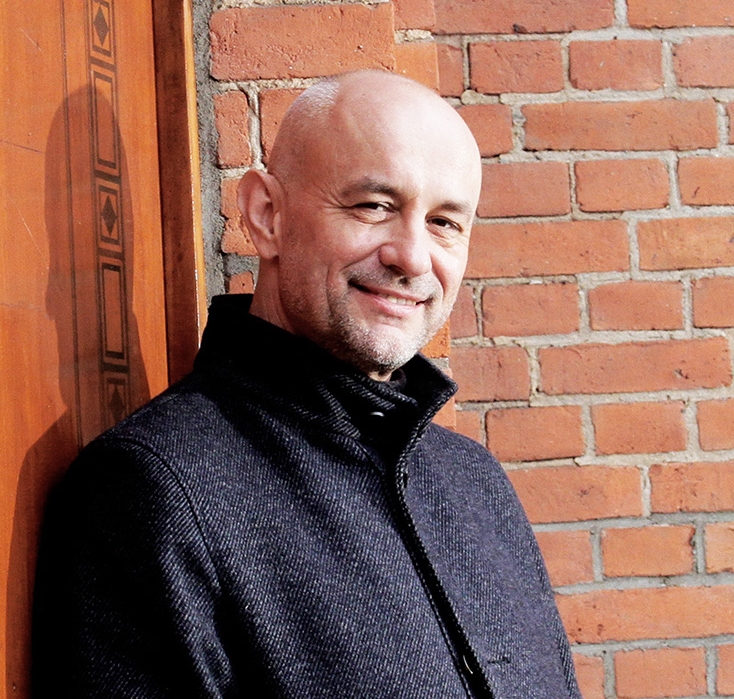
Frank Biess
· ProfessorVerifiedUniversity of California, San Diego · History
Active 1994–2025
About
Frank Biess is a historian of Modern Europe with an emphasis on 20th Century Germany. He began his academic training at the Universities of Marburg and Tübingen in Germany and moved to the United States in 1991, initially as an exchange student at Washington University in St. Louis, and later as a graduate student at Brown University, where he earned his Ph.D. in 2000. His research has primarily focused on the post-1945 period, exploring themes such as the legacies of war and defeat in postwar Germany, the history of emotions—particularly fear and anxiety in West Germany—and the country's colonial and post-colonial history. His first book, 'Homecoming. Returning POWs and the Legacies of Defeat in Postwar Germany,' examines how German societies coped with the aftermath of war and defeat, highlighting the differences and similarities between East and West German societies during the Cold War era. Currently, he is developing a project that analyzes the Weimar Republic as a post-colonial state. Biess has also contributed extensively to the understanding of German history through numerous publications, including books, articles, and edited volumes, and teaches courses on modern German history, Europe since 1945, and the history of emotions.
Research topics
- Psychology
- Philosophy
- Political Science
- History
- Archaeology
- Law
- Aesthetics
- Classics
- Psychoanalysis
- Art history
- Economic history
- Theology
- Art
- Linguistics
- Literature
Selected publications
Weimar in the World: Transnational and Global Perspectives on Germany’s First Democracy
The Journal of Modern History · 2025-06-01
article1st authorCorrespondingBerghahn Books · 2024-10-31
book-chapter1st authorCorrespondingProfessors, Post-structuralism, and the “Postwar”:
Berghahn Books · 2024-10-06
book-chapter1st authorCorrespondingHolocaust Memory and Postcolonialism: Transatlantic Perspectives on the Debate – CORRIGENDUM
Central European History · 2023-08-29
erratumOpen access1st authorCorrespondingAn abstract is not available for this content. As you have access to this content, full HTML content is provided on this page. A PDF of this content is also available in through the ‘Save PDF’ action button.
Holocaust Memory and Postcolonialism: Transatlantic Perspectives on the Debate
Central European History · 2023-06-01 · 3 citations
article1st authorCorrespondingGerman commemorative culture is clearly in flux. Over the last year or so, a series of seemingly never-ending controversies have made it abundantly clear that, more than seventy-five years after the end of the Second World War, the memory of National Socialism and the Holocaust is not only very much present in contemporary Germany but also remains deeply contested. The list of controversies is familiar to everybody who has followed German public debates over the last three years: first the debate over the planned appearance of the Cameroonian philosopher Achille Mbembe at the 2020 Ruhr-Trienale in the spring of 2020; then the publication of the German translation of Michael Rothberg's book Multidirectional Memory in March 2021 and the heated controversy around A. Dirk Moses's “catechism” blog article a few months later; and finally, the recent debate about antisemitism at the documenta art exhibition curated by an Indonesian artist collective.
Fear, Anxiety and Terror post 9/11
2022-06-13 · 1 citations
book-chapter1st authorCorrespondingThis essay offers an overview of the history of fear since the early modern period. It focuses especially on contemporary fears during the twenty-first century. Against the background of a longer history of fear, the essay argues that contemporary fears are de-territorialised, that is they lack a concrete origin or location. Contemporary fears are an essential part of a particularly crisis-ridden globalisation that featured an entire series of fear cycles: terrorism, an economic and financial crisis, a refugee crisis, a climate crisis, and most recently, a global health crisis. The global rise of right-wing populism is based on a new politics of fear that seeks to blame specific groups (immigrants, Muslims, a global elite) for such globalised contemporary fears.
INTRODUCTION Histories of the Aftermath
Berghahn Books · 2022-10-11 · 1 citations
book-chapter1st authorCorrespondingThe American Historical Review · 2022-03-01
article1st authorCorrespondingCHAPTER 2 Feelings in the Aftermath: Toward a History of Postwar Emotions
Berghahn Books · 2022-10-11 · 3 citations
book-chapter1st authorCorrespondingIntroduction: German Histories and Pacific Histories
Berghahn Books · 2022-09-27
book-chapter
Frequent coauthors
- 4 shared
Mark Roseman
- 2 shared
Hanna Schissler
- 2 shared
Robert G. Moeller
- 2 shared
Daniel M. Gross
- 2 shared
Hartmut Berghoff
- 2 shared
Ulrike Strasser
- 2 shared
Ute Frévert
- 1 shared
Pieter Lagrou
Université Libre de Bruxelles
Education
- 1999
PhD, History
Brown University
- Resume-aware match score
- Save to shortlist
- AI-drafted outreach
See your match with Frank Biess
PhdFit ranks faculty by your research interests, methods, and publications — grounded in their actual work, not templates.
- Free to start
- No credit card
- 30-second signup