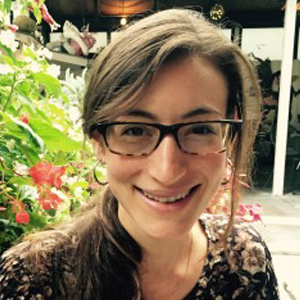
Gabrielle Berlinger
· Associate ProfessorUniversity of North Carolina at Chapel Hill · American Studies
Active 2008–2025
About
Gabrielle A. Berlinger is an Associate Professor of American Studies and Folklore at the University of North Carolina at Chapel Hill, where she also serves as the Director of Graduate Studies. She holds a Ph.D. in Folklore from Indiana University at Bloomington (2013), an M.A. in Folklore from the same institution (2008), and a B.A. in Anthropology from the University of Pennsylvania (2003). Her research focuses on creative expression in everyday life, particularly examining vernacular architecture and ritual practices. She studies how the construction, interpretation, and use of structures and landscapes reflect their creators' histories, social practices, cultural customs, and beliefs, and how ritual practices can sacralize, activate, and transform these spaces. Berlinger's work emphasizes ethnographic fieldwork and public engagement, with applied experience in arts and cultural research organizations across multiple regions including Pennsylvania, Massachusetts, Indiana, New York, and Israel. She was an Andrew W. Mellon Postdoctoral Fellow at the Bard Graduate Center, where her ethnographic research centered on the preservation of the Lower East Side Tenement Museum, exploring issues of historic preservation, immigrant social history, heritage management, and museum practices. Her notable publication, 'Framing Sukkot: Tradition and Transformation in Jewish Vernacular Architecture,' is based on ethnographic fieldwork in South Tel Aviv, Israel, and investigates the material and ritual aspects of Sukkot dwellings, offering insights into community, home, homelessness, and belonging within multicultural contexts. Her teaching integrates ethnographic methods, multimedia projects, and collaborations with cultural institutions and communities, and she offers courses on folklore, Jewish ethnography, urban folklore, ritual, and art.
Research topics
- Computer Science
- Sociology
- Psychology
- History
- Psychoanalysis
- Theology
- Philosophy
- Archaeology
- Religious studies
Selected publications
Homes of the Past: A Lost Jewish Museum. By Jeffrey Shandler.
Jewish History · 2025-12-01
article1st authorCorrespondingBeyond the Synagogue: Jewish Nostalgia as Religious Practice by Rachel B. Gross
American Jewish history · 2022
1st authorCorresponding- Sociology
- Sociology
- History
Reviewed by: Beyond the Synagogue: Jewish Nostalgia as Religious Practice by Rachel B. Gross Gabrielle A. Berlinger (bio) Beyond the Synagogue: Jewish Nostalgia as Religious Practice. By Rachel B. Gross. New York: NYU Press, 2021. xii + 259 pp. In Beyond the Synagogue, Rachel B. Gross makes a bold and significant claim: Jewish religion in America today is hidden in plain sight, and not where you would imagine. Past generations prayed in synagogues and married within the faith—historic patterns of Jewish religious expression. Today's Jews, writes Gross, have moved beyond. They do not find or express their Judaism in such explicit ways or spaces but rather in daily life and everyday places. Gross's research identifies a network of "secular" places and practices that affirm Jewish cultural and religious affiliation, countering vocal concern that American Jewish religion is on the decline or that intermarriage is causing a "continuity crisis." Gross argues that former metrics no longer apply; today, one must look to a multiplicity of vernacular expressions such as genealogical pursuits, new food movements, historic preservation efforts, and children's toys and publications to locate Jewish religious expression. In each of these contexts, she writes, American Jews are engaging with Jewishness on their own terms. Crucially, the key to finding Judaism in these spaces is a familiar feeling to us all in a 21st century world in constant flux: nostalgia. Contemporary American Jewish religion, writes Gross, exists and thrives today in diverse modes of nostalgic practice. This book examines "the ways in which people enact their religious identities on a daily basis, through ordinary activities such as eating, cooking, shopping, reading, or entertaining" (7). Through this lens of lived religion, Gross uncovers the Jewish practices of a broad spectrum of Jews, [End Page 311] cutting across the common divides of "religious" and "secular," "leader" and "layperson." She recognizes new meaning attained in the blurring of these boundaries in contemporary American Jewish life, stating that, "Divisions between Judaism (the religion) and Jewishness (the culture) are no longer useful, if they ever were…In reality, activities understood as both religious and cultural provide existential meaning for American Jews and connect them to imagined transhistorical communities of Jews past, present, and future" (32). Gross thus conceives of religion as the relationships and structures between families, communities, ancestors, and the divine, and as such, she looks to activities and organizations—both "religious" and "secular"—in modern Jewish America that nurture these relationships and produce structures of meaning. Memory, in the form of nostalgic practice, threads together Gross's four cases of contemporary religious practice. Countering former theories of nostalgia, she asserts that nostalgia functions as religious practice for Jews in contemporary America. She claims that this is possible because nostalgia can be productive, not only reductive, helping to forge personal and shared bonds with history and satisfy present-day desires to search for and connect with authentic pasts. Each of the case studies demonstrates a distinctive way in which nostalgia works as religious practice—"alternately authoritative, intimate, playful, ironic, or elegiac" (13). Gross's first case highlights amateur and professional Jewish genealogists across the United States. Through their efforts, these genealogists create local and digital communities in the present while gaining an emotional and spiritual appreciation of history—one that Gross notes is nostalgically longed for and eagerly claimed. Gross's second case centers on historic synagogues across the United States that function as heritage sites. Through self-conscious public programming, these institutions enable visitors to affectively experience local and shared history by walking through the historic spaces, brushing with an "authentic" past. "A search for authenticity is a hallmark of American religion," observes Gross, and these restored buildings yield tangible results to such nostalgic quests (96). The third case study describes how children are taught nostalgia through new toys and the contemporary publication and distribution of books with Jewish consciousness. The Jewish experiences and values that these books and toys convey focus on forging bonds with, primarily, Eastern European Jewish immigrant history, bridging imagined ancestors and a storied past with a child's present and future. The last case surveys the field of new Jewish deli cuisine and culinary revival efforts...
Material Culture Review · 2021-04-29
articleOpen access1st authorCorrespondingBernard L. Herman. An article from journal Material Culture Review / Revue de la culture matérielle (Special Issue - Storied Spaces: Renewing Folkloristic Perspectives on Vernacular Architecture), on Érudit.
Material Culture Review · 2021-04-29
articleOpen accessSenior authorStories Buildings Tell, Lives Buildings Shape: The Enduring Tradition of Vernacular Architecture Research in North American Folkloristics. An article from journal Material Culture Review / Revue de la culture matérielle (Special Issue - Storied Spaces: Renewing Folkloristic Perspectives on Vernacular Architecture), on Érudit.
Material Culture Review · 2021
Senior authorCorresponding- Psychoanalysis
- Psychology
Michael Ann Williams. An article from journal Material Culture Review / Revue de la culture matérielle (Special Issue - Storied Spaces: Renewing Folkloristic Perspectives on Vernacular Architecture), on Érudit.
New York University Press eBooks · 2020
- Computer Science
- Computer Science
Israel in the Making: Stickers, Stitches, and Other Critical Practices
Journal of American Folklore · 2019-03-29
article1st authorCorrespondingBook Review| April 01 2019 Israel in the Making: Stickers, Stitches, and Other Critical Practices Israel in the Making: Stickers, Stitches, and Other Critical Practices. By Hagar Salamon. (Bloomington: Indiana University Press, 2017. Pp. 292 + 40 black-and-white illustrations.). Gabrielle A. Berlinger Gabrielle A. Berlinger University of North Carolina at Chapel Hill Search for other works by this author on: This Site Google Journal of American Folklore (2019) 132 (524): 217–218. https://doi.org/10.5406/jamerfolk.132.524.0217 Cite Icon Cite Share Icon Share Facebook Twitter LinkedIn MailTo Permissions Search Site Citation Gabrielle A. Berlinger; Israel in the Making: Stickers, Stitches, and Other Critical Practices. Journal of American Folklore 1 January 2019; 132 (524): 217–218. doi: https://doi.org/10.5406/jamerfolk.132.524.0217 Download citation file: Zotero Reference Manager EasyBib Bookends Mendeley Papers EndNote RefWorks BibTex toolbar search Search Dropdown Menu toolbar search search input Search input auto suggest filter your search All Scholarly Publishing CollectiveUniversity of Illinois PressJournal of American Folklore Search Advanced Search The text of this article is only available as a PDF. Copyright 2019 by the Board of Trustees of the University of Illinois2019 Article PDF first page preview Close Modal You do not currently have access to this content.
2018-06-09
book-chapter1st authorCorrespondingSearching for Home in the Ephemeral Architecture of the Sukkah
Indiana University Press eBooks · 2018-01-30
book-chapter1st authorCorrespondingBalancing Memory and Material at the Lower East Side Tenement Museum
Museum Anthropology Review · 2018-01-17 · 1 citations
articleOpen access1st authorCorrespondingAbstract: Founded in a nationally landmarked apartment building on the ever-gentrifying Lower East Side of Manhattan, New York, the Lower East Side Tenement Museum is an historic site of immigrant social history and material culture. Constructed in 1864 and occupied by over 7,000 immigrants until its closing in 1935, this building has withstood constantly rising visitorship each year since its opening as a museum in 1988. With apartment spaces restored for the public to explore without roped-off restriction, this time capsule of domestic immigrant life requires continual maintenance to preserve its historic physical fabric. Through interviews with the Museum staff and the Preservation Advisory Committee (conservators, architectural historians, curators), as well as documentation of technical processes carried out in the preservation process, this ethnographic study investigates the questions and compromises that arise in the preservation of the tangible and intangible heritage contained within an historic structure in constant use. Which narratives are reconstructed through the Museum’s decisions to restore certain material features of the building while allowing others to decay? What are best practices for interpretation and preservation when a museum’s success results in the gradual destruction of its main artifact (the building) through use? This study explores the intersection of museum mission and practice, heritage construction, and historic preservation at a site both sustained and destroyed by its increasing success.
Frequent coauthors
- 3 shared
Michael J. Chiarappa
- 1 shared
Stanislav Shvabrin
University of North Carolina at Chapel Hill
- 1 shared
Jonathan Boyarin
Cornell University
- 1 shared
Malachi Haim Hacohen
- 1 shared
Hanna Sprintzik
- 1 shared
Martin Sueldo
- 1 shared
Gabriel Trop
- 1 shared
D Christmas
Awards & honors
- Andrew W. Mellon Postdoctoral Fellow in the “Cultures of Con…
- Resume-aware match score
- Save to shortlist
- AI-drafted outreach
See your match with Gabrielle Berlinger
PhdFit ranks faculty by your research interests, methods, and publications — grounded in their actual work, not templates.
- Free to start
- No credit card
- 30-second signup