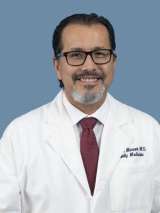
Gerardo Moreno
· Chair and ProfessorVerifiedUniversity of California, Los Angeles · Family Medicine
Active 1954–2025
About
Dr. Gerardo Moreno is the chair of the UCLA Department of Family Medicine and a professor at the David Geffen School of Medicine at UCLA. He has been elected to the National Academy of Medicine, one of the highest honors in the fields of medicine and health, recognizing his outstanding professional achievement. As the department's leader, Dr. Moreno oversees a mission focused on outstanding patient care, education, research discovery, and community engagement to improve the health of patients and families in the community. His department provides comprehensive and personalized primary care through innovative models delivered by a multidisciplinary team that includes pharmacists, behavioral and mental health clinicians, and physicians with expertise in addiction medicine and sports medicine. The department operates multiple practices, including UCLA Health Family Health Center in Santa Monica, West Adams Primary Care, and the Vine Street Clinic, along with a partnership with Los Angeles County at the Mid Valley Family Medicine Clinic, serving as a teaching site. Dr. Moreno's family medicine residency program prepares physicians to serve a multicultural and diverse society, emphasizing care that considers patients' families, communities, and broader social conditions. Dr. Moreno's research program is nationally recognized, ranking in the top ten family medicine departments in NIH funding. His work focuses on transforming primary care, addressing healthcare disparities, and developing models to strengthen the primary care workforce. He leads efforts to improve healthcare delivery, including primary care addiction medicine, and actively engages with the community through mentoring programs, supervision at community health fairs, and UCLA student-run homeless clinics. His leadership and contributions significantly impact primary care practice, research, and community health initiatives.
Research topics
- Computer Science
- Medicine
- Political Science
- Environmental health
- Family medicine
- Nursing
- World Wide Web
- Internal medicine
- Engineering
- Business
- Emergency medicine
- Internet privacy
- Public relations
- Gerontology
- Medical emergency
Selected publications
A Guide to Building K-12 Pathway Programs Within Family Medicine Residency Programs
Family Medicine · 2025-03-05
articleOpen accessSenior authorFamily medicine residency programs can implement pathway programs to grow a diverse primary care workforce capable of caring for all patients and communities. A pathway program aims to support students from selected level(s) of the educational continuum toward becoming qualified applicants to health professions programs. This guide provides an evidence-informed approach to developing, implementing, and evaluating effective pathway programs that residency programs can use to build the diverse health care workforce that is critical for health equity. First, we provide practical guidance for program development that uses a logic model and builds partnerships with schools and crucial stakeholders. Then, we discuss how to incorporate a needs assessment to align program goals with student needs. Next, we describe how to leverage social cognitive theory to maximize impact on learners and their ultimate achievement. Finally, we overview systematic evaluation to support long-term program success. Effective program planning leverages the processes through which learning occurs, influencing learners' self-efficacy and outcomes expectations through relatable role models and mastery experience. We provide concrete examples from the Family Medicine Bridging the Gap Pathway Program. Pathway program developers can accelerate students' trajectory toward health profession graduate schools by choosing interventions that serve their greatest needs, thus preparing competitive applicants able to progress to the next educational level.
Family Medicine · 2025-06-12 · 1 citations
articleOpen accessSenior authorBACKGROUND AND OBJECTIVES: The 2023 Accreditation Council for Graduate Medical Education (ACGME) program requirements for family medicine residencies state that family physicians must have the competence to address racial and ethnic health disparities experienced by their patients. Racial justice curricula (RJC) or antiracism curricula can provide residencies with the tools faculty and residents need. This study explores the differences in perceived barriers between family medicine program directors (PDs) and residents. METHODS: Survey questions on RJCs were included in the 2020 Council of Academic Family Medicine Educational Research (CERA) survey of PDs and 2021 CERA survey of residents. Participants' perceived top two barriers to implementing an RJC in their residency program were illustrated with Sankey diagrams. We used the χ2 test and logistic regression for analysis. RESULTS: Of the 578 participants included, 312 (54%) were PDs and 266 (46%) were residents. Compared to PDs, residents were more likely to identify as female, less likely White, and more likely from community-based, nonuniversity-affiliated residency programs. PDs ranked lack of faculty training as the most important barrier, while residents ranked lack of time as the top barrier. Residents also were significantly more likely to rank lack of faculty interest and resident interest as barriers. CONCLUSIONS: Family medicine PDs and residents identified different barriers to implementing an RJC. Additional research is needed to investigate the impact of knowledge and culture on residency programs' receptiveness to addressing racial and ethnic health disparities.
The New Educator · 2025-06-07
article1st authorCorrespondingFamily Medicine · 2025-04-04
articleOpen accessSenior authorBACKGROUND AND OBJECTIVES: The University of California, Los Angeles (UCLA) International Medical Graduate (IMG) program addresses the need for more bilingual and bicultural Latino family physicians in California where Latinos are the largest racial/ethnic minority group and a large percentage of the population speaks Spanish. The objective of this descriptive study was to assess family medicine residency match, board certification, and initial practice location outcomes of the program graduates. METHODS: We conducted a cross-sectional study of program graduates (N=204) from 2007 to 2024. Data were abstracted from program administrative files and the California Medical Board. Primary outcomes were match rate into California family medicine residency programs, completion of a residency, board certification, and initial training practice location. We computed descriptive statistics for participant characteristics and outcomes. RESULTS: A total of 177/204 (87%) participants completed the UCLA IMG program and entered the match. The country with the most graduates was Mexico followed by Cuba. All graduates, 177/177 (100.0%), that applied and entered the National Resident Matching Program matched in a family medicine residency program. A total of 172 (97%) matched in California programs and 5 (2.8%) matched out of state. Family medicine board certification was verified for 152/159 (95.6%) of those eligible. Few completed a fellowship. CONCLUSIONS: The UCLA IMG program was effective at preparing program graduates that were fluent in Spanish and bicultural to match in a California family medicine residency program and subsequently practice family medicine in underserved areas. Future studies will examine long-term practice outcomes, predictors of success, and participant perspectives on the program.
Health Equity · 2024-05-01
articleOpen accessBackground: To achieve health equity, interventions should yield similar effectiveness across all patient subgroups. However, the adoption of diabetes prevention strategies and successful weight loss in "real-world" Diabetes Prevention Program (DPP) translational studies have varied by race and ethnicity. We examined racial and ethnic differences in diabetes prevention outcomes among study participants from the Prediabetes Informed Decisions and Education (PRIDE) Study. Methods: In a retrospective analysis of data from the PRIDE cluster randomized trial across a large health system, we examined (1) percent weight change and (2) uptake of DPP and/or metformin among overweight/obese participants with prediabetes 12 months after participating in a pharmacist-led shared decision-making (SDM) intervention. We stratified the outcomes by race and ethnicity using a generalized linear mixed-effects model. Results: < 0.01 for both comparisons). There was no significant difference in the adoption of diabetes prevention strategies between racial and ethnic groups after completing an educational SDM intervention. Conclusion: To better promote health equity, future studies should investigate the potential causal factors for these differences in weight loss, such as variations in socioeconomic status, physical activity, cultural influences, and neighborhood characteristics.
Tactics for Institutional Advocacy to Increase Research Capacity in a Family Medicine Department
The Journal of the American Board of Family Medicine · 2024-11-01
articleOpen accessSenior authorFamily medicine as a specialty has steadily increased its research capacity. Specific approaches are needed to attain the following: 1) Advocate for increased funding for Departments of Family Medicine from institutional leadership. 2) Identify and promote promising practices for chairs to support and fund research participation within their departments and institutions. Having each assumed the chair position recently, the authors summarize the specific approaches taken to expand the research capacity in a midsized urban and a large research intensive urban public university family medicine department. They included: obtaining adequate support from the Dean and other institutional programs at the time of on-boarding, focusing on established research themes within the department, ensuring the recruited faculty had high likelihood of success via their track record and mentorship, and getting the buy-in from all faculty through sharing of vision and helping everyone establish their scholarly niche.
Practice Intention: Addressing the Needs of Diverse Underserved Communities in Medical Education
Family Medicine · 2024-12-17 · 1 citations
articleOpen accessSenior authorBACKGROUND AND OBJECTIVES: The US physician workforce is at a critical juncture, with a projected shortage and misdistribution of primary care physicians. Culturally and linguistically diverse states, such as California, are challenged to search for innovative approaches in medical education to address the physician needs of diverse underserved communities. The University of California recognizes this imperative and supports Programs in Medical Education (PRIME), including PRIME Leadership and Advocacy (PRIME-LA) at University of California Los Angeles (UCLA). This study examines medical education outcomes for PRIME-LA graduates versus a comparator group. METHODS: We conducted a secondary data analysis of the graduation questionnaire responses from UCLA graduates between 2018 and 2023. Our study included 97 PRIME-LA graduates and 811 comparator graduates. Primary outcomes included intentions to practice in underserved areas and intentions to care for underserved populations. Secondary outcomes included participation in experiences related to health disparities, health education, providing mentorship, and specialty of interest. RESULTS: A higher proportion of PRIME-LA graduates reported an intention to practice in underserved areas than the comparator group (89% vs 32%, P<.001). Intentions to care for underserved populations were higher among PRIME-LA graduates than those in the comparator group (93% vs 44%, P<.001). Family medicine is the most common specialty among PRIME-LA graduates in contrast to graduates of the comparator group (26.4% vs 6.3%, P<.001). CONCLUSIONS: Mission-based medical education programs play a critical role in addressing the physician workforce gap in underserved communities. The PRIME-LA program may equip students with additional skills and training to address California's physician workforce needs.
Efforts to Reduce Bias in Clerkship Evaluations: A CERA Study
PRiMER · 2024-08-05
articleOpen accessIntroduction: As the number of medical students who identify as underrepresented in medicine (URiM) increases, the disparities related to gender and URiM status persist. This study examines the current initiatives within family medicine clerkships to reduce bias in evaluations. Methods: Our 10-item survey was included as a module in the 2022 Council of Academic Family Medicine Educational Research Alliance national survey of family medicine clerkship directors. Our survey questions asked about whether programs had strategies to reduce bias in student evaluations, antiracism initiatives, perceptions on effectiveness of the initiatives, and type and cadence of faculty development on evaluations for preceptors. Results: The overall response rate for the survey was 59.12% (94/159); all respondents completed our module. Seventy percent said they had implemented strategies to reduce bias in evaluations, 60% felt these were effective, and 80% felt that reducing bias in evaluations was a priority. The majority, 89/91(95%), indicated that their medical schools had a current social justice, diversity, or antiracism initiative. We identified a positive association between specific antibias medical school initiatives and clerkship directors undertaking practices to reduce bias in evaluations (P=.005). Conclusions: Most programs had implemented strategies to reduce bias and felt that doing so was a priority. Community-based preceptors were less likely to have faculty development around reducing bias compared to those in academics. Further improvements may need to prioritize including community preceptors in educational efforts to reduce bias.
The Annals of Family Medicine · 2024-11-20
articleOpen access<h3>Context:</h3> Concerns about declining diversity among medical students have emerged due to the Supreme Court’s 2023 ruling against race-based affirmative action in college admissions. Medical schools must now eliminate race or ethnicity considerations, making it imperative to develop innovative approaches to preserve recent progress. Notably, California has been navigating this landscape since it banned affirmative action in 1996. The University of California recognized this imperative and has supported the Programs in Medical Education (PRIME). At the University of California Los Angeles, the PRIME Leadership and Advocacy (PRIME-LA) program prepares medical students to be leaders and advocates in clinical care, research, or policymaking for marginalized communities. <h3>Objective:</h3> This study examines specialty choice and practice location characteristics for PRIME-LA graduates. <h3>Study design and Setting:</h3> We conducted a cross-sectional survey of PRIME-LA graduates during 2013-2022. Data collection took place between June of 2023 and May of 2024. <h3>Outcome measures:</h3> The survey included demographic characteristics, specialty choice, training status, and practice location characteristics. Descriptive statistics were calculated using R version 4.2.2. <h3>Results:</h3> The response rate was 46% (77/168). The majority of respondents were female (70%). 19.5% of respondents identified as Asian, 15.6% identified as Black, and 44.2% of respondents identified as Latino/a/x. Family Medicine was the most common specialty among alumni respondents (29.9%). Of all respondents, 50.6% selected primary care specialties including family medicine, pediatrics, and internal medicine. 45.5% of survey respondents were in training (residency or fellowship) and 54.5 had completed their training. Most alumni were currently training or practicing in California (76.6%). 81.9% of alumni reported practicing in an underserved area and 76.6% reported providing clinical care for underserved populations. <h3>Conclusion:</h3> Graduates of the PRIME-LA program are diverse, serve underserved populations, and have high rates of choosing primary care. This mission-based medical education program is an important model for effectively addressing physician workforce gaps in underserved and marginalized communities.
2023 · 3 citations
Senior authorCorresponding- Medicine
- Gerontology
- Family medicine
<h3>Context:</h3> Telehealth is an emerging technology lauded for its potential to improve healthcare access and utilization. The use of telemedicine increased dramatically due to the public health emergency resulting from COVID-19. Prior to the pandemic, there were significant disparities in access to telehealth for patients with limited English proficiency (LEP). <h3>Objective:</h3> To examine the association between limited English proficiency and telehealth use during the pandemic. <h3>Study Design and Analysis:</h3> We performed a secondary analysis of data from the 2021 California Health Interview Survey (CHIS). We used bivariate and multivariable logistic regression analyses to assess the association between limited English proficiency and telehealth use. The telehealth measure included telephone and video visits. Our analysis controlled for age, sex, race/ethnicity, marital status, education, federal poverty level, education, insurance type, self-reported health status, and whether patients had a usual source of care. <h3>Dataset:</h3> The adult population file of the 2021 California Health Interview Survey. <h3>Population:</h3> CHIS is a crosssectional survey of noninstitutionalized adults living in California aged 18 years and older. <h3>Outcome Measures:</h3> Descriptive statistics and adjusted odds ratios. <h3>Results:</h3> This study included 24,453 adult respondents. A total of 1,268 respondents reported limited English proficiency. Bivariate analysis revealed that adults who reported LEP had lower rates of telehealth use compared to those who were English proficient (38.0% to 50%). The adjusted odds (AOR) of telehealth use were lower among adults with limited English proficiency compared to those who were English proficient (AOR 0.68, p < 0.001). Asian and Latino adults had lower adjusted odds of telehealth use compared to White adults (AOR 0.66, p <0.001; AOR 0.89, p = 0.02, respectively). Adults without a usual source of care also had lower adjusted odds of telehealth use (AOR 0.31, p <0.001). <h3>Conclusions:</h3> The results of this study highlight that adults with limited English proficiency experience disparities in access to telehealth use even after controlling for socioeconomic factors, access to care, and self-reported health status. These findings reiterate that health systems and policymakers should consider the needs of communities with limited English proficiency as we move toward an era of healthcare delivery inclusive of digital health technologies.
Recent grants
Health IT decision support to improve medication management safety and quality
NIH · $699k · 2012–2018
Frequent coauthors
- 49 shared
Carol M. Mangione
University of California, Los Angeles
- 25 shared
Marielle Baldwin
Boston Medical Center
- 25 shared
Maria Harsha Wusu
Morehouse School of Medicine
- 25 shared
Afi Mansa Semenya
- 22 shared
Leo S. Morales
University of Washington
- 20 shared
Stephen A. Wilson
Boston Medical Center
- 20 shared
Jesus G. Ulloa
VA Greater Los Angeles Healthcare System
- 18 shared
Efrain Talamantes
RAND Corporation
Education
- 2010
Postgraduate fellowship, Robert Wood Johnson Foundation Clinical Scholars Program
University of California Los Angeles David Geffen School of Medicine
- 2009
MS, School of Public Health
University of California Los Angeles
- 2007
Internship and Residency, Family and Community Medicine
University of California San Francisco
- 2004
MD
University of California Los Angeles David Geffen School of Medicine
Awards & honors
- elected to the National Academy of Medicine
- Resume-aware match score
- Save to shortlist
- AI-drafted outreach
See your match with Gerardo Moreno
PhdFit ranks faculty by your research interests, methods, and publications — grounded in their actual work, not templates.
- Free to start
- No credit card
- 30-second signup