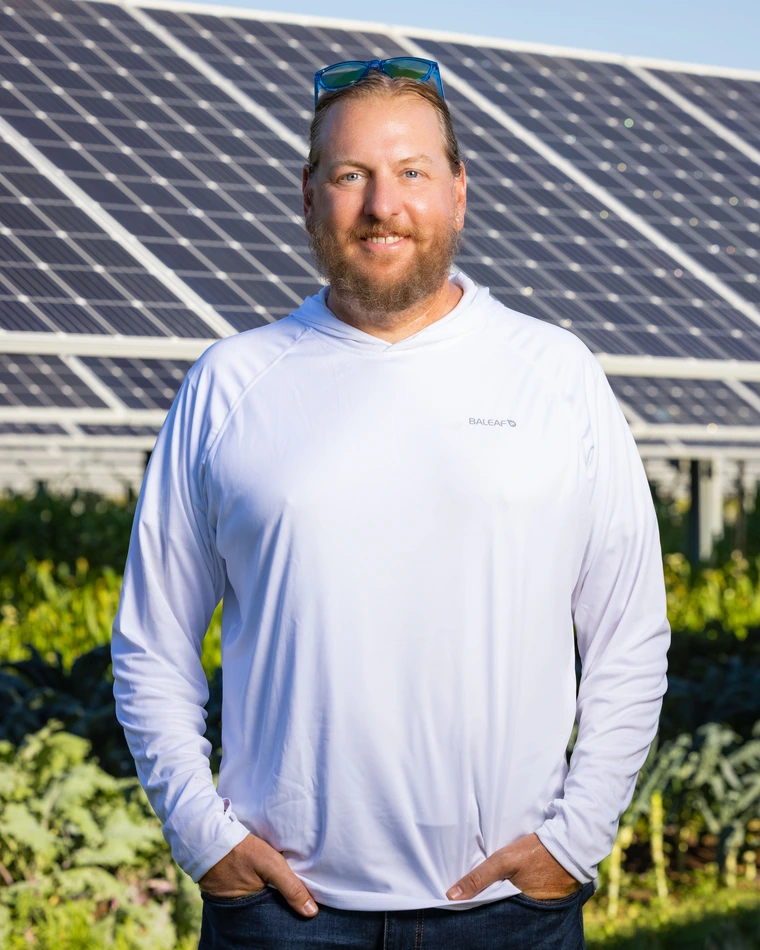
Greg Barron-Gafford
· Professor Associate Director of the School Garden Workshop Director of Food, Energy, and Water Resilience Solutions for Biosphere 2VerifiedUniversity of Arizona · Geography and Development Studies
Active 2003–2025
About
Greg Barron-Gafford is an associate director of the School of Geography, Development & Environment at the University of Arizona, where he also serves as the workshop director of Food, Energy, and Water Resilience Solutions for Biosphere 2. His research focuses on the food-water-energy nexus, global change ecology, and ecosystem ecology, with a particular emphasis on understanding how external environmental and human factors, as well as internal plant characteristics, influence species distribution and ecosystem function. He is a biogeographer studying the interactive effects of vegetation and climate change on plant and ecosystem responses, especially in semiarid environments. His group investigates how threats such as drought, climate change, and human pressures impact ecosystems, and they have been pioneering the field of 'agrivoltaics'—the co-location of agriculture and photovoltaic solar energy—over the past 12+ years. This work originated in southern Arizona and has expanded into national and international collaborations across the United States, Mexico, Africa, and the Middle East, aiming to develop science-based solutions to help communities adapt to a changing climate.
Research topics
- Environmental science
- Ecology
- Biology
- Geography
- Geology
- Atmospheric sciences
- Agronomy
- Meteorology
- Botany
- Remote sensing
- Agroforestry
- Chemistry
Selected publications
Developing crop-based agrivoltaic systems: A case study of Jack’s Solar Garden
Journal of Agriculture Food Systems and Community Development · 2025-01-01
articleOpen accessSolar developers seek agricultural lands as sites for new projects because of their high suitability for energy generation, and a growing number of farmers are interested in selling or leasing their land to developers as a form of financial diversification. However, many local governments and communities perceive the development of solar energy on farmland as a threat to the rural landscape, motivating enactment of restrictive solar energy land use policies. Agrivoltaics, the co-production of agriculture and solar energy on the same parcel of land, is increasingly proposed as a solution to the single-use nature of solar energy development in rural landscapes. Agrivoltaic systems featuring crop production may provide a range of benefits for farmers and local food systems, but they are uncommon in practice. This article presents a mixed-methods case study of Jack’s Solar Garden (JSG), a crop-based agrivoltaic site in Colorado, U.S., to explore why a farmer might pursue a crop-based agrivoltaic system, what challenges are involved in project development and maintenance, and what benefits such a project may yield for both a farm and a local food system. Utilizing interviews, document analysis, and media analysis, we find that crop-based agrivoltaic systems can serve as an acceptable compromise between farmers and local government while providing a wide range of community benefits. We emphasize the importance of public-private partnerships for the effective implementation of crop-based agrivoltaic systems and close with insights for potential agrivoltaic practitioners and suggestions for further research.
Journal of Rural Studies · 2025-01-13 · 19 citations
articleOpen accessSenior authorFrontiers in Sustainable Food Systems · 2025-10-08 · 2 citations
articleOpen accessSenior authorIntroduction The increasing global demand for food and energy is intensifying land-use competition. Agrivoltaic systems are a multifunctional land-use approach that vertically integrates the production of agricultural crops and solar power on the same land area. Most food crops are adapted to full-sun conditions, and the physiological responses of these crops to the novel microclimate under solar panels remain poorly understood. We hypothesized that the microclimate beneath the high-density photovoltaic system would influence carbon uptake, water use, and yield outcomes of zucchini summer squash. Methods We conducted a field experiment in a hot, semi-arid climate on zucchini ( Cucurbita pepo ). Plants were grown under an agrivoltaic system with a 75% ground cover ratio (GCR) and in a full-sun control plot, each with two irrigation regimes (100 and 50%). We measured leaf-level photosynthesis, microclimate variables, and fruit yield at plant maturity and throughout the growing season. Results The agrivoltaic array reduced photosynthetically active radiation (PAR) by ~79%, resulting in a cooler (−1.1 °C), more humid environment with higher soil moisture. These microclimatic conditions enhanced midday photosynthesis and daily cumulative carbon uptake. However, fruit yield was consistently lower under the panels, indicating a shift in carbon allocation toward vegetative growth. Photosynthesis was primarily driven by PAR across treatments, while soil moisture significantly influenced photosynthesis only in the control plots, suggesting water limitation was alleviated under the panels. Discussion These findings highlight a trade-off between improved physiological performance and reduced yield under high-density agrivoltaics. While the system buffered heat and drought stress and improved overall plant function, excessive shade reduced reproductive output. Optimizing panel density or selecting crops cultivated for non-fruit yields will be essential for balancing food production and energy generation in dryland agrivoltaic settings.
Agrivoltaics can reduce heat exposure for farmworkers
2025-11-20
articleOpen accessHeat exposure endangers over 850 million farmworkers, with agricultural labor projected to account for 60% of heat-related working-hour losses by 2030. Agrivoltaic systems, which integrate solar panels with agriculture, may reduce this risk by modifying the thermal environment farmworkers operate within, yet their impact on heat exposure remains unquantified. We evaluate wet bulb globe temperature (WBGT) across conventional full-sun agriculture and four agrivoltaic designs differing in panel height, density, and layout. Agrivoltaic systems significantly reduced WBGT, but the magnitude and timing of cooling varied by design. Overhead systems provided shading throughout the day, and consistently reduced daytime WBGT, with greater panel coverage increasing protection. Conversely, interspaced systems reduced morning and evening exposure but intensified midday heat, as restricted airflow and direct solar radiation elevated WBGT, particularly with lower solar panels. These findings demonstrate that strategic agrivoltaic design can improve farmworker thermal safety, whereas poorly configured systems may exacerbate exposure.
Energy Policy · 2025-06-03 · 7 citations
articleSenior authorNetwork of networks: Time series clustering of AmeriFlux sites
Agricultural and Forest Meteorology · 2025-06-24 · 2 citations
articleOpen access• Air temperature and net radiation followed a latitude gradient in clustering. • Clustering of fluxes was related to mean annual temperature and precipitation. • Site uniqueness was quantified, and proximal sites pairs were more similar. • Unique sites were in urban, open water, mountains, Hawaii, and Latin America. Environmental observation networks, such as AmeriFlux, are foundational for monitoring ecosystem response to climate change, management practices, and natural disturbances; however, their effectiveness depends on their representativeness for the regions or continents. We proposed an empirical, time series approach to quantify the similarity of ecosystem fluxes across AmeriFlux sites. We extracted the diel and seasonal characteristics (i.e., amplitudes, phases) from carbon dioxide, water vapor, energy, and momentum fluxes, which reflect the effects of climate, plant phenology, and ecophysiology on the observations, and explored the potential aggregations of AmeriFlux sites through hierarchical clustering. While net radiation and temperature showed latitudinal clustering as expected, flux variables revealed a more uneven clustering with many small (number of sites < 5), unique groups and a few large (> 100) to intermediate (15–70) groups, highlighting the significant ecological regulations of ecosystem fluxes. Many identified unique groups were from under-sampled ecoregions and biome types of the International Geosphere-Biosphere Programme (IGBP), with distinct flux dynamics compared to the rest of the network. At the finer spatial scale, local topography, disturbance, management, edaphic, and hydrological regimes further enlarge the difference in flux dynamics within the groups. Nonetheless, our clustering approach is a data-driven method to interpret the AmeriFlux network, informing future cross-site syntheses, upscaling, and model-data benchmarking research. Finally, we highlighted the unique and underrepresented sites in the AmeriFlux network, which were found mainly in Hawaii and Latin America, mountains, and at under-sampled IGBP types (e.g., urban, open water), motivating the incorporation of new/unregistered sites from these groups.
Cultivating engagement: Public participation in agrivoltaics planning and design
Energy Research & Social Science · 2025-09-01 · 2 citations
articleSenior authorGlobal Environmental Change Advances · 2025-07-16 · 2 citations
articleOpen accessSenior authorThe semi-arid environment of the southwestern United States, coupled with rising temperatures and reducing water availability, is threatening the sustainability of agriculture. To sustain farming here, strategies that support agricultural systems in adapting to the changing climate are needed. In such environments, agrivoltaics create a microclimate that can reduce air temperature and increase water efficiency, potentially providing a promising adaptation solution. However, strategic and appropriate implementation requires understanding where these systems would be most beneficial. We evaluate land suitability for agrivoltaics across the southwest using spatially explicit multi-criteria decision analysis, which incorporates biophysical variables that relate to the potential microclimate benefits provided by agrivoltaics under current and future climate conditions. Results show 310,393 km 2 of the region is suitable for agrivoltaics, with 20,576 km 2 classified as most suitable under current conditions, increasing to 31,712 km 2 under 2080 conditions. Arizona, New Mexico, and California contain the largest area of most suitable land under all time periods, with Luna and Torrance counties, New Mexico, Cochise and Maricopa counties, Arizona, and Imperial County, California, consistently ranking as the most suitable counties. Suitability increases as climate change progresses, with New Mexico and California seeing the largest relative gains. 82.7 % of the region is found to be unsuitable, highlighting the need for careful site selection when considering agrivoltaic implementation. Despite this, our findings indicate the substantial potential for agrivoltaics to support agricultural systems in the southwestern U.S. adapt to mounting environmental pressures and establishes a foundational understanding of where these systems could be most beneficial. • First agrivoltaic suitability analysis to incorporate future climate projections. • Most suitable agrivoltaic land in Southwest U.S. increases 54 % under future climate conditions. • California and New Mexico show largest gains in suitability as climate changes. • Early adoption in moderately suitable areas could future-proof agricultural systems.
Agrivoltaics and Education: Opportunities for Citizen Science
2025-06-08
articleThis paper presents a multi-generational, networked approach to studying small-scale agrivoltaics installations in arid desert climates and communities. In collaboration with university partners, K-12 students and teachers design, construct, maintain, and monitor garden beds with and without solar panels on school campuses and in community spaces. Results suggest promising benefits of community-embedded agrivoltaic systems, highlighting the potential for these installations to support sustainable agricultural and energy goals, as well as positive learning outcomes.
Preface: AgriVoltaics World Conference 2024
AgriVoltaics Conference Proceedings · 2025-08-08
articleOpen accessSenior authorThe 5th AgriVoltaics World Conference in Denver, Colorado, USA was a landmark event for the global agrivoltaics community. Nearly 500 scholars, practitioners, policymakers, and industry leaders from over 30 countries gathered to share international research outcomes and facilitate the deployment of agrivoltaics. The conference theme of “Building Food-Energy-Water Resilience through Agrivoltaics at Multiple Scales” permeated each technical session, roundtable discussion, and poster session. The event’s broad representation of scientific disciplines, government sectors, and nations highlighted the diverse partnerships and collaborative ethos that is driving agrivoltaics forward, while emphasizing regional and local differences in agrivoltaic designs and applications. AgriVoltaics2024 showcased the leading edge of agrivoltaics research and development practice. More than 60 technical sessions, 8 roundtable discussions, and 80+ poster presentations offered participants a deep dive into novel analyses, technological innovations, foundational tools, and real-world applications in agrivoltaics. Sessions addressed critical issues related to multiple approaches to “scaling agrivoltaics,” such as workforce development, industry perspectives, legal frameworks, community engagement, and best practices. As agrivoltaics continues to grow as a field and research discipline, questions of how to scale deployment most effectively must take into consideration insights from the burgeoning research community. This conference enabled direct engagement among researchers, industry, and policymakers to foster discussions on improved research approaches and agrivoltaic deployment strategies. Beyond technical content, the largest AgriVoltaics World Conference to-date delivered unforgettable learning and networking opportunities, illuminating the growth in the global agrivoltaics community and the desire for increased coordination. Participants visited multiple agrivoltaics sites that demonstrated successful agrivoltaic solutions across multiple scales, celebrated winners of the Student Design Competition for novel agrivoltaic applications, contributed to a strategic workshop aimed at international coordination of agrivoltaics research, and enjoyed agrivoltaics-grown food during the conference dinner and networking event. The spirit of community and commitment to excellence of the 5th AgriVoltaics World Conference is embodied in these proceedings. A stated goal of the conference was to bridge the scientific and non-scientific communities necessary for agrivoltaics to flourish. The proceedings showcase this harmony across communities and represent the latest advancements in agrivoltaics that lay the groundwork for continued global progress.
Recent grants
Frequent coauthors
- 66 shared
Russell L. Scott
Southwest Watershed Research Center
- 52 shared
Travis E. Huxman
University of California, Irvine
- 51 shared
R. K. Murthy
University of Agricultural Sciences, Bangalore
- 50 shared
John F. Knowles
Montana State University
- 41 shared
R. L. Minor
Bates College
- 29 shared
Guo‐Yue Niu
University of Arizona
- 25 shared
Enrique P. Sánchez‐Cañete
- 25 shared
David D. Breshears
University of Arizona
- Resume-aware match score
- Save to shortlist
- AI-drafted outreach
See your match with Greg Barron-Gafford
PhdFit ranks faculty by your research interests, methods, and publications — grounded in their actual work, not templates.
- Free to start
- No credit card
- 30-second signup