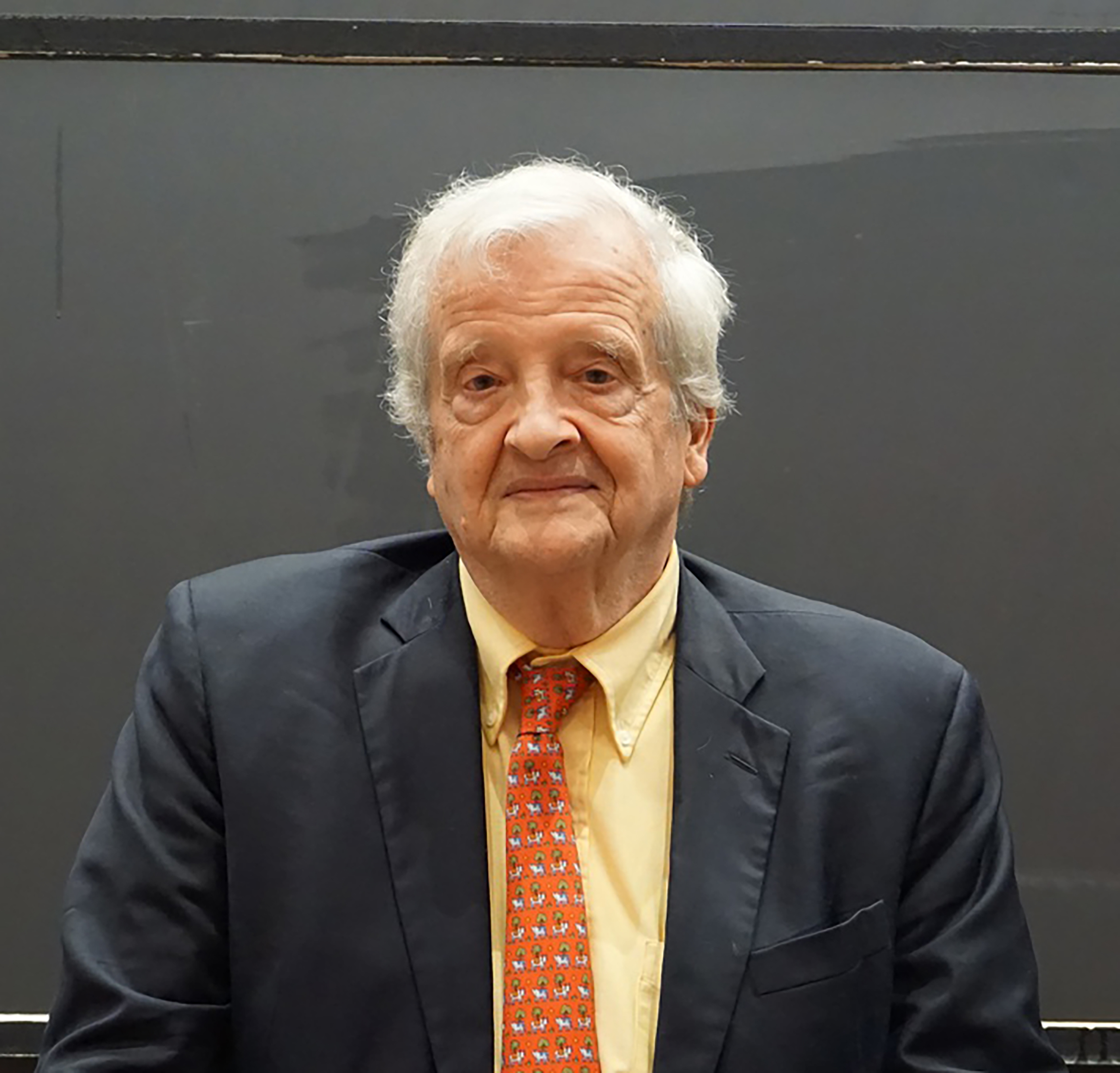
Gregory Nagy
· Francis Jones Professor of Classical Greek Literature and Professor of Comparative LiteratureHarvard University · Comparative Literature
Active 1965–2026
About
Gregory Nagy is the Francis Jones Professor of Classical Greek Literature and Professor of Comparative Literature at Harvard University. His research interests include archaic Greek literature and oral traditions. Nagy aims to integrate his research with collaborative and intergenerational mentorships, as well as public engagement initiatives. He has developed Harvard College and Harvard DCE courses on the ancient Greek hero, which have engaged nearly 10,000 alumni, and he has created a HarvardX MOOC that has enrolled over 181,000 learners since 2013. His recent scholarly works include the monographs 'Ancient Greek Heroes, Athletes, Poetry' (2024) and 'Masterpieces of Metonymy: From Ancient Greek Times to Now' (2015). Nagy has authored numerous other influential works, such as 'The Best of the Achaeans: Concepts of the Hero in Archaic Greek Poetry,' which won the Goodwin Award of Merit, and has contributed significantly to the fields of Greek mythology, poetics, and comparative literature. His scholarship explores themes of heroism, oral tradition, and poetic performance, establishing him as a leading figure in classical Greek literary studies.
Research topics
- Art
- History
- Literature
- Chemistry
- Biochemistry
- Philosophy
Selected publications
A Pausanias Reader in Progress
Zenodo (CERN European Organization for Nuclear Research) · 2026-05-05
otherOpen accessSenior authorA Pausanias Reader in Progress is an ongoing effort (1) to produce a revised English translation of Pausanias' Periegesis based on the translation of W. H. Jones; (2) to produce a rich commentary on the text; and (3) to annotate the text through named entity recognition and linking.
A Pausanias Reader in Progress
Zenodo (CERN European Organization for Nuclear Research) · 2026-05-05
otherOpen accessSenior authorA Pausanias Reader in Progress is an ongoing effort (1) to produce a revised English translation of Pausanias' Periegesis based on the translation of W. H. Jones; (2) to produce a rich commentary on the text; and (3) to annotate the text through named entity recognition and linking.
Cornell University Press eBooks · 2025-02-28
book-chapter1st authorCorresponding2025-11-20
book-chapter1st authorCorrespondingAbstract Book 24 seeks to close both the Odyssey and the epic tradition through a series of scenes that are engaged with various themes of closure. The scenes include a second trip to the underworld (a nekyia), Odysseus’s reunion with his father, an assembly of the suitors’ families to debate continued conflict with Odysseus, an abortive attack on Odysseus’s family, and a sudden end and “amnesty” caused by Zeus and Athena. The chaotic plot of book 24 has led previous scholars to doubt its authenticity, but each part of the epic’s final book resolves essential themes and concerns of the whole poem.
2025-11-20
other1st authorCorrespondingSong 44 of Sappho as Shaped by Oral Traditions
2025-08-14
book-chapter1st authorCorrespondingPausanias as a novelist: A micro-sample
Harrassowitz Verlag eBooks · 2025-01-01
book-chapterOpen access1st authorCorrespondingIn this post, dated 2018.07.20, I have put together a working retranslation of the sad story of Komaithο, priestess in love, as retold by Pausanias at 7.18.8–7.20.2. Some essential parts of this story have already been paraphrased at §1 in the post for 2018.07.13, but now I need to look at the whole story. And, for that, I need to share my working translation, which is also available in the larger context of A Pausanias Reader in Progress. Also, in the post here, I will add to my translation some comments highlighting what I argue are novelistic aspects of the story. For my argumentation, I will be using such words as novelistic, novel, and even novelist, having in mind some remarkable similarities I see between the micro-narrative I have selected from the writings of Pausanias the traveler on the one hand and, on the other, the kinds of macro-narratives that have shaped the genre known to Classicists as the ancient Greek erotic novel.
Imagining the Hero Ajax in Poetry by Pindar and by Pindar's Hoer
2025-01-19
book1st authorCorrespondingAncient Greek Heroes, Athletes, Poetry
2024-09-15
bookOpen access1st authorCorrespondingThis book continues where the paperback version of "The Ancient Greek Hero in 24 Hours," published in 2020, left off. Like the previous book, which centered on some of the great masterpieces of Ancient Greek literature, including the Homeric Ilad and Odyssey along with seven tragedies stemming from the Classical Age of Athens, "Ancient Greek Heroes, Athletes, Poetry" returns to the same grand era and then moves beyond, in both time and space, with a new emphasis: how did the heroes of Ancient Greek poetry relate to athletes female as well as male, who competed in the athletic festivals of Ancient Greece A primary point of interest here is the ancient Olympics, notionally founded by the hero Herakles.
Cornell University Press eBooks · 2023-12-15
book-chapter1st authorCorrespondingExtract We the three editors of Myth and Poetics II take special pride and delight in introducing this first of two volumes of collected papers by Stephen Mitchell, internationally recognized as the doyen of medieval and premodern Scandinavian studies—and as a world-class folklorist whose comparative interests range well beyond his unrivaled command of North Germanic civilizations. The research that went into this collection of papers is universally praised for its accessibility to experts and non-experts alike. Mitchell's luminous career as a researcher is beautifully complemented by his fame, many decades in the making, as a charismatic teacher of college-level and Ph.D.-level students at Harvard: he is living proof of the adage that not only does good research drive good teaching, good teaching drives good research. Stephen Mitchell is a paragon of such an academic ideal, and this stellar book is a most eloquent proof of concept.
Frequent coauthors
- 3 shared
Leonard Muellner
- 3 shared
Laura Slatkin
- 3 shared
John Miles Foley
- 3 shared
Marco Fantuzzi
- 2 shared
Stephanie A. Amici
The Ohio State University
- 2 shared
Ettore Cingano
- 2 shared
Lindsay Webb
- 2 shared
Antonios Rengakos
Awards & honors
- Goodwin Award of Merit (1982)
- Resume-aware match score
- Save to shortlist
- AI-drafted outreach
See your match with Gregory Nagy
PhdFit ranks faculty by your research interests, methods, and publications — grounded in their actual work, not templates.
- Free to start
- No credit card
- 30-second signup