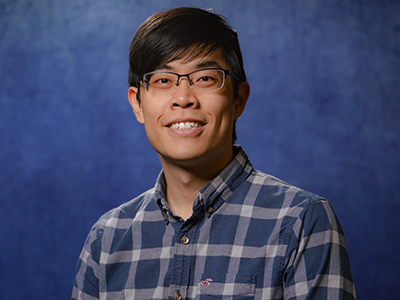
Hao-Wen (Herman) Dong
· Assistant Professor of Music; Affiliate Faculty, Computer Science and Engineering; Affiliate Faculty, Electrical and Computer EngineeringVerifiedUniversity of Michigan · Department of Performing Arts Technology
Active 2017–2026
About
Hao-Wen (Herman) Dong is an Assistant Professor in the Department of Performing Arts Technology at the University of Michigan, with additional affiliations in the Computer Science and Engineering and Electrical and Computer Engineering departments. His research focuses on augmenting human creativity through generative AI, developing human-centered AI technologies that can be integrated into professional workflows for music, audio, and video creation. His long-term goal is to make professional content creation accessible to everyone. Herman holds a PhD in Computer Science from the University of California San Diego, where he worked with Julian McAuley and Taylor Berg-Kirkpatrick. His work has been recognized by several awards and honors, including the AAAI New Faculty Highlights, UCSD CSE Doctoral Award for Excellence in Research, and others. He has organized the NeurIPS 2025 Workshop on AI for Music.
Research topics
- Crystallography
- Nuclear magnetic resonance
- Chemistry
- Organic chemistry
- Stereochemistry
- Computational chemistry
Selected publications
CCDC 2515370: Experimental Crystal Structure Determination
The Cambridge Structural Database · 2026-01-06
datasetOpen accessAn entry from the Cambridge Structural Database, the world’s repository for small molecule crystal structures. The entry contains experimental data from a crystal diffraction study. The deposited dataset for this entry is freely available from the CCDC and typically includes 3D coordinates, cell parameters, space group, experimental conditions and quality measures.
Journal of the American Chemical Society · 2026-01-05 · 2 citations
articleMetalloenzymes use second coordination sphere (SCS) hydrogen bond (H-bond) donors and acceptors to facilitate small molecule activation by lowering the activation energies for chemical transformations or by stabilizing reactive intermediates. Borovik and co-workers studied the role of SCS groups in dioxygen and chalcogen activation in well-defined mononuclear model complexes. Here, we use the same complex, K[FeII(H3L)], to study the role of H-bonding for nitric oxide (NO) activation. Remarkably, in solution, K[FeII(H3L)] is capable of direct NO reduction to nitrous oxide (N2O) at a single Fe center. Initial formation of a hs-{FeNO}7 intermediate is followed by fast attack by a second NO molecule to form N2O and a putative FeIV═O intermediate, which then undergoes multiple decomposition pathways, forming an antiferromagnetically coupled St = 1/2 FeIII/FeIV dimer and a diamagnetic diferric species as confirmed by Mössbauer and EPR spectroscopy. Notably, in the absence of the SCS H-bond donors, only the formation of a stable hs-{FeNO}7 species is observed. Intermediates of NO reduction were observed by reacting K[FeII(H3L)] in the solid state with NO, which leads to the formation of hs-{FeNO}7 species, N2O, and the FeIV═O intermediate, as confirmed by IR spectroscopy. To the best of our knowledge, direct reduction of NO at a single Fe center has not been reported. Furthermore, the ability to form a high-valent metal-oxo species directly from NO is unprecedented for nonheme iron chemistry. This novel reactivity has significant implications in biology and for catalytic systems for NOx reduction.
CCDC 2084745: Experimental Crystal Structure Determination
The Cambridge Structural Database · 2023-11-09
datasetOpen accessAn entry from the Cambridge Structural Database, the world’s repository for small molecule crystal structures. The entry contains experimental data from a crystal diffraction study. The deposited dataset for this entry is freely available from the CCDC and typically includes 3D coordinates, cell parameters, space group, experimental conditions and quality measures.
Exploring second coordination sphere effects in flavodiiron nitric oxide reductase model complexes
Dalton Transactions · 2023-01-01 · 3 citations
article, 3795-3799]. Specifically, this H-bond stabilizes the hyponitrite intermediate and reduces the energetic barrier for the N-N coupling step. At the same time, the role of the Fe⋯Fe distance and its effect on the N-N coupling step has not been fully investigated. In this study, we equipped the H[BPMP] (= 2,6-bis[[bis(2-pyridylmethyl)amino]methyl]-4-methylphenol) ligand with SCS amide groups and investigated the corresponding diiron complexes with 0-2 bridging acetate ligands. These amide groups can form hydrogen bonds with the bridging acetate ligand(s) and potentially the coordinated NO groups in these model complexes. At the same time, by changing the number of bridging acetate ligands, we can systematically vary the Fe⋯Fe distance. The reactivity of these complexes with NO was then investigated, and the formation of stable iron(II)-NO complexes was observed. Upon one-electron reduction, these NO complexes form Dinitrosyl Iron Complexes (DNICs), which were further characterized using IR and EPR spectroscopy.
CCDC 2084746: Experimental Crystal Structure Determination
The Cambridge Structural Database · 2023-11-09
datasetOpen accessAn entry from the Cambridge Structural Database, the world’s repository for small molecule crystal structures. The entry contains experimental data from a crystal diffraction study. The deposited dataset for this entry is freely available from the CCDC and typically includes 3D coordinates, cell parameters, space group, experimental conditions and quality measures.
CCDC 2078934: Experimental Crystal Structure Determination
The Cambridge Structural Database · 2022-08-30
datasetOpen access1st authorCorrespondingAn entry from the Cambridge Structural Database, the world’s repository for small molecule crystal structures. The entry contains experimental data from a crystal diffraction study. The deposited dataset for this entry is freely available from the CCDC and typically includes 3D coordinates, cell parameters, space group, experimental conditions and quality measures.
CCDC 2126171: Experimental Crystal Structure Determination
The Cambridge Structural Database · 2022-01-22
datasetOpen access1st authorCorrespondingJournal of Inorganic Biochemistry · 2022-01-10 · 7 citations
articleOpen access1st authorCCDC 2081128: Experimental Crystal Structure Determination
The Cambridge Structural Database · 2022-08-30
datasetOpen access1st authorCorrespondingAn entry from the Cambridge Structural Database, the world’s repository for small molecule crystal structures. The entry contains experimental data from a crystal diffraction study. The deposited dataset for this entry is freely available from the CCDC and typically includes 3D coordinates, cell parameters, space group, experimental conditions and quality measures.
CCDC 2084747: Experimental Crystal Structure Determination
The Cambridge Structural Database · 2022-01-21
datasetOpen access1st authorCorresponding
Frequent coauthors
- 37 shared
Nicolai Lehnert
University of Michigan–Ann Arbor
- 15 shared
Carsten Krebs
Pennsylvania State University
- 12 shared
Jiyong Zhao
University of Chinese Academy of Sciences
- 12 shared
Debangsu Sil
Pennsylvania State University
- 12 shared
Kiyoshi Fujisawa
Ibaraki University
- 11 shared
Haruka Kurihara
Ibaraki University
- 11 shared
Michael Y. Hu
- 11 shared
Shoko Soma
Labs
Education
- 2021
PhD, Chemistry
University of Michigan
- 2016
Bachelor of Science, ACS certified, Chemistry
University of Cincinnati
Awards & honors
- AAAI New Faculty Highlights
- UCSD CSE Doctoral Award for Excellence in Research
- KAUST Rising Stars in AI
- UChicago and UCSD Rising Stars in Data Science
- ICASSP Rising Stars in Signal Processing
- Resume-aware match score
- Save to shortlist
- AI-drafted outreach
See your match with Hao-Wen (Herman) Dong
PhdFit ranks faculty by your research interests, methods, and publications — grounded in their actual work, not templates.
- Free to start
- No credit card
- 30-second signup