Resume-aware faculty matching

Find professors who actually fit you

Upload your resume. Four AI agents analyze your background, rank the faculty who fit, inspect their recent research, and help you draft outreach — grounded in their actual work, not templates.

Free to startNo credit cardCancel anytime
Top matches Balanced preset
Dr. Sarah Chen
Stanford · Interpretability · NLP
91
Dr. Marcus Holloway
MIT · Robotics · RL
84
Dr. Aisha Okonkwo
CMU · Fairness · HCI
82
Nova · Professor Researcher · re-ranking top 20…
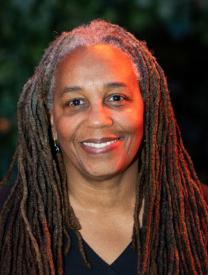
Heather A. Williams

Heather A. Williams

· Associate Professor of Africana Studies

University of Pennsylvania · African and African American Studies

Active 1933–2024

h-index128
Citations92.8k
Papers1.3k184 last 5y
Funding
See your match with Heather A. Williams — sign in to PhdFit.Sign in

About

Heather A. Williams is the Geraldine R. Segal Professor of American Social Thought and a Professor of Africana Studies at the University of Pennsylvania. She previously served as a Professor of History at the University of North Carolina at Chapel Hill. Williams holds a B.A. and J.D. from Harvard University and a Ph.D. in American Studies from Yale University. Her scholarly work focuses on African American history, with particular emphasis on slavery, the aftermath of the American Civil War, and race in American history. She is the author of several books, including 'Self-Taught: African American Education in Slavery and Freedom,' 'Help Me to Find My People: The African American Search for Family Lost in Slavery,' and 'American Slavery: A Very Short Introduction.' Currently, she is working on a documentary film about Jamaicans who migrated to the United States in the 1950s and 60s, as well as a book about violence in the antebellum South. Williams has received fellowships from prominent foundations such as the Ford Foundation, the Spencer Foundation, the Woodrow Wilson Foundation, and the Andrew W. Mellon Foundation. She teaches courses on African American History, with an emphasis on slavery and the post-Civil War era.

Research topics

  • Physics
  • Nuclear physics
  • Particle physics
  • Computer Science
  • Geology
  • Quantum mechanics
  • Optics
  • Combinatorics
  • Astrophysics
  • Mathematics

Selected publications

  • Our Care Improvement System

    BJPsych Open · 2023-07-01

    articleOpen access

    Aims Our Care Improvement System is an integrated quality and performance system designed to develop co-ordinated approach to managing performance at all levels of the organisation, ensuring everything we do is aligned to achieving our goals set out in our Trust strategy. The aim of this programme is to help the team move away from typical firefighting routines, towards a more structured routine of problem solving, applying quality improvement tools and methodology. Methods Five members of multidisciplinary team (MDT) in a Lewisham Community Mental Health Team were chosen as the core working team. They underwent four-month training programme which was one day per month plus weekly team coaching sessions from the Trust's Quality Improvement lead. One targeted measure was identified. This was to focus on improving patient discharges for more manageable caseloads, and ultimately provide a better staff and patient experience. A3 methodology was adopted to provide a structured framework for thinking through the problem. This included: problem statement, current situation, aims statement, root cause analysis, change ideas, actions, progress and benefits, and insights. In parallel, daily improvement huddles (15-minute long team meetings) were adopted to enable the team to problem solve other identified improvement work. The huddles follow a set structure of reviewing work in progress, new improvement opportunities, work that needs to be escalated and celebrated. This work was gradually widened to include the entire team. Results The team's caseload was observed to be continuously going up from 200 in September 2021 to 264 in October 2022. We aimed to increase the number of safe discharges and to sustain a steady team caseload. Root cause analysis utilising a fishbone diagram identified barriers to discharge, such as lack of MDT approach and structure to discharge planning. Change ideas included creation of standard work, describing how an MDT discharge meeting would work. Actions were agreed to implement structured weekly MDT discharge meetings where four cases are discussed and safe discharge plans agreed, sharing responsibility for discharge decision. This has allowed us to reduce and maintain a steady caseload with 258 patients in January 2023. Conclusion Implementing Our Care Improvement System has not only provided a structure to our improvement work and improved our caseload but has also consolidated our team in working together for a common goal. We have naturally implemented structure to all other team meetings, which have now become more focused and productive, making our team a more rewarding place to work.

  • A detailed map of Higgs boson interactions by the ATLAS experiment ten years after the discovery

    Nature · 2022 · 371 citations

    • Physics
    • Particle physics
    • Nuclear physics

    . Since then, more than 30 times as many Higgs bosons have been recorded by the ATLAS experiment, enabling much more precise measurements and new tests of the theory. Here, on the basis of this larger dataset, we combine an unprecedented number of production and decay processes of the Higgs boson to scrutinize its interactions with elementary particles. Interactions with gluons, photons, and W and Z bosons-the carriers of the strong, electromagnetic and weak forces-are studied in detail. Interactions with three third-generation matter particles (bottom (b) and top (t) quarks, and tau leptons (τ)) are well measured and indications of interactions with a second-generation particle (muons, μ) are emerging. These tests reveal that the Higgs boson discovered ten years ago is remarkably consistent with the predictions of the theory and provide stringent constraints on many models of new phenomena beyond the standard model.

  • arXiv : Search for exotic decays of the Higgs boson into long-lived particles in $pp$ collisions at $\sqrt{s} = 13$ TeV using displaced vertices in the ATLAS inner detector

    2021 · 1 citations

    • Physics
    • Particle physics
    • Nuclear physics

    A novel search for exotic decays of the Higgs boson into pairs of long-lived neutral particles, each decaying into a bottom quark pair, is performed using 139 fb$^{-1}$ of $\sqrt{s} = 13$ TeV proton-proton collision data collected with the ATLAS detector at the LHC. Events consistent with the production of a Higgs boson in association with a leptonically decaying $Z$ boson are analysed. Long-lived particle (LLP) decays are reconstructed from inner-detector tracks as displaced vertices with high mass and track multiplicity relative to Standard Model processes. The analysis selection requires the presence of at least two displaced vertices, effectively suppressing Standard Model backgrounds. The residual background contribution is estimated using a data-driven technique. No excess over Standard Model predictions is observed, and upper limits are set on the branching ratio of the Higgs boson to LLPs. Branching ratios above 10% are excluded at 95% confidence level for LLP mean proper lifetimes $c\tau$ as small as 4 mm and as large as 100 mm. For LLP masses below 40 GeV, these results represent the most stringent constraint in this lifetime regime.

  • Implementing out of hours MDT safety huddles at the Ladywell Unit, Lewisham, South London and the Maudsley (SLAM) NHS Foundation Trust

    BJPsych Open · 2021-06-01

    articleOpen access

    Aims • For 100% of patients admitted OOH (Friday 5pm – Sunday 9am) to have a multi-disciplinary review of their treatment • For 100% of patients with deteriorating physical and mental health to be discussed • To improve multi-disciplinary team (MDT) morale, working relationships and team cohesiveness OOH Background In most specialties, the standard of best practice is that patients admitted to the ward out of hours (OOH) receive a senior review over the weekend. However this does not usually take place in Psychiatry, and patients routinely wait until Monday to be seen by the ward team. This has been highlighted as problematic in cases where patients are agitated and not receiving any treatment for > 24 hours. We trialled a weekend teleconference safety huddle in Lewisham involving the on call consultant, registrar (SpR), core trainee (CT) and duty senior nurse (DSN). Method The weekend huddles were through a teleconference line, with participants dialling in at 9.45am. Issues discussed: 1) Management plan for newly admitted patients OOH. 2) Plan for patients with deteriorating mental health or escalating level of aggression. 3) Plan for patients with deteriorating physical health. Feedback was collected from CTs, SpRs and consultants focusing on whether the huddle made any difference to the speed of care, cohesiveness of the OOH team, and whether it was generally helpful or not. Result 54% of CTs (n = 11) felt that patients admitted OOH had an MDT review, and 90% felt that patients with deteriorating mental and physical health were discussed and a plan put in place. 80% of CTs, 63% of SpRs (n = 8) and 67% of consultants (n = 6) agreed it improved team cohesiveness. 90% of DSNs felt safer and more supported in decision-making OOH. 80% of CTs, 63% of SpRs and 83% of consultants found weekend huddles helpful. Data were also collected on violent incidents OOH, and there was a slight reduction in the number of violent incidents in the weeks following introduction of the huddle. Conclusion Introducing safety huddles in Lewisham has facilitated the prompt discussion of the management of patients admitted OOH, and of those with deteriorating mental and physical health. It has also fostered a greater sense of cohesiveness in the MDT team. In light of this feedback, safety huddles have now been established as part of the weekend schedule in Lewisham, and are being rolled out to other boroughs within SLaM.

  • Muon reconstruction and identification efficiency in ATLAS using the full Run 2 pp collision data set at $$\sqrt{s}=13$$ TeV

    The European Physical Journal C · 2021 · 262 citations

    • Computer Science
    • Physics
    • Particle physics

    Abstract This article documents the muon reconstruction and identification efficiency obtained by the ATLAS experiment for 139 $$\hbox {fb}^{-1}$$ <mml:math xmlns:mml="http://www.w3.org/1998/Math/MathML"><mml:msup><mml:mtext>fb</mml:mtext><mml:mrow><mml:mo>-</mml:mo><mml:mn>1</mml:mn></mml:mrow></mml:msup></mml:math> of pp collision data at $$\sqrt{s}=13$$ <mml:math xmlns:mml="http://www.w3.org/1998/Math/MathML"><mml:mrow><mml:msqrt><mml:mi>s</mml:mi></mml:msqrt><mml:mo>=</mml:mo><mml:mn>13</mml:mn></mml:mrow></mml:math> TeV collected between 2015 and 2018 during Run 2 of the LHC. The increased instantaneous luminosity delivered by the LHC over this period required a reoptimisation of the criteria for the identification of prompt muons. Improved and newly developed algorithms were deployed to preserve high muon identification efficiency with a low misidentification rate and good momentum resolution. The availability of large samples of $$Z\rightarrow \mu \mu $$ <mml:math xmlns:mml="http://www.w3.org/1998/Math/MathML"><mml:mrow><mml:mi>Z</mml:mi><mml:mo>→</mml:mo><mml:mi>μ</mml:mi><mml:mi>μ</mml:mi></mml:mrow></mml:math> and $$J/\psi \rightarrow \mu \mu $$ <mml:math xmlns:mml="http://www.w3.org/1998/Math/MathML"><mml:mrow><mml:mi>J</mml:mi><mml:mo>/</mml:mo><mml:mi>ψ</mml:mi><mml:mo>→</mml:mo><mml:mi>μ</mml:mi><mml:mi>μ</mml:mi></mml:mrow></mml:math> decays, and the minimisation of systematic uncertainties, allows the efficiencies of criteria for muon identification, primary vertex association, and isolation to be measured with an accuracy at the per-mille level in the bulk of the phase space, and up to the percent level in complex kinematic configurations. Excellent performance is achieved over a range of transverse momenta from 3 GeV to several hundred GeV, and across the full muon detector acceptance of $$|\eta |&lt;2.7$$ <mml:math xmlns:mml="http://www.w3.org/1998/Math/MathML"><mml:mrow><mml:mo>|</mml:mo><mml:mi>η</mml:mi><mml:mo>|</mml:mo><mml:mo>&lt;</mml:mo><mml:mn>2.7</mml:mn></mml:mrow></mml:math> .

  • Searches for electroweak production of supersymmetric particles with compressed mass spectra in <mml:math xmlns:mml="http://www.w3.org/1998/Math/MathML" display="inline"><mml:mrow><mml:msqrt><mml:mrow><mml:mi>s</mml:mi></mml:mrow></mml:msqrt><mml:mo>=</mml:mo><mml:mn>13</mml:mn><mml:mtext> </mml:mtext><mml:mtext> </mml:mtext><mml:mi>TeV</mml:mi></mml:mrow></mml:math> <mml:math xmlns:mml="http://www.w3.org/1998/Math/MathML" display="inline"><mml:mi>p</mml:mi><mml:mi>p</mml:mi></mml:math> collisions with the ATLAS detector

    Physical review. D/Physical review. D. · 2020 · 207 citations

    • Physics
    • Particle physics
    • Nuclear physics

    This paper presents results of searches for the electroweak production of supersymmetric particles in models with compressed mass spectra. The searches use 139 fb -1 of ffiffi ffi s p 13 TeV proton-proton collision data collected by the ATLAS experiment at the Large Hadron Collider. Events with missing transverse momentum and two same-flavor, oppositely charged, low-transverse-momentum leptons are selected, and are further categorized by the presence of hadronic activity from initial-state radiation or a topology compatible with vector-boson fusion processes. The data are found to be consistent with predictions from the Standard Model. The results are interpreted using simplified models of R-parity-conserving supersymmetry in which the lightest supersymmetric partner is a neutralino with a mass similar to the lightest chargino, the second-to-lightest neutralino, or the slepton. Lower limits on the masses of charginos in different simplified models range from 193 to 240 GeV for moderate mass splittings, and extend down to mass splittings of 1.5 to 2.4 GeV at the LEP chargino bounds (92.4 GeV). Similar lower limits on degenerate light-flavor sleptons extend up to masses of 251 GeV and down to mass splittings of 550 MeV. Constraints on vector-boson fusion production of electroweak SUSY states are also presented.

  • Test of the universality of $\tau$ and $\mu$ lepton couplings in $W$-boson decays from $t\bar{t}$ events with the ATLAS detector

    2020 · 3 citations

    • Physics
    • Particle physics
    • Nuclear physics

    The Standard Model of particle physics encapsulates our current best understanding of physics at the smallest scales. A fundamental axiom of this theory is the universality of the couplings of the different generations of leptons to the electroweak gauge bosons. The measurement of the ratio of the rate of decay of $W$ bosons to $\tau$-leptons and muons, $R(\tau/\mu) = B(W \to \tau \nu_\tau)/B(W \to \mu \nu_\mu)$, constitutes an important test of this axiom. A measurement of this quantity with a novel technique using di-leptonic $t\bar{t}$ events is presented based on 139 fb${}^{-1}$ of data recorded with the ATLAS detector in proton--proton collisions at $\sqrt{s}=13$ TeV. Muons originating from $W$ bosons and those originating from an intermediate $\tau$-lepton are distinguished using the lifetime of the $\tau$-lepton, through the muon transverse impact parameter, and differences in the muon transverse momentum spectra. The value of $R(\tau/\mu)$ is found to be $0.992 \pm 0.013 [\pm 0.007 (stat) \pm 0.011 (syst)]$ and is in agreement with the hypothesis of universal lepton couplings as postulated in the Standard Model. This is the most precise measurement of this ratio, and the only such measurement from the Large Hadron Collider, to date.

  • Observation of electroweak production of two jets and a $Z$-boson pair with the ATLAS detector at the LHC

    HAL (Le Centre pour la Communication Scientifique Directe) · 2020 · 16 citations

    • Physics
    • Particle physics
    • Nuclear physics

    Electroweak symmetry breaking explains the origin of the masses of elementary particles through their interactions with the Higgs field. Besides the measurements of the Higgs boson properties, the study of the scattering of massive vector bosons with spin 1 allows the nature of electroweak symmetry breaking to be probed. Among all processes related to vector-boson scattering, the electroweak production of two jets and a Z-boson pair is a rare and important one. Here we report the observation of this process from proton–proton collision data corresponding to an integrated luminosity of 139 fb$^{−1}$ recorded at a centre-of-mass energy of 13 TeV with the ATLAS detector at the Large Hadron Collider. We consider two different final states originating from the decays of the Z-boson pair: one containing four charged leptons and another containing two charged leptons and two neutrinos. The hypothesis of no electroweak production is rejected with a statistical significance of 5.7σ, and the measured cross-section for electroweak production is consistent with the Standard Model prediction. In addition, we report cross-sections for inclusive production of a Z-boson pair and two jets for the two final states.

  • 6 Laryngospasm in recovery

    E-Posters · 2016-11-01

    article

    Background Emergence from anaesthesia is a common time for anaesthetic complications. 1 When patients are taken to recovery they may be in the emergence phase. Recovery nurses should therefore be trained in the assessment and management of complications that arise. Methodology A simulation based on the management of laryngospasm following removal of a laryngeal mask in theatre recovery was written. An ‘Advanced Life Support’ mannequin was used as the patient, and a remotely controlled iPad displayed observations in real time. A recovery nurse completed the scenario with assistance from another nurse. The nurse was asked to receive a patient and manage any complications (for each scenario this was laryngospasm). The debrief consisted of teaching based on the causes and management of laryngospasm, the contents of the emergency airway trolley, and a discussion around human factors. Each candidate completed a feedback form which used the 5 point Likert scale (1 = lowest, 5 = highest). Each simulation took 30 to 45 minutes. Results 31 recovery nurses completed the simulation. The average score was 4.5 for ‘I felt I have learned’ (a little to a lot). All 31 candidates scored 5 for the scenario being relevant to their practice. 30 candidates scored 5 for finding the debrief useful. 20 candidates scored 4 or 5 for, ‘confidence in knowledge of topic before training’, (the average score was 3.6). This increased to 30 candidates scoring 4 or 5 for ‘confidence in knowledge of topic after training’. 26 candidates scored 4 or 5 when asked if the simulation made them consider their communication and team working skills. Discussion There was an improvement in knowledge, confidence and non-technical skills following the simulation. All candidates felt the topic was relevant to their practice. Further sessions will be delivered on the airway trolley and application of cricoid pressure.

  • Final Report for Research in High Energy Physics at the University of Pennsylvania for the period ending April 30, 2012

    2015-07-23

    reportOpen access1st authorCorresponding

    The University of Pennsylvania elementary particle physics/particle cosmology group, funded by the Department of Energy Office of Science, participates in research in high energy physics and particle cosmology that addresses some of the most important unanswered questions in science. The research is divided into five areas. Energy Frontier - We participate in the study of proton-proton collisions at the Large Hadron Collider in Geneva, Switzerland using the ATLAS detector. The University of Pennsylvania group was responsible for the design, installation, and commissioning of the front-end electronics for the Transition Radiation Tracker (TRT) and plays the primary role in its maintenance and operation. We play an important role in the triggering of ATLAS, and we have made large contributions to the TRT performance and to the study and identification of electrons, photons, and taus. We have been actively involved in searches for the Higgs boson and for SUSY and other exotic particles. We have made significant contributions to measurement of Standard Model processes such as inclusive photon production and WW pair production. We also have participated significantly in R&D for upgrades to the ATLAS detector. Cosmic Frontier - The Dark Energy Survey (DES) telescope will be used to elucidate the nature of dark energy and the distribution of dark matter. Penn has played a leading role both in the use of weak gravitational lensing of distant galaxies and the discovery of large numbers of distant supernovae. The techniques and forecasts developed at Penn are also guiding the development of the proposed Large Synoptic Survey Telescope (LSST).We are also developing a new detector, MiniClean, to search for direct detection of dark matter particles. Intensity Frontier - We are participating in the design and R&D of detectors for the Long Baseline Neutrino Experiment (now DUNE), a new experiment to study the properties of neutrinos. Advanced Techology R&D - We have an extensive involvement in electronics required for sophisticated new detectors at the LHC and are developing electronics for the LSST camera. Theoretical Physics - We are carrying out a broad program studying the fundamental forces of nature and early universe cosmology and mathematical physics. Our activities span the range from model building, formal field theory, and string theory to new paradigms for cosmology and the interface of string theory with mathematics. Our effort combines extensive development of the formal aspects of string theory with a focus on real phenomena in particle physics, cosmology and gravity.

Frequent coauthors

  • S. De Cecco

    Radboud University Nijmegen

    2592 shared
  • B. Trocmé

    Laboratoire AstroParticule et Cosmologie

    2538 shared
  • T. Beau

    Consejo Nacional de Investigaciones Científicas y Técnicas

    2402 shared
  • A. Cerri

    2235 shared
  • F. Šforza

    University of Genoa

    2114 shared
  • M. Ridel

    Université Paris Cité

    2113 shared
  • L. Roos

    Laboratoire de Physique Nucléaire et de Hautes Énergies

    2093 shared
  • S. Trincaz-Duvoid

    Laboratoire de Physique Nucléaire et de Hautes Énergies

    2093 shared

Awards & honors

  • Fellowship from the Ford Foundation
  • Fellowship from the Spencer Foundation
  • Fellowship from the Woodrow Wilson Foundation
  • Fellowship from the Andrew W. Mellon Foundation
  • Resume-aware match score
  • Save to shortlist
  • AI-drafted outreach

See your match with Heather A. Williams

PhdFit ranks faculty by your research interests, methods, and publications — grounded in their actual work, not templates.

  • Free to start
  • No credit card
  • 30-second signup