Resume-aware faculty matching

Find professors who actually fit you

Upload your resume. Four AI agents analyze your background, rank the faculty who fit, inspect their recent research, and help you draft outreach — grounded in their actual work, not templates.

Free to startNo credit cardCancel anytime
Top matches Balanced preset
Dr. Sarah Chen
Stanford · Interpretability · NLP
91
Dr. Marcus Holloway
MIT · Robotics · RL
84
Dr. Aisha Okonkwo
CMU · Fairness · HCI
82
Nova · Professor Researcher · re-ranking top 20…
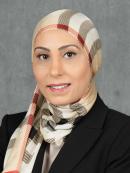
Heba Elkassaby

Heba Elkassaby

· Associate ProfessorVerified

Rutgers University · Restorative Dentistry

Active 2016–2025

h-index1
Citations11
Papers65 last 5y
Funding
See your match with Heba Elkassaby — sign in to PhdFit.Sign in

Research topics

  • Computer Science
  • Artificial Intelligence
  • Medicine
  • Surgery
  • Medical education
  • Library science
  • Psychology
  • Materials science
  • Orthodontics

Selected publications

  • Advances in the Treatment of the Partially Edentulous Patient

    Dental Clinics of North America · 2025-01-30

    reviewSenior authorCorresponding
  • Journal of Dental Education Volume 87 Number 12/December 2023

    Journal of Dental Education · 2023

    • Computer Science
    • Library science
    • Computer Science

    Journal of Dental Education is published in 15 issues per year.FTE-based pricing, based on the overall demand and on the size and type of the subscribing institution (academic, government, hospital or corporate), applies for this Journal.

  • A survey on utilization and barriers of digital removable prostheses in the US dental education

    Journal of Dental Education · 2023-09-15 · 3 citations

    articleOpen access1st authorCorresponding

    PURPOSE: Gaining knowledge on the extent of digital technology implementation in dental education and the barriers to it will help inform future directions to promote the use of such technology and will enhance dental education. This study aimed to investigate the utilization of digitally fabricated removable prostheses and the potential obstacles to implementing such technology in US dental schools. METHODS: A survey was developed and distributed to the restorative dentistry department chairs and postdoctoral prosthodontic program directors. The survey delivery protocol included follow-up emails 1 week, 3 weeks, and 4 weeks after the initial email. The collected data were analyzed descriptively. RESULTS: The response rate was 85% and 45% for predoctoral and postdoctoral prosthodontic programs, respectively. The results showed that 88.06% of the predoctoral programs and 95.65% of the postdoctoral prosthodontic programs implement digital complete dentures in the curriculum; however, the digital removable partial dentures implementation rate was recorded at 70.77% in predoctoral programs and 61.9% in postdoctoral prosthodontic programs. CONCLUSIONS: Dental schools are challenged by cost, design software limitations, IT and laboratory support, and faculty training. Multifaceted support is instrumental in further implementing digital removable prosthodontics into dental education.

  • Evaluation of the accuracy of 2 digital intraoral scanners: A 3D analysis study

    Journal of Prosthetic Dentistry · 2020 · 19 citations

    Senior authorCorresponding
    • Computer Science
    • Artificial Intelligence
    • Orthodontics
  • 2019 JADA Manuscript Reviewers

    The Journal of the American Dental Association · 2020

    • Psychology
  • Using a Visible Light‐Polymerized Resin to Fabricate an Interim Partial Removable Dental Prosthesis

    Journal of Prosthodontics · 2016-06-03

    articleSenior author

    An interim partial removable dental prosthesis (RDP) is any dental prosthesis that replaces some teeth in a partially dentate arch designed to enhance esthetics, stabilization, and/or function for a limited period of time, after which it is to be replaced by a definitive dental prosthesis. This article describes a technique that uses a visible light-polymerized (VLP) resin as the base material for an interim partial RDP. This technique can be easily accomplished in a dental office or laboratory and results in a predictable dental prosthesis. This technique eliminates the need for laboratory processing.

Frequent coauthors

  • David C. Johnsen

    University of Iowa

    5 shared
  • Ahmed Mahrous

    A.T. Still University

    5 shared
  • Julia Mainelli

    John Wiley & Sons (United States)

    5 shared
  • Bennett T. Amaechi

    The University of Texas at San Antonio

    5 shared
  • Ramtin Sadid‐Zadeh

    University of Alabama at Birmingham

    5 shared
  • Candice Zemnick

    James J. Peters VA Medical Center

    5 shared
  • Marjan Moghadam

    John Wiley & Sons (United States)

    5 shared
  • Shuying Jiang

    5 shared
  • Resume-aware match score
  • Save to shortlist
  • AI-drafted outreach

See your match with Heba Elkassaby

PhdFit ranks faculty by your research interests, methods, and publications — grounded in their actual work, not templates.

  • Free to start
  • No credit card
  • 30-second signup