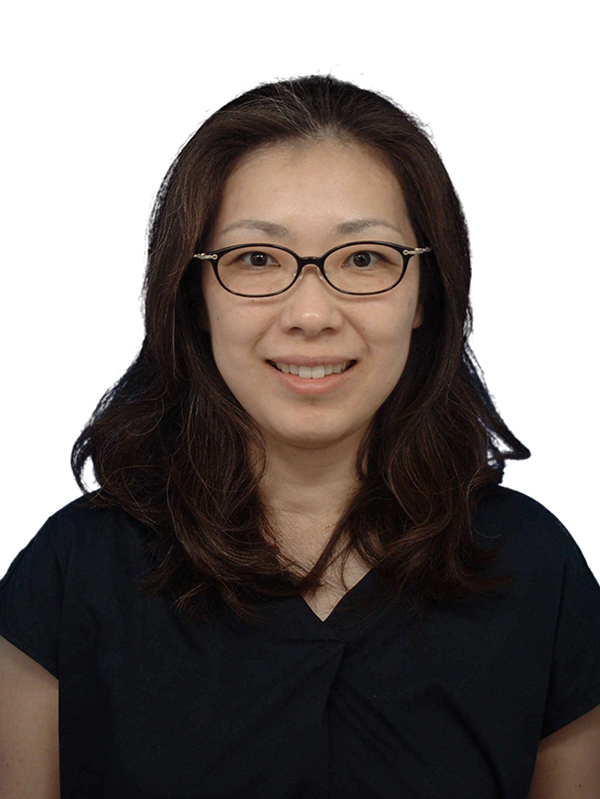
Hiroko Kitajima
· Associate Professor and Texas A&M Presidential Impact FellowVerifiedTexas A&M University · Geology & Geophysics
Active 2005–2026
About
Hiroko Kitajima is an Associate Professor and Texas A&M Presidential Impact Fellow in the Department of Geology & Geophysics at Texas A&M University. She has been serving as a faculty member since 2020, with prior experience as an Assistant Professor at the same institution from 2014 to 2020, and as a researcher at the Geological Survey of Japan from 2012 to 2014. Her educational background includes a Ph.D. from Texas A&M University obtained in 2010 and a B.S. from Kyoto University in 2004. Her research interests focus on experimental rock and soil mechanics, specifically characterizing the hydromechanical properties of rocks and sediments deformed under various pressure, temperature, and strain rate conditions. She combines laboratory experimental work with numerical modeling, geophysical data, and field work, including ocean and continental drilling projects. Her current research aims to understand the interaction between sediment and rock deformation and fluid flow under complex loading conditions associated with earthquakes in subduction zones, as well as the micromechanics of compaction, shear deformation, and granular materials at high strain rates and pressures. Dr. Kitajima has received notable awards such as the 2022 Asahiko Taira International Scientific Ocean Drilling Research Prize and the 2019 NSF CAREER Award, reflecting her significant contributions to geophysical research.
Research topics
- Geology
- Biological system
- Petrology
- Physics
- Geochemistry
- History
- Paleontology
- Biology
- Thermodynamics
- Seismology
- Materials science
Selected publications
SSRN Electronic Journal · 2026-01-01
preprintOpen accessProceedings of the International Ocean Drilling Programme · 2026-02-05
articleOpen accessAbstract. The International Ocean Drilling Programme (IODP3) Expedition 502 will explore the nature of the acoustic basement in the outer-rise area of the NW Pacific subduction system, where the seismic-layer-1 pelagic sediment cover of the subducting old (120–130 Ma) Pacific Plate is expected to be anomalously thin. Drilling will test our hypothesis that layer 1 is due to the intrusion of basaltic sills or the eruption of sheet-flow lavas into and onto the pelagic sediments fed by petit-spot magmatism. If our hypothesis is correct, petit-spot magmatism at the outer rise may be more widely distributed than previously thought. More extensive petit-spot volcanism could strongly impact our understanding of subduction systems, including rupture nucleation and slip propagation of plate boundary megathrust earthquakes. It will also require adjustments to the geochemical budgets of arc magmatism and global volatile cycles due to changes in the inventory of materials associated with the subducting oceanic plates. Testing this hypothesis will shed light on the impacts of subduction inputs and help to determine the global role of petit-spot magmatism.
Proceedings of the International Ocean Discovery Program. Expedition reports · 2025-11-07
book-chapterOpen accessSenior authorThe FUTURE of the US Marine Seafloor and Subseafloor Sampling Capabilities
AGU Advances · 2025-05-21 · 2 citations
articleOpen accessAbstract Recent changes in US oceanographic assets are impacting scientists' ability to access seafloor and sub‐seafloor materials and thus constraining progress on science critical for societal needs. Here we identify national infrastructure needs to address critical science questions. This commentary reports on community‐driven discussions that took place during the 3‐day FUTURE of US Seafloor Sampling Capabilities 2024 Workshop , which used an “all‐hands‐on‐deck” approach to assess seafloor and sub‐seafloor sampling requirements of a broad range of scientific objectives, focusing on capabilities that could be supported through the US Academic Research Fleet (US‐ARF) now or in the near future. Cross‐cutting issues identified included weight and size limitations in the over‐boarding capabilities of the US‐ARF, a need to access material at depths greater than ∼20 m below the seafloor, sampling capabilities at the full range of ocean depths, technologies required for precise navigation‐guided sampling and drilling, resources to capitalize on the research potential of returned materials, and workforce development.
Geochemistry Geophysics Geosystems · 2025-05-01 · 1 citations
articleOpen accessAbstract Obtaining in situ samples from active subduction systems is critical for assessing the material properties and geological evolution of rocks and sediments that host plate boundary deformation, and advancing our understanding of the processes that lead to fault locking and rupture. However, accessing and coring these materials is challenging, and commonly requires riser drilling. The International Ocean Discovery Program (IODP) Nankai Trough Seismogenic Zone Experiment (NanTroSEIZE) project has successfully used ultradeep riser‐drilling to collect deep crust samples via core or cuttings. This paper reviews analytical methods and challenges associated with interpreting subduction zone processes from cuttings. A key advantage of analyzing cuttings is the ability to collect real time data on the lithological, biostratigraphical, structural and geochemical properties of the drilled materials. Combining these data with logging‐while‐drilling and mud gas logging data permits the generation of depth profiles of lithological variation and deformation structures. Significant limitations of cuttings include small sample size, contamination from cement and drilling fluids, the formation of drilling‐induced cohesive aggregates (DICAs), and vertical mixing during ascent. While it is impossible to overcome all these limitations, this study provides and includes examples illustrating how these issues can impact the assessment of the geological formation. Despite these challenges, cuttings have advanced our knowledge of subduction zone stratigraphy, fault friction, fluid flow, and stress distribution. This has significantly improved our understanding of earthquake mechanics, megathrust fault processes and locking/rupture mechanisms along plate fault boundaries. Future riser‐drilling operations are therefore crucial for understanding megathrust earthquakes and fault behavior.
Report of the Structure and Deformation at Plate Boundaries GeoPRISMS Synthesis Workshop
Zenodo (CERN European Organization for Nuclear Research) · 2023-01-18
reportOpen accessSummary report of the 2022 GeoPRISMS Synthesis Workshop: Structure and Deformation at Plate Boundaries held at University of Hawaiʻi at Mānoa from March 16 - 18, 2022.
2023-02-26
preprintOpen access1st authorCorrespondingPore fluid pressure in the geological formation at depth varies spatially and temporarily. An increase in pore fluid pressure leads to a reduction in effective normal stress and thus affects the rock strength and deformation mode. Extremely high pore fluid pressure induces very low normal stress conditions, where an extension or extension-shear hybrid fractures are formed. To better quantify the stress states and fluid pressure during fracture formation, it is crucial to document mechanical strength and the transition from tensile to shear fracture at low effective stress with elevated pore fluid pressure. However, all previous experimental studies were conducted under dry conditions. Here, we investigate the effects of pore fluid pressure on tensile and hybrid fractures in Berea sandstone by conducting triaxial extension deformation experiments under pore-fluid-pressure controlled conditions at effective maximum principal stress (&#963;1' = &#963;1&#160;- Pp, where &#963;1&#160;is total maximum principal stress and Pp is pore fluid pressure) ranging from 10 to 130 MPa. Fracture strength, inelastic strain, strain at failure, fracture angle to &#963;1', and the amount of comminution increase with &#963;1'. The transition of extension to shear fracture occurs at &#963;1' = ~ 30 MPa, based on the fracture angle and the degree of comminution. All the saturated or pore fluid pressure-controlled test specimens exhibit lower fracture strength than dry samples, and the difference is distinct when the minimum principal stress is tensile (i.e., &#963;3' < 0). This implies that pore fluid pressure more effectively assists the breakage of the bonds and opening of the microcracks in the extension fracture regime. A series of triaxial extension experiments at &#963;1' = 20 and 50 MPa with various combinations of &#963;1&#160;and Pp indicate that the fracture angle to &#963;1' is independent of &#963;1&#160;and Pp in the extension fracture regime at &#963;1' = 20 MPa, and that fracture angle increases with &#963;1&#160;and Pp in the extension-shear hybrid fracture regime at &#963;1' = 50 MPa. This implies that the estimation of in-situ stress and pore fluid pressure from natural or human-induced deformation at low effective pressure (such as joints, veins, and drilling-induced tensile fractures) requires careful consideration of the mode of fractures formed.
Earth and Planetary Science Letters · 2022 · 14 citations
- Geology
- Petrology
- Seismology
IODP Expedition 358, Hole C0002R - Well Logging Data
Figshare · 2021-05-12
datasetLogging data are measurements of physical properties of the formation surrounding a borehole, acquired in situ after completion of coring (wireline logging) or during drilling (Logging-While-Drilling, LWD). The range of data (resistivity, gamma radiation, velocity, density, borehole images,…) in any hole depends on the scientific objectives and operational constraints.
IODP Expedition 358, Hole C0024A - Well Logging Data
Zenodo (CERN European Organization for Nuclear Research) · 2021-05-12
datasetOpen accessLogging data are measurements of physical properties of the formation surrounding a borehole, acquired in situ after completion of coring (wireline logging) or during drilling (Logging-While-Drilling, LWD). The range of data (resistivity, gamma radiation, velocity, density, borehole images,…) in any hole depends on the scientific objectives and operational constraints.
Recent grants
Frequent coauthors
- 152 shared
Gregory F. Moore
- 135 shared
Michael B. Underwood
- 121 shared
Brandon Dugan
Colorado School of Mines
- 114 shared
D. M. Saffer
- 112 shared
Katerina Petronotis
- 110 shared
Hung‐Yu Wu
Tamkang University
- 109 shared
Philip M. Barnes
National Institute of Water and Atmospheric Research
- 107 shared
Leah J. LeVay
Awards & honors
- 2022 Asahiko Taira International Scientific Ocean Drilling R…
- 2019 National Science Foundation CAREER Award
- 2010-2012 NSF-MARGINS/GeoPRISMS Post-Doctoral Fellowship
- Resume-aware match score
- Save to shortlist
- AI-drafted outreach
See your match with Hiroko Kitajima
PhdFit ranks faculty by your research interests, methods, and publications — grounded in their actual work, not templates.
- Free to start
- No credit card
- 30-second signup