Resume-aware faculty matching

Find professors who actually fit you

Upload your resume. Four AI agents analyze your background, rank the faculty who fit, inspect their recent research, and help you draft outreach — grounded in their actual work, not templates.

Free to startNo credit cardCancel anytime
Top matches Balanced preset
Dr. Sarah Chen
Stanford · Interpretability · NLP
91
Dr. Marcus Holloway
MIT · Robotics · RL
84
Dr. Aisha Okonkwo
CMU · Fairness · HCI
82
Nova · Professor Researcher · re-ranking top 20…
Humaira Chaudhry

Humaira Chaudhry

· Chair, Chief of Service, ProfessorVerified

Rutgers University · Radiology

Active 2007–2026

h-index13
Citations695
Papers3816 last 5y
Funding
See your match with Humaira Chaudhry — sign in to PhdFit.Sign in

About

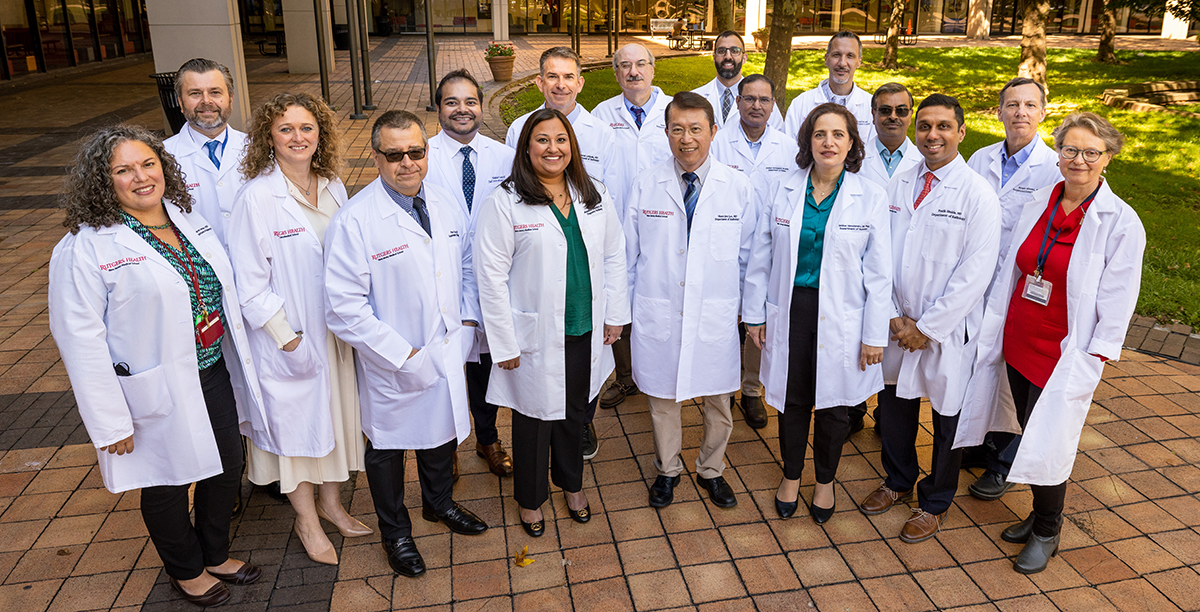
Humaira Chaudhry, MD is Chair and Professor of Radiology at Rutgers, New Jersey Medical School. She is an Abdominal Radiologist who is an expert in hepatobiliary and oncological imaging. Dr. Chaudhry is a graduate of Rutgers, New Jersey Medical School and completed her residency in Diagnostic Radiology at The Mount Sinai Medical Center in New York. She then went on to a fellowship in Abdominal Imaging and Image-Guided Intervention at Duke University Medical Center. Dr. Chaudhry has contributed to numerous publications, book chapters, and scientific presentations in the field of radiology. She is a grant funded researcher investigating the role of artificial intelligence in diagnosing pancreatic ductal carcinoma and methods to improve cancer screening adherence in an underserved population. Dr. Chaudhry is part of a team of investigators that was recently awarded the Rutgers Inclusion, Diversity, Equity, and Advocacy (IDEA) Innovation Grant to develop an interprofessional public and population health service-learning structure known as the Rutgers Health Service Corps. She serves on the American College of Radiology's Commission on Quality and Safety, is the Chair for their RADPEER Committee, and participates in other professional committees related to liver imaging and hepatocellular carcinoma.

Research topics

  • Medicine
  • Computer Science
  • Radiology
  • Pathology
  • Family medicine
  • Immunology
  • Biology
  • Medical education
  • Cell biology

Selected publications

  • Evaluation for Osteoporosis Using Low-Dose CT Imaging of the Chest Obtained for Lung Cancer Screening

    CHEST Journal · 2026-01-08 · 1 citations

    article
  • Development of an AI-driven body composition analysis platform for objective evaluation of liver transplant recipient myosteatosis

    American Journal of Transplantation · 2026-01-01

    article
  • Abstract 4893: Who falls through the cracks?: Characteristics of women successfully and unsuccessfully navigated to breast cancer screening from the emergency department

    Cancer Research · 2025-04-21

    articleSenior author

    Abstract Screening mammography has contributed to decreased breast cancer mortality, but screening disparities exist among racial/ethnic minority populations. Emergency departments (EDs) serve in a safety net capacity for underserved patients and are a novel place for cancer screening education and navigation. We implemented an intervention at two EDs in New Jersey where students recruited patients overdue for breast cancer screening and connected them to patient navigators. This analysis describes participants who were reached by a navigator to make a mammogram appointment versus those not reached, as well as women who attended their appointment versus not. Of 415 ED patients eligible for breast cancer screening (women 40-74 years old), 152 (37%) were eligible for the study (last mammogram >1 year ago), of which 101 agreed to participate. When contacted, 14 (14%) participants were reached and made a mammogram appointment. Women reached were more likely to: be in their 40s (71% vs. 49%), Hispanic (77% vs. 47%), Spanish-speaking (64% vs. 38%), not have private insurance (33% vs. 49%), and have Medicaid (22% vs. 10%) than women not reached. Nine women (9% total, 64% of those reached) attended a mammogram appointment. Women who attended their appointment had similar characteristics as women reached but were more likely to have a primary care provider (PCP) (78% vs 64%) and Medicaid (33% vs 22%) compared to all women who made an appointment. (See table.)Follow-up care is vital to an ED cancer screening intervention. Surprisingly, English speaking and patients with private insurance were less likely to be reached for a mammogram appointment. Patients without a PCP were less likely to attend their appointment. Adapting interventions to target women who “fall through the cracks” is imperative to improving breast cancer equity. More work is needed to strengthen the follow-up process for breast cancer screening for ED patients. Characteristics of Study Participants by Follow-Up Status % Attended Appointment (n=9) Made Appointment (n=14) Was Not Reached (n=87) All (n=101) Age Mean (SD) 48.7 (7.4) 47.8 (6.2) 51.1 (8.1) 50.6 (8.0) 40-49 years 67 71 49 53 50-59 years 22 21 31 29 60-69 years 11 7 19 17 70-74 years 0 0 1 1 Race/ Ethnicity Asian 0 0 6 5 Black 22 23 30 29 Hispanic 78 77 47 51 White 0 0 10 8 Other 0 0 7 6 Language English 33 36 60 56 Spanish 67 64 38 42 Other 0 0 2 2 Insurance Type Private 33 33 49 47 Medicaid 33 22 10 12 Medicare 0 0 8 7 No Insurance 33 33 27 28 Other 0 11 6 7 PCP (Y/N) Yes 78 64 52 54 Highest Level of Education Less than HS degree 38 42 38 38 HS degree or GED 38 33 40 39 Associate’s degree 13 8 5 5 Bachelor’s degree 13 17 10 11 Master’s degree 0 0 7 6 Citation Format: Sara Heinert, John Hemphill, Gabrielle Gracias, Maya Iglesias, Jessica Kim, Hrithika Ravuri, Antonia Sames, Alexandra Sobocinski, Ana Natale-Pereira, Erin Muckey, Pamela Ohman-Strickland, Vince Silenzio, Jonathan McCoy, Amanda Esposito, Ethan Halm, Mary O'Dowd, Humaira Chaudhry. Who falls through the cracks?: Characteristics of women successfully and unsuccessfully navigated to breast cancer screening from the emergency department [abstract]. In: Proceedings of the American Association for Cancer Research Annual Meeting 2025; Part 1 (Regular Abstracts); 2025 Apr 25-30; Chicago, IL. Philadelphia (PA): AACR; Cancer Res 2025;85(8_Suppl_1):Abstract nr 4893.

  • Tu1373: PREDICTING PDAC OCCURRENCE UP TO 10 YEARS IN ADVANCE USING RADIOMIC FEATURES OF THE MAIN PANCREATIC DUCT IN PREDIAGNOSTIC CT SCANS

    Gastroenterology · 2025-05-01

    article
  • Magnetic resonance imaging of hepatocellular carcinoma: a spectrum of uncommon morphologic subtypes, unusual imaging patterns and mimics

    Abdominal Radiology · 2025-01-04 · 1 citations

    review
  • Predicting Pancreatic Ductal Adenocarcinoma Occurrence Up to 10 Years in Advance Using Features of the Main Pancreatic Duct in Pre-Diagnostic CT Scans

    Cancers · 2025-06-04 · 2 citations

    articleOpen access

    Background/Objectives: Pancreatic ductal adenocarcinoma (PDAC) prediction in high-risk individuals is essential for early detection and improved outcome. While prior studies have utilized pancreatic radiomics for PDAC prediction, the added value of main pancreatic duct (MPD) features remains unclear. This study aims to assess the additional value of features of the main pancreatic duct (MPD) for predicting PDAC occurrence across different timeframes in advance. Methods: In total, 321 contrast-enhanced CT scans of the MPD and pancreas carried out across control, pre-diagnostic, and diagnostic cohorts were segmented, and radiomics were extracted. A support vector machine (SVM) classifier was used to classify the control and pre-diagnostic cohorts, with model performance assessed using area under the receiver operating characteristic (ROC) curves (AUCs) Results: The MPD diameter and volume significantly increased from the control to the pre-diagnostic and diagnostic CT scans (p < 0.05). The addition of features of the MPD to the pancreas improved the PDAC prediction AUC from 0.83 to 0.96 for subjects 6 months to 3 years in advance, from 0.81 to 0.94 for 3–6 years in advance, and 0.75 to 0.84 for 6–10 years in advance of diagnosis. Additionally, integrating MPD radiomics with diameter and volume significantly improved the AUC from 0.81 to 0.88 for subjects 6 months to 3 years in advance. Conclusions: Radiomic features from abdominal CT scans allow PDAC prediction up to 10 years in advance. Integrating MPD features, including diameter and volume, significantly improves PDAC prediction compared to using radiomics of the pancreas alone.

  • “Learning From Disaster: What Past Events Can Teach Radiology Departments about Planning for a Mass Casualty Incident”

    Current Problems in Diagnostic Radiology · 2023-05-11 · 2 citations

    reviewOpen access

    The increased frequency of mass shootings, terror attacks, and natural disasters in recent years have presented challenges to provision of quality medical care in both short and long-term stressful situations. While emergency departments and trauma surgeons are usually the face of the response to mass casualty incidents (MCI), other departments such as radiology are often active participants in caring for these patients but may not be as well prepared. In this article, we review nine papers describing the experiences of various radiology departments with specific MCIs and the lessons they learned from those experiences. By analysis of common themes raised in these papers, we hope to enable departments to incorporate these lessons into their disaster plans to enhance their preparedness for such events.

  • Understanding the role of radiologists in complex treatment decisions for patients with hepatocellular carcinoma

    Abdominal Radiology · 2023-09-16 · 4 citations

    reviewOpen access
  • The adoption of LI-RADS: a survey of non-academic radiologists

    Abdominal Radiology · 2023-05-26 · 14 citations

    article
  • Current State of Peer Learning in Radiology: A Survey of ACR Members

    Journal of the American College of Radiology · 2023-05-23 · 12 citations

    article

Frequent coauthors

  • Melissa Jenkins

    49 shared
  • Zhengjia Chen

    Zhejiang University

    49 shared
  • Rendon C. Nelson

    Duke Medical Center

    49 shared
  • Jian Kang

    University of Michigan–Ann Arbor

    49 shared
  • Dushyant V. Sahani

    University of Washington Medical Center

    49 shared
  • Daniella F. Pinho

    49 shared
  • Courtney C. Moreno

    Emory University

    49 shared
  • MaryAnne Zabrycki

    Massachusetts General Hospital

    49 shared

Education

  • M.D.

    Rutgers, New Jersey Medical School

    2005
  • B.S.

    NJIT

    2002

Awards & honors

  • Rutgers Inclusion, Diversity, Equity, and Advocacy (IDEA) In…
  • Resume-aware match score
  • Save to shortlist
  • AI-drafted outreach

See your match with Humaira Chaudhry

PhdFit ranks faculty by your research interests, methods, and publications — grounded in their actual work, not templates.

  • Free to start
  • No credit card
  • 30-second signup