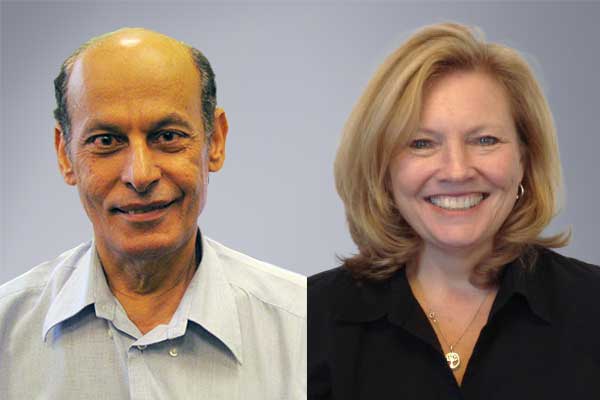
Ibrahim Zeid
Northeastern University · Engineering Management and Systems Engineering
Active 1961–2025
About
Ibrahim Zeid is a professor of Mechanical and Industrial Engineering at Northeastern University College of Engineering. His research focuses on mechanics, personalized medicine, simulation techniques, and complex networks analysis. He has contributed to various projects including the development of artificial intelligence-based emission reduction strategies, Monte-Carlo numerical simulations of aerodynamics, and the analysis of machining processes. Zeid has been involved in initiatives aimed at transforming engineering education and fostering STEM learning, including leading NSF-funded programs to mentor students and modernize high school STEM curricula with AI integration. His work emphasizes the application of advanced simulation and analytical techniques to solve complex engineering problems and improve educational practices.
Research topics
- Chemistry
- Waste management
- Nuclear chemistry
- Environmental engineering
- Composite material
- Environmental science
- Materials science
- Engineering
- Organic chemistry
- Metallurgy
Selected publications
2025-08-21
article1st authorCorrespondingSSRN Electronic Journal · 2024-01-01
preprintOpen accessQuinazolines Linked to Sugar Derivatives as Nucleoside Analogs, Synthesis and Biological Aspects
Egyptian Journal of Chemistry · 2024-02-25 · 2 citations
articleQuinazoline incorporating compounds have recently acquired intensive interest due to their several applications, the most important of which are those related to the divers bioactivities. Quinazoline derivatives have a variety of pharmacological effects providing a special interest to such heterocyclic systems as a basic core in bioactive structures. Techniques for synthesizing or modifying this ring structure are therefore always evolving and intriguing. As intermediates in the synthesis of various beneficial heterocyclic compounds, they are of considerable interest. Incorporation of sugar, in modified cyclic and acyclic forms, with the structure of heterocyclic possessing quinazoline system revealed potential structures with various bioactivities.
2024-07-09
peer-review2024-02-07
articleOpen access1st authorCorrespondingAbstract Northeastern University has received funding from the division of Engineering Education and Centers (EEC) to establish a three-year REU site focusing on smart engineering for community college (CC) students. The REU Site hosts 10 CC students each year, during the summer session, to participate in research projects focusing on the field of Smart Engineering. The REU site is guided by two of the grand challenges of the National Academy of Engineering: personalized learning and scientific discovery. Specifically, this project trains students on how to conduct cutting-edge research and communicate their research findings to the broader community. The project focuses on recruiting URM and students who are currently underrepresented in the STEM workforce. The outcome will be a better-trained, diverse scientific workforce, which will help deliver solutions that both benefit society and maintain the competitive edge of the United States in the global economy. In addition to gaining research experience, REUs also receive training on teamwork and communication best practices through a suite of professional development opportunities. Field trips to local industry will provide students with first-hand exposure to the STEM workforce in action. These efforts are expected to yield a cohort of CC young researchers, many from underrepresented groups, who have a strong understanding of interdisciplinary team-based research. The first year of operation of the REU site has concluded. The site team and the grant external evaluator have conducted their first formative evaluations to inform the program of what worked well and what needs adjustments and improvements. The paper discusses the activities of the REU program in the first year. The paper also discusses the observations of students during the 10 weeks summer research program. The paper also discusses the various evaluation instruments that are used. These evaluations will improve and enhance the program in years 2 and 3 of the site operations.
2024-02-07
articleOpen access1st authorCorrespondingAbstract Community colleges (CCs) play an important role in workforce development across the U.S. their main mission is to provide academic preparation and skills training to prepare students for jobs or to transfer to four-year colleges and universities. In recognizing the importance of CCs in workforce development and student training, Northeastern University recently received a grant for an REU site. The site recruits only CC students from a specific geographic region with the goal of preparing students to either join the workforce or transfer to higher education. The REU site, called REU Pathways, main field of research is smart engineering focusing on four research themes: AI/Machine Learning, smart infrastructure, smart materials, and smart health. The REU site runs for three years, recruits 10 CC students per year, and runs for 10 weeks during each year summer. This REU program is a commuter program, providing travel expenses, food vouchers and a laptop in lieu of housing. In Week 1, all students participate in a weeklong program of Engineering Essentials to build their engineering skillset. Week 1 is designed to focus on learning how to use the SparkFun Inventor's kit required to conduct design projects and use the maker space lab. Week 1 is also designed to acquaint students with Northeastern University and help them connect/network with mentor faculty and student mentors. Weeks 2 – 10 focus on developing social skills, in addition to research and engineering. "soft" skills" weekly sessions are planned during these weeks and will be conducted by the project team. Sample topics covered in these sessions include DEI, Ethics, study skills, graduate school workshop, updating your LinkedIn profile and resume, preparing final presentations, and developing a poster, to name a few. Students will also have additional research seminars they will be invited to over the course of the summer in collaboration with other programs – generally offered on Wed at noon from late June through July. The daily activities of each of Weeks 2-10 are as follows. CC students spend the morning (9:00 AM – 12:00 noon) in the research laboratory working on their research projects. Students break for group lunch from 12:00 noon – 1:00 PM. Students go back to their research labs from 1:00 PM – 4:00 PM. This daily schedule takes place on Monday – Thursday each week. Friday of each week is reserved for field trips and/or workshops (full and/or half a day). The paper discusses the detailed logistics and implementation of the REU Pathway program in the first year. The paper also discusses the observations of students' struggles during the 10 weeks. The paper also discusses the lessons learned and feedback that will be implemented in Year 2 and Year 3 of the site to alleviate these struggles and pitfalls of Year 1. One of the important lessons learned is that we did not include daily meetings with all students to foster community building to ensure students feel connected, especially since this is a commuter program. Other important lessons are to be discussed in the paper.
2024-07-11
peer-reviewScientific Reports · 2024-09-27 · 3 citations
articleOpen access1st authorCorrespondingAbstract The removal of pollutants from the environment has become a global demand. The current study aimed to relieve the Ni toxicity effect on the germination, growth, and grain yield of maize by using Azolla pinnata as a phytoremediator. Azolla- treated and untreated nickel solutions [0 (control), 24, 70, 140 and 190 ppm] were applied for germination and pot experiments. Electron microscope examination cleared the Ni accumulation in Azolla’s cell vacuole and its adsorption on the cell wall. The inhibition of the hydrolytic enzyme activity reduces maize germination; maximal inhibition was 57.1% at 190 ppm of Ni compared to the control (100%). During vegetative growth, Ni stimulated the generation of H 2 O 2 (0.387 mM g −1 F Wt at 190 ppm of Ni), which induced maximal lipid peroxidation (3.913 µMDA g −1 F Wt) and ion leakage (74.456%) compared to control. Chlorophyll content and carbon fixation also showed significant reductions at all Ni concentrations; at 190 ppm, they showed maximum reductions of 56.2 and 63%, respectively. However, detoxification enzymes’ activity such as catalase and antioxidant substances (phenolics) increased. The highest concentration of Ni (190 ppm) had the most effect on constraining yield, reaching zero for the weight of 100 grains at 190 ppm of Ni. Azolla -treated Ni solutions amended all determinant parameters, indicating a high percentage of changes in hydrolytic enzyme activity (125.2%) during germination, chlorophyll content (77.6%) and photosynthetic rate (120.1%). Growth measurements, carbon fixation, and yield components showed a positive association. Thus, we recommended using Azolla as a cost-effective and eco-friendly strategy to recover Ni-polluted water.
RSC Advances · 2024-01-01 · 10 citations
articleOpen accessvalue of 0.251 ± 0.011 μM. Finally, the binding mode of the chemical inhibitors at the active site of CK2 receptor was also investigated using a docking study which confirmed that the presence of the amino acid functionality is an important feature for anticancer activity and the synthesized compounds showed favorable ADME properties. Besides that, SAR analysis was implemented for the target compounds.
Materials · 2021 · 90 citations
- Nuclear chemistry
- Chemistry
- Organic chemistry
for 5 h.
Recent grants
Strategies: CAPSULE: CAPStone Unique Learning Experience
NSF · $1.4M · 2009–2013
NSF · $700k · 2014–2018
Frequent coauthors
- 36 shared
Sagar Kamarthi
Northeastern University
- 18 shared
Claire Duggan
Universidad del Noreste
- 17 shared
I. Ismail
- 13 shared
N. LATIF
Armed Forces College of Medicine
- 12 shared
Adel A.‐H. Abdel‐Rahman
- 11 shared
Jessica Chin
- 11 shared
Theodore Bardasz
- 9 shared
Surendra M. Gupta
Lovely Professional University
Awards & honors
- Fellow, American Society of Mechanical Engineers
- Resume-aware match score
- Save to shortlist
- AI-drafted outreach
See your match with Ibrahim Zeid
PhdFit ranks faculty by your research interests, methods, and publications — grounded in their actual work, not templates.
- Free to start
- No credit card
- 30-second signup