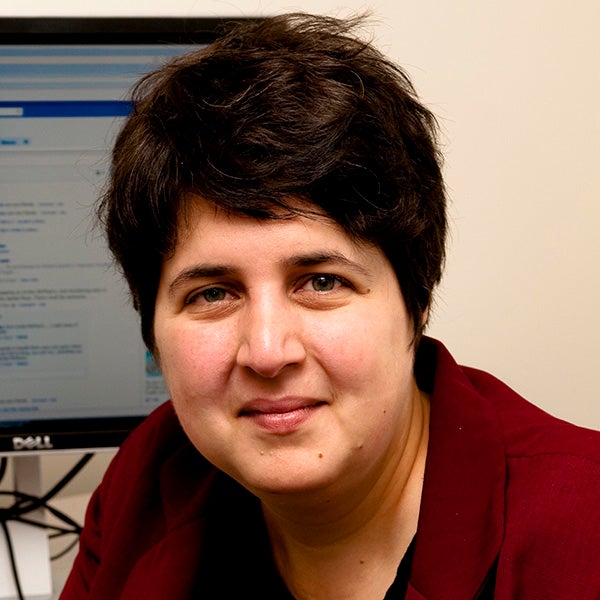
Ilana Gershon
· Herbert S. Autrey Chair, Anthropology Director of Graduate Studies, Anthropology Co-Director, Program in Science and Technology StudiesVerifiedRice University · Anthropology
Active 1999–2026
About
Ilana Gershon is a US-focused anthropologist with broad interests in political and legal anthropology, linguistic and media anthropology, science and technology studies, and the anthropology of work. She holds the Herbert S. Autrey Chair in Anthropology at Rice University and serves as the Director of Graduate Studies in Anthropology, as well as Co-Director of the Program in Science and Technology Studies. Her research projects include a comparative study of Samoan migrants in New Zealand and the United States, which informed her book 'No Family is an Island: Cultural Expertise among Samoans in Diaspora.' She has also explored Maori members of the New Zealand parliament, mediated breakups through technology, and studied hiring rituals in corporate America, leading to several publications including books and articles. Her recent work examines how workplaces function as sites of private government during the pandemic, resulting in her upcoming book 'The Pandemic Workplace: How People Learned to be Citizens in the Office.' Gershon has contributed to ethnographic fiction and produces a podcast on academic hiring rituals, as well as maintains a blog for scholars in linguistic and media anthropology. Her theoretical work includes surfacing emerging movements in anthropology that analyze circulation, power, ritual, and scale among multiple social orders, and generating a historically specific understanding of neoliberalism as a distinct moment of capitalism.
Research topics
- Sociology
- Computer Science
- Political Science
- Media studies
- History
- World Wide Web
- Economic growth
- Business
- Art history
- Linguistics
- Library science
- Geography
- Human–computer interaction
- Psychology
- Internet privacy
- Social psychology
- Engineering
- Economics
- Management
- Marketing
- Public relations
Selected publications
Linguistic anthropology of AI: an afterword
Journal of the Royal Anthropological Institute · 2026-04-19
article1st authorCorrespondingThis reflection on the themed cluster of articles on linguistic anthropology and AI addresses what social anthropologists might wish to know about the linguistic anthropological analytical toolkit when turning to large language models (LLMs) as objects of analysis. In particular, this afterword discusses what agency might be understood to be when the scholarly attention is focused largely on how people use communicative repertoires to accomplish complex social tasks with others. Building on how linguistic anthropologists understand human semiosis, the article makes apparent how human communicative agency differs from the communicative agency expressed by LLMs.
Living Under Contract: An LPE Analysis of American Democracy
eYLS (Yale Law School) · 2026-03-01
articleSenior authorIs President Donald Trump appealing in part because he has made contracts seem like provisional arrangements likely to endure only insofar as they serve his (or putatively national) interests? Two political economy studies of U.S. workplaces and firms, one ethnographic and one historical, can begin to shed light. Ilana Gershon’s ethnography explores how people’s everyday legal and political consciousness is formed through their experiences of regulatory decision-making in a contract filled workplace. Sociologist Melinda Cooper’s historical account reveals how a turn to viewing corporations as a conglomeration of individual contracts paved the way for a veneration of autocratic rule. In making this argument, we contribute to this Symposium in two ways. First, we illustrate the value of an insight that has helped organize the field of law and political economy but not law and economics: namely, that people’s legal and political sensibilities are often shaped by their experiences in economic life. Second, we illustrate the value of interpretative social sciences, which has remained marginal in both fields. We argue that qualitative and ethnographic research methods are particularly useful in moments such as the political present in the United States when what can be assumed about political, legal, and class identities and categories is rapidly changing.
Semiotic Determinacy: Sovereign Citizens’ Approach to Legal Language — CORRIGENDUM
Signs and Society · 2025-06-16
erratumOpen accessSenior authorSeeking romance in a marketplace of profiles: a commentary
Discourse Context & Media · 2025-09-27
article1st authorCorrespondingAn Anthropologist’s Guide to Better Automation
Communications of the ACM · 2025-12-03
article1st authorCorrespondingHow engineering and computer science might be enhanced if collaborations with anthropologists were the norm.
Prefigurative Neoliberalism: A Provisional Analysis of the Global Sovereign Citizen Movement
PoLAR Political and Legal Anthropology Review · 2025-04-18
articleOpen accessSenior authorCorrespondingABSTRACT Much contemporary research on prefigurative legality turns to left‐leaning activists for ethnographic insights into practices that call forward an alternative legal world. We turn instead to a right‐leaning movement commonly known by scholars as the Pseudolaw movement—or self‐named (by some involved) as the sovereign citizen movement—filled with loosely affiliated groups that share a common ideological approach to law. We discuss the underlying logics motivating sovereign citizens' practices, discussing how a nostalgically based form of prefiguration shapes sovereign citizens' responses to contemporary neoliberal dilemmas. We then compare this right‐leaning movement's approach to prefigurative legality with the approach of left‐leaning activists.
Seeing like a Typewriter: Reading Kittler as an Anthropologist
Sprache und Literatur · 2025-07-15
article1st authorCorrespondingAbstract Der Beitrag untersucht die Rezeption Kittlers in der US-amerikanischen Kulturanthropologie der 2000er Jahre. Verfolgt man Kittlers Einfluss auf die anthropologische Arbeit, zeichnet sich ab, wie Ideen zwischen den Disziplinen migrieren, aber auch, welche Übersetzungsanstrengungen damit verbunden sind. Die vier hier besprochenen Anthropologinnen haben sich allesamt mit unterschiedlichen Themen in Kittlers Werk beschäftigt, und alle haben sein Denken auf eigentümliche Weise ihren Zwecken angepasst, um spezifische ethnographische Kontexte zu bedienen: vom rapide gewandelten Verhältnis zwischen Sprache und kultureller ‚Identität‘ im modernen Südindien bis hin zu der Frage, warum sich US-Studentinnen nach einer gescheiterten Liebesbeziehung dafür entschieden haben, sich auch von Facebook zu trennen. Letztlich führt der Beitrag vor, unter welchen Bedingungen und mit welchen Modifikationen Anthropologen, die soziale Interaktionen untersuchen, einen medientheoretischen Ansatz zur Geltung bringen können.
2025-03-08
articleOpen access1st authorCorrespondingA Business of One or Nurturing the Craft: Who are You?
2025-10-01
book-chapter1st authorCorrespondingIf you want to be successful as a professional media maker, you have to think of yourself as a ‘business of one’: always managing, promoting, and performing yourself as a brand. This is a truism throughout all media industries. However, such constant self-branding comes at a cost. This chapter discusses the origin of self-branding and of ers an alternative way of finding work in media by focusing on craftsmanship.
The Political Uses of Semiotic Indeterminacy
Signs and Society · 2025-01-22 · 1 citations
articleOpen access1st authorCorrespondingAbstract The authors in this collection start with the insight that not all instances of semiotic indeterminacy are produced in the same way, that they can be located differently in the process of semiosis, and this fact shapes how and when semiotic indeterminacy is deployed by formulators and interpreters. The authors explore patterned uses of semiotic indeterminacy in Brazil, Bulgaria, Iran, and the United States to examine the role indeterminacy plays in institutional attempts at control and persuasion.
Frequent coauthors
- 16 shared
Christine Lee
- 16 shared
Francisco Goldman
- 16 shared
Jose-Henrique Alves
NOAA Weather Program Office
- 16 shared
Irus Braverman
University at Buffalo, State University of New York
- 16 shared
Jiangyu Li
Southern University of Science and Technology
- 16 shared
Val Solomon
Pacific Standard
- 16 shared
Arun Chawla
Manipal Academy of Higher Education
- 16 shared
Camelia Dewan
Uppsala University
Labs
Awards & honors
- Fellowship at Stanford’s Center for Advanced Study in the Be…
- Fellowship at Notre Dame’s Institute of Advanced Study
- Resume-aware match score
- Save to shortlist
- AI-drafted outreach
See your match with Ilana Gershon
PhdFit ranks faculty by your research interests, methods, and publications — grounded in their actual work, not templates.
- Free to start
- No credit card
- 30-second signup