Resume-aware faculty matching

Find professors who actually fit you

Upload your resume. Four AI agents analyze your background, rank the faculty who fit, inspect their recent research, and help you draft outreach — grounded in their actual work, not templates.

Free to startNo credit cardCancel anytime
Top matches Balanced preset
Dr. Sarah Chen
Stanford · Interpretability · NLP
91
Dr. Marcus Holloway
MIT · Robotics · RL
84
Dr. Aisha Okonkwo
CMU · Fairness · HCI
82
Nova · Professor Researcher · re-ranking top 20…
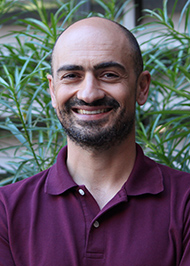
Ippolytos Kalofonos

Ippolytos Kalofonos

Verified

University of California, Los Angeles · Anatomy and Cell Biology

Active 1999–2025

h-index13
Citations1.2k
Papers4525 last 5y
Funding
See your match with Ippolytos Kalofonos — sign in to PhdFit.Sign in

About

Ippolytos Kalofonos is an assistant professor-in-residence in the David Geffen School of Medicine Center for Social Medicine and the UCLA International Institute, where he teaches in the Global Health Minor. He is a medical anthropologist and a practicing psychiatrist at the Greater Los Angeles Veteran Affairs Medical Center, serving as an Investigator with the Center for Healthcare Innovation, Implementation, and Policy. His research focuses on meaning in psychosis, institutions and care, homelessness, Veteran health, political economy of health, critical global health, social psychiatry, HIV/AIDS, and Africa. Kalofonos has published widely in clinical and social science journals and authored the book ‘All I Eat is Medicine’: Going Hungry in Mozambique’s AIDS Economy, which explores the legacies of imperialism, extraction, and racialized exploitation underlying contemporary health crises like the HIV/AIDS epidemic. His work emphasizes understanding social and political forces that produce health inequities and advocates for a global health approach that addresses these root causes.

Research topics

  • Psychiatry
  • Medicine
  • Nursing
  • Social psychology
  • Political Science
  • Psychology
  • Family medicine
  • Public relations
  • Psychotherapist

Selected publications

  • Author response for "Enhancing Vocational Rehabilitation Services for Homeless‐Experienced Veterans in Permanent Supportive Housing"

    2025-02-07

    peer-review
  • Enhancing Vocational Rehabilitation Services for Homeless‐Experienced Veterans in Permanent Supportive Housing

    Journal of Community Psychology · 2025-02-01

    articleOpen access

    Few homeless-experienced individuals use vocational rehabilitation services. Using qualitative methods, as part of a pilot study at VA Greater Los Angeles (GLA), we characterized the perspectives of homeless-experienced persons and homeless program staff on vocational services. We also explored relationships among employment, housing, and well-being in this group. We interviewed homeless-experienced persons enrolled in vocational rehabilitation services embedded in GLA's permanent supportive housing program (PSH) (n = 19); as well as vocational rehabilitation staff (n = 10). Interviews were analyzed using rapid qualitative methods. Our analysis found that embedding vocational services within PSH enabled easy access, continual support, and care coordination, but there was a mismatch between job opportunities and consumers' employment preferences and goals. Employment positively impacted quality of life and recovery. In conclusion, increase vocational service use among homeless-experienced persons, integrating vocational services within PSH programs may improve access. PSH consumers desired tailored services, with meaningful vocational options aligned with their professional goals.

  • Author response for "Enhancing Vocational Rehabilitation Services for Homeless‐Experienced Veterans in Permanent Supportive Housing"

    2024-09-27

    peer-review
  • Meaning in Psychosis: A Veteran’s Critique of the Traumas of Racism, Sexual Violence, and Intersectional Oppression

    Culture Medicine and Psychiatry · 2023-05-03 · 1 citations

    articleOpen access1st authorCorresponding

    This clinical case study presents the case of a Latina Veteran experiencing psychosis and draws on eclectic theoretical sources, including user/survivor scholarship, phenomenology, meaning-oriented cultural psychiatry & critical medical anthropology, and Frantz Fanon's insight on 'sociogeny,' to emphasize the importance of attending to the meaning within psychosis and to ground that meaning in a person's subjective-lived experience and social world. The process of exploring the meaning and critical significance of the narratives of people experiencing psychosis is important for developing empathy and connection, the fundamental prerequisite for developing trust and therapeutic rapport. It also helps us to recognize some of the relevant aspects of a person's lived experiences. To be understood, this Veteran's narratives must be contextualized in her past and ongoing life experience of racism, social hierarchy, and violence. Engaging in this way with her narratives pushes us towards a social etiology that conceptualizes psychosis as a complex response to life experience, and in her case, a critical embodiment of intersectional oppression.

  • Improving a Sanctioned Homeless Encampment for Veterans During COVID-19 Through Multilevel Partnerships

    Psychiatric Services · 2023-07-26 · 3 citations

    article

    A veteran-clinician-researcher partnership-the Care, Treatment, and Rehabilitation Service (CTRS)-enabled quality improvement within a U.S. Department of Veterans Affairs-sanctioned homeless encampment created in response to the COVID-19 pandemic. Although the differing concerns of clinicians and operational leaders led to challenges in defining CTRS's goals and quality metrics, partnering with frontline social work and peer staff (N=11) and veterans (N=21 of 381 CTRS participants) and considering their feedback resolved those differences. Multilevel partnerships improved care within the encampment, leading to the development of an encampment medicine team (providing onsite integrated health care) and a veteran engagement committee (providing feedback).

  • A pilot trial examining the effects of veteran voices and visions, an adaptation of hearing voices groups for a large public health system in the United States

    International Journal of Social Psychiatry · 2023-09-19 · 6 citations

    article1st authorCorresponding

    BACKGROUND: The Hearing Voices Approach, a community-based peer-led support group model, is generating interest as a novel way to engage with psychosis. Hearing Voices (HV) groups are run by peers, 'experts-by-experience', and emphasize group ownership and community-building rather than adherence to a therapist-led, predetermined structure. Diverse beliefs about experiences are respected and viewed as potentially meaningful. Groups work within each individual's explanatory framework to reframe understandings. AIMS: This paper describes the effects of participation in Veteran Voices and Visions (VVV) groups, an adaptation of the HV approach, co-led by clinicians and Veteran peer support specialists, adapted for Veterans who have experienced psychosis and receive care at the VA, a large public health system in the United States. METHOD: This mixed methods pilot study has a convergent parallel design, integrating quantitative and qualitative data from participants in pre-intervention and post-intervention assessments. RESULTS: Over 16 weeks, quantitative analysis showed a statistically significant reduction in distress, due to auditory hallucinations, as measured by the Psychotic Symptom Rating Scales (PSYRATS). The Beliefs about Voices Questionnaire- Revised (BAVQ-R) results showed a reduction in malevolence and omnipotence and an increase in benevolence related to auditory hallucinations, but no change in resistance. Engagement showed a trend-level reduction. Qualitative data from midpoint (Week 8) and endpoint (Week 16) interviews revealed several perceived benefits from groups: 1) normalization and camaraderie, 2) increased hope and confidence, 3) self-understanding and reframing of experiences, and 4) building relationships outside of groups. Overall, VVV groups reduced distress due to voices, negative beliefs about voices, and perceived power of voices. CONCLUSIONS: Study findings contribute to a growing body of literature indicating HV groups support those who have experienced psychosis by reducing social isolation and fostering community, which may facilitate social integration. Overall, our findings highlight the potential benefits of adapting HV groups to health systems.

  • Purity, Danger, and Patriotism: The Struggle for a Veteran Home during the COVID-19 Pandemic

    Pathogens · 2023-03-18 · 2 citations

    articleOpen access1st authorCorresponding

    The coronavirus disease 2019 (COVID-19) pandemic rendered congregate shelter settings high risk, creating vulnerability for people experiencing homelessness (PEH). This study employed participant observation and interviews over 16 months in two Veteran encampments, one located on the grounds of the West Los Angeles Veteran Affairs Medical Center (WLAVA) serving as an emergency COVID-19 mitigation measure, and the other outside the WLAVA gates protesting the lack of onsite VA housing. Study participants included Veterans and VA personnel. Data were analyzed using grounded theory, accompanied by social theories of syndemics, purity, danger, and home. The study reveals that Veterans conceptualized home not merely as physical shelter but as encompassing a sense of inclusion and belonging. They sought a Veteran-run collective with a harm reduction approach to substance use, onsite healthcare, and inclusive terms (e.g., no sobriety requirements, curfews, mandatory treatment, or limited lengths of stay). The twin encampments created distinct forms of community and care that protected Veterans from COVID-19 infection and bolstered collective survival. The study concludes that PEH constitute and belong to communities that provide substantial benefits even while amplifying certain harms. Housing interventions must consider how unhoused individuals become, or fail to become, integrate into various communities, and foster therapeutic community connections.

  • A Sanctioned Encampment as a Strategy for Increasing Homeless Veterans’ Access to Housing and Healthcare During the COVID-19 Pandemic

    Journal of General Internal Medicine · 2023-06-20 · 6 citations

    articleOpen access1st authorCorresponding

    BACKGROUND: The COVID-19 pandemic intersected with a housing crisis for unsheltered Veterans experiencing homelessness (VEHs); congregate settings became high risk for viral spread. The VA Greater Los Angeles responded by creating the Care, Treatment, and Rehabilitation Service (CTRS), an outdoor, low-barrier-to-entry transitional housing program on VA grounds. This novel emergency initiative offered a protected outdoor environment ("sanctioned encampment") where VEHs lived in tents and had access to three meals a day, hygiene resources, and health and social services. OBJECTIVE: To identify contextual factors that supported and impeded CTRS participants' access to healthcare and housing services. DESIGN: Multi-method, ethnographic data collection. PARTICIPANTS: VEHs residing at CTRS, CTRS staff. APPROACH: Over 150 hours of participant observation were conducted at CTRS and at eight town hall meetings; semi-structured interviews were conducted with 21 VEHs and 11 staff. Rapid turn-around qualitative analysis was used to synthesize data, engaging stakeholders in iterative participant validation. Content analysis techniques were used to identify key factors that impacted access to housing and health services among VEHs residing in CTRS. KEY RESULTS: Staff varied in their interpretation of CTRS' mission. Some conceptualized access to health services as a central tenet, while others viewed CTRS as an emergency shelter only. Regardless, staff burnout was prevalent, which lead to low morale, high turnover, and worsened access to and quality of care. VEHs endorsed trusting, long-term relationships with CTRS staff as paramount for facilitating access to services. Though CTRS addressed basic priorities (food, shelter, etc.) that traditionally compete with access to healthcare, some VEHs needed on-site healthcare services, at their tents, to access care. CONCLUSIONS: CTRS provided VEHs access to basic needs and health and housing services. To improve access to healthcare services within encampments, our data suggest the value of longitudinal trusting relationships, adequate staff support, and on-site health services.

  • Long-Acting Injectable Therapy for People with HIV: Looking Ahead with Lessons from Psychiatry and Addiction Medicine

    AIDS and Behavior · 2022 · 18 citations

    • Psychiatry
    • Medicine
    • Psychology

    Long-acting injectable antiretroviral medications are new to HIV treatment. People with HIV may benefit from a treatment option that better aligns with their preferences, but could also face new challenges and barriers. Authors from the fields of HIV, substance use treatment, and mental health collaborated on this commentary on the issues surrounding equitable implementation and uptake of LAI ART by drawing lessons from all three fields. We employ a socio-ecological framework beginning at the policy level and moving through the community, organizational, interpersonal, and patient levels. We look at extant literature on the topic as well as draw from the direct experience of our clinician-authors.

  • Lessons Learned by Collaborating with Structurally Vulnerable Veterans via a Veterans Engagement Group

    Journal of General Internal Medicine · 2022-03-29 · 7 citations

    editorialOpen access

Frequent coauthors

  • Sonya Gabrielian

    Center for the Study of Healthcare Provider Behavior

    29 shared
  • Lillian Gelberg

    23 shared
  • Matthew McCoy

    21 shared
  • Lisa Altman

    University of California, Los Angeles

    21 shared
  • Enrico G. Castillo

    19 shared
  • Joseph H. Grotts

    16 shared
  • Shayan Rab

    Ziauddin University

    16 shared
  • Imani J. Walker

    Gateways Hospital and Mental Health Center

    16 shared

Education

  • General Psychiatry Residency, Psychiatry

    University of Washington

    2014
  • MD, Medicine

    University of California, San Francisco

    2010
  • PhD, Anthropology, History, and Social Medicine

    University of California San Francisco

    2008
  • MPH, Epidemiology

    University of California Berkeley

    2002
  • Master of Health Sciences, Joint Medical Program

    University of California Berkeley

    2002
  • Bachelor of Arts, Anthropology

    University of California, San Diego

    1998

Awards & honors

  • American Council of Learned Societies Fellow – 2019-2020
  • AHRQ-PCORI Stakeholder-Partnered Implementation Research and…
  • Clark Taylor Professional Paper Prize from the AIDS and Anth…
  • Minority Fellowship Program, American Psychiatric Associatio…
  • Rudolph Virchow Award, Critical Anthropology of Global Healt…
  • Resume-aware match score
  • Save to shortlist
  • AI-drafted outreach

See your match with Ippolytos Kalofonos

PhdFit ranks faculty by your research interests, methods, and publications — grounded in their actual work, not templates.

  • Free to start
  • No credit card
  • 30-second signup