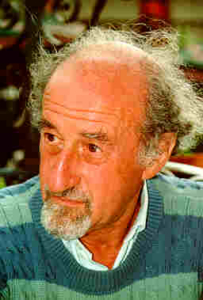
Ivan Berend
University of California, Los Angeles · History
Active 1965–2024
About
Ivan Berend is a Professor Emeritus at UCLA in the Department of History. His research focuses on the social and economic history of Europe from the 19th to the 20th centuries, including the European Union and contemporary Europe. His work addresses issues of economic modernization, the problems of European peripheral backwardness, and the complex economic, social, ideological, and cultural history of Central and Eastern Europe during the 19th and 20th centuries. Berend has contributed extensively to the understanding of the transition from state socialism to capitalism and the economic transformation of Central and Eastern Europe since 1973. Throughout his career, Berend has published 28 books and over 120 studies in various international periodicals, covering topics such as European economic history, regional crises, and the development of East-Central Europe. His notable publications include 'Europe Since 1980,' 'From the Soviet Bloc to the European Union,' and 'An Economic History of Twentieth-Century Europe.' Berend has received numerous awards and honors for his lifetime achievements, including the Konstantin Jireček Gold Medal from the Suedosteuropa Gesellschaft and honorary memberships in several academic societies. His work has significantly contributed to the fields of European and Central and Eastern European economic and social history.
Research topics
- Political Science
- Economics
- Sociology
- Law
- Regional science
- Positive economics
- Economy
- Geography
- International trade
- History
- Archaeology
- Political economy
Selected publications
The resurgence of nationalist-populism in post-communist Europe: a longue durée perspective
Edward Elgar Publishing eBooks · 2024-12-13
book-chapterSenior authorCentral European University Press eBooks · 2023-03-03
book-chapter1st authorCorrespondingChanging Europe’s Economic History
Cambridge University Press eBooks · 2023-10-12
book-chapter1st authorCorrespondingFrom the late eighteenth century, Europe started rising to the top of the world. The first industrial revolution in Britain gradually spread over the continent and the first important steps of a second industrial revolution, partly by Germany, were made after the middle of the nineteenth century. By 1870, Europe produced 45 per cent of the world’s total income. Around the turn of the century, however, Europe lost its leading position, and produced only 27 per cent of the world’s total income by 1913. The combined per capita gross domestic product (GDP) of the overseas West (the United States, Canada, Australia and New Zealand) was already more than 70 per cent higher than that of western Europe.
Central European University Press eBooks · 2023-03-16
book-chapter1st authorCorresponding2023-11-10
book1st authorCorresponding2023-11-10
book-chapter1st authorCorrespondingSlavic Review · 2022-01-01
article1st authorCorrespondingTaking Stock of Shock: Social Consequences of the 1989 Revolutions. By Kristen Ghodsee and Mitchell A. Orenstein. Oxford: Oxford University Press, 2021. xviii, 304 pp. Appendix. Notes. Bibliography. Index. Photographs. Figures. Tables. 27.95 paper. - Volume 81 Issue 3
Economic nationalism in historical perspective
Edward Elgar Publishing eBooks · 2022-10-13 · 3 citations
book-chapterOpen access1st authorCorrespondingEconomic nationalism has its intellectual origins in the nineteenth century. Its goal was the protection of weaker, late starter, mostly agricultural national economies against the much stronger competitors of the most advanced industrial powers. It was closely connected with dominant nationalist ideas and policies to strengthen and make economically independent the nation state. It was also used in extremely difficult times of crises to cope with decline and assist recuperation. With the start of World War I, state direction, control and ownership, tariffs and self-sufficiency became general practice in national economies all over Europe. After World War II, in an American-led international system, a free trade regime was reintroduced. Under U.S. hegemony, the large majority of states eventually joined the World Trade Organization (WTO). Nevertheless, history started repeating itself in the early 21st century when the United States returned to economic nationalist protectionism in its rivalry with rising China and the European Union.
An increasingly hostile international environment
2020-11-16
book-chapter1st authorCorrespondingCHAPTER 2 A Hungarian fascist demagogue: Gyula Gömbös
Central European University Press eBooks · 2020-09-10
book-chapter1st authorCorresponding
Frequent coauthors
- 14 shared
György Ránki
- 13 shared
Barbro Johansson
- 12 shared
Giuseppe Longo
- 11 shared
Henk Wesseling
- 11 shared
Stephan Leibfried
- 11 shared
A. S. V. Burgen
- 10 shared
Theo D’haen
- 10 shared
Gian Vittorio Caprara
Sapienza University of Rome
Awards & honors
- Konstantin Jireček Gold Medal, from the Suedosteuropa Gesell…
- Honorary member of the Portuguese Association of Internation…
- Honorary doctor of Janus Pannonius University, Hungary (1995…
- Honorary doctor of Glasgow University (1990)
- Corresponding member of the British Academy (1989)
- Resume-aware match score
- Save to shortlist
- AI-drafted outreach
See your match with Ivan Berend
PhdFit ranks faculty by your research interests, methods, and publications — grounded in their actual work, not templates.
- Free to start
- No credit card
- 30-second signup