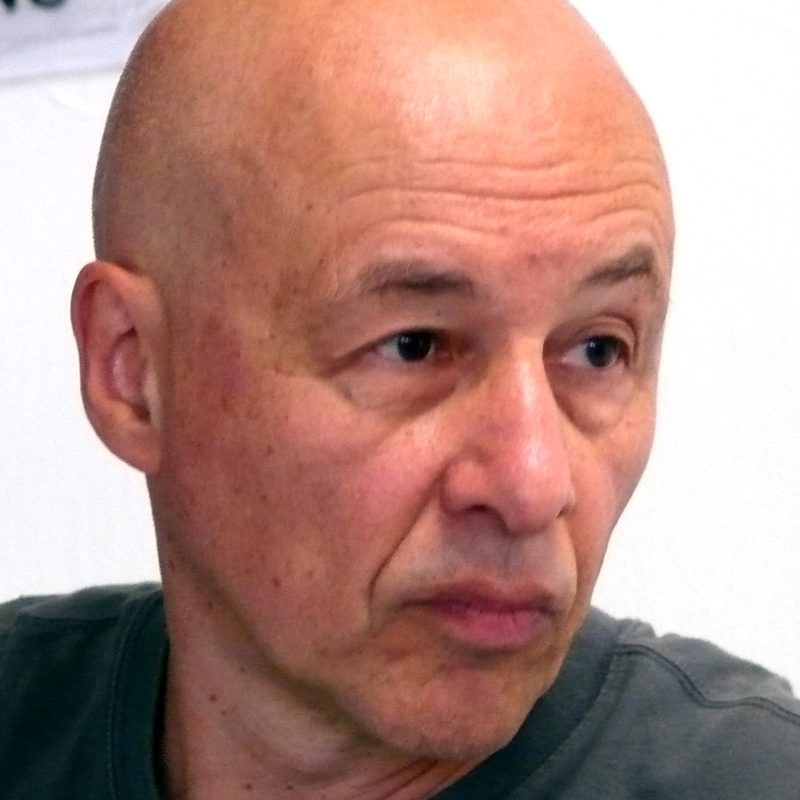
Ivan Cherednik
· Austin M. Carr Distinguished ProfessorVerifiedUniversity of North Carolina at Chapel Hill · Mathematics
Active 1975–2025
About
Ivan Cherednik is the Austin M. Carr Distinguished Professor at the Department of Mathematics at the University of North Carolina at Chapel Hill. His research interests encompass representation theory, mathematical physics, combinatorics, number theory, algebraic geometry, low-dimensional topology, mathematical biology, and quantitative finance. Cherednik's academic background includes a PhD in arithmetic geometry, where he obtained the p-adic uniformization of Shimura curves associated with quaternion algebras, a breakthrough used in the proof of Fermat's Last Theorem. He later shifted focus to representation theory and integrable models in physics, leading to the development of Double Affine Hecke Algebras (DAHA), the proof of the Macdonald conjectures in q-combinatorics, and advancements in hypergeometric functions, DAHA invariants of algebraic knots and links, and Rogers-Ramanujan identities. His recent work explores applications of DAHA knot invariants in number theory, including classical zeta and L-functions, as well as contributions to financial mathematics and modeling the spread of COVID-19 using Bessel functions.
Research topics
- Waste management
- Chemistry
- Chemical engineering
- Nuclear engineering
- Organic chemistry
- Materials science
- Environmental science
- Geology
- Composite material
- Engineering
Selected publications
Modeling the Waves of Covid-19
UNC Libraries · 2025-06-20
articleOpen access1st authorCorrespondingDiscrete Poisson hardcore 1D model and applications
Contemporary mathematics - American Mathematical Society · 2025-01-01
other1st authorCorrespondingWe suggest and study new hardcore Poisson-type distributions originated in sequences of non-overlapping subsegments in a given one of the lengths from some finite list, which are governed by a variant of the Matérn II process in 1D. The boundary effects are important: the last subsegment is allowed to go beyond the endpoint of the initial one. This is somewhat analogous to the interlacing sequences due to Kerov and others, but the corresponding Young diagrams are finite and the basic point process is different in our setup. When the lengths of subsegments are comparable with that of the initial segment, the classical limit becomes a new “truncated” Poisson-type distribution. The normal-type classical limit is of interest too. A variant is a random walk when the number of steps satisfies the classical Poisson distribution or our truncated one. Then the Bessel <inline-formula content-type="math/mathml"> <mml:math xmlns:mml="http://www.w3.org/1998/Math/MathML" alttext="upper I"> <mml:semantics> <mml:mi>I</mml:mi> <mml:annotation encoding="application/x-tex">I</mml:annotation> </mml:semantics> </mml:math> </inline-formula> -functions naturally occur, which provides an interesting probabilistic interpretation of their basic properties. Among applications, our truncated Poisson distribution can be used to model reinfections in epidemics.
Superpolynomials of Algebraic Links
The Quarterly Journal of Mathematics · 2025-08-25
article1st authorCorrespondingAbstract Theory of motivic superpolynomials is developed, including its extension to algebraic links coloured by rows, relations to $L$-functions of plane curve singularities, the justification of the motivic versions of Weak Riemann Hypothesis and recurrences for iterated torus links. The key theme is the conjectural coincidence of motivic superpolynomials with the double affine Hecke algebra ones, which can be interpreted as a far-reaching generalization of the Shuffle Conjecture. Applications include affine Springer fibres of type $A_n$ and compactified Jacobians in the most general case (for arbitrary characteristic polynomials) and extended rho-invariants of algebraic knots. The second connection conjecture relates the superpolynomials to the Galkin–Stöhr $L$-functions, which is some counterpart of the ORS conjecture. The corresponding theory of plane curve singularities is systematically exposed and developed, which can be seen in the case of Hopf links as a generalized version of Schubert Calculus.
On R-Matrix Quantization of Formal Loop Groups
2024-10-31 · 5 citations
book-chapter1st authorCorresponding1. The general plan of quantization. We choose a basis {Ia} in the associative algebra MN of NxN - matrices with unit Io and for any X∈ MN define Xα ∈ C from the expansion https://www.w3.org/1998/Math/MathML" display="inline"> X = ∑ α X α I α https://www.w3.org/1999/xlink" xlink:href="https://s3-euw1-ap-pe-df-pch-content-public-p.s3.eu-west-1.amazonaws.com/9781003580850/6547cd04-0b1f-4948-b2f4-c67f2028b35d/content/p161-1.tif"/> in terms of Iα https://www.w3.org/1998/Math/MathML" display="block"> 1 I α = I α ⊕ I o ⊕ . . . ⊕ I o , 2 I α = I o ⊕ I α ⊕ I o ⊕ . . . ⊕ I o , etc . , ij X = ∑ α , β x αβ i I α j I β for X = ∑ α , β x αβ I α ⊕ I β ∈ ∈ M N ⊕ M N https://www.w3.org/1999/xlink" xlink:href="https://s3-euw1-ap-pe-df-pch-content-public-p.s3.eu-west-1.amazonaws.com/9781003580850/6547cd04-0b1f-4948-b2f4-c67f2028b35d/content/dmath_p161-1.tif"/>
Zeta-Polynomials, Superpolynomials, DAHA, and Plane Curve Singularities
Simons symposia · 2024-01-01 · 1 citations
book-chapter1st authorCorrespondingZeta-polynomials, superpolynomials, DAHA and plane curve singularities
arXiv (Cornell University) · 2023-04-05
preprintOpen access1st authorCorrespondingWe begin with modular form periods, a focal point of several Yuri Manin's works. The similarity is discussed between the corresponding zeta-polynomials and superpolynomials of algebraic links, closely related to Khovanov-Rozansky polynomials. We focus on DAHA superpolynomials and motivic ones, defined via compactified Jacobians of plane curve singularities and their counterparts in arbitrary ranks; the non-unibranch construction is new. They conjecturally coincide with the corresponding generalizations of L-functions and satisfy the Riemann Hypothesis in some sectors of the parameters. Presumably, the motivic ones an be interpreted as certain partition functions of Landau-Ginzburg models associated with plane curve singularities; RH for them is remarkably similar to the Lee-Yang circle theorem for Ising models. A q,t-deformation of the Witten index is obtained as an application. General perspectives of the motivic theory of isolated curve and surface singularities are discussed, including possible implications in number theory. Also, we introduce super-analogs of $ρ_{ab}$-invariants and discuss super-deformations of the Riemann's zeta. Among other topics: Verlinde algebras, and the topological vertex.
Discrete Poisson hardcore 1D model and reinfections
arXiv (Cornell University) · 2022-02-18
preprintOpen access1st authorCorrespondingWe suggest a new hardcore Poisson-type distribution for Young diagrams with the row lengths from some finite list. A discrete variant of the time-ordered Matérn II process in 1D is employed. This approach is related to that based on the interlacing sequences due to Kerov and others, but we restrict the number of rows. The basic lengths are assumed comparable with the total order of the diagram in the quasi-classical limit, which results in new methods and new formulas. An interesting application is to random walks where the steps are at the points satisfying the classical Poisson distribution or our truncatedone. In the simplest case, one obtains the distribution in terms of Bessel I-functions, which provides some probabilistic interpretation of its many properties. An immediate application of our truncated Poisson distributions is to modeling reinfections in epidemics.
Gröbner cells of punctual Hilbert schemes in dimension two
Journal of Algebra · 2022-01-29 · 1 citations
preprintOpen access1st authorCorrespondingIntegral formulas for DAHA inner products
arXiv (Cornell University) · 2022-11-02
preprintOpen access1st authorCorrespondingThe main aim is to obtain integral formulas for DAHA coinvariants and the corresponding inner products for any values of the DAHA parameters. In the compact case, our approach is similar to the procedure of ``picking up residues" due to Arthur, Heckman, Opdam and others; the resulting formula is a sum of integrals over double affine residual subtori. A single real integral provides the required formula in the noncompact case. As q tends to 0, our integral formulas result in the trace formulas for the corresponding AHA, which calculate the Plancherel measures for the spherical parts of the regular AHA modules. The paper contains a systematic theory of DAHA coinvariants, including various results on the affine symmetrizers and induced DAHA modules.
Combinatorics, Modeling, Elementary Number Theory
WORLD SCIENTIFIC eBooks · 2022-08-09 · 1 citations
book1st authorCorresponding
Recent grants
NSF · $575k · 2019–2025
NSF · $170k · 2011–2015
NSF · $228k · 2008–2012
NSF · $145k · 2005–2009
NSF · $525k · 2014–2020
Frequent coauthors
- 36 shared
S. A. Yankovsky
Tomsk Polytechnic University
- 36 shared
Г. В. Кузнецов
National Research Tomsk State University
- 28 shared
Anton Tolokolnikov
National Research Tomsk State University
- 10 shared
Daniel L. Orr
- 10 shared
Boris Feigin
- 9 shared
V. A. Vysloukh
Universidad de las Américas Puebla
- 8 shared
А. V. Zenkov
Tomsk Polytechnic University
- 5 shared
Ian Philipp
University of North Carolina Health Care
- Resume-aware match score
- Save to shortlist
- AI-drafted outreach
See your match with Ivan Cherednik
PhdFit ranks faculty by your research interests, methods, and publications — grounded in their actual work, not templates.
- Free to start
- No credit card
- 30-second signup