Resume-aware faculty matching

Find professors who actually fit you

Upload your resume. Four AI agents analyze your background, rank the faculty who fit, inspect their recent research, and help you draft outreach — grounded in their actual work, not templates.

Free to startNo credit cardCancel anytime
Top matches Balanced preset
Dr. Sarah Chen
Stanford · Interpretability · NLP
91
Dr. Marcus Holloway
MIT · Robotics · RL
84
Dr. Aisha Okonkwo
CMU · Fairness · HCI
82
Nova · Professor Researcher · re-ranking top 20…
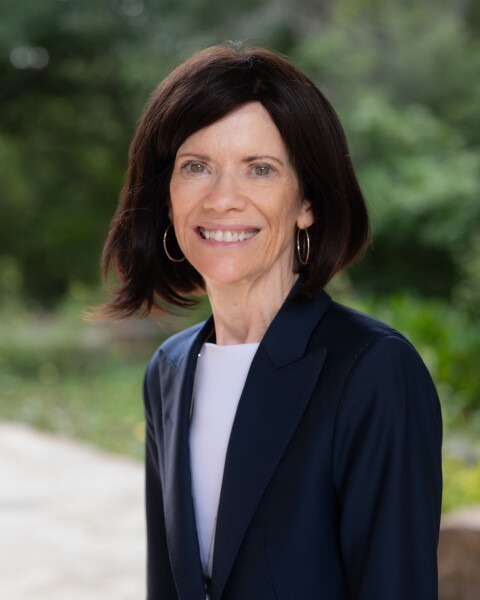
Jacqueline L. Angel

Jacqueline L. Angel

· Professor, LBJ School of Public Affairs, Wilbur J. Cohen Professor of Health and Social PolicyVerified

University of Texas at Austin · Romance Studies

Active 1952–2026

h-index32
Citations3.5k
Papers18949 last 5y
Funding$1.5M1 active
See your match with Jacqueline L. Angel — sign in to PhdFit.Sign in

About

Jacqueline L. Angel is a Professor at the LBJ School of Public Affairs and holds the Wilbur J. Cohen Professorship of Health and Social Policy at the University of Texas at Austin. Her research focuses on health and retirement issues in the United States, with particular attention to older minorities. She examines the impact of social policy on the Hispanic population and Mexican American families, contributing to understanding how social policies influence health and economic outcomes for these groups.

Research topics

  • Political Science
  • Gerontology
  • Medicine
  • Environmental health
  • Psychology
  • Sociology
  • Economics
  • Demography
  • Economic growth
  • Business
  • Psychiatry
  • Public economics
  • Nursing
  • Social psychology
  • Demographic economics

Selected publications

  • Special issue: Hispanic/Latinx healthy aging

    The Gerontologist · 2026-03-21

    articleSenior author
  • Assessing the Societal Costs of Cognitive Aging: Evidence From the US and Mexico

    Innovation in Aging · 2025-12-01

    articleOpen accessSenior author

    Abstract As the United States and Mexico undergo demographic shifts, rising longevity has intensified the burden of chronic conditions such as dementia and diabetes. These conditions pose significant policy and financial challenges, particularly as families bear most caregiving costs. This symposium advances knowledge on caregiving in the U.S. and Mexico, using diverse data sources to examine barriers and facilitators in chronic disease management. Five papers reflect collaborations between emerging scholars and senior faculty from the International Conference on Aging in the Americas. Falk analyzes BRFSS data, showing that caregivers of individuals with Alzheimer’s Disease and related dementias (ADRD), especially women and those facing food insecurity, experience significantly higher stress, underscoring the need for targeted interventions. Rojas-Alvarez uses HEPESE and Medicare data to show that Hispanic older adults with dual diagnoses of diabetes and ADRD near the U.S.-Mexico border experience worse healthcare utilization and self-reported health, pointing to structural barriers. Bokum analyzes the HEPESE and ACS to examine financial strain among co-residing adult child caregivers, finding younger and late-middle-aged caregivers face disproportionate financial stress, emphasizing the need for direct compensation and expanded support. Aguila draws on MHAS and HRS sister surveys to assess informal dementia care, identifying public and family-based care gaps requiring policy action. Mudrazija and Aranda estimate that unpaid dementia caregiving costs will rise substantially by 2060, disproportionately affecting minoritized caregivers and highlighting the need for culturally tailored support. Together, these studies inform strategies to enhance caregiver support and reduce health and financial disparities.

  • Introduction to Special Issue: Living With Dementia Among Latinos

    Hispanic Journal of Behavioral Sciences · 2025-02-01

    article1st authorCorresponding

    Dementia presents many challenges for nations and certainly for low-income families and particularly for U.S. Latinos. The articles in this special issue highlight important research findings addressing social, economic, and physical disparities in dementia, epidemiology, measurement, and care for older adults and their caregivers. They address relevant questions that complement current work undertaken by the 2023 National Research Summit on Care, Services, and Supports for Persons Living with Dementia and Their Care Partners/Caregivers, as well as research presented at the 16th conference on “Aging in the Americas” held at the University of Southern California in 2023. Importantly, the 2024 ICAA meeting elucidates five new iterations of the National Institute on Aging fifth competing renewal application submission, which we envision will foster the development of the next generation of emerging scholars and early career investigators in the field.

  • Who Moves In Matters: Move-in Patterns, Household Headship, & Financial Strain Among Latino Adult Child Caregivers

    Innovation in Aging · 2025-12-01

    articleOpen access

    Abstract While research shows increasing prevalence of multigenerational households, we know little about how different pathways to co-residence affect caregiver well-being. Using the Hispanic Established Populations for the Epidemiologic Study of the Elderly (2010-11), we examine how move-in scenarios and household structure influence financial strain among 659 Mexican-American adult child caregivers and their older parents (80+). Preliminary findings show that financial strain varies by move-in scenario. Adult children who moved in with their parent to provide care experience the highest rates of financial strain (22.2%), followed by adult children whose parents moved in with them for care (19.4%). Homeownership is a key predictor, with financial strain reaching 35.7% among caregivers who moved into a parent-owned home to provide care. Parents with dementia are more likely to move in with their adult children (64.5% vs. 44.4% when children move in), suggesting cognitive decline drives household restructuring. Among adult children who moved in to provide care, only 14.8% are household heads, compared to 57.1% of those who moved in for general reasons. This housing transition correlates with increased caregiving intensity (8.0-8.1 ADL/IADL hours per day) vs. 2.6-3.4 hours for caregivers who moved in for their own housing needs, and 6.2-6.3 hours for caregivers who co-reside without discerning move-in reasons.These findings highlight the need for policies that consider both direction and motivation for household moves when targeting support for caregiving families. Future research incorporating American Community Survey data will examine broader patterns of caregiving-related mobility and how these patterns compare across other populations.

  • Cohort and Gender Differences in Stability Over Five Years Among Mexican-Origin Caregivers to Older Adults Living With Cognitive Impairment

    Research on Aging · 2025-01-08 · 2 citations

    articleOpen accessSenior author

    The current study examines cohort (i.e., Generation X, Baby Boomers, and Silent Generation) and gender differences in the stability of Mexican-origin family caregivers over time. The data comes from Mexican-origin caregivers to community-dwelling older adults living in the west and southwestern United States from the Caregiving Supplement to the Hispanic Established Populations for the Epidemiologic Study of the Elderly (2010/11-2016). Multinomial logistic regressions with interaction and predicted probabilities demonstrate that female caregivers are more consistent in their caregiving role over male caregivers in every cohort over the two time points (RRR = 0.67; 95% CI = [0.01-0.38]). Among men, predicted probabilities indicate more caregivers from Baby Boomer (.17) and Generation X (0.12) cohorts remain in the caregiver role compared to Silent Generation (.07). The findings suggest that gendered expectations may be changing as male caregivers increase in their provision of family care. Future research should consider generational diversity in Hispanic caregiving experience.

  • Financial Strain Among Mexican American Adult Children Caregivers Living With Aging Parents

    Innovation in Aging · 2025-12-01

    articleOpen access

    Abstract As more individuals provide care to aging parents, the question arises of whether adult children who provide care to and live with their parents experience increased financial strain and how this might differ if the caregiver is the head of the household. Despite the cost-sharing benefits of co-residing, adult child caregivers may face greater financial strain due to out-of-pocket costs, medical expenses, and home modifications. We use the Hispanic Established Populations for the Epidemiologic Study of the Elderly (HEPESE) data (2010–11), a survey of Mexican-Americans in five southwestern states in the United States, supplemented with nationally representative data from the American Community Survey. Our dependent variable is an indicator of caregiver financial strain developed from an index of five measures of financial difficulty in meeting financial expenses. Logistic regressions show that co-residing more than doubled the odds of financial strain (OR 2.17, 95% CI [1.22, 3.82], p < 0.01), especially if the caregiver is younger or late-middle aged. We find no observed association between household headship status and financial strain. This study provides empirical evidence for public policies that reduce family caregivers’ financial burden through direct compensation and expanded support services.

  • The Power of Policy: Supporting Latino Aging and Family Care Across Generations

    Innovation in Aging · 2025-12-01

    articleOpen access1st authorCorresponding

    Abstract For over three decades at The University of Texas at Austin, I have mentored emerging scholars committed to addressing the health and well-being of Latino aging populations. As Wilbur J. Cohen Professor of Health and Social Policy and Mentoring and Principal Investigator of the NIH R13-funded International Conference on Aging in the Americas (ICAA), my mentoring philosophy integrates rigorous training with contextual understanding of policy, culture, and family systems. Through the ICAA’s structured, research-driven mentoring model now embedded in the Texas RCMAR I have guided emerging scholars and early-career underrepresented scholars in successfully publishing in top-tier journals, securing NIH funding (R01, R03, R21, K01), and advancing into academic and policy leadership positions. The ICAA mentorship framework emphasizes cross-national, policy-relevant research using large-scale studies such as the Hispanic EPESE, Mexican Health and Aging Study, and Health and Retirement Study. Recent initiatives include mentoring on pilot projects examining formal and informal caregiving among Medicare-Medicaid dually eligible Latino and non-Latino older adults. At ICAA meetings, I lead program development for juried poster competitions, speed-mentoring sessions, and manuscript development workshops all designed to translate research into policy impact. In this presentation I will reflect on how sustained mentorship rooted in evidence, collaboration, and cultural competency can shape research agendas and policy solutions that promote healthy aging and intergenerational caregiving within Latino communities. Angel has received several recognitions for mentoring research on aging, among which are the 2023 GSA James Jackson Outstanding Mentoring Award, UT Austin Faculty Mentor, President’s Award for Global Learning, 2020. She was elected GSA Fellow in 2000.

  • Adult Day Center Use among Older Mexican Americans with Dementia in California and Texas

    Medical Research Archives · 2025-01-01

    articleOpen access1st authorCorresponding

    Background. Dementia is one of the most common causes of disability and dependence in the world and is a frequent reason that older people require supportive living arrangements. New and innovative social policy, in line with Recommendation #10 of the Policy Framework Reducing the Burden of Neurodegenerative Diseases in Europe and Beyond, is vital. The current study offers insights based on dementia care for Latinos in California and Texas, a population with a high incidence of the disease and low resources. Objective. This study investigates how a growing number of Latino families use adult day care services. We focus on California and Texas, the two states with the largest Latino populations of Mexican origin with dual-eligible (Medicare and Medicaid) beneficiaries. Methods. We employ the 2015 Hispanic Established Epidemiologic Studies of the Elderly to compare the socioeconomic characteristics of Mexican Americans 80 and over who are day care service users living with and without dementia in both states (n = 406). Logistic regressions are used to determine the likelihood of participation in adult day care programs in both states by insurance status. Results. Compared to California, restrictive income eligibility requirements in Texas limit participation in adult day care despite a higher need for care. Multivariate analyses reveal that foreign-born dual-eligibles in Texas are particularly dependent on family, to provide dementia caregiving in comparison to the native born; they do not report using adult day health services. Conclusion. The paper ends with a discussion of viable policy options for promoting equity in access to affordable and sustainable adult day health centers as well as other community-based long-term care services in Texas and California. A multi-faceted approach is necessary and must involve all levels of government, as well as private and charitable organizations.

  • Caregiving Intensity, Stress, and Social Relationships in Mexican American Dementia and Non-Dementia Caregivers

    Innovation in Aging · 2025-12-01

    articleOpen accessSenior author

    Abstract Mexican American caregivers often face intensive caregiving demands, which may be further complicated or protected by social and family dynamics. This study examines the mediating roles of social relationships, including support, negative interactions, and familism, in the relationship between caregiving intensity and perceived stress. Using the stress process paradigm, we assess whether these factors increase or reduce caregiver perceived stress and explore differences between dementia and non-dementia caregivers. Data from the Hispanic Established Populations for the Epidemiologic Study of the Elderly (Wave 9, N = 457) were analyzed using Structural Equation Modeling. Social support, negative interaction, familism, and perceived stress were modeled as latent constructs. A multiple-group SEM approach assessed differences in caregiving paths between dementia and non-dementia caregivers. Caregiving intensity was negatively associated with social support and familism but positively linked to negative interactions. Social support significantly buffered the relationship between caregiving intensity and perceived stress, whereas negative interactions exacerbated it. Dementia caregivers reported a stronger association between caregiving intensity and perceived stress than non-dementia caregivers. Social support helped reduce stress more for non-dementia caregivers, while negative interactions had a greater impact on dementia caregivers. High-intensity caregiving is associated with increased stress, particularly among dementia caregivers in Mexican American communities. Social relationships play a complex role, both alleviating and exacerbating caregiver burden. These findings underscore the need for interventions that strengthen support networks, reduce negative family dynamics, and address the unique challenges facing dementia caregivers, ultimately improving caregiver well-being and care sustainability.

  • Social and Economic Support for Mexican Older Adults Living With Dementia in Mexico and the United States

    Innovation in Aging · 2025-12-01

    articleOpen accessSenior author

    Abstract Dementia is one of the most common causes of disability and dependence and is a frequent reason that older people require supportive living. In Mexico and the United States, Alzheimer’s and other dementias represent one of main cause of DALYS (disability-adjusted life-years) and it is estimated that there are approximately 1.6 million in Mexico and at least 6 million persons living with dementia in the U.S. However, the health systems are not prepared to adequately provide diagnosis, post-diagnosis care as well as care support at home for individuals living with dementia and their family caregivers. In addition, economic conditions of a large number of Mexican-origin older population are precarious given their working life in the informal sector or “gig economy” with limited access to employer provided benefits and social safety net policies in old age, relying primarily on family financial and in-kind support. The aim of this study is to investigate the burden of informal support in Mexico and the United States. We use the Mexican Health and Aging Study (MHAS) and the Health and Retirement Study (HRS) data sets linked to their Cognitive Aging Ancillary Study (Mex-Cog and HCAP) 2015-16. This allows for a detailed characterization of support received by individuals living with dementia and compares it with the support available and received by older adults with no impairment. The results allow for specific recommendations for further support programs and activities that focus on areas of need and are currently not covered either by public or family support.

Recent grants

Frequent coauthors

  • Ronald J. Angel

    The University of Texas at Austin

    65 shared
  • Sunshine Rote

    30 shared
  • Kyriakos S. Markides

    19 shared
  • Stipica Mudražija

    University of Washington

    15 shared
  • William A. Vega

    Florida International University

    11 shared
  • Phillip Cantu

    The University of Texas Medical Branch at Galveston

    10 shared
  • Mariana López‐Ortega

    10 shared
  • Fernando Torres-Gil

    University of California, Los Angeles

    9 shared

Education

  • PhD, LBJ School of Public Affairs

    Jacqueline

    1989
  • Resume-aware match score
  • Save to shortlist
  • AI-drafted outreach

See your match with Jacqueline L. Angel

PhdFit ranks faculty by your research interests, methods, and publications — grounded in their actual work, not templates.

  • Free to start
  • No credit card
  • 30-second signup