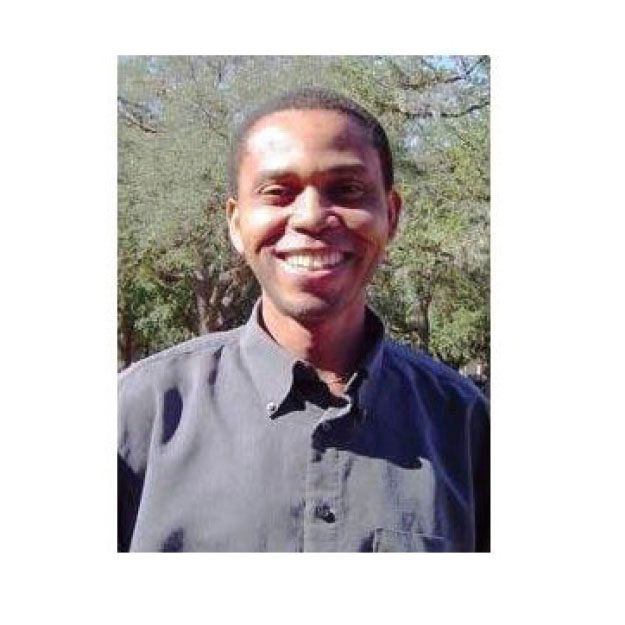
James Essegbey
· Ph.D.VerifiedUniversity of Florida · Linguistics
Active 1999–2024
About
James Essegbey, PhD, is a professor in the College of Liberal Arts & Sciences. His areas of interest and research include language endangerment, documentation and description, Atlantic Creoles and varieties of English of people of African descent, African elements in the Americas, syntax semantics interface, and West African languages. He is engaged in scholarly work that explores the linguistic diversity and cultural heritage of African languages and their diasporic connections, contributing to the understanding and preservation of these languages and their cultural contexts.
Research topics
- Computer Science
- Linguistics
- Philosophy
- History
- Natural Language Processing
- Sociology
- Art
- Library science
- Literature
- Speech recognition
- Media studies
- Mathematics
- Anthropology
Selected publications
Towards a unified account of <em> na </em> in Akan
Glossa a journal of general linguistics · 2024-02-23
articleOpen accessSenior authorGrammatical accounts of na in Akan identify two different forms: nà with a low tone (LT-na) and ná with a high tone (HT-na). LT-na functions in two ways: as a focus marker or a conjunction, the latter of which can take a prefix and be realized as ɛna. While some scholars treat them as two different na’s, others point to a commonality between the two.&nbsp;HT-na has been analyzed as functioning as past and future tenses, and a logical connector. We argue that these three HT-na along with the two LT-na are subcategories of a super-category. We propose that the super-category is a non-tonal na (call it Root-na), with a common basic meaning which explains all five seemingly unrelated interpretations. Root-na links the na-clause with something in the common ground, i.e., to something that appeared in the previous context or is presupposed. It is spelled out as a LT-na or HT-na, depending on the kind of linking. LT-na marks discourse coherence relations such as focus and narrative-sequence, both of which are shown in the linguistics literature to be anaphoric. HT-na is an intensional marker which links times or possible worlds.
Catching and classifying fish among the Dwang
Culture and language use · 2024-01-12
book-chapterOpen access1st authorCorrespondingAbstract The goal of this chapter is to discuss an endangered fishing practice, and the naming and uses of fish among the Dwang of the Bono East Region of Ghana. I discuss a (defunct) communal fish catching process known as kese /kə́sə́/, in which the poisonous plant Adenia cissampeloises , also called kese by the Dwang, was used to kill the fish and harvest them. I then turn to the Dwang names for six freshwater fish, which is a classification of sorts. I explore the semantics of the fish names, especially their classes, such as ka - for singular versus n - for plural (e.g., káwá/nkáwá ), on the one hand, and ɔ - for singular versus a - for plural (e.g., ɔtʃwɪrɛ/atʃɪrɛ ), among others. I discuss some medicinal and customary uses of the fish which have almost disappeared. The chapter is therefore a discussion of endangered indigenous knowledge of a plant and fish.
Studies in language companion series · 2024-07-11
book-chapter1st authorCorrespondingAbstract Ewe, like many Kwa languages, has very few verbs. Some of them are said to be meaningless or light because they either do not have a translation equivalent in Standard Average European languages (SAE) or, where they do, they appear on the surface to have several meanings. In this paper, I discuss one of these verbs, namely dó. Although Westermann (1933) has only one entry for dó , he provides more than 20 subentries all with different categories of internal arguments. The entries include ‘to stretch out’, ‘trade’, ‘lend’, ‘fix a price’, and ‘plant. Rongier (2015), on the other hand, has more than a hundred entries for dó . Following Ameka (2019), I argue that while the multiple interpretations are presented in the dictionaries as though they are different meanings, they are actually contextual interpretations. I argue that when the argument structure constructions in which the verb occurs, and the semantics of the arguments with which it occurs are taken into consideration, many of the different interpretations that are provided for dó fall out from one invariant meaning.
Studies in language companion series · 2024-07-11
book-chapter1st authorCorrespondingMoving from verbs to prepositions in Gbe
Studies in language companion series · 2024 · 1 citations
Senior authorCorresponding- Computer Science
- Natural Language Processing
- Computer Science
Abstract Gbe languages have two classes of adpositions, namely prepositions and postpositions that have been argued to have developed from verbs and nouns, respectively. Focusing on the former, we highlight the functions of the forms across Gbe using examples from Eastern Gbe (e.g., Gungbe) and Western Gbe (e.g., Ewegbe). We further show that verb-to-preposition shift is gradual: some of the forms (e.g., ablative) are not fully grammaticalised in all the languages. Likewise, the process is associated with a semantic change from “temporal predicate” in Serial Verb Constructions (SVC) to a more abstract atemporal predicate, which is also reflected in the loss of the power of the verbal element to take aspectual inflections or markers.
Celebrating 50 years of ACAL: Selected papers from the 50th Annual Conference on African Linguistics
2021-10-19 · 12 citations
bookOpen accessThe papers in this volume were presented at the 50th Annual Conference on African Linguistics held at the University of British Columbia in 2019. The contributions span a range of theoretical topics as well as topics in descriptive and applied linguistics. The papers reflect the typological and genetic diversity of languages in Africa and also represent the breadth of the ACAL community, with papers from both students and more senior scholars, based in North America and beyond. They thus provide a snapshot on current research in African linguistics, from multiple perspectives. To mark the 50th anniversary of the conference, the volume editors reminisce, in the introductory chapter, about their memorable ACALs.
Reminiscences of the last 50 years and the way forward
Studies in African Linguistics · 2021-04-23
articleOpen access1st authorCorrespondingThis article is a retrospective and a prospective look at SAL on the occasion of its 50th anniversary. The founding editors and various editors reflect on their experiences
Springer eBooks · 2021 · 1 citations
1st authorCorresponding- Computer Science
- History
- Linguistics
2021
- Sociology
- Computer Science
- Library science
The papers in this volume were presented at the 50th Annual Conference on African Linguistics held at the University of British Columbia in 2019. The contributions span a range of theoretical topics as well as topics in descriptive and applied linguistics. The papers reflect the typological and genetic diversity of languages in Africa and also represent the breadth of the ACAL community, with papers from both students and more senior scholars, based in North America and beyond. They thus provide a snapshot on current research in African linguistics, from multiple perspectives. To mark the 50th anniversary of the conference, the volume editors reminisce, in the introductory chapter, about their memorable ACALs.
Language Endangerment, Documentation, and Revitalization
Oxford University Press eBooks · 2020-05-07
book-chapter1st authorCorrespondingAbstract In the late 1980s, the attention of linguists was drawn to the fact that the world’s languages are disappearing at an alarming rate. Since then, steps have been taken to revitalize those that can be revitalized but, most importantly, document the languages before they disappear. There is the perception, however, that even though Africa has about a third of the world’s languages, accounts of language endangerment do not take the specificities of the African situation into consideration. This chapter discusses the types of endangerment in Africa and the role African scholars are playing in documentation, as well as modest efforts at the revitalization of dying languages on the continent.
Frequent coauthors
- 15 shared
Felix K. Ameka
- 10 shared
N. J. Enfield
University of Sydney
- 7 shared
Sotaro Kita
University of Warwick
- 6 shared
Enoch O. Aboh
- 5 shared
Asifa Majid
University of Oxford
- 5 shared
Jürgen Bohnemeyer
- 2 shared
Friederike Lüpke
- 2 shared
Laura McPherson
- Resume-aware match score
- Save to shortlist
- AI-drafted outreach
See your match with James Essegbey
PhdFit ranks faculty by your research interests, methods, and publications — grounded in their actual work, not templates.
- Free to start
- No credit card
- 30-second signup