Resume-aware faculty matching

Find professors who actually fit you

Upload your resume. Four AI agents analyze your background, rank the faculty who fit, inspect their recent research, and help you draft outreach — grounded in their actual work, not templates.

Free to startNo credit cardCancel anytime
Top matches Balanced preset
Dr. Sarah Chen
Stanford · Interpretability · NLP
91
Dr. Marcus Holloway
MIT · Robotics · RL
84
Dr. Aisha Okonkwo
CMU · Fairness · HCI
82
Nova · Professor Researcher · re-ranking top 20…
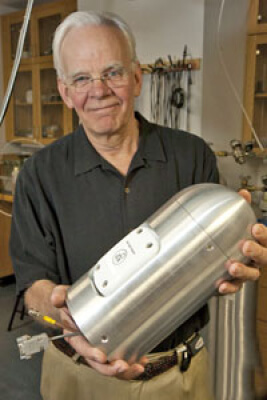
James G. Anderson

James G. Anderson

· Philip S. Weld Professor of Atmospheric Chemistry

Harvard University · Electrical Engineering

Active 1944–2025

h-index47
Citations6.6k
Papers1537 last 5y
Funding$2.7M
See your match with James G. Anderson — sign in to PhdFit.Sign in

About

James G. Anderson is the Philip S. Weld Professor of Atmospheric Chemistry at Harvard University, affiliated with the Harvard John A. Paulson School of Engineering and Applied Sciences. His primary teaching area is Environmental Science & Engineering. His research focuses on atmospheric chemistry, climate change, and solar geoengineering. Anderson's work includes studying the effects of Arctic permafrost thaw on greenhouse gas emissions, particularly nitrous oxide, and developing scientific understanding related to ozone depletion and climate change. He is actively involved in research that addresses environmental challenges through scientific investigation and engineering solutions.

Research topics

  • Meteorology
  • Computer Science
  • Geography
  • Environmental science
  • Artificial Intelligence
  • Climatology
  • Sociology
  • Atmospheric sciences
  • World Wide Web
  • Psychology
  • Multimedia
  • Mathematics education
  • Mechanical engineering
  • Geology
  • Pedagogy
  • Engineering management
  • Engineering

Selected publications

  • The Dynamics and Chemistry of the Summer Stratosphere (DCOTSS) Project

    Bulletin of the American Meteorological Society · 2025-07-09 · 2 citations

    article

    Abstract Overshooting storms are convective systems with updrafts that penetrate through the tropopause into the overlying stratosphere. These storms can rapidly transport a wide variety of chemical species and aerosols from the boundary layer and free troposphere directly to the stratosphere. The central plains of the United States and the Sierra Madre Occidental of Mexico are two of the global hotspots for overshooting convection. While the existence of these storms has been known for several decades, the amount of tropospheric air, including water vapor, trace gases, and aerosols, transported across the tropopause is poorly understood, as is their impact on the dynamics, chemistry, and radiative balance of the stratosphere. Climate models suggest that as Earth’s climate continues to warm, overshooting convection over the United States may increase, potentially causing changes to stratospheric composition and transport. To address these scientific questions, the NASA ER-2 high-altitude research aircraft flew 31 missions during the summers of 2021 and 2022 to make observations of the outflow from overshooting storms in the stratosphere over North America and the eastern Pacific Ocean as part of the Dynamics and Chemistry of the Summer Stratosphere (DCOTSS) project. The ER-2 carried a payload of 12 instruments to measure meteorological parameters, water and its isotopologues, trace gases, and aerosol properties. Ozone, water vapor, and aerosol sondes were also launched on balloons during the field deployments. This paper describes the science goals of the DCOTSS project, the aircraft measurement strategy, the data produced by the project, and highlights of science results to date. Significance Statement During the summers of 2021 and 2022, the Dynamics and Chemistry of the Summer Stratosphere (DCOTSS) project used the NASA ER-2 high-altitude aircraft. DCOTSS was the first research mission designed specifically to make observations of the outflow from overshooting thunderstorms in the stratosphere. The ER-2 carried instruments to measure meteorological parameters, trace gases, water vapor and its isotopologues, and aerosol properties. DCOTSS vastly expanded the available observational data and has led to significant advances in understanding the occurrence of overshooting storms and their impact on the stratosphere, including background conditions, transport mechanisms at different scales, ozone chemistry, and volcanic aerosols. All DCOTSS data are publicly available from the NASA Atmospheric Science Data Center (ASDC).

  • Method for the production of a compact source of atomic line spectra in the vacuum ultraviolet

    Applied Optics · 2024-04-05

    articleSenior author

    Atomic emission spectra provide a means to identify and to gain insight into the electronic structure of emitting or absorbing matter. Detailed procedures are provided for the construction of low-pressure electrodeless discharge lamps that yield targeted emission in the vacuum ultraviolet for the spectroscopic study of water vapor and halogen species aboard an array of airborne observation platforms in the upper atmosphere, as well as in laboratory environments. While specific to the production of Lyman-alpha, atomic chlorine, and atomic bromine emissions in this study, the configuration of the lamps and their interchangeability with respect to operation lend these procedures to constructing sources engaging a wide selection of atomic and molecular spectra with straightforward modifications. The features and limitations of each type of lamp are discussed, as well as methods to improve spectral purity and factors affecting operational lifetime.

  • Effects of Reynolds number and solidity ratio on advection dominated mixing in a high-altitude instrument

    Measurement Science and Technology · 2023-03-16 · 2 citations

    articleOpen accessSenior author

    Abstract Due to the role of ClO and BrO in the rate-limiting step of the catalytic cycles enabling ozone loss, measurement of concentrations of these halogen molecules is of critical importance to understanding the loss rate of ozone in the stratosphere. A key advantage of in situ measurements is that these rate-limiting molecules can be observed simultaneously with ozone in the same volume element of the stratosphere, with high spatial and temporal resolution. Historically, these in situ measurements were made using instruments on the NASA ER-2 flight platform for a few hours at a time. However, the development and advancement of a high-altitude long-endurance (HALE) solar aircraft has made it possible to monitor these radicals continuously in the stratosphere. The slower flight speeds of the HALE aircraft will greatly improve molecule detection sensitivity and spatial resolution. To ensure proper mixing and accurate measurements, a quantitative dissection of the flow dynamics within the instrument architecture is required. Of particular importance are the turbulent behavior and the boundary layer growth, both of which affect measurement quality. The geometry of the NO injector used for titration is studied as a function of its solidity and the flight airspeed, to understand its effect on turbulence and boundary layer growth. A 3D Computational Fluid Dynamics simulation of an Eulerian mixture model is used to analyze the advection-dominated mixing inside the instrument. The injector inside the instrument is found to act as a flow-conditioning device, with a lower solidity causing the downstream flow to be increasingly turbulent. Additionally, a quantitative relationship between the Reynolds number of the inlet air and the volume fraction of the flow is demonstrated. Analysis of the boundary layer dependencies demonstrates that the boundary layer does not encroach on the optical sensing area in any of the cases.

  • Comment on acp-2022-641

    2022-10-27

    peer-reviewOpen accessSenior authorCorresponding

    <strong class="journal-contentHeaderColor">Abstract.</strong> We constructed a database of cross-tropopause convection in the Asian monsoon region for the months of May through October of 2017 using overshooting tops (OTs), deep convective features that penetrate the local cirrus anvil layer and the local tropopause, with Meteosat-8 geostationary satellite detections. The database of 40 918 OTs represents a hemispheric record of convection covering the study domain from 10<span class="inline-formula"><sup>∘</sup></span> S to 55<span class="inline-formula"><sup>∘</sup></span> N and from 40 to 115<span class="inline-formula"><sup>∘</sup></span> E. With this database, we analyzed the geographic, monthly, and altitude distribution of this convection and compared it to the convective distributions represented by satellite observations of outgoing longwave radiation (OLR) and precipitation. We find that cross-tropopause convection is most active during the months of May through August (with daily averages of these months above 300 OTs per day) and declines through September and October. Most of this convection occurs within Northern India and Southern India, the Bay of Bengal, and the Indian Ocean regions, which together account for 75.1 % of all OTs. We further identify distinct, differing seasonal trends within the study subregions. For the Northern India, Southern India, and Bay of Bengal regions, the distribution of OTs follows the development of the Asian monsoon, with its north–south movement across the study period. This work demonstrates that when evaluating the effects of convection on lower stratospheric composition over the Asian monsoon region, it is important to consider the impact of cross-tropopause convection specifically, as well as the contributions from both land-based and oceanic regions due to the significant geographic and monthly variation in convective activity.

  • Solar-Powered Aircraft Feasibility Analysis based on Propulsion System Characteristics

    AIAA AVIATION 2022 Forum · 2022-06-20 · 3 citations

    article

    View Video Presentation: https://doi.org/10.2514/6.2022-3283.vid The feasibility and success of a high-altitude, long-endurance (HALE) solar-powered aircraft depends on a variety of factors including energy conversion efficiency and overall mass. Like with any other subsystem, in the aircraft’s propulsion system, maximizing efficiency and minimizing the mass required, increases the feasibility of the aircraft. The feasibility of such an aircraft also depends on the mission profile – specifically the time of year and geographic location, due to environmental factors such as available solar irradiation. Here, increased feasibility is defined as decreased wingspan, due to the previous aero-structural failures associated with HALE aircraft. A study to explore the feasibility of such an aircraft across this locational and seasonal space is conducted. The study focuses on analyzing the effect of the propulsion system design and aircraft configuration has on this “feasibility space”. This methodology is integrated into the higher-level multi-disciplinary optimization for the aircraft design, which combines the propulsion system mass and efficiency effects with the other effects the aircraft configuration has on aircraft design. Furthermore, this integrated methodology was extended to analyze these effects across the locational and temporal feasibility space. It is shown that enabling a gearbox-drive electric motor allows for greater aircraft feasibility at all locations and times of year. Further, a locational and seasonal dependence is shown in the choice of the optimal aircraft configuration. That is, the choice of optimal aircraft configuration – 2-engines, 4-engines, or 6-engines – is dependent on the region within the feasibility space – that is, the geographic location and time of year. These trends and the methodology behind them are explored in this paper.

  • Solar-Powered Aircraft-Configuration Design Optimization Based on Propulsion System Mass and Efficiency Characterization

    AIAA AVIATION 2021 FORUM · 2021-07-28 · 5 citations

    article

    View Video Presentation: https://doi.org/10.2514/6.2021-2416.vid The feasibility and success of a high-altitude, long-endurance, solar-powered aircraft is tied to various factors – including increasing energy efficiency and decreasing required mass of the propulsion system. The choice of aircraft configuration, defined here as the number of propulsion units and the total propeller area, is an important part of the overall aircraft design. Additionally, the choice of gear ratio (and whether to use a gearbox at all as opposed to a direct drive approach) is considered as part of the trade-off study. Although various viable configurations exist, a study to determine an optimal configuration based on the aforementioned propulsive efficiency and mass, would be useful in selecting the eventual design configuration. A methodology and study for a solar aircraft is presented in this paper, using custom-designed precision gearboxes, available permanent magnet synchronous motors, and custom-designed propellers. An optimization sweep conducted at a range of possible aircraft configurations resulted in various trends, such as the favorability of a gear reduction drive, lower number of motors, and larger propellers. For our particular aircraft design constraints, the optimization model drove the design to the selection of a geared, 2-motor aircraft, with 4.3m diameter propellers.

  • Comment on amt-2021-6

    2021-03-06

    peer-reviewOpen accessSenior author

    <strong class="journal-contentHeaderColor">Abstract.</strong> Stratospheric HCl observations are an important diagnostic for the evaluation of catalytic processes that impact the ozone layer. We report here in situ balloon-borne observations of HCl employing an off-axis integrated cavity output spectrometer (OA-ICOS) fitted with a reinjection mirror. Laboratory assessments demonstrated that the spectrometer has a 90 % response time of 10 s to changes in HCl and a 30 s precision of 26 pptv. The instrument was deployed alongside an ozone instrument in August 2018 on a balloon-borne descent between 20–80 hPa (29–18 km altitude). The observations agreed with nearby satellite measurements made by the Earth Observing System Microwave Limb Sounder within 10 % on average. This is the first time that stratospheric measurements of HCl have been made with ICOS and the first time any cavity-enhanced HCl instrument has been tested in flight.

  • In situ observations of stratospheric HCl using three-mirrorintegrated cavity output spectroscopy

    2021-02-03 · 2 citations

    preprintOpen accessSenior author

    Abstract. Stratospheric HCl observations are an important diagnostic for the evaluation of catalytic processes that impact the ozone layer. We report here in situ balloon-borne observations of HCl employing an off-axis integrated cavity output spectrometer (ICOS) fitted with a re-injection mirror. The spectrometer has a 90 % response time of 10 s to changes in HCl and a 30 s precision of 26 pptv. The instrument was deployed alongside an ozone instrument in August 2018 on a balloon-borne descent between 20–80 hPa (29–18 km altitude). The observations agreed with nearby satellite measurements (MLS) within 10 % on average. This is the first time that stratospheric measurements of HCl have been made with ICOS and the first time any cavity enhanced HCl instrument has been tested in-flight.

  • Global Climate

    Bulletin of the American Meteorological Society · 2021 · 79 citations

    • Climatology
    • Environmental science
    • Meteorology

    As we show in this chapter, the climate has continued to respond to the resulting warming from these increases in CO2 and other greenhouse gases such as methane and nitrous oxide, which also experienced record increases in 2020.

  • Engineering Design And Communication: Jump Starting The Engineering Curriculum

    2020 · 18 citations

    • Computer Science
    • Sociology
    • Artificial Intelligence

    Abstract: A new course for Northwestern University’s engineering freshmen— Engineering Design and Communication or EDC—is noteworthy for its emphasis on the user-centered nature of design and its thorough integration of design and communication. Team-taught by faculty from two schools, EDC creates a new model for integrating core courses in engineering and liberal arts, combining content and pedagogy from two different fields, and building a new program and culture of design at the McCormick School of Engineering and Applied Science.

Recent grants

Frequent coauthors

  • R. M. Stimpfle

    102 shared
  • Kevin Raeder

    NSF National Center for Atmospheric Research

    93 shared
  • E. M. Weinstock

    Partners In Care

    91 shared
  • P. O. Wennberg

    California Institute of Technology

    91 shared
  • T. F. Hanisco

    Goddard Space Flight Center

    90 shared
  • R. C. Cohen

    University of California, Berkeley

    81 shared
  • T. J. Hoar

    NSF National Center for Atmospheric Research

    77 shared
  • Nancy Collins

    70 shared

Labs

  • Anderson GroupPI

  • Resume-aware match score
  • Save to shortlist
  • AI-drafted outreach

See your match with James G. Anderson

PhdFit ranks faculty by your research interests, methods, and publications — grounded in their actual work, not templates.

  • Free to start
  • No credit card
  • 30-second signup