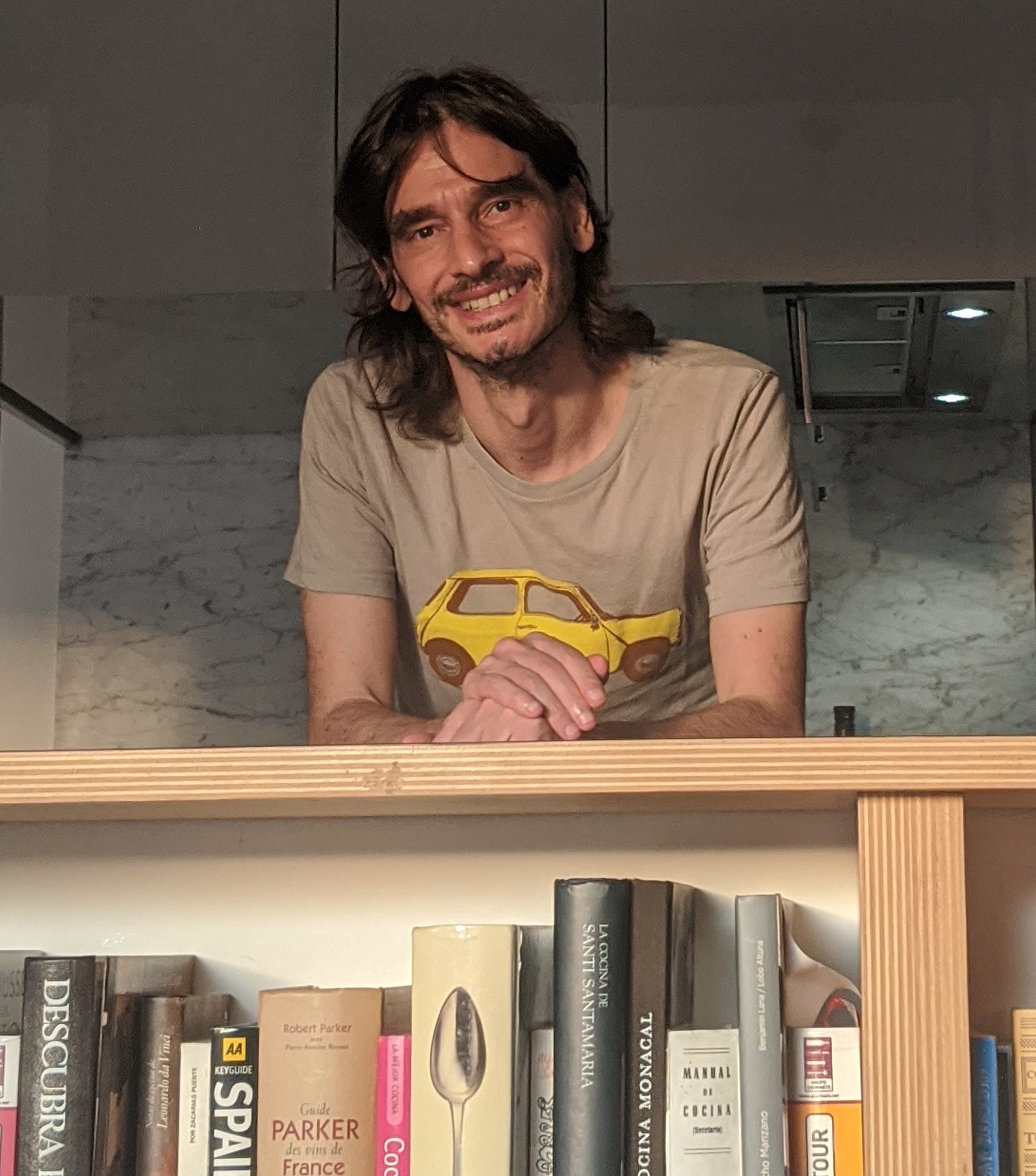
Javier Uriarte
· Associate Professor, Director of Graduate Studies (starting fall 22)Stony Brook University · Latin American and Iberian Studies
Active 1978–2025
About
Javier Uriarte is an Associate Professor and the Director of Graduate Studies in the Department of Hispanic Languages & Literature at Stony Brook University. He holds a Licenciatura en Letras from the Universidad de la República of Uruguay and a PhD from New York University. His research interests include theories of space and place, war studies, environmental studies, and the intersections between literary studies and history, geography, philosophy, and politics. Uriarte specializes in the study of travel narratives, territorial imagination, war and representation, the Amazon, state consolidation, and cultural production in nineteenth-century Latin America, as well as infrastructure, water, and representations of nature and labor. He has authored the book 'The Desertmakers: Travel, War, and the State in Latin America,' published in 2020 with Routledge, which conducts a comparative study of war's role in state consolidation in the Southern Cone and Brazil during the late nineteenth century, analyzing travel narratives by Richard Burton, William Henry Hudson, Francisco Moreno, and Euclides da Cunha. The Spanish version of this book won Uruguay's 2012 National Prize for Literature in the Unpublished literary essay category. Uriarte has also co-edited several academic works, including special issues and books on Latin American war and cultural studies, and is working on a second book project titled 'Fluvial Poetics in the Amazon,' which explores narratives of the Amazon River during the early twentieth century, focusing on the aquatic imaginary and its significance in environmental and cultural contexts.
Research topics
- Social Science
- Political Science
- Sociology
- Computer Science
- Psychology
- Aesthetics
- History
- Economics
- Art
- Economy
- Geography
- Law
- Business
- Economic history
- Neuroscience
- Economic geography
Selected publications
Utopías infraestructurales en Amazonia: formas del deseo y del fracaso
Cuadernos LIRICO · 2025-01-01
articleOpen access1st authorCorrespondingEl presente artículo estudia las modulaciones que la noción de utopía ha tenido en relación con el espacio amazónico desde tiempos coloniales. En un primer momento se estudia la Amazonia en relación con miradas que vinculan la utopía a la naturaleza, al espacio considerado como desconocido y a nociones como el concepto de “desierto”. En un segundo momento, el artículo se enfoca en lo que podrían denominarse utopías capitalistas o estatales que se vuelven centrales a las miradas sobre el espacio amazónico y latinoamericano a partir del siglo XIX para acabar pensando el lugar de la figura del ingeniero y de la noción de infraestructura en esa mirada modernizadora. Se trabaja en particular la utopía vinculada a nociones de orden, de construcción y de invención. La última parte del texto consiste en el análisis del cuento “Inferno verde” [Infierno verde], del ingeniero brasileño Alberto Rangel, que forma parte del libro homónimo, publicado en 1908. En este análisis la idea de utopía aparece vinculada a la fe inquebrantable en el progreso y en la capacidad de imponer el orden en el caos y la agresividad de la naturaleza, así como también a nociones de velocidad, ya que el texto se centra en escenas de navegación que van sufriendo un progresivo enlentecimiento, particularmente motivado por los ritmos de los ríos amazónicos.
Cultural and Political Debates on Independence and Sovereignty in the Early Nineteenth Century
2024-09-26
book-chapter1st authorCorrespondingThis chapter examines discourses on sovereignty and independence in the Southern Cone during the first half of the nineteenth century by focusing on the role of letrados, or the lettered elite, in formulating these concepts. The essay emphasizes common tendencies across the continent but focuses, most particularly, on the countries of the Río de la Plata. By studying the writings of creole intellectuals, the essay explores the fluctuating notions of patria, independence, and sovereignty during the revolutionary period. It looks at three different moments and contexts: (1) the years considered to be the beginning of the process of independence (roughly 1810–1811); (2) the period of the wars (1810s–1820s); and (3) the years when the national anthems of Uruguay and Paraguay were composed, in 1833 and 1846, respectively.
Nature, Labour, and Infrastructure in the Amazon: Miguel Triana’s <i>Por el sur de Colombia</i>
Journal of Latin American Cultural Studies · 2023-04-03
article1st authorCorrespondingFocusing on Colombian engineer Miguel Triana’s 1907 travelogue Por el sur de Colombia, this article discusses the role that labour, broadly understood, plays in the projects of state transformation of the Putumayo region, in the Colombian Amazon. The text analyses the role that physical effort plays in making possible the construction of infrastructural works such as roads in the Amazon space, but also in the concrete forms of land cultivation he observes in Indigenous peoples and in his own process of writing his travelogue. Theories of environmental determinism turn out to be key in Triana’s understanding of labour as a way of transforming nature and bringing progress to the Colombian frontiers. The article makes clear the rhetorical process through which different forms of materiality – roads, bridges, books, cultivation – are seen as parallel forms of embodiment in the discourse of engineering.
2023-08-21
book-chapter1st authorCorrespondingCapital, Bodies, and the Environment in Alberto Rangel's Stories
2022-05-27 · 1 citations
book-chapter1st authorCorrespondingThis chapter explores different images of animals in two books of short stories by Alberto Rangel, Inferno verde (1908) and Sombras n’água (1913), from the perspective of ecocriticism and human geography. In dialogue with Viveiros de Castro’s notion of perspectivism, I argue that in Rangel’s representation of Amazonian space, human characters are related to animals in ways that respond to foundational myths of the region. These mythical meanings are connected to an additional dimension of animality in these narrations: in Rangel’s prose, the Amazon is a sexualized space where the presence of capital as a key player that dramatically transforms the relationships between nature and humans is represented as a form of sexual violence that destroys harmony in the environment.
Cuadernos LIRICO · 2022-01-01
articleOpen access1st authorCorrespondingAll por el ao 2018, en varias ocasiones Sergio Chejfec y yo nos encontramos casualmente al llegar a nuestro destino; descubramos que, sin saberlo, habamos tomado un mismo avin. Pas a ser una broma que nos hacamos al encontrarnos, pero ahora se me ocurre leer que en esos encuentros tanto el azar como la experiencia del desplazamiento, claves es su literatura, estaban presentes. Habiendo yo mismo escrito sobre viajes, las formas en que la literatura de Chejfec aborda los trayectos siempre fue uno de los aspectos que ms me atrajeron de ella. El otro lo constituye la relacin que ese deambular (no se trata en sentido estricto de viajes) va construyendo con el paisaje: los paisajes que se van viendo son tambin fragmentarios, ruinosos, extraos, a veces tan caprichosos o inexactos o borrosos -he aqu el azar-como las formas de moverse, de mirarlos. Conoc a Sergio Chejfec en 2006 o 2007, en un curso
Cambridge University Press eBooks · 2022
1st authorCorresponding- Political Science
- Sociology
- Social Science
As a consequence of the process of modernization and the new growing engagement of Latin American countries in cultural and material global exchanges, the period 1870–1930 marked some important transitions in the way travel was understood. It became increasingly a bodily and material practice, and even a form of consumption. This chapter follows some of these trends in order to show how different Latin American intellectuals of the period reflected upon their own writing about travel. Discussing works by Lucio V. Mansilla, Miguel Triana, Enrique Gómez Carrillo, and Mário de Andrade, it focuses on descriptions of the modes and rhythms of travel. Finally, it pays attention to the means of transportation: traveling by horse, on foot, by boat, by train, or by car turns out to connote a different experience as the relationships that the traveler establishes with the landscape vary significantly depending on the type of transportation used.
Temporalidad, guerra y nostalgia imperial en las Memorias del vizconde de Taunay
Iberoamericana Vervuert eBooks · 2021-08-02
book-chapter1st authorCorrespondingHispanófila/Hispanófila · 2021-09-01
article1st authorCorrespondingReviewed by: Gender, Science, and Authority in Women's Travel Writing: Literary Perspectives on the Discourse of Natural History by Michelle Medeiros Javier Uriarte Medeiros, Michelle. Gender, Science, and Authority in Women's Travel Writing: Literary Perspectives on the Discourse of Natural History. Lexington Books, 2019. 212 pp. ISBN: 9781498579759. El libro de Michelle Medeiros del cual se ocupa esta reseña propone una nueva mirada a los cruces entre la literatura de viajes y el discurso científico. Si bien no es nuevo que viaje y ciencia han ido de la mano, y que el primero ha resultado esencial para la construcción de los discursos de la segunda, Medeiros piensa ambos desde una perspectiva de género. Es más, podríamos decir que este es un libro sobre los dos sentidos de "género" (en inglés, gender y genre), sobre cómo la escritura de las mujeres viajeras rearticula la construcción del discurso viajero y científico. Lo que el libro dice sobre una de las autoras estudiadas podría valer también para describir el propósito del propio libro: "deliberately blur the line between gender and genre" (16). La idea es leer en detalle algunos textos y poner de manifiesto sus estrategias textuales, las imágenes, la retórica que emplean para construir autoridad; en otras palabras, leer la ciencia como literatura, o, quizá más precisamente, con las herramientas del análisis literario. En suma, tratar la ciencia como texto, en el sentido de entramado de discursos en el que se integran afectos, proyectos políticos, deseos, formas del poder. Hoy en día basta dar un vistazo a los departamentos universitarios de muchas disciplinas científicas (y no solo en Estados Unidos) para comprobar que todavía la presencia de las mujeres en ellos es escasa y que siguen teniendo dificultades para acceder a posiciones de autoridad, de visibilidad, de relevancia. En la conclusión del libro Medeiros hace referencia a esta realidad y a las formas en que su libro resulta un aporte para pensar no solo las formas en que en los siglos XIX y XX se realizaban estas dinámicas de exclusión, sino sobre todo en las sutiles estrategias para discursivamente rodearlas, atenuarlas, o jugar con ellas, apropiarlas irónicamente. Además de una introducción y una conclusión, el libro cuenta con cuatro capítulos, cada uno de ellos dedicado a una viajera. En cuanto al corpus estudiado, es importante resaltar que el trabajo con libros publicados aparece complementado con el análisis de notas dispersas, cartas, diarios y textos inéditos. Parte del corpus es resultado de un valioso trabajo de archivo que aporta información útil. El primer capítulo, "Shaping Scientific Knowledge", se enfoca en la británica Maria Graham, particularmente en su libro Journal of a Voyage to Brazil and Residence There, During Part of the Years 1821, 1822, 1823. Medeiros también trabaja con notas y escritos personales de Graham. En el segundo capítulo, "Gertrudis Gómez de Avellaneda's Travel Writing", se estudian textos poco conocidos de la canónica escritora cubana: sus textos de viajes escritos en España—Memorias, de 1836-38, y el posterior "Mi última excursión a los Pirineos", de 1860—y algunas de sus contribuciones periódicas, así como su labor como editora en Cuba (se analizan textos publicados por otros autores pero leídos como parte del proyecto editorial de Avellaneda en la revista "Álbum cubano de lo bueno y de lo bello"). El tercer capítulo es un estudio de la trayectoria de la brasileña Nísia Floresta (1810-1885) y sus viajes por Europa: el capítulo comienza con un análisis de sus escritos en Brasil, donde fue pionera en un proyecto de educación para mujeres—un proyecto, sin embargo, bastante conservador, [End Page 192] resalta Medeiros—, una inquietud que mantuvo a lo largo de su vida. Las formas en que su proyecto fue ignorado o desdeñado en Brasil provocaron que Floresta viajara reiteradamente a Europa y acabara por elegir ese continente como su hogar, aunque mantuvo su identidad brasileña al escribir(se). El...
Tierras en trance: arte y naturaleza después del paisaje
A Contracorriente: Revista de Historia Social y Literatura en América Latina · 2020-10-14 · 1 citations
article1st authorCorresponding
Frequent coauthors
- 1 shared
M Piccinini
Ciência Viva
- 1 shared
Adriana Raquel Massone
Universidad Nacional de La Plata
- 1 shared
Javier Origlia
Universidad Nacional de La Plata
- 1 shared
Alecto Medici
- 1 shared
Miguel Ángel Petruccelli
Universidad Nacional de La Plata
- 1 shared
F. P. Marino
- 1 shared
P Bobba
- 1 shared
P. García
Awards & honors
- Uruguay's 2012 National Prize for Literature in the Unpublis…
- Resume-aware match score
- Save to shortlist
- AI-drafted outreach
See your match with Javier Uriarte
PhdFit ranks faculty by your research interests, methods, and publications — grounded in their actual work, not templates.
- Free to start
- No credit card
- 30-second signup