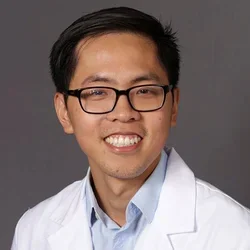
Jay Jayanetti, D.D.S.
· Associate Clinical Professor, Associate Residency Program Director for Maxillofacial ProstheticsVerifiedUniversity of California, Los Angeles · Dentistry
Active 2011–2025
About
Jay Jayanetti, D.D.S., is an Associate Clinical Professor and Associate Residency Program Director for Maxillofacial Prosthetics at the UCLA School of Dentistry. He joined the faculty in April 2015 and is a member of the prosthodontics and maxillofacial prosthetic rehabilitation practice at UCLA. His academic responsibilities include co-chairing courses such as Introduction to Treatment of the Edentulous Patient and Complete Dentures, as well as chairing Head and Neck Cancer and Maxillofacial Prosthetics. He is involved in predoctoral and postdoctoral teaching, serving as a clinical attending and director for Maxillofacial Prosthetics, and participates in research activities focused on rapid prototyping of maxillofacial prosthetics, implant-assisted maxillofacial prosthodontics, early loading of Zygomatic implants, and zirconia restorations. Dr. Jayanetti's private practice encompasses esthetic dentistry, single-tooth replacement, mouth implant functional rehabilitation, and oral-facial prosthetics. His educational background includes a Bachelor of Science from UC Davis, a D.D.S. from UC San Francisco, and certificates in Prosthodontics and Maxillofacial Prosthetics from UCSF and the University of Alabama, Birmingham, respectively. He has received multiple awards for teaching excellence and is a member of several professional organizations, including the American Academy of Maxillofacial Prosthetics and the American College of Prosthodontics.
Research topics
- Medicine
- Surgery
- Orthodontics
- Dentistry
- Biology
- Pathology
- Chemistry
- Materials science
- Biophysics
- Biomedical engineering
- Cell biology
- Physical therapy
- Optics
Selected publications
Enhancing Prosthetic Nasal Rehabilitation Through Digital Technology
Special Care in Dentistry · 2025-05-01
reviewOpen accessSenior authorAIMS: This article explores the integration of digital technologies into the rehabilitation process of patients with nasal defects, typically resulting from neoplastic conditions, trauma, or autoimmune disorders. METHODS AND RESULTS: Nasal defects, especially from total rhinectomies, significantly impact patients' psychosocial well-being, making effective prosthetic rehabilitation essential. Traditionally, prosthetic nasal rehabilitation was labor-intensive and required high expertise; however, advancements in digital tools such as intraoral and extraoral scanners, virtual implant planning software, and 3D printing have streamlined the process. These technologies enhance accuracy in implant placement and prosthesis fabrication while reducing manual effort and some expertise requirements. The use of digital tools allows for precise facial scans, which can serve as references for designing nasal stents and definitive prostheses. Polyjet 3D printing has enabled the creation of aesthetic and biocompatible nasal stents, improving upon traditional vacuum-formed stents. Additionally, craniofacial endosseous implants, guided by digital planning and surgical guides, offer better retention for nasal prostheses, improving patient satisfaction. The definitive nasal prosthesis is fabricated using a combination of digital and traditional methods, optimizing both efficiency and aesthetics. CONCLUSION: This approach reduces barriers to care, making high-quality, personalized rehabilitation more accessible and improving the overall patient experience in managing nasal defects.
Journal of Prosthetic Dentistry · 2024-04-24
articleSenior authorThe International Journal of Oral & Maxillofacial Implants · 2024 · 8 citations
- Materials science
- Biomedical engineering
- Biophysics
PURPOSE: To examine the behavior and function of human gingival fibroblasts growing on healing abutments with or without laser-textured topography. MATERIALS AND METHODS: Human primary gingival connective tissue fibroblasts were cultured on healing abutments with machined or laser-textured (Laser-Lok, BioHorizons) surfaces. Cellular and molecular responses were evaluated by a variety of tests, including cell density assay (WST-1), fluorescence microscopy, real-time quantitative reverse-transcription polymerase chain reaction (qRT-PCR), and detachment tests. RESULTS: The machined surface showed monodirectional traces and scratches from milling, whereas the laser-textured surface showed a distinct morphology consisting of monodirectional mesoscale channels (15-μm pitch) and woven oblique microridges formed within the channels. There were no differences in initial fibroblast attachment, subsequent fibroblast proliferation, or collagen production between the machined and laser-textured surfaces. Fibroblasts growing on a laser-textured surface were found to spread in one direction along the mesochannels, while cells growing on machined surfaces tended to spread randomly. Fibroblasts on laser-textured surfaces were 1.8 times more resistant to detachment than those on machined surfaces. An adhesive glycoprotein (fibronectin) and transmembrane adhesion linker gene (integrin β-1) were upregulated on laser-textured surfaces. CONCLUSIONS: The increased fibroblast retention, uniform growth, and increased transcription of cell adhesion proteins compellingly explain the enhanced tissue-level response to laser-created and hybrid-textured titanium surfaces. These results provide a cellular and molecular rationale for the tissue reaction to this unique surface; in addition, they support its extended use, from implants and healing abutments to diverse prosthetic components where enhanced soft tissue responses would be desirable.
Journal of Prosthodontics · 2024-11-12 · 1 citations
articleOpen accessSenior authorCorrespondingThis clinical report outlines the prosthetic restoration of a 92-year-old Caucasian patient who underwent a partial rhinectomy. Utilizing CAD-CAM technology, scanning and design were accomplished digitally, and material jetting additive manufacturing was used to create a two-piece mold for a partial nasal silicone prosthesis. An unprecedented challenge was observed involving cure inhibition when the silicone came into contact with the additively manufactured (AM) material, and multiple attempted strategies to remedy this situation were discussed. The report emphasizes the critical need for further research to optimize digital workflows in prosthetic facial rehabilitation.
Journal of Craniofacial Surgery · 2023-10-06
articleSenior authorComputer-aided design and computer-aided manufacturing and digitally simulated surgeries have revolutionized maxillomandibular reconstruction. In particular, this technology has increased the accuracy and facilitated the process of dental implantation in fibula free flaps. Despite the efficacy of virtual planning, there is a minor degree of translational difference between digital and intraoperative measurements, which may affect the precision of implant and fibula orientations. This is especially concerning during the last stage of fibula insetting, where the graft segments have the potential to roll, yaw, or pitch. The objective of this study is to describe an advanced prosthodontic technique that ensures the fibula grafts and implants remain in a restorable position during final insetting. We describe the technique and workflow of the implant-borne articulation splint through a case presentation and demonstrate results at 4 months postoperative and postradiotherapy. Given the degree of investment placed in virtual planning, free flap reconstruction, and endosteal implants, a technique that ensures optimal restorability of each implant is pivotal. Larger studies are still required to fully elucidate the cost-effectiveness and long-term results of the implant-borne articulation splint.
Journal of Prosthetic Dentistry · 2021 · 4 citations
1st authorCorresponding- Dentistry
- Medicine
- Orthodontics
An implant-retained auricular prosthesis complicated by a modified temporal bone resection
Journal of Prosthetic Dentistry · 2021-04-18 · 1 citations
articleJournal of Prosthetic Dentistry · 2021-12-29 · 2 citations
articleSenior authorDirect chairside fabrication of a two-piece brachytherapy appliance
Journal of Prosthetic Dentistry · 2020-03-30 · 1 citations
reviewSenior authorJournal of Prosthetic Dentistry · 2020 · 6 citations
Senior authorCorresponding- Medicine
- Dentistry
- Orthodontics
Frequent coauthors
- 18 shared
Ricardo Alves Mesquita
Universidade Federal de Minas Gerais
- 10 shared
Porto Carreiro
Banff National Park
- 10 shared
Ana Larisse
- 10 shared
Marta Revilla‐León
University of Washington
- 10 shared
John Beumer
Faculty of 1000 (United States)
- 10 shared
Adriana Da Fonte
Banff National Park
- 10 shared
Carneiro Pereira
Banff National Park
- 9 shared
Arati Shinde
National Medical Research Center of Dentistry and Maxillofacial Surgery
Awards & honors
- Beumer Teaching Award, UCLA Section of Special Patient Care…
- Berg Teaching Award, UCLA Division of Advanced Prosthodontic…
- Golden Apple Award; Excellence in Teaching, LSU School of De…
- Pacific Coast Society for Prosthodontics & The Journal of Pr…
- UCSF Postgraduate Prosthodontics Dr. Sciutto Award, 2009
- Resume-aware match score
- Save to shortlist
- AI-drafted outreach
See your match with Jay Jayanetti, D.D.S.
PhdFit ranks faculty by your research interests, methods, and publications — grounded in their actual work, not templates.
- Free to start
- No credit card
- 30-second signup