Resume-aware faculty matching

Find professors who actually fit you

Upload your resume. Four AI agents analyze your background, rank the faculty who fit, inspect their recent research, and help you draft outreach — grounded in their actual work, not templates.

Free to startNo credit cardCancel anytime
Top matches Balanced preset
Dr. Sarah Chen
Stanford · Interpretability · NLP
91
Dr. Marcus Holloway
MIT · Robotics · RL
84
Dr. Aisha Okonkwo
CMU · Fairness · HCI
82
Nova · Professor Researcher · re-ranking top 20…
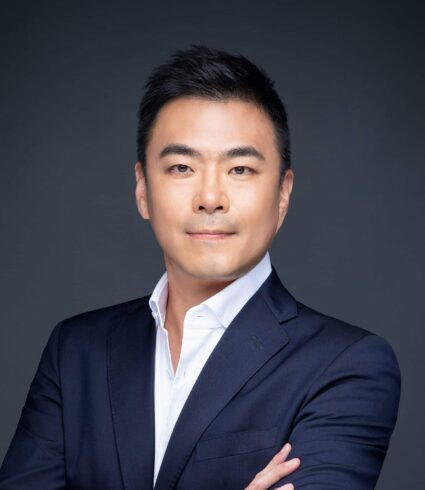
Jeehwan Kim

Jeehwan Kim

· Associate Professor

Massachusetts Institute of Technology · Materials Science & Engineering

Active 1997–2026

h-index42
Citations8.8k
Papers16597 last 5y
Funding$590k
See your match with Jeehwan Kim — sign in to PhdFit.Sign in

About

Professor Jeehwan Kim is an Associate Professor of Mechanical Engineering and a joint faculty member of the Department of Materials Science and Engineering at MIT. His research encompasses a broad range of topics, including basic material physics and mechanics, electronic and photonic devices, and systems for next-generation electronics and 3D integration. His group focuses on innovation in nanotechnology for computing and electronics, as well as for electronic, photonic, and energy applications. Additionally, his research involves neuromorphic computing modeled on cognitive systems and nanotechnology for advanced heterogeneous integration. Professor Kim joined MIT's Department of Mechanical Engineering in 2015 and the Department of Materials Science and Engineering in 2016. Prior to his tenure at MIT, he was a research staff member at IBM’s Thomas J. Watson Research Center, where he conducted research in photovoltaics, 2D materials, graphene, and advanced complementary metal-oxide semiconductor devices. He has been recognized as a Master Inventor at IBM, with more than 100 patent filings over five years. His academic background includes a BS from Hongik University in Seoul, South Korea, an MS from Seoul National University, and a PhD from the University of California, Los Angeles, all in materials science and engineering.

Research topics

  • Computer Science
  • Materials science
  • Artificial Intelligence
  • Nanotechnology
  • Optoelectronics
  • Physics
  • Electrical engineering
  • Engineering
  • Telecommunications
  • Condensed matter physics
  • Electronic engineering
  • Biomedical engineering
  • Medicine
  • Chemistry
  • Computer architecture
  • Optics
  • Composite material
  • Crystallography

Selected publications

  • Real-time stent monitoring: chip-less E-skins via remote epitaxy

    2026-04-16

    articleSenior author

    Peripheral arterial disease (PAD) is commonly treated with stent implantation, but long-term durability is limited by cyclic deformation in the lower limbs, leading to fracture or restenosis. We present a novel wireless surface acoustic wave (SAW)-based strain sensor integrated into arterial stents, enabling real-time monitoring of stent deformation. To evaluate feasibility, we developed a non-metallic bending test platform simulating physiologic motion and pulsatile flow. Preliminary data demonstrate that the SAW sensor reliably detects strain with strong correlation to imposed bending curvature, and that the test platform allows reproducible assessment under controlled conditions. This work establishes a foundation for next-generation smart stents with continuous biomechanical monitoring.

  • Atomic lift-off of epitaxial membranes for cooling-free infrared detection

    Nature · 2025-04-23 · 17 citations

    articleSenior author
  • Future trends of display technology: micro-LEDs toward transparent, free-form, and near-eye displays

    Light Science & Applications · 2025-09-21 · 19 citations

    reviewOpen access

    Displays are one of the most indispensable electronic devices used in our daily lives. Over the past decades, display technology has evolved relentlessly, driven by innovation in materials, structures, and manufacturing processes that have enabled higher image quality, larger screen size, slimmer form factor, and novel functionalities. The display market is currently dominated by liquid crystal displays (LCDs) and organic light-emitting diode (OLED) displays, but significant investment and research efforts are being directed toward emerging self-emissive display technologies, such as micro-light-emitting diodes (micro-LEDs), as well as unconventional applications such as transparent, deformable, and near-eye displays. This review article begins with a historical background of self-emissive display technology and an overview of the recent advances in organic-, quantum dot-, perovskite-, and micro-LED displays. We then critically review the current state of micro-LED technology, including its size-dependent performance issues, different types of mass transfer technologies, backplane interconnection techniques, methods for detection/repair of defective pixels, and emerging display applications, including transparent, deformable, and virtual and augmented reality (VR/AR) displays.

  • Electrically controlled nano-OLED metasurfaces

    Nature Photonics · 2025-12-19 · 1 citations

    articleSenior authorCorresponding
  • A relative humidity sensor based on V4C3 MXene-coated etched optical fiber

    Optical and Quantum Electronics · 2025-04-26

    article
  • Monolithic 3D integration of full color microLEDs towards > 5000 PPI

    2025-03-19

    article1st authorCorresponding
  • Mid-infrared power measurement using the photothermal effect of TiO<sub>2</sub> microparticles in a fiber-optic Fabry-Pérot interferometer

    Laser Physics Letters · 2025-04-24

    article

    Abstract This research explores the feasibility of using the photothermal effect in TiO 2 microparticles (MPs) to measure mid-infrared (MIR) laser output power, introducing a new application of the photothermal effect in MPs. The MIR power measurement setup is based on an optical fiber-based Fabry-Pérot interferometer (FPI) structure, which includes a silica fiber ferrule, a polymer layer, a TiO 2 MP layer, and a ZBLAN fiber ferrule. The power of a 1550 nm probe beam in reflection mode of the FPI configuration was found to change linearly with 2.7 μ m laser output power due to the photothermal conversion effect in the TiO 2 MPs. The MIR laser output power was indirectly measured by detecting changes in the reflected 1550 nm probe beam power with a low-cost 1.5 μ m InGaAs/InP-based optical power meter. This setup could measure MIR optical power in a range from 0 to 2 mW.

  • Heterogeneous van der Waals integration of single-crystalline photonic nanomembranes

    Research Square · 2025-12-18

    preprintOpen access
  • Artificial Optoelectronic Synapse Featuring Bidirectional Post‐Synaptic Current for Compact and Energy‐Efficient Neural Hardware (dAdv. Mater. 34/2025)

    Advanced Materials · 2025-08-01

    articleOpen access

    Artificial Optoelectronic Synapse In article number 2418582, Jin-Hong Park, Saeroonter Oh, and co-workers present an artificial optoelectronic synapse capable of bidirectional post-synaptic current modulation. This innovative design eliminates the need for differential synapse pairs while supporting essential synaptic functions. A fabricated synapse array experimentally demonstrates compatibility with multiply-accumulate (MAC) operations, and simulations using the MNIST dataset underscore the energy efficiency of the proposed neuromorphic system.

  • Single-crystalline BaTiO <sub>3</sub> -based ferroelectric capacitive memory via membrane transfer

    Science Advances · 2025-12-05

    articleOpen accessSenior authorCorresponding

    Ferroelectric capacitive memory (FeCAP) holds enormous potential for low-power, high-density in-memory computing. While hafnia-based FeCAPs have attracted attention for their silicon compatibility, they suffer from limited performance, such as a narrow memory window and relatively high switching fields. In this work, an FeCAP device is developed on the basis of a single-crystalline barium titanate (BTO) membrane, a perovskite oxide thin film that can be epitaxially lifted off and transferred onto a silicon platform. By engineering the device structure and epitaxy process, polarization asymmetry is introduced in capacitance-voltage characteristics. The resulting BTO-based FeCAP exhibits superior memory behavior, including a wide memory window of 308 picofarads and a low switching field of 0.005 megavolts per centimeter, outperforming conventional hafnia-based FeCAPs. Furthermore, these properties are preserved after active layer transfer onto a silicon platform. This approach provides a viable pathway for high-quality BTO to integrate into industry-compatible processes and to drive progress in future logic/memory applications.

Recent grants

Frequent coauthors

  • Sang‐Hoon Bae

    Washington University in St. Louis

    35 shared
  • Hyunseok Kim

    University of Illinois Urbana-Champaign

    26 shared
  • Sangho Lee

    Massachusetts Institute of Technology

    26 shared
  • Hyun Kum

    25 shared
  • D. K. Sadana

    SUNY Polytechnic Institute

    22 shared
  • Kuangye Lu

    Massachusetts Institute of Technology

    18 shared
  • Wei Kong

    Westlake University

    18 shared
  • Doyoon Lee

    Massachusetts Institute of Technology

    18 shared

Labs

  • Jeehwan Kim Research GroupPI

Awards & honors

  • 2022 Samsung Fellow
  • 2021 Director’s Award, DARPA
  • 2019 Young Faculty Award, DARPA
  • 2016 Faculty Award, IBM
  • 2012 Master Inventor, IBM
  • Resume-aware match score
  • Save to shortlist
  • AI-drafted outreach

See your match with Jeehwan Kim

PhdFit ranks faculty by your research interests, methods, and publications — grounded in their actual work, not templates.

  • Free to start
  • No credit card
  • 30-second signup