Resume-aware faculty matching

Find professors who actually fit you

Upload your resume. Four AI agents analyze your background, rank the faculty who fit, inspect their recent research, and help you draft outreach — grounded in their actual work, not templates.

Free to startNo credit cardCancel anytime
Top matches Balanced preset
Dr. Sarah Chen
Stanford · Interpretability · NLP
91
Dr. Marcus Holloway
MIT · Robotics · RL
84
Dr. Aisha Okonkwo
CMU · Fairness · HCI
82
Nova · Professor Researcher · re-ranking top 20…
Jeffrey Winters

Jeffrey Winters

· Professor of Political Science

Northwestern University · Comparative and Historical Social Science

Active 1988–2021

h-index13
Citations1.7k
Papers872 last 5y
Funding
See your match with Jeffrey Winters — sign in to PhdFit.Sign in

About

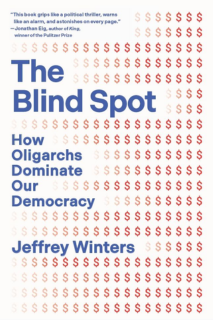
Jeffrey A. Winters is a professor in the Department of Political Science at Northwestern University and serves as the Director of the Equality Development and Globalization Studies (EDGS) program. His research specializes in oligarchs and elites in the United States from independence to the present, as well as in contemporary Southeast Asia, medieval Europe, and ancient Athens and Rome. His latest book, The Blind Spot: How Oligarchs Dominate Our Democracy (2026), focuses on the impact of wealth power and wealth defense on American democracy. His 2011 book, Oligarchy, received the APSA's 2012 Gregory M. Luebbert Award for the Best Book in Comparative Politics and has been translated into multiple languages. Winters' work emphasizes themes such as economic inequality, wealth concentration, the rule of law, authoritarianism, and democracy, with a regional specialization in Southeast Asia, particularly Indonesia. He has authored influential books including Power in Motion, which explores the structural power of investment resources in Indonesia, and has co-edited critical works on the World Bank. Winters is also the founder and Chairman of the Board of Trustees of the Indonesian Scholarship and Research Support Foundation (ISRSF) and directs the Social Sciences Program at the Center for Public Policy Transformation in Jakarta. Recognized for teaching excellence, he has received multiple awards from students and the department. His scholarly contributions extend to international engagement through his leadership roles in various foundations and programs.

Research topics

  • Political Science
  • Sociology
  • Finance
  • Engineering
  • Architectural engineering
  • Marketing
  • Media studies
  • Business
  • Public relations
  • Law
  • Gender studies
  • Philosophy

Selected publications

  • Real estate as a service

    2021

    • Political Science
    • Business
    • Architectural engineering

    When looking at the expertise in the RICS Research Group and Development in The Netherlands and a holistic approach to the possible relevant developments in the field of the built environment-whether or not influenced by COVID-19-an integral approach is of great importance for the raison d'etre of real estate. A long-term approach to real estate will increasingly play a role in which the boundaries between construction and management of the built environment are blurred, but where there is still a long way to go to bring service to a higher level. We therefore look from three different perspectives by experts from this group at (1) Corona crisi accelerates the green blue revolution in real estate (2) Perspectives of Urban Mixed Use in Post-Corona Central Urban Areas and (3) cooperation in new coalitions. © 2021 Nova Science Publishers, Inc.

  • Illiberal Democracy in Indonesia: The Ideology of the Family State by David Bourchier

    Indonesia · 2020 · 1 citations

    1st authorCorresponding
    • Sociology
    • Political Science
    • Sociology

    Reviewed by: Illiberal Democracy in Indonesia: The Ideology of the Family State by David Bourchier Jeffrey A. Winters (bio) David Bourchier. Illiberal Democracy in Indonesia: The Ideology of the Family State. Abingdon: Routledge, 2015. 318 pp. There is a game of social-cultural generalizations that pretty much everyone engages in. New Yorkers are said to be brash. American midwesterners are nicer folk. Italians indulge their passions. Brits are reserved. In the Indonesian context, the Javanese hate confrontation and won't reveal what they're really thinking. Bataks are loud and relish a debate. The Madurese and Ambonese are warmhearted, but quick-tempered. Heads nod as various complementary or insulting things get said about broad populations, even though we know these are stereotypes that fall apart quickly at the level of actual individuals in each group. As David Bourchier reminds us in this excellent book, it is a very different phenomenon when powerful actors and states engage in a parallel game of generalizations about the character of their people. The difference lies in the motives. Contending factions of elites are interested in stable control and smooth domination, and they work hard to manufacture political-cultural interpretations that advance these goals. Indonesia's leaders aggressively promote the view that from the basic family unit, up through villages and neighborhoods, and on to the national level, Indonesians are a people who value harmony above all else and prefer to operate by consensus rather than by voting. Political opposition, dissenting parties, and general disagreement are labeled as un-Indonesian, and a commitment to individual political and human rights is derided as a Western import. Authentic Indonesian politics is portrayed as a harmonious family with the nation's leaders playing the role of benevolent parents. Permanently positioned below are the citizens as obedient and grateful children. Bourchier notes that this vision has been variously called organicist, corporatist, and integralist. It is also a key ideological ingredient of authoritarianism—and especially of fascism. Defining Indonesia's social and political identity has been a contested terrain for over a century. Bourchier's analysis of illiberal democracy in Indonesia arrived just as new clashes have erupted over what constitutes a true, authentic, and good Indonesian. The work provides a sophisticated framework for understanding the origins and trajectory of these debates and it deserves to be read widely. What is at stake in these clashes is not actually discovering who Indonesians are at their core. That is a pointless exercise even for societies that have a great deal of homogeneity. For diverse countries like Indonesia, it is an absolute impossibility. Indonesians are many things depending on their class, gender, and ethnicity, and the socio-cultural trajectories of their lives. Some are empowered while many are [End Page 133] marginalized. The country's history makes clear that Indonesians resist when they can and go along when they must. Their identities are dynamic and may overlap in various ways with the constructed political culture. But there is also an endless array of subcultures and countercultures. Elite investments in national-identity narratives serve two important purposes. Vertically, and most obviously, the goal is to render the population docile by glorifying a natural and harmonious hierarchy that delegitimizes dissent and resistance. But there is a horizontal purpose as well. Those in power must fend off competing elite factions (ambitious aunts and uncles, perhaps?) who think they should be in charge of Indonesia's big, happy family. Along the way, the masses below endure heavy doses of gotong-royong (mutual assistance) indoctrination, while at the elite level Indonesians conduct an intricate dance of bagi-bagi (sharing of the spoils) to keep the extended family leadership from stirring up mischief. The broad outlines of the story in Illiberal Democracy are familiar. But what Bourchier accomplishes in this book is to provide the most comprehensive examination to date of how this conservative ideology of domination arose and evolved in Indonesia. He also adds an important historical dimension rooted in European political philosophy. Prior to Bourchier, the most important and pathbreaking scholarship on the topic was by David Reeve and Marsillam Simanjuntak.1 It is useful to think of Bourchier's contribution as positioned between these two...

  • 1. REINVENTING THE WORLD BANK

    Cornell University Press eBooks · 2019-03-14 · 10 citations

    book-chapterSenior author
  • 5. CRIMINAL DEBT

    Cornell University Press eBooks · 2019-03-14

    book-chapter1st authorCorresponding
  • 4. The Determinants of Financial Crisis in Asia

    Cornell University Press eBooks · 2019-09-04 · 4 citations

    book-chapter1st authorCorresponding
  • 10. CONCLUSION

    Cornell University Press eBooks · 2019-03-14

    book-chapterSenior author
  • Reinventing the World Bank

    2018-01-01 · 112 citations

    bookSenior author

    Largely ignored for decades, the World Bank increasingly finds itself at the center of an international political maelstrom. Attacked by the Right as the last bastion of socialism and by the Left as an instrument of economic imperialism, the Bank has struggled to adapt to a changing post-Cold War era. Still the world's leading development institution in terms of size and influence, the International Bank for Reconstruction and Development's failure to articulate and implement a convincing strategy to reduce world poverty has left it vulnerable to the charge that, at least in its present form, it has outlived its usefulness.In a book neither funded nor controlled by its subject, leading North American and British scholars critically examine the World Bank. They contend that an institution that has grown to unmanageable proportions through internally driven change cannot realistically be expected to effect its own reform program. All the Bank's previous attempts at self-redesign have failed, and the contributors argue it is beyond reform; it must be reinvented.Reinvention involves a thoroughgoing and externally controlled process of transformation, starting from basic principles and encompassing three closely related dimensions: operations, or the fit between the Bank's lending program and its development objectives; concepts, its vision of development and anti-poverty strategy; and power, which includes the Bank's relationships with member countries and the wider public, as well as structures of internal governance and accountability.

  • Oligarchy and Democracy in Indonesia

    Cornell University Press eBooks · 2018-06-20 · 6 citations

    book-chapter1st authorCorresponding
  • 5. Wealth Defense and the Complicity of Liberal Democracy

    New York University Press eBooks · 2018-01-23 · 62 citations

    book-chapter1st authorCorresponding
  • 2. The Preboom Years, 1965-1974: Investor Confidence and Political Contradictions

    Cornell University Press eBooks · 2018-12-31

    book-chapter1st authorCorresponding

Frequent coauthors

  • Richard Robison

    University of Melbourne

    3 shared
  • Jonathan Pincus

    3 shared
  • Jacques Bertrand

    2 shared
  • Alasdair Bowie

    2 shared
  • Kevin Hewison

    University of North Carolina at Chapel Hill

    2 shared
  • Adam J. Schwarz

    University of California, Irvine

    2 shared
  • Garry Rodan

    2 shared
  • Harold Crouch

    2 shared

Awards & honors

  • APSA's 2012 Gregory M. Luebbert Award for the Best Book in C…
  • Associated Student Government (ASG) Faculty Honor Roll for t…
  • Farrell Teaching Prize (2014)
  • Resume-aware match score
  • Save to shortlist
  • AI-drafted outreach

See your match with Jeffrey Winters

PhdFit ranks faculty by your research interests, methods, and publications — grounded in their actual work, not templates.

  • Free to start
  • No credit card
  • 30-second signup