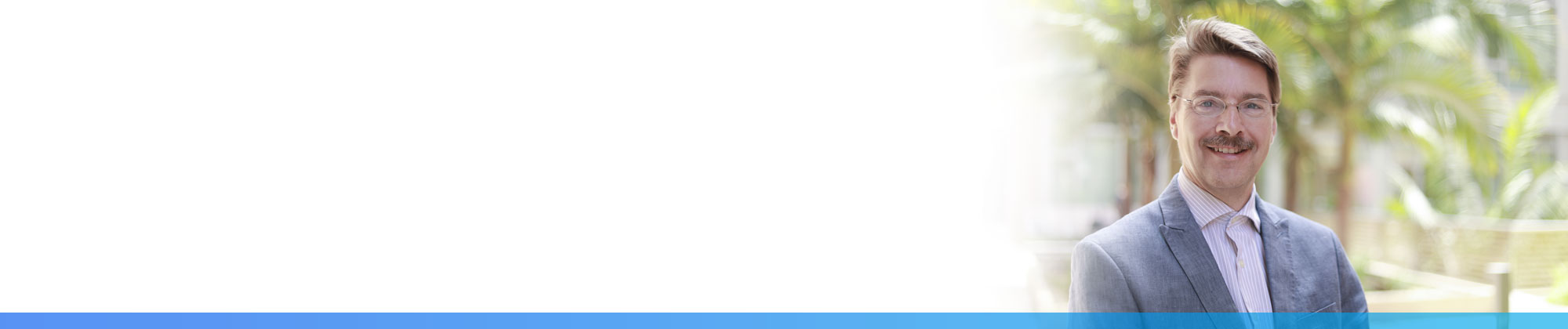
Jens Palsberg
· ProfessorVerifiedUniversity of California, Los Angeles · Computer Science
Active 1989–2026
About
Jens Palsberg is a Professor of Computer Science at UCLA Samueli School of Engineering. His research interests include compilers, embedded systems, and programming languages. He has been recognized with numerous awards, including the National Science Foundation CAREER Award in 1998, the UCLA Samueli Excellence in Teaching Award in 2023, and several distinguished service awards from ACM. Palsberg has served on the executive committee of the global scientific computing society and has been an ACM Distinguished Speaker. His academic background includes a PhD from the University of Aarhus obtained in 1992. Throughout his career, he has been acknowledged for his outstanding teaching and research contributions in the field of computer science.
Research topics
- Computer Science
- Software engineering
- Quantum mechanics
- Computational science
- Discrete mathematics
- Engineering physics
- Theoretical computer science
- Systems engineering
- Mathematics
- Programming language
- Physics
- Engineering
- Algorithm
Selected publications
HALO: A Fine-Grained Resource Sharing Quantum Operating System
Open MIND · 2026-02-06
preprintSenior authorAs quantum computing enters the cloud era, thousands of users must share access to a small number of quantum processors. Users need to wait minutes to days to start their jobs, which only takes a few seconds for execution. Current quantum cloud platforms employ a fair-share scheduler, as there is no way to multiplex a quantum computer among multiple programs at the same time, leaving many qubits idle and significantly under-utilizing the hardware. This imbalance between high user demand and scarce quantum resources has become a key barrier to scalable and cost-effective quantum computing. We present HALO, the first quantum operating system design that supports fine-grained resource-sharing. HALO introduces two complementary mechanisms. First, a hardware-aware qubit-sharing algorithm that places shared helper qubits on regions of the quantum computer that minimize routing overhead and avoid cross-talk noise between different users' processes. Second, a shot-adaptive scheduler that allocates execution windows according to each job's sampling requirements, improving throughput and reducing latency. Together, these mechanisms transform the way quantum hardware is scheduled and achieve more fine-grained parallelism. We evaluate HALO on the IBM Torino quantum computer on helper qubit intense benchmarks. Compared to state-of-the-art systems such as HyperQ, HALO improves overall hardware utilization by up to 2.44x, increasing throughput by 4.44x, and maintains fidelity loss within 33%, demonstrating the practicality of resource-sharing in quantum computing.
iSwitch: QEC on Demand via In-Situ Encoding of Bare Qubits for Ion Trap Architectures
2026-03-10
articleOpen accessRecent advances in quantum hardware and error correction have paved the way for early fault-tolerant (EFT) quantum computing. We propose iSwitch, a hybrid system architecture for trapped-ion quantum computers (TIQC) that exploits ultra-high-fidelity single-qubit gates and efficient logical CNOTs enabled by ion shuttling. iSwitch employs bare qubits for single-qubit operations and QEC-encoded logical qubits for two-qubit gates, avoiding full logical encoding, gate synthesis, and magic state distillation. To enable this selective encoding, we develop a low-noise conversion protocol between bare and logical qubits, a hybrid instruction set tailored to 2D TIQC layouts, and a compiler that minimizes conversion overhead and optimizes scheduling. Evaluations on variational quantum algorithm benchmarks show that iSwitch achieves comparable fidelity to conventional QEC methods, while reducing qubit and operation counts by roughly 33–50%, offering a practical, resource-efficient path toward EFT quantum computing on trapped-ion platforms.
Scalable testing of quantum error correction
Open MIND · 2026-02-04
preprintSenior authorThe standard method for benchmarking quantum error-correction is randomized fault-injection testing. The state-of-the-art tool stim is efficient for error correction implementations with distances of up to 10, but scales poorly to larger distances for low physical error rates. In this paper, we present a scalable approach that combines stratified fault injection with extrapolation. Our insight is that some of the fault space can be sampled efficiently, after which extrapolation is sufficient to complete the testing task. As a result, our tool scales to distance 17 for a physical error rate of 0.0005 with a two-hour time budget on a desktop. For this case, it estimated a logical error rate of $1.51 \times 10^{-11}$ with high confidence.
Scalable testing of quantum error correction
arXiv (Cornell University) · 2026-02-04
articleOpen accessSenior authorThe standard method for benchmarking quantum error-correction is randomized fault-injection testing. The state-of-the-art tool stim is efficient for error correction implementations with distances of up to 10, but scales poorly to larger distances for low physical error rates. In this paper, we present a scalable approach that combines stratified fault injection with extrapolation. Our insight is that some of the fault space can be sampled efficiently, after which extrapolation is sufficient to complete the testing task. As a result, our tool scales to distance 17 for a physical error rate of 0.0005 with a two-hour time budget on a desktop. For this case, it estimated a logical error rate of $1.51 \times 10^{-11}$ with high confidence.
Computer Science Challenges in Quantum Computing: Early Fault-Tolerance and Beyond
Open MIND · 2026-01-28
preprint1st authorCorrespondingQuantum computing is entering a period in which progress will be shaped as much by advances in computer science as by improvements in hardware. The central thesis of this report is that early fault-tolerant quantum computing shifts many of the primary bottlenecks from device physics alone to computer-science-driven system design, integration, and evaluation. While large-scale, fully fault-tolerant quantum computers remain a long-term objective, near- and medium-term systems will support early fault-tolerant computation with small numbers of logical qubits and tight constraints on error rates, connectivity, latency, and classical control. How effectively such systems can be used will depend on advances across algorithms, error correction, software, and architecture. This report identifies key research challenges for computer scientists and organizes them around these four areas, each centered on a fundamental question.
Toffoli Requires Six Quantum Neighbor Gates
ACM Transactions on Quantum Computing · 2026-01-02
articleOpen accessSenior authorToffoli gates are key building blocks in quantum programs, and on most current quantum computers, they must be implemented with smaller gates. Such an implementation requires five 2-qubit gates if we assume that each gate can operate on any two qubits. However, many current quantum computers have only 2-qubit gates that operate on neighboring qubits; we call them neighbor gates. How many neighbor gates are required to implement a Toffoli gate? In this article, we show that six neighbor gates are necessary and sufficient, and we generalize to a characterization of all 3-qubit diagonal gates.
HALO: A Fine-Grained Resource Sharing Quantum Operating System
ArXiv.org · 2026-02-06
articleOpen accessSenior authorAs quantum computing enters the cloud era, thousands of users must share access to a small number of quantum processors. Users need to wait minutes to days to start their jobs, which only takes a few seconds for execution. Current quantum cloud platforms employ a fair-share scheduler, as there is no way to multiplex a quantum computer among multiple programs at the same time, leaving many qubits idle and significantly under-utilizing the hardware. This imbalance between high user demand and scarce quantum resources has become a key barrier to scalable and cost-effective quantum computing. We present HALO, the first quantum operating system design that supports fine-grained resource-sharing. HALO introduces two complementary mechanisms. First, a hardware-aware qubit-sharing algorithm that places shared helper qubits on regions of the quantum computer that minimize routing overhead and avoid cross-talk noise between different users' processes. Second, a shot-adaptive scheduler that allocates execution windows according to each job's sampling requirements, improving throughput and reducing latency. Together, these mechanisms transform the way quantum hardware is scheduled and achieve more fine-grained parallelism. We evaluate HALO on the IBM Torino quantum computer on helper qubit intense benchmarks. Compared to state-of-the-art systems such as HyperQ, HALO improves overall hardware utilization by up to 2.44x, increasing throughput by 4.44x, and maintains fidelity loss within 33%, demonstrating the practicality of resource-sharing in quantum computing.
Computer Science Challenges in Quantum Computing: Early Fault-Tolerance and Beyond
ArXiv.org · 2026-01-28
articleOpen access1st authorCorrespondingQuantum computing is entering a period in which progress will be shaped as much by advances in computer science as by improvements in hardware. The central thesis of this report is that early fault-tolerant quantum computing shifts many of the primary bottlenecks from device physics alone to computer-science-driven system design, integration, and evaluation. While large-scale, fully fault-tolerant quantum computers remain a long-term objective, near- and medium-term systems will support early fault-tolerant computation with small numbers of logical qubits and tight constraints on error rates, connectivity, latency, and classical control. How effectively such systems can be used will depend on advances across algorithms, error correction, software, and architecture. This report identifies key research challenges for computer scientists and organizes them around these four areas, each centered on a fundamental question.
SAQR-QC: A Logic for Scalable but Approximate Quantitative Reasoning about Quantum Circuits
ArXiv.org · 2025-07-18 · 1 citations
preprintOpen accessReasoning about quantum programs remains a fundamental challenge, regardless of the programming model or computational paradigm. Despite extensive research, existing verification techniques are insufficient -- even for quantum circuits, a deliberately restricted model that lacks classical control, but still underpins many current quantum algorithms. Many existing formal methods require exponential time and space to represent and manipulate (representations of) assertions and judgments, making them impractical for quantum circuits with many qubits. This paper presents a logic for reasoning in such settings, called SAQR-QC. The logic supports {S}calable but {A}pproximate {Q}uantitative {R}easoning about {Q}uantum {C}ircuits, whence the name. SAQR-QC has three characteristics: (i) some (deliberate) loss of precision is built into it; (ii) it has a mechanism to help the accumulated loss of precision during a sequence of reasoning steps remain small; and (iii) most importantly, to make reasoning scalable, every reasoning step is local -- i.e., it involves just a small number of qubits. We demonstrate the effectiveness of SAQR-QC via two case studies: the verification of GHZ circuits involving non-Clifford gates, and the analysis of quantum phase estimation -- a core subroutine in Shor's factoring algorithm.
Software Managed Networks via Coarsening
2025-11-17
articleOpen accessWe propose moving from Software Defined Networks (SDN) to Software Managed Networks (SMN) where all information for managing the life cycle of a network (from deployment to operations to upgrades), across all layers (from Layer 1 through 7) is stored in a central repository. Crucially, a SMN also has a generalized control plane that, unlike SDN, controls all aspects of the cloud including traffic management (e.g., capacity planning) and reliability (e.g., incident routing) at both short (minutes) and large (years) time scales. Just as SDN allows better routing, a SMN improves visibility and enables cross-layer optimizations for faster response to failures and better network planning and operations. Implemented naively, SMN for planetary sc6ale networks requires orders of magnitude larger and more heterogeneous data (e.g., alerts, logs) than SDN. We address this using coarsening — mapping complex data to a more compact abstract representation that has approximately the same effect, and is more scalable, maintainable, and learnable. We show examples including Coarse Bandwidth Logs for capacity planning and Coarse Dependency Graphs for incident routing. Coarse Dependency Graphs improve an incident routing metric from 45% to 78% while for a distributed approach like Scouts the same metric was 22%. We end by discussing how to realize SMN, and suggest cross-layer optimizations and coarsenings for other operational and planning problems in networks.
Recent grants
CRI: CI-New: Collaborative Research: NJR: A Normalized Java Resource
NSF · $600k · 2018–2024
Collaborative Research: CI-P: NJR: A National Java Resource
NSF · $58k · 2017–2018
SHF: Small: Typed Self-Application
NSF · $494k · 2012–2018
Certification of Medical Device Software
NSF · $700k · 2008–2012
SHF: Small: Concurrency with Specified Orders
NSF · $396k · 2018–2024
Frequent coauthors
- 40 shared
Michael I. Schwartzbach
- 25 shared
Christopher Fox
University of Chicago
- 25 shared
Maurice Naftalin
- 25 shared
Robin Sharp
Technical University of Denmark
- 25 shared
Hans Lcvengreen
Cornell University
- 25 shared
Ronald Huijsman
Cornell University
- 25 shared
J. van Katwijk
Delft University of Technology
- 25 shared
Nico Plat
Education
- 1995
Ph.D., Computer Science
University of California, Los Angeles
- 1991
M.S., Computer Science
University of California, Los Angeles
- 1989
B.S., Computer Science
University of California, Los Angeles
Awards & honors
- National Science Foundation CAREER Award (1998)
- Purdue University Faculty Scholar (1999-2004)
- One of the Ten Best Teachers of Undergraduates in the School…
- Okawa Foundation Research Award (2003)
- IBM Faculty Award (2005)
- Resume-aware match score
- Save to shortlist
- AI-drafted outreach
See your match with Jens Palsberg
PhdFit ranks faculty by your research interests, methods, and publications — grounded in their actual work, not templates.
- Free to start
- No credit card
- 30-second signup