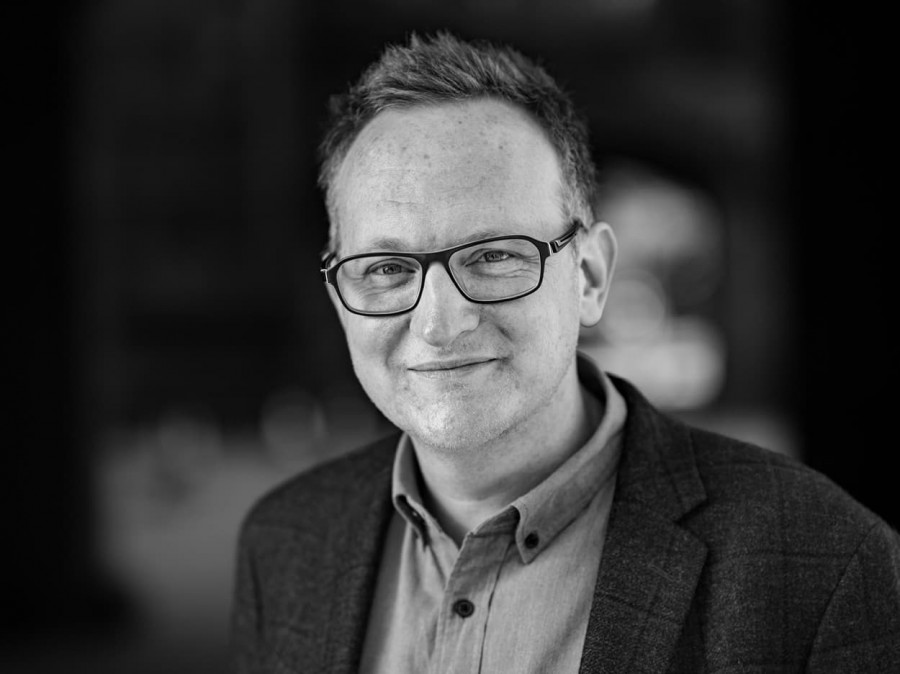
Johannes Wankhammer
· Associate ProfessorVerifiedPrinceton University · German
Active 2016–2024
About
Johannes Wankhammer is an Associate Professor on Leave for the academic year 2025-26 in the Princeton German Department. His scholarship focuses on critical and aesthetic theory, the cultural history of attention, and the environmental humanities. His work draws on the conceptual repertoire of German aesthetics to address contemporary social and cultural questions, including the origins and future of critique, the evolution of notetaking and writing practices, and issues of representation and knowledge related to the climate crisis. Wankhammer's research is inspired by eighteenth-century literature and thought, particularly by writers and philosophers predating the classical period of German culture around 1800, such as G. W. Leibniz, A. G. Baumgarten, and G. Ch. Lichtenberg. His first book, 'Creatures of Attention: Aesthetics and the Subject before Kant' (Cornell University Press, 2024), offers a deep history of contemporary concerns with attention and self-control, tracing the emergence of attention as a mental faculty in the German eighteenth century and examining how early aesthetics critically reflected on Enlightenment paradigms of attention. His current book project explores an environmental history of German aesthetics, investigating how ecological concerns have been integral to aesthetic thought since its emergence in the eighteenth century. This project examines the material conditions of aesthetic experience in changing environmental practices and charts the development of ecological thinking within German aesthetic thought from Baumgarten to Adorno, emphasizing the entanglements between human and extra-human worlds. Wankhammer earned his PhD in German Studies from Cornell University, where he was awarded a Mellon Graduate Fellowship at the Society for the Humanities. He also holds degrees in Comparative Literature and German Studies from Binghamton University and the University of Graz, Austria. Prior to his current position, he taught at Reed College as a Visiting Assistant Professor. His work on eighteenth-century poetics, aesthetics, and ecocritical topics has been published in various journals, and he has edited a special issue of MLN on 'Scenes of Writing'.
Research topics
- Computer Science
- History
- Art history
- Linguistics
- Sociology
- Literature
- Philosophy
- Art
- Aesthetics
- Geology
- Archaeology
- Epistemology
- Paleontology
Selected publications
Cornell University Press eBooks · 2024-06-03
book1st authorCorrespondingCreatures of Attention excavates the early modern prehistory of our late modern crises of attention. At the threshold of modernity, philosophers, scientists, and poets across Europe began to see attention as the key to autonomous agency and knowledge. Recovering the philosophical and literary works from eighteenth-century Germany in which "attention," "subject," and "aesthetics" developed their modern meanings, Johannes Wankhammer examines control over attention as the cultural technique underpinning the ideal of individual autonomy. Aesthetics, founded by Alexander Baumgarten as a science of sense perception, challenged this ideal by reframing art as a catalyst for alternative modes of selfhood and attention. While previous scholarship on the history of attention emphasized the erosion of subjectivity by industrial or technological modernization, Wankhammer asks how attention came to define subjectivity in the first place. When periodically recurring crises of attention threaten the coherence of the subject, the subject comes undone at the very seams that first sutured it together. Creatures of Attention offers the first systematic study of a foundational discourse on attention from 1650 to 1780. Presenting pre-Kantian aesthetics as a critique of the Enlightenment paradigm of strained attention, the book offers a fresh perspective on poetics and aesthetics in eighteenth-century Germany.
The Nature of Critique: Revisiting Adorno’s “Natural History” amid the Postcritique Debates
New German Critique · 2024-11-01
article1st authorCorrespondingThis article revisits Adorno’s concept of “natural history” to propose an alternative to the exhausted paradigm of denaturalizing critique. As Jonathan Crary’s work on the ruination of sleep illustrates, the reflex to denounce natural limits as ideological constructs falls short when it comes to confronting social pathologies wrought by late capitalism’s demand for infinite flexibility. Since its Enlightenment origins, however, critical thought has tended to attack natural limits as illegitimate barriers to human self-determination, even before this strategy became, with Nietzsche, the sole rationale behind denaturalizing critique. By contrast, Adorno’s concept of natural history offers a profound (if long-overlooked) self-critique of critique’s one-sided reliance on denaturalization: it suggests how it is possible to harness natural limits as levers for emancipatory transformation rather than blindly calling for the transformation of given limits. Pace Adorno, such natural-historical critique may clarify emerging forms of political praxis, especially those fighting for environmental justice.
Cornell University Press eBooks · 2024-06-15
book-chapter1st authorCorrespondingThis chapter provides an overview of aesthetics, a new philosophy of sense perception from Alexander G. Baumgarten. It mentions the correlation of Baumgarten's thought to Joachim Ritter's narrative about aesthetics. Baumgarten's defense of sense perception pivoted on an economy of narrowing or widening the mind's focus, which he explored as the constraint conditioning all finite cognition. In <italic>Metaphysica and the Aesthetica</italic>, Baumgarten explored the dynamics of intensive versus extensive clarification and attention. According to Baumgarten, aesthetics marks an exploration of the subject in tension with the nexus rerum, an interconnection of entities in the world that exceeds and encompasses the self.
Cornell University Press eBooks · 2024-06-15
book-chapter1st authorCorrespondingThis chapter focuses on the disciplines of attention in the German eighteenth century. The term <italic>Aufmerksamkeit</italic> as the standard German word for attention was largely the work of a single author, the philosopher Christian Wolff. The chapter explains Wolff's <italic>Psychologia empirica</italic> (Empirical psychology; 1732) as a springboard for exploring the place of attention in German eighteenth-century thought and culture. In eighteenth-century pedagogy, reformers such as J. B. Basedow and J. H. Campe saw the improvement of attention as the bedrock of all further education. The chapter then elaborates on the connection between the regulation of attention and the formation of the self, a notion that haunts classical German philosophy.
Cornell University Press eBooks · 2024-06-15
book1st authorCorrespondingAt the threshold of modernity, philosophers, scientists, and poets across Europe began to see attention as the key to autonomous agency and knowledge. Recovering the philosophical and literary works from eighteenth-century Germany in which “attention,” “subject,” and “aesthetics” developed their modern meanings, this book examines control over attention as the cultural technique underpinning the ideal of individual autonomy. Aesthetics, founded by Alexander Baumgarten as a science of sense perception, challenged this ideal by reframing art as a catalyst for alternative modes of selfhood and attention. While previous scholarship on the history of attention emphasized the erosion of subjectivity by industrial or technological modernization, this book asks how attention came to define subjectivity in the first place. When periodically recurring crises of attention threaten the coherence of the subject, the subject comes undone at the very seams that first sutured it together. The book offers the first systematic study of a foundational discourse on attention from 1650 to 1780. Presenting pre-Kantian aesthetics as a critique of the Enlightenment paradigm of strained attention, it offers a fresh perspective on poetics and aesthetics in eighteenth-century Germany.
Cornell University Press eBooks · 2024-06-15
book-chapter1st authorCorrespondingThis chapter references poetry as an education of attentiveness. It features poet Barthold Heinrich Brockes and the poetic theorist Johann Jakob Breitinger as representatives of poetics of the marvelous (<italic>das Wunderbare</italic>) highlighting the power of the rare, strange, and extraordinary to captivate an audience. In their poetic theory and practice, Breitinger and Brockes eventually discover that all perception may rely on a contingent pattern of habituated attention. The chapter explains that Breitinger and Brockes modeled their respective renovations of poetry and poetics on the rationalist concept of attention. It cites that both of them, in different degrees, seized attention as a nonmimetic element in cognition to carve out a place for artifice in poetic representation.
Cornell University Press eBooks · 2024-01-01
book1st authorCorrespondingDe Gruyter eBooks · 2023
1st authorCorresponding- Geology
- Paleontology
- History
Scenes of Writing: An Introduction
MLN · 2021-01-01
articleSenior authorScenes of Writing:An Introduction Bryan Klausmeyer (bio), Andrea Krauß (bio), and Johannes Wankhammer (bio) In the three decades since the publication of Rüdiger Campe's essay "Die Schreibszene, Schreiben" (1991; "Writing; The Scene of Writing"), the concept of the Schreibszene or "scene of writing" has established itself as part of the vernacular of contemporary German literary studies. Scholars of various stripes now use the term with an air of obviousness when referring to the ensemble of material and semiotic conditions that frame historical writing practices and make them possible. This remarkable career and quick canonization of the "scene of writing" in Germany1 could hardly have been anticipated when the essay first appeared in the context of a series of edited volumes concerned with the "materialities of communication."2 The term "materialities" was self-consciously invoked by the volumes' co-editors to signal a shift in the German reception of post-structuralism from a focus on the "materiality of the signifier"—as the non-meaningful condition of meaning—to a more general interest in the material conditions of [End Page 965] meaning production (see Pfeiffer), especially with respect to media technologies and "discourse networks." Campe's essay, which prominently cites not only Roland Barthes and Jacques Derrida but also Friedrich Kittler and Marshall McLuhan, can certainly be read as a product of this transitional moment in the contemporary history of theory, when the post-structuralist critique of hermeneutics gave way to what has since come to be known as "German media theory."3 If the essay has had a longer shelf-life than most scholarship produced under the aegis of the "materialities of communication," this is at least in part because it did not exhaust itself in media theory's revolt against hermeneutics. By sketching out a positive model for how to analyze literary writing as a "non-stable ensemble of language, instrumentality, and gesture" (Campe 973)—to cite a frequently invoked phrase from Campe's essay—it offered an alternative to the hermeneutic fetishization of authorial intent, while at the same time avoiding the reduction of writing to any onedimensional notion of materiality, be it of the signifier or of media. This can be seen in the way that Campe's essay reframes traditional domains of literary analysis, including poetics (e.g., occasional poetry), genre (e.g., the epistolary novel), as well as rhetoric and print history (e.g., humanist guides to writing and the history of the adage), by locating within each of them the instabilities and ambiguities that writing and its thematization in literature occasion. In calling attention to the convergence of the irreducibly heterogeneous elements that constitute the scene of writing, the essay also anticipated theoretical trends that only fully emerged in the decades after its publication: among these are concerns with the praxeological dimensions of writing (e.g., notetaking, excerption, and file management); with the performative character of knowledge production emphasized in the "poetics of knowledge" (Poetologien des Wissens); with distributed agency between humans, machines, and systems (as explored by actornetwork theory); and with the coupling of embodied routines and technical instruments highlighted by German media theory's more recent focus on "cultural techniques" (Kulturtechniken) and "media in-use" (Mediengebrauch). The same qualities that propelled the quick adoption of the "scene of writing" as a key concept of literary studies in Germany are also what compel us to introduce the concept to a wider audience outside [End Page 966] of Germany and beyond German Studies. To be sure, interest in the material history of writing as well as interdisciplinary approaches to the study of literature have long been a major focus of the Anglophone humanities: book and print history, new historicism, the study of material culture, histories of science and technology, and—more recently—historical epistemology have all established themselves as thriving fields of humanistic inquiry on this side of the Atlantic. What distinguishes the approach sketched out by Campe, however, is its attunement to the epistemological paradoxes that arise from combining the divergent approaches to "writing" offered by various methodological orientations and theoretical impulses. In this respect, it is just as distinct from positivistic approaches to the material history of writing techniques...
MLN · 2021 · 3 citations
Senior authorCorresponding- Computer Science
- Literature
- Philosophy
Writing; The Scene of Writing Rüdiger Campe (bio) Translated by Bryan Klausmeyer (bio) and Johannes Wankhammer (bio) For Roland Barthes, the word or concept écriture can dissolve demarcations and rearrange classifications: 1) Écriture dissolves the boundaries between literary genres to the extent that it is at work both in literature and in criticism. (According to Barthes, this is a consequence of modernism—"undoubtedly since Mallarmé.") 2) As the "traces of a practice: the practice of writing," écriture constitutes the work insofar as the latter can be conceived independently of the (juridical) personhood of its author. (This is how Barthes accounts for the death of the author.) 3) In a usage that is, again, distinctly modern, the verb "écrire" receives mediopassive significance in Barthes (s'écrire, "to write itself"): with this, he transitions via a medial reframing of the subject of production to the differential play of the text. (This offers the possibility of recombining the operations of literary criticism and the (linguistically-based) science of literature that were separated in the first argument.)1 Arguments (1) and (3) obviously contain certain assumptions about the development of literary history and the relation of commentary to work. In order to bracket these assumptions, we will consider earlier—and certainly less prominent—examples in which "writing" is either thematized within literature or regulated in close relation to it. (In this way, we will also practice epoché with respect to a certain phenomenological tendency diffusely imparted to the "modern [End Page 971] experience of writing.")2 Our primary concern, however, will lie with a more basic and profound presupposition in the use of the words écrire and écriture, one that is especially evident in argument (2). These terms can obviously refer to writing as an instance of language in the context of orality and literacy,3 yet they also always imply a practice, a repertoire of gestures and provisional arrangements. It is this fundamental linguistic-gestural relationship4 that will be designated in what follows by "writing, the scene of writing."5 "Writing, the scene of writing" recalls distinctions—body/language, equipment/intention—which they then demand to be passed over again.† "Writing" typically refers to a movement that crosses the boundary of such distinctions in the direction of the body or of materiality; "the scene of writing" can designate a process by which bodies are linguistically marked or equipment contributes to the meaning to which it relates in an instrumental fashion. In such a case, we are dealing with the labor of civilization or the effect of techniques. Is it imperative, then, to recover these distinctions analytically, or rather to pursue the trace of how they are passed over in various contexts? Does opting for one or the other approach mean privileging one direction of passing over distinctions rather than the other (i.e., by [End Page 972] either analyzing paradoxes that spring from passing them over in their respective contexts within the history of civilization, or by pushing such paradoxes further through an interrogation of writing)? Or is it—either systematically or evolutionarily—proper to literature to move author, readers, and critics within the field of passing over distinctions, albeit without returning to the boundary or the play of distinctions in either one of these directions? Even and especially if "the writing-scene" does not designate the self-evident framing of the scene but a non-stable ensemble of language, instrumentality, and gesture, it can still designate the undertaking of literature precisely as this problematic ensemble, as this difficult process of framing. If that is the case, however, it will be worthwhile to describe the formation of ensembles and processes of framing in their limited validity and with all their fissures. Theme, Date "Writing" already surfaces as a theme in the epoch of rhetoricallybased poetics, or at least at its end—for example, in witty references to its own facticity. These occur especially where literary history speaks of the transition from the Baroque to Enlightenment neoclassicism. Johann Christian Günther (1695–1723), for instance, writes in a heading of a poem—as if wanting to free himself from the labor of writing (from mere facticity) while on the other hand lending...
Frequent coauthors
- 2 shared
Tim Sparenberg
- 2 shared
Bryan Klausmeyer
Virginia Tech
- 1 shared
Étienne Balibar
- 1 shared
Thijs Menting
- 1 shared
Thomas Ebke
- 1 shared
Philipp Weber
Fraunhofer Institute for Integrated Circuits
- 1 shared
Karin Harrasser
- 1 shared
Maximilian Haas
- Resume-aware match score
- Save to shortlist
- AI-drafted outreach
See your match with Johannes Wankhammer
PhdFit ranks faculty by your research interests, methods, and publications — grounded in their actual work, not templates.
- Free to start
- No credit card
- 30-second signup