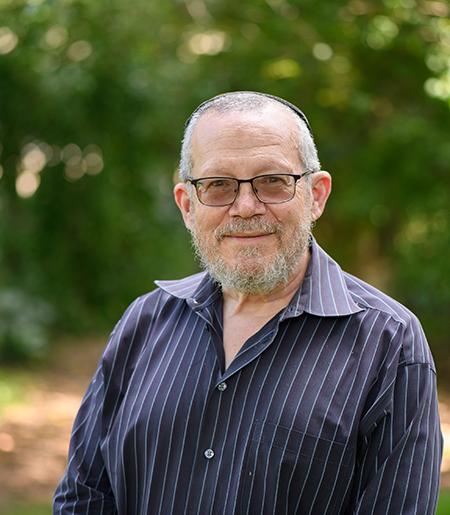
Jonathan Aaron Boyarin
· Mann Professor of Modern Jewish StudiesVerifiedCornell University · Anthropology
Active 1978–2025
About
Jonathan Aaron Boyarin is the Mann Professor of Modern Jewish Studies at Cornell University, affiliated with the Department of Anthropology and the American Studies Program. His work centers on Jewish communities and the dynamics of Jewish culture, memory, and identity, with ethnographic projects conducted in Paris, Jerusalem, and the Lower East Side of New York City. Boyarin's research involves interdisciplinary critical theory from the perspective of modern Jewish politics and experience, extending into comparative work on diaspora, the politics of time and space, and the ethnography of reading. He is also a Yiddish translator. Since graduate school, Boyarin has focused on modern Jewish experience and culture, investigating comparative and theoretical questions that illuminate the lives of Jews and others. His fieldwork has been conducted in major cities where Jewish populations reside, and his work includes historical ethnography of nineteenth and twentieth-century Polish Jewish life. He engages with the field of comparative diaspora, participating in discussions on post-colonial studies and resistant identities worldwide. A significant aspect of his scholarship is the importance of text in Jewish life, from scriptures and rabbinic debates to modern and postmodern literature and criticism, exploring how Jewishness is shaped by textual traditions and their intersections with anthropology, history, and literary cultural studies.
Research topics
- Computer Science
- Philosophy
- Theology
- Social Science
- Sociology
- Humanities
- Anthropology
- Art history
- Art
- Religious studies
Selected publications
2025-10-01
book-chapter1st authorCorrespondingInstantiations of alterity: The goy as modern subject
Critical Research on Religion · 2024-05-22
articleSenior authorThis article offers an anthropological and theoretical-archeological comparative exploration of agency, responsibility, and alterity in the Late Ancient Iranian Talmud and its reading in contemporary Manhattan. The guiding question is how the classical rabbinic imagery and conceptualization of the “Goy” or “non-Jew” are implicitly recast in the modern framework of subjectivity, in a social context of quasi-traditionalist Talmud study. The specific Talmudic texts examined focus further on the role that the difference and analogy between humans and other animals plays in this reimagination of the “Goy's” persona.
Traditionalist Jews and the Question of Whiteness
Jewish Social Studies · 2023-09-01
article1st authorCorrespondingAbstract: This article has two main purposes. First, it aims to unpack the question "Are Jews white?" by insisting that the assignment of even ambiguous racial identities to "Jews" as an undifferentiated collective is a categorical mistake. It argues instead for a highly contextualized approach to the racialization of certain Jews or groups of Jews in certain times and places for certain purposes and from certain perspectives—which need not imply any lessening of the import of such racialization. Second, and more specifically, it aims to provoke a careful discussion of the racialization of traditionalist Jews in the particular context of growing and recently established residential enclaves in the suburbs of New York City, and suggests that legal or scholarly understanding of their difference as primarily "religious" is also mistaken.
2023-09-01
book-chapter1st authorCorresponding2023-09-01
book-chapter1st authorCorrespondingAfterword: The Ethnographer of Reading, Pushing Seventy
Palgrave Studies in Literary Anthropology · 2023-01-01
book-chapter1st authorCorrespondingTraditionalist Jews and the Question of Whiteness
Jewish Social Studies · 2023-09-01 · 1 citations
article1st authorCorrespondingAbstract: This article has two main purposes. First, it aims to unpack the question "Are Jews white?" by insisting that the assignment of even ambiguous racial identities to "Jews" as an undifferentiated collective is a categorical mistake. It argues instead for a highly contextualized approach to the racialization of certain Jews or groups of Jews in certain times and places for certain purposes and from certain perspectives—which need not imply any lessening of the import of such racialization. Second, and more specifically, it aims to provoke a careful discussion of the racialization of traditionalist Jews in the particular context of growing and recently established residential enclaves in the suburbs of New York City, and suggests that legal or scholarly understanding of their difference as primarily "religious" is also mistaken.
2023-09-01
book-chapter1st authorCorresponding2. Responsive Thinking: Cultural Studies and Jewish Historiography
Fordham University Press eBooks · 2022-03-29
book-chapter1st authorCorrespondingOrthodox Time at a Lower East Side Yeshiva
AJS Review The Journal of the Association for Jewish Studies · 2022-04-01 · 1 citations
article1st authorCorrespondingMy article draws on long-term fieldwork and participation at an all-male yeshiva on the Lower East Side. Its literary form is autoethnographic memoir, comprising a set of anecdotes and reflections all closely tied to my own involvement. This affords me grounds for reflecting on what the term "Orthodox" means to me and to those with whom I have been studying for several years now. In my understanding, the regulars at this yeshiva view the institution as neither "Modern Orthodox" nor "Haredi" but as representing a common-sense but threatened middle ground. My article reinforces the notion of that middle ground with respect to temporality inside the yeshiva, as I support the claim that while the yeshiva is very much in the world and in no way "out of time," the valuation of time and its rhythms remains distinctive, perhaps increasingly so in a world where commodification otherwise seems to proceed apace.
Frequent coauthors
- 10 shared
Daniel Boyarín
- 6 shared
Warren Goldstein
- 5 shared
Rebekka King
Middle Tennessee State University
- 4 shared
Barbara Kirshenblatt–Gimblett
- 3 shared
Martin Land
University of Groningen
- 3 shared
Edward Cohen
Rutgers, The State University of New Jersey
- 2 shared
Joan Bildner
Rutgers Sexual and Reproductive Health and Rights
- 2 shared
Jack Kugelmass
- Resume-aware match score
- Save to shortlist
- AI-drafted outreach
See your match with Jonathan Aaron Boyarin
PhdFit ranks faculty by your research interests, methods, and publications — grounded in their actual work, not templates.
- Free to start
- No credit card
- 30-second signup