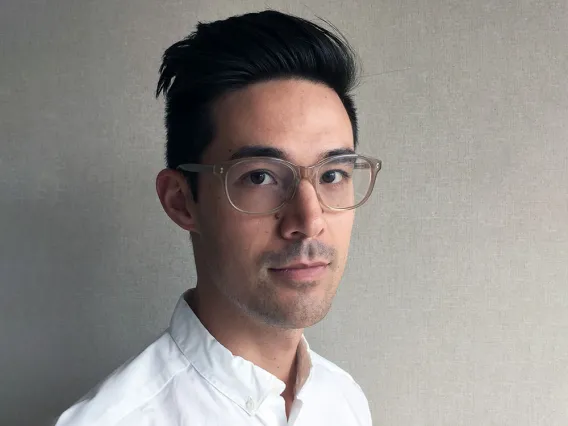
Jonathan Jae-an Crisman
· Affiliated Assistant Professor of Architecture and Urban PlanningVerifiedUniversity of Arizona · Urban Planning
Active 2012–2025
About
Jonathan Jae-an Crisman is an artist and urban scholar whose work considers the intersections between culture, politics, and place. His book Urban Humanities: New Practices for Reimagining the City (MIT Press, 2020), co-authored with Dana Cuff, Anastasia Loukaitou-Sideris, Todd Presner, and Maite Zubiaurre, stakes out new disciplinary terrain for the humanities. His current research focuses on the role that art and culture can play as forms of political engagement in gentrifying cities, and (with collaborator Maite Zubiaurre) on the forensic, cultural, and political practices around migrant death in the Borderlands. Work from his collaborative art practice has been shown at various venues including the Los Angeles Contemporary Archive, the Los Angeles Forum for Architecture and Urban Design, the West Bund Biennial of Arts and Architecture, and the Reykjavík Arts Festival. He was formerly the founding Project Director and Core Faculty for the UCLA Urban Humanities Initiative, and was a research affiliate with USC’s Spatial Analysis Lab (SLAB) where he worked with Annette Kim on humanizing cartographic representation.
Research topics
- Political Science
- Sociology
- Humanities
- Civil engineering
- Geography
- Engineering
- Art
- Computer Science
- Media studies
- Archaeology
- Transport engineering
- Law
- Risk analysis (engineering)
- Architectural engineering
- Visual arts
- Political economy
- Environmental planning
- Business
- Public relations
- Psychology
- Economic geography
- Management science
- Data science
- Cartography
Selected publications
Democracy as creative practice: weaving a culture of civic life
Cultural Trends · 2025-10-14
article1st authorCorrespondingJournal of Urban Affairs · 2025-02-27
articleUrban Geography · 2024-04-19 · 3 citations
article1st authorCorrespondingThe strip mall is a ubiquitous urban design type formed by a strip of commercial establishments on a single parcel of land that surround an open, street-facing parking lot. We hypothesize that they are important sites for ethnic and immigrant businesses in LA and, in particular, that their relatively low rents, location, and design (including site layout, unit size, and structure quality) are particularly conducive for ethnic cultural placemaking. Using data about the built environment, real estate market, and our own original "EthniCITY" spatial database of race/ethnicity placemaking patterns in Los Angeles, we use mapping and spatial analysis, descriptive statistics, a hedonic price model, and groundtruthing fieldwork to find that small and medium-sized strip malls are important ethnic places in Los Angeles, hosting the most ethnic commercial establishments amongst all commercial building types. We also find that half of all small strip malls are located within ethnic cultural hubs. Our findings suggest that physical urban design matters in shaping the cultural life of cities and the geographic opportunities for immigrant entrepreneurship.
The Arts and Historic Preservation: Intersections in the Urban Context
Journal of Planning Literature · 2024-03-06 · 1 citations
articleThe arts and historic preservation are well-established as strategies that can underpin urban planning and development. Although there is documented alignment between the arts and preservation, they are not typically formally integrated in city planning and existing research tends to address one or other, but not their integration. We fill this gap through an exploration of the intersection of the arts and historic preservation. We focus on who employs these strategies and why, the synergies and tensions between these practices, and how the arts and preservation relate to contemporary urban development in terms of gentrification, community control, and placemaking.
The more, the better: queer urban spatialities of Seoul in three films
Cultural Studies · 2024-10-03 · 1 citations
articleSenior authorCorrespondingWho Is the We in Diaspora? Liner Notes from the Future
Amerasia Journal · 2023-05-04
article1st authorCorresponding"Who Is the We in Diaspora?" is episode2, season two of Digital Salon, an experimental podcast begun at the onset of the COVID-19 pandemic. Produced by coauthor Jonathan Jae-an Crisman, the "DJ," it meditates on the Atlanta shootings of six Asian spa workers on March6 2021. The transcript of this episode is presented anew, paired with "liner notes" that are a collaboration between the DJ and his "critical listener," Jacqueline Barrios, coauthor of this piece and co-producer of Digital Salon, through textual "accompaniments" on the episode and its afterlife to stage the work's claim to its own futurity.
The Journal of Environmental Education · 2023-03-17 · 9 citations
article1st authorCorrespondingClimate change and the urban heat island (UHI) effect are increasing extreme heat risk in cities across the world, and have already made extreme heat the top weather-related cause of death in the United States. Despite this, understanding of viable strategies to address extreme heat is still limited, for both decision-makers and the public. Using a design-based research methodology, we developed an interactive educational game, Chill City, which teaches players about possible heat planning strategies and their tradeoffs. We surveyed adult, non-expert players to understand the game’s reception and impacts. Players expressed that they enjoyed the game and that it helped them better understand heat planning strategies and the environmental, social, and economic tradeoffs associated with them. We argue that environmental games offer educational potential for adult learners on issues of extreme heat and climate change that should be further explored to inform effective approaches and designs.
50 Years of Pride: Queer Spatial Joy as Radical Planning Praxis
Urban Planning · 2023-04-27 · 11 citations
articleOpen accessSenior authorPlanning has historically been used as a tool to regulate queer people in urban space and parades have long been a vibrant, yet overlooked, practice for resisting such municipal regulation—although parades themselves require spatial planning practices. We analyze the 50-year history of the Los Angeles Pride parade through archival materials, asking to what extent and how the historical planning of LA Pride demonstrates a radical planning praxis, especially in relation to policing. We find that LA Pride was initially (a) a ritual of remembrance and (b) a political organizing device. In contrast to heteronormative readings of Pride as an opportunity to “come out” and transform the “straight state,” we argue that the early years of Pride demonstrated intersectional and insurgent planning wherein heterogeneous queer people claimed agency through collectively expressing joy as an act of resistance to municipal governance. Based on theories of Black joy and the feminist killjoy, we conceptualize this experience as a “spatialized queer joy.” This concept is particularly germane given ongoing debates regarding the relationship between queer and BIPOC urban life and policing. We suggest that spatialized queer joy complicates conventional readings of Pride and queer urban space, offering instead powerful tools for radical queer planning praxis.
Co-Creation From the Grassroots: Listening to Arts-Based Community Organizing in Little Tokyo
Urban Planning · 2022-07-26 · 9 citations
articleOpen access1st authorCorrespondingCo-creation has been adopted by some as a new paradigm for collaborative and participatory planning, especially through the introduction of creative and artistic practices which can disrupt the problematic power relationships latent within urban projects and knowledge creation. Co-creation research, however, has often focused on practices which connect empowered institutional actors, such as city planning officials, from the top down to less empowered grassroots and community actors. Co-creation can take myriad forms, however, and I use evidence from the Los Angeles community of Little Tokyo to, first, model grassroots-driven co-creation. Second, this example shows how empowered actors can practice “listening” as defined within public spheres literature to better respond to grassroots-driven co-creation. Third, Little Tokyo has also been the site of another promising form of co-creation practice: horizontal co-creation across multiple grassroots actors. In sum, I argue that co-creation practices which emanate from the grassroots can provide valuable insights, further a more just and inclusive city, and deserve more attention.
Urban humanities as experimental research praxis
Elsevier eBooks · 2022-11-18
book-chapter1st authorCorresponding
Frequent coauthors
- 56 shared
Gerard Sandoval
Fordham University
- 56 shared
Christoph Lindner
Universität Hamburg
- 49 shared
Jenny Lin
University of Southern California
- 49 shared
Maria Beatriz Cruz Rufino
Hospital Universitário da Universidade de São Paulo
- 49 shared
Brandi Thompson Summers
Columbia University
- 49 shared
Guillaume Sirois
- 49 shared
Susanna Newbury
- 49 shared
Jennifer Hock
Technical University of Munich
Labs
Urban Humanities LabPI
- Resume-aware match score
- Save to shortlist
- AI-drafted outreach
See your match with Jonathan Jae-an Crisman
PhdFit ranks faculty by your research interests, methods, and publications — grounded in their actual work, not templates.
- Free to start
- No credit card
- 30-second signup