Resume-aware faculty matching

Find professors who actually fit you

Upload your resume. Four AI agents analyze your background, rank the faculty who fit, inspect their recent research, and help you draft outreach — grounded in their actual work, not templates.

Free to startNo credit cardCancel anytime
Top matches Balanced preset
Dr. Sarah Chen
Stanford · Interpretability · NLP
91
Dr. Marcus Holloway
MIT · Robotics · RL
84
Dr. Aisha Okonkwo
CMU · Fairness · HCI
82
Nova · Professor Researcher · re-ranking top 20…
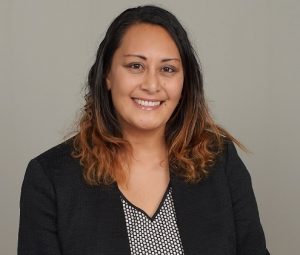
Juliann Anesi

Juliann Anesi

· Associate Professor

University of California, Los Angeles · Gender Studies

Active 2012–2023

h-index2
Citations20
Papers73 last 5y
Funding
See your match with Juliann Anesi — sign in to PhdFit.Sign in

About

Juliann Anesi is an Associate Professor at UCLA specializing in Disability Studies, Inclusive Education Pedagogies, Decolonial Feminisms, Native Pacific Studies, Indigeneity and Ableism, and Interdisciplinarity. Her work focuses on these areas, contributing to academic discussions and research in gender and disability studies, with an emphasis on indigenous perspectives and decolonial approaches. She is actively involved in the academic community, engaging in teaching and research that explore these interconnected fields.

Research topics

  • Sociology
  • International trade
  • Meteorology
  • Geography
  • Geology
  • Medicine
  • Psychology
  • Demography
  • Business
  • History
  • Oceanography

Selected publications

  • Oceanic Activism: A Talanoa on Land, Love, and Resistance

    Institutional Repositories DataBase (IRDB) · 2023-05-15

    articleOpen accessSenior author
  • Acknowledgments

    Cornell University Press eBooks · 2023

    • Medicine
  • Enduring the Storm: Dealing with Mental Disabilities in Oceania

    Disability Studies Quarterly · 2022 · 3 citations

    1st authorCorresponding
    • Psychology
    • History
    • Geography

    No abstract available.

  • Special Olympics in the US Territories of American Sāmoa, Guam, and Puerto Rico

    Oxford Research Encyclopedia of American History · 2022-06-17

    reference-entry1st authorCorresponding

    Abstract The Special Olympics organization has humble beginnings—it started in the backyard of Eunice Kennedy Shriver, an American philanthropist, and member of the Kennedy family. The first games were held in 1968, and the Special Olympics has developed to convey a political message of the importance of including people with intellectual disabilities in sports and as members of the larger society. The Special Olympics is a program with more than one million participants and half a million volunteers. Although the Special Olympics is not quite at the scale of the Olympics in terms of international participation, sponsorship, and audience, the games still mimic the spirit of competition and inclusion through sports. The games continue to serve athletes, families, and the community by challenging (often erroneous) conceptions about people with intellectual disabilities. The games provide social interaction and the opportunity for achievement, both on and off the playing field for disabled people. Worldwide, individuals with intellectual disabilities are serious in their endeavor to be physically active. The Special Olympics organization has also been endorsed by local communities in the US territories of American Sāmoa, Guam, and Puerto Rico. Addressing inclusion through sports in the US territories can shed a light on the complicated uneven political relations that the territories or colonies have with the United States—specifically, the unfulfilled promise of inclusion by the United States for the territories when thinking about statehood, citizenship, and representation under the Constitution. The Special Olympics purports a project centered around inclusion and belonging for disabled people within the territories that is often on the periphery of US foreign relations. Disability is a critical category of analysis that can lead to an understanding of how the three aforementioned territories are examples of mapping, control, and subjugation of the human body and mind as core features of colonial conquest. The Special Olympics organization exposes the presence and significance of disability within colonialism—in particular, “how disability remains present in the establishment, maintenance, and continuation of colonial structures of power”—as these territories are often occupied and governed by US jurisprudence, but their citizens do not garner the same rights as US citizens on the “mainland.” The Special Olympics, with its goal of inclusion, is commonly seen as a national project that aims to better the lives of disabled people. Unfortunately, these efforts of inclusion are somewhat limited in scope, especially with regards to the politics of governance, voting rights, and gaining independence in the broader US legislative processes. Based solely on place of residence, people who live in the territories are denied voting representation in the House of Congress, even though Congress possesses plenary authority over local territorial matters. Thus, coupling the spirit of inclusion through sports with the social and political challenges in the territories, may reinforce colonial approaches to inclusion. Here, thinking about citizenship mirrors the difficult situation of those living in the territories—and fuels what some would consider paternalist forms of governance of the territories, a theme that reflects the power relations of the United States with its territories. The complicated relations between the unincorporated territories as military posts for the United States is a pressing issue, as people in these communities continue to fight for sovereignty and demilitarization from the United States. The constant struggle for decolonization is ongoing. In terms of governance, much of the territories are ruled from afar, a point that feeds into paternalist politics of inclusion and condescending policies imposed on territories without their input. For example, this point is further implemented under the Article 4, Section 3, of the US Constitution, known as the “territorial clause,” which gives Congress broad authority to govern US territories. Puerto Rico is the most populous US territory. Others include American Sāmoa, Guam, the Northern Mariana Islands, and the Virgin Islands. They are granted various measures of self-rule but lack their own sovereignty. Given such inconsistencies in political relations, the question then becomes, what does inclusion through sports convey within colonial and occupied territories with longstanding, fraught political relations to the United States?

  • (Re)centering Pacific Islanders in Trans-Pacific Studies

    Critical Ethnic Studies · 2022

    1st authorCorresponding
    • Sociology
    • Oceanography
    • Business
  • Action makes a difference

    2019-08-22 · 2 citations

    book-chapter1st authorCorresponding

    This chapter describes the advocacy work of Samoa’s only self-advocacy organization, Nuanua O Le Alofa (NOLA), illustrating the vital role of disability advocacy in driving legislative and policy change across the country. It highlights the ‘advocacy work’ of NOLA, as coined by its members, and the challenges they continue to face in a changing society. Self-advocacy organizations practise concepts and skills associated with self-determination. Research suggests that people who are self-determined have better post-school outcomes. NOLA is an organization that advocates for and promotes the rights and abilities of people with disabilities. In terms of organization make-up, NOLA’s infrastructure is partially supported by government agencies, which complicates the inter(dependent) relations they deal with on a daily basis. Advocating and changing policies are two priorities for NOLA. In terms of education, disabled students did not attend formal schools due to the negative belief that they were ‘uneducable’.

  • Laughing matters: humour as advocacy in education for the disabled

    Disability & Society · 2018-04-02 · 15 citations

    article1st authorCorresponding

    Humour is an advocacy tool used by women organisers in Sāmoa, an Independent State in the Pacific. Examining the use of humour (jokes, sarcasm, banter, and clowning) in social action research reveal creative ways that advocates and activists can challenge systems of normalcy. This paper examines humour as an informal conversational and non-confrontational strategy used by (non)disabled Indigenous women to support the creation of schools for disabled students. Thematic analysis of the data shows that the women’s use of humour supports their agenda of transforming exclusive structures in education and policy. Using humour as an organising strategy also shifts mainstream thinking about disabled people as easy targets of offensive and degrading humour. The paper explores humour as an organising strategy that provides new supports into inclusive spaces for the education of disabled people in the global South.

  • Trying times: Disability, activism, and education in Samoa, 1970-1980

    2015-01-01

    articleOpen access1st authorCorresponding

    In the 1970s and 1980s, Samoan women organizers established Aoga Fiamalamalama and Loto Taumafai, which were educational institutions in Samoa, an island in the Pacific. Establishing these schools for students with intellectual and physical disabilities, excluded from attending formal schools based on the misconception that they were "uneducable". In this project, I seek to understand how parent advocates, allies, teachers, women organizers, women with disabilities, and former students of these schools understood disability, illness, inclusive education, and community organizing. Through interviews and analysis of archival documents, stories, cultural myths, legends related to people with disabilities, pamphlets, and newspaper media, I examine how disability advocates and people with disabilities interact with educational and cultural discourses to shape programs for the empowerment of people with disabilities. I argue that the notions of ma’i (sickness), activism, and disability inform the Samoan context, and by understanding, their influence on human rights and educational policies can inform our biased attitudes on ableism and normalcy.

  • Practicing Liberatory Pedagogy

    Culture Studies &#x2194 Critical Methodologies · 2012-04-01 · 9 citations

    articleSenior author

    Following the works of Patricia Williams, bell hooks, and other feminist scholars of color, we address what it means for women of color teaching social justice issues in predominantly white classrooms. Very little research has been done to illuminate the challenges women of color face in classrooms and what this means for liberatory practice. We grapples with the question, “What are the particular experiences of women of color from various racial and ethnic backgrounds with white student resistance, specifically in relation to issues of authority?” We also provide recommendations for classroom practice as well as address policy recommendations to structurally support women of color.

Frequent coauthors

  • Christen T. Sasaki

    2 shared
  • Brandon J. Reilly

    University of Guam

    2 shared
  • Kēhaulani Vaughn

    2 shared
  • Jose- Phine Oberiano

    University of Guam

    1 shared
  • Lisa Naholowa'a

    University of Guam

    1 shared
  • Kris Kaupalolo

    University of Guam

    1 shared
  • Vivian Loyola Dames

    University of Guam

    1 shared
  • Cristobal Hope

    University of Guam

    1 shared

Labs

  • Gender StudiesPI

  • Resume-aware match score
  • Save to shortlist
  • AI-drafted outreach

See your match with Juliann Anesi

PhdFit ranks faculty by your research interests, methods, and publications — grounded in their actual work, not templates.

  • Free to start
  • No credit card
  • 30-second signup