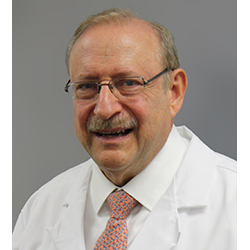
Julius Gardin
· ProfessorVerifiedRutgers University · Medicine
Active 1977–2026
About
Julius M. Gardin, MD, MBA is a Professor of Medicine, Director (interim), Division of Cardiology, and the Chief of Quality and Program Development for the Division at Rutgers New Jersey Medical School. He previously served as Chair of the Department of Medicine at Hackensack University Medical Center from 2008 to 2015. Dr. Gardin cares for patients with a wide spectrum of cardiac conditions and risk factors, and has been listed annually in the Who’s Who, Best Doctors in America, and Top Doctors publications. He earned his undergraduate and medical degrees with honors from the University of Michigan, completed his residency in Internal Medicine at University of Michigan-affiliated hospitals, and completed a fellowship in Cardiology at Georgetown University Hospital. His research has significantly contributed to cardiac investigation, funded by the American Heart Association, the National Institutes of Health, and the medical industry. His ongoing research has helped elucidate the role of non-invasive cardiac imaging in predicting the risk of developing heart attacks and stroke. Dr. Gardin has authored more than 200 original research articles, along with guidelines, editorials, textbook chapters, review articles, and holds a U.S. patent. He serves on multiple editorial boards and is currently a Senior Consulting Editor for the Journal of the American Society of Echocardiography.
Research topics
- Internal medicine
- Cardiology
- Medicine
- Endocrinology
Selected publications
REFINING THE CRITERIA FOR LEFT VENTRICULAR MYOCARDIAL DYSSYNCHRONY IN HEART FAILURE
The American Journal of Cardiology · 2026-04-01
article1st authorCorrespondingJournal of the American College of Cardiology · 2026-03-27
articleSenior authorCardiac Arrest Mortality Across Time and Space: A National Analysis with Forecasts to 2035
Journal of Clinical Medicine · 2025-07-08 · 1 citations
articleOpen accessBackground: Cardiac arrest remains a significant public health challenge with variable mortality trends across different demographics and regions, affecting healthcare planning and intervention strategies. We conducted this study to analyze cardiac arrest-related mortality trends from 1999 to 2023 and predict future trends up to 2035. Methods: This study analyzed data from 1999 to 2023, focusing on cardiac arrest as the primary cause of death (ICD-10: I46). Age-adjusted mortality rates (AAMRs) were standardized according to the 2000 U.S. Census. Joinpoint regression was utilized to calculate annual percentage change (APC), and an ARIMA model with Python 3.10 was used for mortality predictions. Results: A total of 365,608 cardiac arrest-related deaths were recorded in the USA from 1999 to 2023. There was a sharp decline in mortality rate until 2001 (APC: −10.35, p < 0.05), followed by a slowed decline until 2013 (APC: −2.91, p < 0.05), and then a gradual uptrend. Males exhibited a higher AAMR (5.8, 95% CI: 5.8–5.9) compared to females (4.2, 95% CI: 4.1–4.2). African Americans had the highest AAMR (8.9, 95% CI: 8.9–9), followed by Caucasians (4.8, 95% CI: 4.8–4.9) and American Indians (3.5, 95% CI: 3.3–3.7). The South region of the US had the highest AAMR, followed by the Northeast, Midwest, and West. Alabama exhibited the highest AAMR, followed by Nevada and Hawaii. Predictive analysis suggests a potential stable slow downtrend in mortality rates by 2035 (AAMR: 4.28, 95% CI: −1.8–10.4). Conclusions: The observed trends and future predictions underscore the importance of targeted public health interventions and healthcare planning to address cardiac arrest mortality.
Noninvasive Cardiac Imaging in Older Adults
JACC Advances · 2025-11-13
reviewOpen accessNoninvasive cardiac imaging plays a critical role in the diagnosis and risk stratification of cardiovascular disease in older adults, a population marked by clinical heterogeneity, multimorbidity, and age-related physiologic changes. This review outlines the strengths and limitations of commonly used imaging modalities including echocardiography, transesophageal echocardiography, cardiac computed tomography, nuclear imaging tests, and cardiac magnetic resonance imaging in the context of aging. We highlight diagnostic challenges such as limited exercise capacity, image quality artifacts, reduced specificity in the setting of multivessel, or microvascular disease and intolerance to longer scan protocols. Advances in imaging technology, including artificial intelligence and hybrid protocols, offer opportunities to improve accuracy, access, and individualized decision-making. The review emphasizes the importance of tailoring test selection to patient comorbidities and goals of care. Addressing current evidence gaps through trials inclusive of older adults and geriatric-focused imaging guidelines is essential to delivering equitable, high-value cardiovascular care to older adults.
Journal of the American College of Cardiology · 2025-03-29
articleOpen accessFrontiers in Medicine · 2025-12-11
articleOpen accessBackground Frailty is a proxy for biologic aging that confers risk independently of chronologic age. Most frailty indices correlate strongly with chronologic age, making independent features of biologic aging challenging to identify. Methods We aimed to create a novel Age Less-Dependent Frailty (AGELESS) Score less-associated with chronologic age than the Fried frailty phenotype. Among Cardiovascular Health Study participants with available echocardiographic data, we identified demographic, clinical, serologic, and echocardiographic variables more correlated with a continuous version of the Fried frailty phenotype than age, then used LASSO regression for variable selection. In a 25% leave-out sample, we internally validated the score's association with age-adjusted all-cause and cardiovascular mortality and compared model characteristics with the Fried frailty phenotype. Results In 4,029 individuals (mean age 72 ± 5.0 years, 59.6% female), serum cystatin C, depression, diabetes, educational attainment, forced expiratory volume in 1 s, and income were more associated with frailty than age and selected for inclusion in the AGELESS Score. Adjusted for age, individuals in the highest vs. lowest quartiles of the AGELESS Score had a higher risk of all-cause (HR: 1.44, 95% CI: 1.17–1.79, p &lt; 0.001) and CV death (HR: 1.64, 95% CI: 1.43–1.87, p = 0.002). The AGELESS Score was less correlated with age (AGELESS r = 0.23, 95% CI: 0.16–0.30; Fried r = 0.28, 95% CI: 0.21–0.34; p -value for comparison of correlations &lt; 0.001) and more closely associated with all-cause and CV mortality within each age quartile than the Fried frailty phenotype. Conclusions We derived and internally validated a novel frailty score that is less associated with chronologic age than existing indices and predicts mortality within age strata better than the existing reference standard for phenotypic frailty. This score could help identify high-risk patients with frailty across the age spectrum and may provide insights into mechanisms of biologic aging.
JACC. Cardiovascular imaging · 2025-04-16 · 2 citations
letterCureus · 2025-06-01 · 1 citations
articleOpen accessSenior authorBackground Peripheral artery disease (PAD) is a prevalent yet often overlooked manifestation of atherosclerosis that significantly contributes to cardiovascular morbidity and mortality. With the increasing reliance on artificial intelligence (AI) for medical information, it is essential to assess the accuracy and readability of AI-generated health content, especially with regard to common cardiovascular diseases. Objective This study evaluates the accuracy, completeness, and readability of responses generated by OpenAI's ChatGPT (San Francisco, CA) and Google's Gemini (Mountain View, CA) when answering common questions about PAD. AI responses were compared to Cleveland Clinic's frequently asked questions (FAQs) on PAD to assess the reliability of AI-generated responses as a patient education tool. Methods ChatGPT 4.0 and Gemini 1.0 were prompted in three formats (no prompt (Form 1), patient-level prompt (Form 2), and physician-level prompt (Form 3)) before answering 19 questions from Cleveland Clinic's FAQs on PAD. Responses were categorized as correct, partially correct, or incorrect based on percent content alignment. Readability was assessed using the Flesch-Kincaid (FK) grade level, and word count differences were analyzed. Chi-square tests and one-way analysis of variance (ANOVA) were used for statistical analysis, with a significance threshold of p < 0.05. Results ChatGPT provided 70% correct and 30% partially correct responses, with no incorrect answers. Gemini provided 52% correct, 45% partially correct, and 3% incorrect responses. ChatGPT performed significantly better in accuracy, with a p-value < 0.05. FK analysis showed no significant readability differences between the two chatbots (mean FK grade: ChatGPT, 10.81; Gemini, 10.73), although both were higher than the recommended reading level for patient education. ChatGPT's responses were significantly longer than Gemini's, with a p-value < 0.0001. Conclusion Both ChatGPT and Gemini provided mostly accurate and comprehensive responses to commonly asked questions about PAD, demonstrating their potential use as supplementary education tools for patients with appropriate provider oversight. However, the grade reading level of these materials exceeded the recommended reading levels set forth by national guidelines, which warrants improvement in AI-driven health communication. Given the growing reliance on AI in healthcare, further research should explore ways to enhance AI-generated medical content for broader patient accessibility and evaluate its impact on patient outcomes.
Echocardiography · 2025-10-27
articleOpen accessABSTRACT Purpose Ground‐level ozone (O 3 ) and nitrogen dioxide (NO 2 ) are two of the most important air pollutants, with accumulating evidence linking them to incident cardiovascular disease. The tissue‐level mechanisms by which they affect myocardial function remain incompletely understood, however. Methods We applied speckle‐tracking echocardiography (STE) to explore the relationship between chronic residential gaseous air pollution exposure and cardiac mechanics in community‐dwelling older adults largely free of baseline heart disease. Average annual address‐specific concentrations of O 3 and NO 2 were estimated from 1990 to 1994 using validated spatiotemporal models. The association between each pollutant and STE measures of left ventricular average longitudinal strain (LVLS), simplified global longitudinal strain (sLVGLS), early diastolic strain rate (LVEDSR), left atrial reservoir strain (LALS), and STE‐derived e′ and E/e′ ratio (E/STe′) was explored using multivariable linear and logistic regressions. sLVGLS was additionally modeled as a binary outcome with a cutoff of −16%. Results One thousand five hundred and seventy‐six individuals were included in the analysis. We found that each part per billion increase in O 3 exposure was associated with a 0.47 increase in E/STe′ ratio (95% CI: 0.06–0.88). O 3 exposure was not significantly associated with LV or LA strain abnormalities, including LV GLS, EDSR, or LALS. NO 2 exposure was not significantly associated with any of the STE‐derived outcomes. Conclusions Ozone exposure may be associated with subclinical markers of diastolic dysfunction, while NO 2 does not appear to be linked to echocardiographic strain abnormalities.
Cureus · 2024-05-08 · 33 citations
articleOpen accessSenior authorBackground Google Gemini (Google, Mountain View, CA) represents the latest advances in the realm of artificial intelligence (AI) and has garnered attention due to its capabilities similar to the increasingly popular ChatGPT (OpenAI, San Francisco, CA). Accurate dissemination of information on common conditions such as hypertension is critical for patient comprehension and management. Despite the ubiquity of AI, comparisons between ChatGPT and Gemini remain unexplored. Methods ChatGPT and Gemini were asked 52 questions derived from the American College of Cardiology's (ACC) frequently asked questions on hypertension, following a specified prompt. Prompts included: no prompting (Form 1), patient-friendly prompting (Form 2), physician-level prompting (Form 3), and prompting for statistics/references (Form 4). Responses were scored as incorrect, partially correct, or correct. Flesch-Kincaid (FK) grade level and word count were recorded. Results Across all forms, scoring frequencies were as follows: 23 (5.5%) incorrect, 162 (38.9%) partially correct, and 231 (55.5%) correct. ChatGPT showed higher rates of partially correct answers than Gemini (p = 0.0346). Physician-level prompts resulted in a higher word count across both platforms (p < 0.001). ChatGPT showed a higher FK grade level (p = 0.033) in physician-friendly prompting. Gemini exhibited a significantly higher mean word count (p < 0.001); however, ChatGPT had a higher FK grade level across all forms (p > 0.001). Conclusion To our knowledge, this study is the first to compare cardiology-related responses from ChatGPT and Gemini, two of the most popular AI chatbots. The grade level for most responses was collegiate level, which was above average for the National Institutes of Health (NIH) recommendations, but on par with most online medical information. Both chatbots responded with a high degree of accuracy, with inaccuracies being rare. Therefore, it is reasonable that cardiologists suggest either chatbot as a source of supplementary education.
Recent grants
NIH · $580k · 2001
NIH · $1.6M · 1993
Frequent coauthors
- 341 shared
Daniel H. O’Leary
Tufts University
- 316 shared
Richard A. Kronmal
University of Washington
- 305 shared
Bruce M. Psaty
- 291 shared
Anne B. Newman
University of Pittsburgh
- 256 shared
Nemat O. Borhani
- 253 shared
Russell P. Tracy
University of Vermont
- 247 shared
Teri A. Manolio
National Institutes of Health
- 223 shared
John S. Gottdiener
Education
- 1968
B.S.
University of Michigan
- 1972
M.D.
University of Michigan
- 2012
Other
Seton Hall University
Awards & honors
- listed annually in the Who's Who
- Best Doctors in America
- Top Doctors publications
- Resume-aware match score
- Save to shortlist
- AI-drafted outreach
See your match with Julius Gardin
PhdFit ranks faculty by your research interests, methods, and publications — grounded in their actual work, not templates.
- Free to start
- No credit card
- 30-second signup