Resume-aware faculty matching

Find professors who actually fit you

Upload your resume. Four AI agents analyze your background, rank the faculty who fit, inspect their recent research, and help you draft outreach — grounded in their actual work, not templates.

Free to startNo credit cardCancel anytime
Top matches Balanced preset
Dr. Sarah Chen
Stanford · Interpretability · NLP
91
Dr. Marcus Holloway
MIT · Robotics · RL
84
Dr. Aisha Okonkwo
CMU · Fairness · HCI
82
Nova · Professor Researcher · re-ranking top 20…
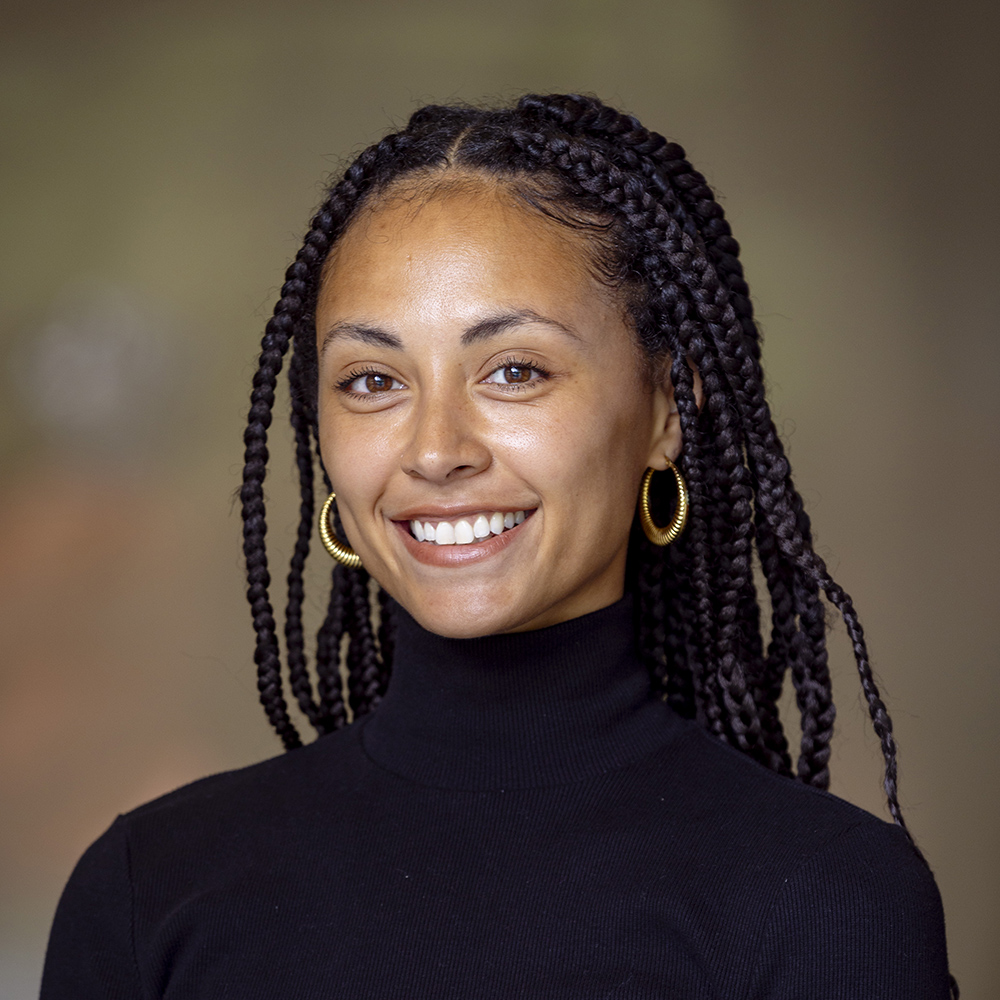
Kaneesha Johnson

Kaneesha Johnson

· Assistant ProfessorVerified

University of North Carolina at Chapel Hill · Political Science

Active 2016–2025

h-index10
Citations299
Papers4432 last 5y
Funding
See your match with Kaneesha Johnson — sign in to PhdFit.Sign in

About

Kaneesha Johnson is an Assistant Professor in the Department of Political Science at the University of North Carolina at Chapel Hill. Her research broadly focuses on the development of punitive institutions and how they serve as forms of racialized state control. Her book project, The Making of a Punitive State, which won the Harvard Department of Government Robert Noxon Toppan prize for the best dissertation on a subject of political science, examines when and why the United States became punitive across a range of social services. Additional research interests include the history of school policing, the origins and modern enforcement of the North Carolina criminal code, and the death penalty. Johnson received her Ph.D. from the Department of Government at Harvard University in May 2023, where she was a Malcolm Weiner Scholar in Poverty and Justice. During the 2022-23 academic year, she was a Dissertation Research Fellow at the Wilson Library at the University of North Carolina at Chapel Hill. In 2022, she earned a Master of Legal Studies from the University of Chicago Law School. She is also an alumna of the Borough of Manhattan Community College and Durham Technical Community College, and graduated from the University of North Carolina at Chapel Hill with a B.A. in political science and philosophy in 2016. Outside of her academic work, she enjoys relaxing, making art, and spending time on her latest hobby.

Research topics

  • Sociology
  • Gender studies
  • Political Science
  • Law
  • Gerontology
  • Aesthetics
  • Criminology
  • Philosophy
  • Epistemology
  • Library science
  • Psychology
  • Medicine

Selected publications

  • An Equity-Based Research Agenda to Promote Social Inclusion and Belonging for People With IDD.

    UNC Libraries · 2025-04-05

    articleOpen access

    Having a sense of social inclusion and belonging, typically characterized by our personal relationships and community participation, is the central essence of life for most people, yet it remains elusive for many people with intellectual and developmental disabilities (IDD). This article summarizes the work of a diverse group of researchers and advocates to propose 6 big-picture, equity-based goals to drive future research in the field: (1) understanding the role of intersectionality, (2) understanding intimate relationships, (3) promoting formation of communities of care to support social inclusion, (4) understanding life course trajectories of social inclusion, (5) understanding social inclusion in virtual spaces, and (6) understanding how to promote social inclusion in the entire research process.

  • From racialized think-pieces toward anti-racist praxis in our science, education, and practice

    UNC Libraries · 2025-07-12

    articleOpen access1st authorCorresponding

    The process of evaluating and understanding occupation as something people want or are obligated to do and its impact on health and survival is as old as the occupational therapy profession (Johnson & Dickie, 2019). However, from 1917 to 1991, occupational therapists more often conceptualized occupation through its utility in practice rather than as a sociological phenomenon in and of itself (Hammell, 2009a), and as a consequence, neglected examination of the racialized context through which it developed (Grenier, 2020). This orientation fostered a knowledge base rooted in Whiteness—a privileged exclusionary category generally based on having White skin and the accumulation of social, economic, and political power (Christian, 2018)—and was consistently only interested in the benefits of occupation. Simultaneously, founders utilized these benefits in order to carve out political power to capitalize on evolving health systems (Calhoun, 2020; Yerxa, 1993). Occupational science was born from this knowledge base and a need to gain traction and power as an emerging basic science in the academy, and subsequently, enable a more efficacious practice within medical and therapeutic fields (Yerxa, 1990). Early occupational scientists, therefore, would have found little utility in turning a critical eye toward the founding construct of the discipline as a potential locus for injustice, especially in relation to racism (Clark et al., 1991; Yerxa, 2000).

  • Exploring the Impact of Insurance Gaps on Healthcare Burden for Autistic Children

    Journal of Autism and Developmental Disorders · 2025-07-18

    articleSenior author
  • Establishing Diversity, Equity, and Inclusion Priorities for Occupational Therapy Research

    UNC Libraries · 2025-04-05

    articleOpen access

    In this State of the Science column, we examine evidence that aligns common applications of diversity, equity, and inclusion (DEI) and occupational therapy research and suggest areas of focus to advance a culturally affirming and antiracist science of occupation. More specifically, we describe why DEI is important to the study of occupation, identify DEI gaps in the occupational therapy knowledge base, suggest DEI priorities for occupational therapy research and their implications for practice, and recommend practical strategies for occupational therapy scholars to apply in more immediate efforts to address DEI in their research endeavors.

  • Systemic Inequities in Health Care: Lessons Learned From Black People With IDD and Their Care Partners

    Progress in community health partnerships · 2025-09-01 · 4 citations

    articleOpen access1st authorCorresponding

    BACKGROUND: Black people with intellectual and developmental disabilities (IDD) are disproportionately impacted by health disparities and endure distinctive systemic challenges as a result of their intersecting identities. OBJECTIVES: This manuscript describes a collaborative project between university researchers, people with IDD and their care partners, and providers to understand contextual and individual characteristics that influence equitable health services access and use. METHODS: The project follows a critical participatory action research approach to address issues of power and equity at the intersections of race, gender, and disability. Data collection strategies included individual semi-structured interviews and focus groups, as well as interactive activities to facilitate deeper discussion. LESSONS LEARNED: We describe strategies to manage challenges of delayed recruitment, power sharing, equitable and inclusive engagement, and dissemination. CONCLUSIONS: Lessons learned underscore the diverse experiential expertise of Black people with IDD, their care partners, and providers in the co-creation of knowledge, the importance of opportunities for partners from different stakeholder groups to cultivate relationships as part of the research process, co-reflexivity as instrumental to assessing and reassessing engagement processes in real time, and implementation of inclusive strategies for participation in dissemination activities.

  • The Equity Agenda in Intellectual and Developmental Disabilities Research.

    UNC Libraries · 2025-04-02

    articleOpen access1st authorCorresponding

    This commentary on Kover and Abbeduto (2023) underscores the critical importance of naming and framing toward an equity agenda in intellectual and developmental disabilities research. More specifically, I briefly outline (1) why racialization is an important anchor in IDD discourse; (2) whiteness as a necessary point of discussion; and (3) the adoption of critical inquiry and critical praxis.

  • Diversity, Equity, Inclusion, Justice, Accessibility, and Belonging in Occupational Therapy Practice and Education

    American Journal of Occupational Therapy · 2025-03-01 · 2 citations

    editorialOpen access1st authorCorresponding

    The occupational therapy profession is well positioned to play a pivotal role in advancing the health and well-being of communities with different lived experiences. The articles included in this special issue on Diversity, Equity, Inclusion, Justice, Accessibility, and Belonging (DEIJAB) in Occupational Therapy Practice and Education provide a snapshot of research and scholarship aimed at interrogating systems and standards of practice and promote evidence-informed strategies to support the unique concerns of nondominant groups. Specifically, authors take stock of practice trends with these populations; describe processes for developing culturally affirming measures; examine the effectiveness of target-based interventions; and articulate the value of applying DEIJAB principles across practice settings, academic programs, advocacy, and professional leadership. Across all of the articles, scholars call on members of the profession to be critically reflective and actively antiracist and to challenge dominant paradigms to shape the future of practice through education, training, leadership, and community partnership.

  • The Inaugural Engage Summit: Proceedings and Call to Action

    OTJR Occupational Therapy Journal of Research · 2025-12-01 · 1 citations

    article

    Community-engaged research intentionally engages communities and people with lived experience as equal partners in the research process from project ideation through dissemination. The American Occupational Therapy Foundation sponsored a 2-day Engage Summit in October of 2024 to: showcase the depth and breadth of high-quality community-engaged research within occupational therapy, identify and evaluate systematic approaches to community-engaged methodologies to elevate occupational therapy-informed community-engaged scholarship, including evaluation, measurement, and dissemination, and build capacity among people with lived experience to actively engage in community-engaged research as full and equal partners. The event culminated in a World Café, a participatory process wherein attendees identified priorities for community-engaged research to guide the profession. The purpose of this paper is to provide a high-level overview of the proceedings, showcase the results from the World Café, and issue a call to action for continued development and institutional support of community-engaged research within occupational therapy and beyond.

  • Occupation, injustice, and anti-Black racism in the United States of America

    UNC Libraries · 2025-07-12

    articleOpen access1st authorCorresponding

    In the summer of 2020, the death of George Floyd – yet another unarmed Black man killed at the hands of police – thrust race and racism to the forefront of public attention in the United States. Across the country, demonstrators and protestors mobilized to end police brutality, one mechanism of systemic racism in this country’s history and present. As this paper explores, occupation too has played a role in the systemic racism against Black people in the United States. In recent years, occupational scientists have critiqued tacit assumptions regarding the qualities and effects of occupation. The following examination contributes to this growing body of critical literature and considers that occupation can be a vehicle for injustice as much as justice. By investigating the construction of race and the dissemination of racism, including its propagation through everyday living, the role of occupation in community formation and development is more fully understood. In pursuing this goal, we hope to reveal the real and often unacknowledged history of racism in the United States that must be recognized and confronted to move toward reconciliation, healing, and social transformation. This exploration uncovers powerful moments when occupation and everyday doing were conduits through which racism was constructed and calls upon occupational scholars to be reflective and critical in their research and practice in order to optimally support the people they serve.

  • Understanding the Theories and Frameworks That Guide Occupational Therapy Practice With Black Populations: A Scoping Review

    American Journal of Occupational Therapy · 2025-08-21

    review

    IMPORTANCE: Globally, the occupational therapy profession has neglected to address the anti-Black racism in its therapeutic services. Although discussions on ethnic/racial issues have grown in the field in recent years, few studies have investigated the theoretical and methodological frameworks that inform the practices of occupational therapy practitioners who work with Black populations. OBJECTIVE: To describe and analyze the theoretical and methodological frameworks available to occupational therapy practitioners who provide services to Black populations. DATA SOURCES: MEDLINE, CINAHL, PsycINFO, LILACS, SCIELO, Web of Science, and Scopus were searched for articles published in English and Portuguese from 2013 to 2024. STUDY SELECTION AND DATA COLLECTION: Scoping review procedures as outlined by Arksey and O'Malley (2005) and the Preferred Reporting Items for Systematic reviews and Meta-Analyses extension for Scoping Reviews (PRISMA-ScR) were used to identify articles that reflect theoretical and methodological frameworks that guide the practices of occupational therapy practitioners who work with Black populations. FINDINGS: Forty-eight articles met the inclusion criteria and were organized into four themes: humanities and social sciences: theories and frameworks; occupation-centered approaches; addressing systemic inequalities through collective occupations, intersectionality, and the incorporation of Black epistemologies into occupational therapy practices; and methodological approaches. CONCLUSIONS AND RELEVANCE: Findings suggest that occupational therapy practitioners must adopt an antiracist approach with Black populations and be guided by counterhegemonic and decolonial frameworks. More studies are needed to investigate the effectiveness and limitations of frameworks that guide therapeutic practices with Black populations. Plain-Language Summary: This scoping review interrogates anti-Black racism in occupational therapy practice and the relevant frameworks available to occupational therapy practitioners working with Black populations around the world. The authors identify practice and research gaps that remain in the discourse and provide pathways for action that address the needs and demands of these populations from an antiracist lens. Positionality Statement: The authors are Black, cisgender, heterosexual, female-identifying occupational therapy practitioners and academic activists who engage in research and practice at the intersections of antiracism, gender, and ableism in occupational therapy and occupational science. The first and third authors live in different regions of Brazil and speak Portuguese. The first author is from a state in northeastern Brazil, which has the largest percentage of Black residents outside the African continent. The third author is from southeastern Brazil, a region with a significant percentage of White individuals. The second author is from the southern United States, is a native English speaker, and has practiced, taught, and conducted research with Black populations in the United States. These social markers shape how we do everyday life, being members of the Black community in our respective countries, belonging to an antiracist movement, and becoming transformative agents to change approaches to engaging with Black occupational therapy service recipients.

Frequent coauthors

  • Matthew Bogenschutz

    University of Minnesota

    20 shared
  • Sehrish Shikarpurya

    University of Maryland, College Park

    16 shared
  • Sarah Lineberry

    Virginia Commonwealth University

    16 shared
  • Joseph Rand

    Boston University

    16 shared
  • Sarah A. Hall

    Boston University

    16 shared
  • Zach Rossetti

    Vanderbilt University

    16 shared
  • Renáta Tichá

    University of Minnesota

    16 shared
  • Meghan Blaskowitz

    Duquesne University

    7 shared

Education

  • Doctor of Philosophy , Division of Occupational Science and Occupational Therapy

    University of North Carolina at Chapel Hill

    2016
  • Dual Bachelor of Science and Master of Science , School of Occupational Therapy

    Brenau University

    2006
  • Resume-aware match score
  • Save to shortlist
  • AI-drafted outreach

See your match with Kaneesha Johnson

PhdFit ranks faculty by your research interests, methods, and publications — grounded in their actual work, not templates.

  • Free to start
  • No credit card
  • 30-second signup