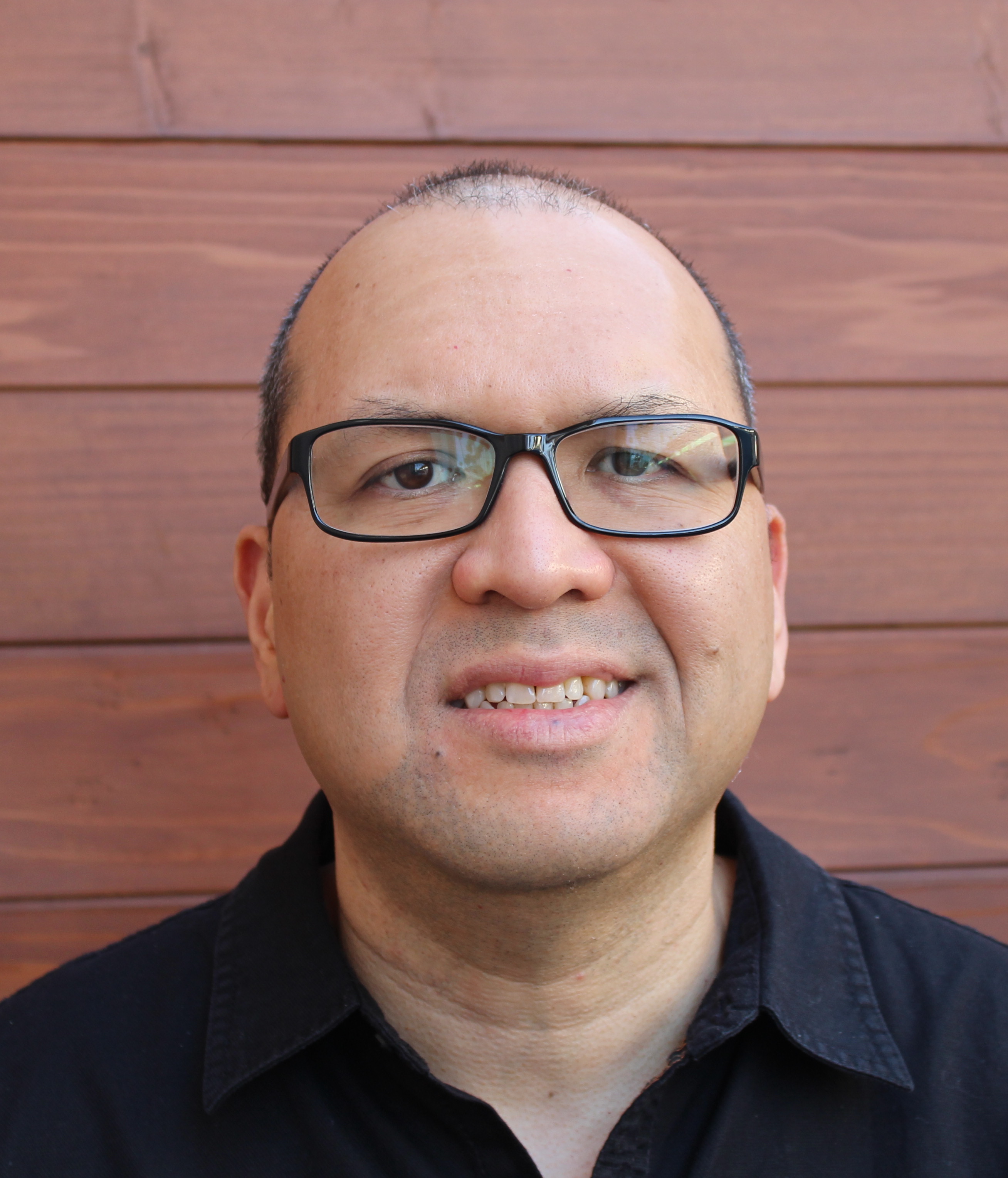
Keith L. Camacho
· Professor & ChairUniversity of California, Los Angeles · Asian American Studies
Active 1998–2023
About
Keith L. Camacho is a Professor and Chair at the UCLA Asian American Studies Department. He received his Ph.D. from the University of Hawai‘i at Mānoa in 2005 and has trained in the anthropology, literature, and history of the Pacific Islands. His research has mainly focused on Chamorro cultural and historical politics, as well as American and Japanese colonialisms and militarisms more generally. He has held research appointments in ethnic studies, gender studies, and native studies at institutions including the Australian National University, the University of Canterbury, the University of Illinois, and the University of Sydney. From 2014 to 2018, he served as the Senior Editor of Amerasia Journal. Currently, his research includes studying Samoan youth violence and justice in Auckland, Aotearoa, and Los Angeles, California.
Research topics
- Political Science
- Sociology
- Ecology
- Medicine
- Law
- Geography
- History
Selected publications
Re-storying Law and Development in Oceania
Oxford University Press eBooks · 2023 · 4 citations
- Political Science
- Political Science
- Geography
Abstract The Pacific is vast, and its people and places woven into a rich array of cultures, ecologies, and legal systems. However, development discourses emanating from Global North institutions consistently portray the region in homogenised terms, as a series of small, underdeveloped, and under-governed islands dotting an empty expanse of ocean. This chapter draws on a rich vein of Pacific scholarship to highlight the effects of these dominant portrayals. It does so with reference to three key areas of concern for Global North institutions: state-building and securitisation of borders, the regulation of Indigenous land and sea, and gender inequality. The chapter then focuses on efforts to ‘decolonise’ and ‘re-story’ mainstream development, and highlights three key characteristics of these efforts: they are emplaced in landscapes, seascapes, and skyscapes; they are founded on Indigenous customs, languages, and the arts; and they are expansive, linking diverse struggles through time and space.
Cornell University Press eBooks · 2023
- Medicine
Ethnic studies review · 2021-01-01 · 1 citations
articleThe first half of this article draws from the keynote lecture delivered by Joyce Pualani Warren in which she theorizes an Indigenous Pacific conception of origins that encompasses notions of Blackness and kinship. Warren argues that using knowledge of Pō can offer a model of kinship and enhanced support for Indigeneity and Indigenous futures. The second half of this article features Warren’s response to questions and prompts posed by Keith L. Camacho, Elizabeth DeLoughrey, and Evyn Lê Espiritu Gandhi.
Amerasia Journal · 2021 · 1 citations
Senior authorCorresponding- Political Science
- Sociology
- Political Science
2020-04-28
book-chapter1st authorCorrespondingHow, and for what reasons, might one cross an ocean? How might we analyze, as well, crossings of another time, place, and people? And what can be said of future crossings? If we turn to this volume on transatlantic and transpacific connections edited by Nicole Poppenhagen and Jens Temmen, we can cultivate an early twenty-first century sensibility about the crossing of the Atlantic and Pacific oceans. Specifically, Poppenhagen and Temmen have compiled a fine collection of essays that reflect a new and uneven but nevertheless shared awareness of Black diasporas, climate change, Indigenous rights, historical and literary methodologies, slavery, social movements, and transnationalism across the Atlantic and the Pacific. To be clear, their eight international contributors do not claim expertise in each of these matters. Nor are they dominated by a single demographic, period, or theme. But when we spatially address their topics through the local and global lens of the Atlantic and Pacific oceans, we can witness how such crossings might be achieved at this juncture in time among the English-speaking scholars of academia. Three decades ago, for instance, one would have been hard-pressed to identify a discipline, forum, or publication that featured and linked, as this collection brilliantly does, Canadian Inuit articulations of sovereignty in the Artic with Herman Melville’s representation of piracy in the novella “Benito Cereno” (1855/1856) and with, even further afar, Venetian mappings of the early modern world in the sixteenth century. Today, much has changed, as illustrated in Poppenhagen and Temmen’s text, “Across Currents: Connections between Atlantic and (Trans)Pacific Studies.”
2019-11-22
book1st authorCorrespondingSacred Men: Law, Torture, and Retribution in Guam
2019-11-22 · 8 citations
bookOpen access1st authorCorrespondingBetween 1944 and 1949 the United States Navy held a war crimes tribunal that tried Japanese nationals and members of Guam's indigenous Chamorro population who had worked for Japan's military government. In Sacred Men Keith L. Camacho traces the tribunal's legacy and its role in shaping contemporary domestic and international laws regarding combatants, jurisdiction, and property. Drawing on Giorgio Agamben's notions of bare life and Chamorro concepts of retribution, Camacho demonstrates how the U.S. tribunal used and justified the imprisonment, torture, murder, and exiling of accused Japanese and Chamorro war criminals in order to institute a new American political order. This U.S. disciplinary logic in Guam, Camacho argues, continues to directly inform the ideology used to justify the Guantánamo Bay detention center, the torture and enhanced interrogation of enemy combatants, and the American carceral state.
2019-01-01
bookOpen access1st authorCorrespondingBetween 1944 and 1949 the United States Navy held a war crimes tribunal that tried Japanese nationals and members of Guam's indigenous Chamorro population who had worked for Japan's military government. In <i>Sacred Men</i> Keith L. Camacho traces the tribunal's legacy and its role in shaping contemporary domestic and international laws regarding combatants, jurisdiction, and property. Drawing on Giorgio Agamben's notions of bare life and Chamorro concepts of retribution, Camacho demonstrates how the U.S. tribunal used and justified the imprisonment, torture, murder, and exiling of accused Japanese and Chamorro war criminals in order to institute a new American political order. This U.S. disciplinary logic in Guam, Camacho argues, continues to directly inform the ideology used to justify the Guantánamo Bay detention center, the torture and enhanced interrogation of enemy combatants, and the American carceral state.
2019-11-22
book1st authorCorrespondingAmerasia Journal · 2018-04-01
article1st authorCorresponding
Frequent coauthors
- 6 shared
Jacqueline Tran
Medical College of Wisconsin
- 6 shared
Michelle Wong
- 6 shared
Joe Fa`avae
Orange County Asian Pacific Islander Community Alliance
- 6 shared
Ashley Cheri
- 6 shared
Mary Anne Foo
- 4 shared
Rebecca Monson
Australian National University
- 3 shared
Erin Kahunawaika'ala Wright
- 3 shared
Eric Wat
Awards & honors
- Mercator Fellowship, Universität Potsdam, Germany, 2024
- Guggenheim Fellowship, John Simon Guggenheim Memorial Founda…
- Sacred Men: Law, Torture, and Retribution in Guam. Honorable…
- Fulbright US Scholar Fellowship, Fulbright New Zealand and t…
- Graduate Mentoring and Teaching Award in Asian American Stud…
- Resume-aware match score
- Save to shortlist
- AI-drafted outreach
See your match with Keith L. Camacho
PhdFit ranks faculty by your research interests, methods, and publications — grounded in their actual work, not templates.
- Free to start
- No credit card
- 30-second signup